Remembrance Day is generally observed on 11 November, marking the 1918 armistice that ended World War I. Hostilities ended “at the 11th hour of the 11th day of the 11th month” of 1918, and this day of commemoration honours members of the armed forces who have died in the line of duty.
The tradition of Remembrance Day evolved out of Armistice Day, first observed on 11 November 1919. In the United States, it is called Veterans Day. At the same time, in the United Kingdom and some other regions, the main memorial services and parades are often held on the second Sunday of November, which falls on 8 November 2026.

Remembrance Day
Traditionally, people wear a poppy during this period, and most commemorations observe a one- or two-minute silence. However, in many parts of the world, “Nimrod,” the ninth and best-known variation from Edward Elgar’s Enigma Variations, has become the music of remembrance.
Edward Elgar: Enigma Variations, “Nimrod”
A National Tradition
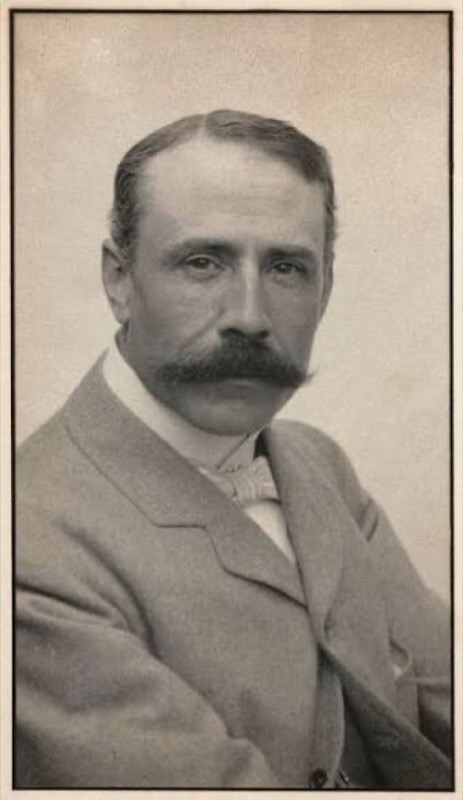
Edward Elgar
“Nimrod” is frequently performed at events with a patriotic subtext, such as the opening ceremony of the London Olympic Games in 2012 and the “Last Night of the Proms.” It is also performed every year at the Cenotaph in Whitehall for the annual National Service of Remembrance.
Edward Elgar finished his Enigma Variations in February 1899, and the work was quickly published a couple of months later. The music presents two mysteries. First, the identities of his friends, each of whom, with one exception, is identified by initials or by a nickname appended to each variation.
And then there is the mystery of the title. As Elgar wrote, “The enigma I will not explain, and I warn you that the apparent connection between the Variations and the Theme is often of the slightest texture; further, through and over the whole set another and larger theme ‘goes,’ but is not played, so the principal Theme never appears.”
Meet the Original Nimrod
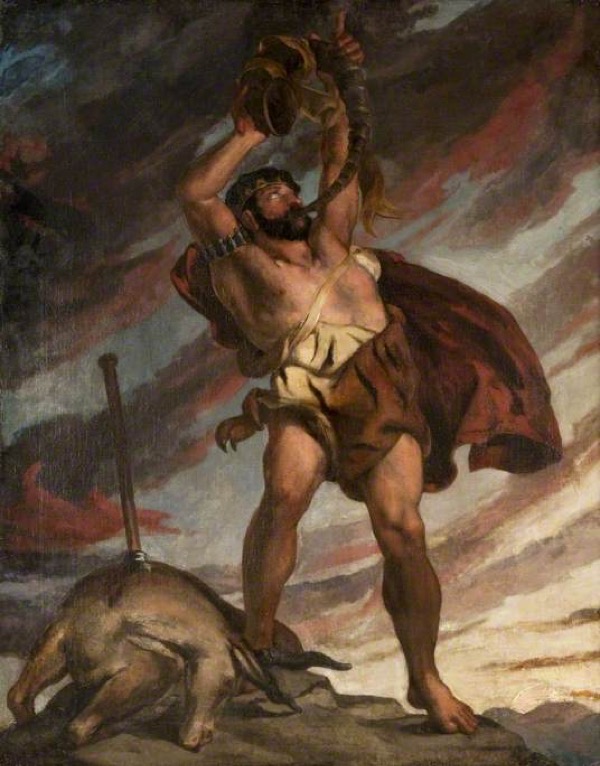
Nimrod (painting)
Variation IX carries the title “Nimrod,” a biblical figure described as a king in the land of Shinar, in Mesopotamia. As a ruler, he is traditionally associated with the Tower of Babel, and, as the Bible states, he was “a mighty hunter before the Lord.”
Here we find the connection: “Nimrod” is a portrait of Augustus Johannes Jaeger, Elgar’s friend and music publisher. In German, Jaeger means “hunter” in English. The name is no surprise, as Augustus Jaeger was born in Düsseldorf, Germany, and came to London in 1878.
In 1890, he joined the London music publishing company Novello & Co., and became head of the publishing office. His responsibilities included overseeing the preparation and publication of musical scores, and he became closely involved with Edward Elgar’s music.
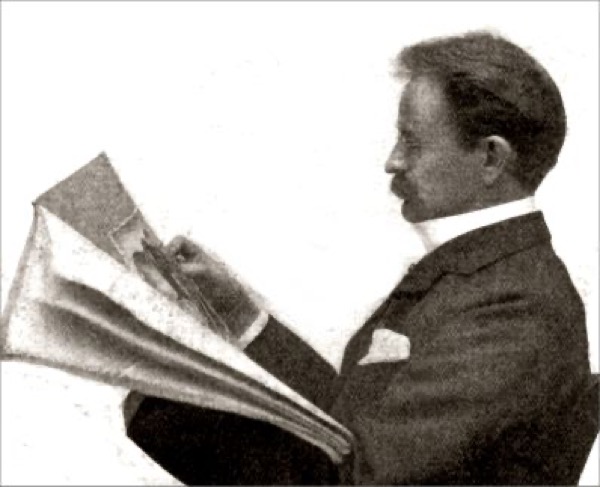
Augustus J. Jaeger
The two first met in late 1897, and their correspondence grew over time. Jaeger took a particular interest in Elgar’s music, offered practical advice, and was not afraid to criticise. This interaction and encouragement became invaluable to Elgar.
This was especially true in the 1890s, when Elgar struggled to establish himself as a composer. Jaeger encouraged him to persevere, and he helped promote Elgar’s compositions. He also prompted the composer to rework some important musical passages, including the finale of his Enigma Variations, and the climax of The Dream of Gerontius.
In an 1898 letter to Jaeger, written while Elgar was composing the Enigma Variations, the composer made their relationship clear. Explaining that he was writing musical portraits of his friends, he added, “you are Nimrod.”
Friendship becomes Remembrance
“Nimrod” might well be among the most purely beautiful orchestral music ever created. The unusually expansive melody unfolds in long phrases of swelling dynamics and gradually builds to an emotional climax.
The melody floats on a cushion of plush harmonies that flow impossibly slowly, as if time itself had stopped completely. We acutely sense the moments of dissonance, but they resolve quickly and intensify the sense of emotional relief.
Elgar composed this variation as a musical tribute to his friend, their friendship and Jaeger’s artistic encouragement. Yet it gradually became one of Britain’s most familiar pieces of commemorative music.
Enduring Power of Remembrance
The First World War profoundly changed Britain’s musical and cultural landscape, and the country needed new ways of expressing collective grief. The Cenotaph in Whitehall became the physical focal point of national remembrance.
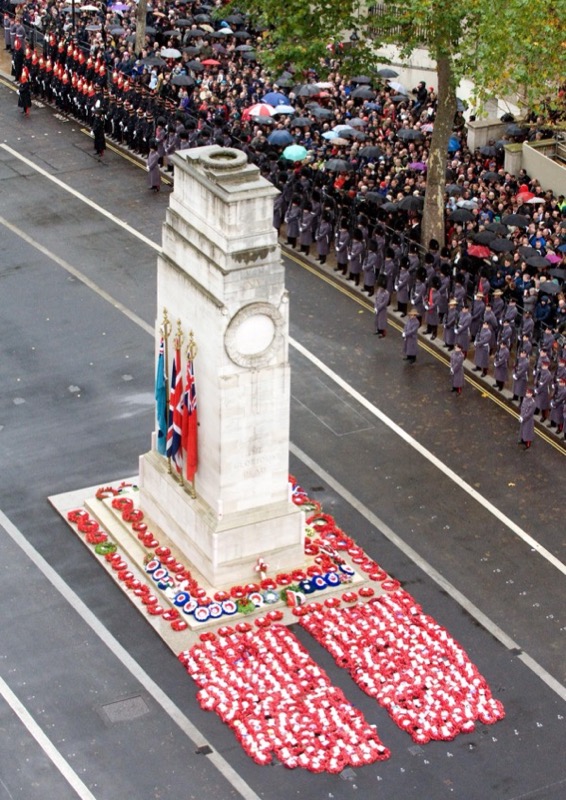
The Cenotaph, Whitehall, London, following the Remembrance Day Parade in 2010 © MOD
“Nimrod” became associated with this emerging culture of remembrance, as the music lends itself to expressions of public mourning. It’s clearly not religious and implies no physical movement. Rather, it creates an atmosphere of dignity and reflection.
Later, the music entered other national ceremonies and memorial occasions, including the funerals of Diana, Princess of Wales, and Prince Philip.
Originally, it represented music in memory of one person, but it later became associated with a nation remembering those who made the ultimate sacrifice.
For more of the best in classical music, sign up for our E-Newsletter