Beethoven is often thought of as a piano god who descended from on high to write some of the most memorable piano music ever written.
However, Beethoven was very human, and the pianists around him shaped him in important ways.
One wrote a treatise on keyboard playing, never knowing a figure as influential as Beethoven would someday pore over it; another taught the budding composer counterpoint; another arranged to buy the British rights to Beethoven’s music; and another pushed to have a new kind of piano built, fit for the virtuosity of the 19th century that Beethoven would help usher in.
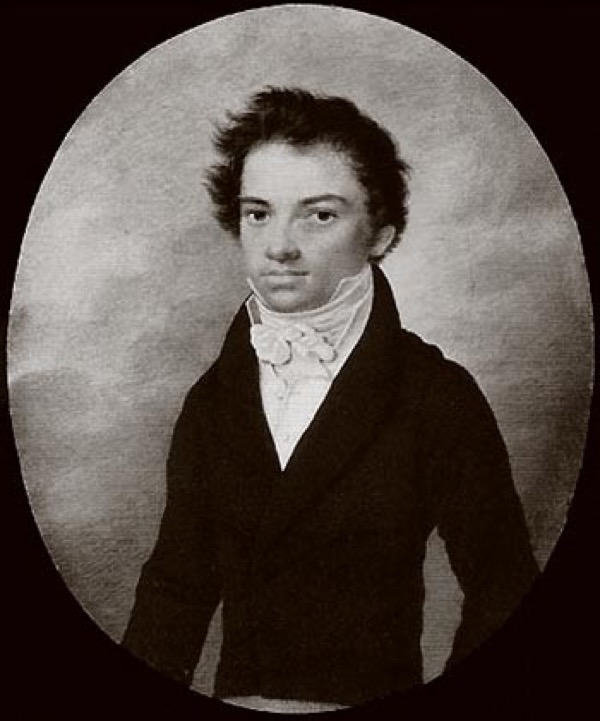
Beethoven (1788)
Today we’re looking at the stories of four keyboard legends and how their playing left fingerprints on Beethoven’s.
Carl Philipp Emanuel Bach (1714–1788)
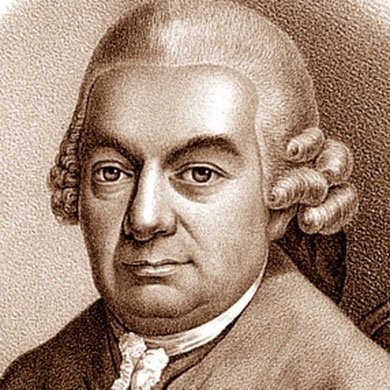
Carl Philipp Emanuel Bach
Carl Philipp Emanuel Bach, Johann Sebastian Bach’s second surviving son, was born 56 years before Beethoven.
His first teacher was his father, and he ultimately joined the family business. He worked at the court of Frederick the Great in Berlin, then became Kapellmeister in Hamburg, where he would live until he died in 1788.
C. P. E. Bach – Keyboard Concerto in D major
C. P. E. Bach’s music was famous for employing two distinct 18th-century trends.
One was Empfindsamkeit, or the “Age of Sensibility.” Music written in this style was tender and wistful, often emphasising thoughtful adagios.
The other trend would later be dubbed the Sturm und Drang (“Storm and Stress”) style, featuring epic, passionate outbursts and declarations.
Both styles were famous for their mercurial mood changes and emotional expressivity: traits that Beethoven would come to embrace in his own piano writing.
Beethoven never met Carl Philipp Emanuel, who died when Beethoven was 17, and in any case, Beethoven never travelled to Hamburg.
But as a young man, Beethoven did study C. P. E. Bach’s influential treatise, Essay on the True Art of Playing Keyboard Instruments.
He even used it to teach his own students, including Carl Czerny, who went on to teach several of the 19th century’s greatest pianists and piano teachers.
Christian Gottlob Neefe (1748–1798)
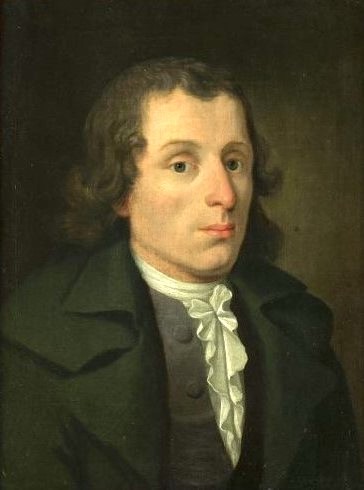
Christian Gottlob Neefe
Christian Gottlob Neefe was born in 1748 in Chemnitz, in Saxony, 22 years before Beethoven.
He worked as a composer and music director in Leipzig and Dresden before settling in Bonn in 1779, where he became court organist in 1781.
One of his new colleagues, an alcoholic singer and violinist named Johann, had a prodigiously talented young son named Ludwig. Neefe began teaching the little boy piano, and the rest is history.
Neefe didn’t necessarily impact Beethoven’s style; his works are not particularly explosive or innovative. However, they are satisfying and well-crafted, and he gave the young Beethoven the solid technique that later pianistic innovations would require.
When Beethoven was around 11, Neefe assigned him Johann Sebastian Bach’s famous Well-Tempered Clavier. Together, teacher and student studied Bach’s peerless preludes and furious fugues: studies that Beethoven would remember and build on for the rest of his life.
Neefe also encouraged Beethoven to compose and even helped publish some of his works when he was still a teenager.
Muzio Clementi (1752–1832)
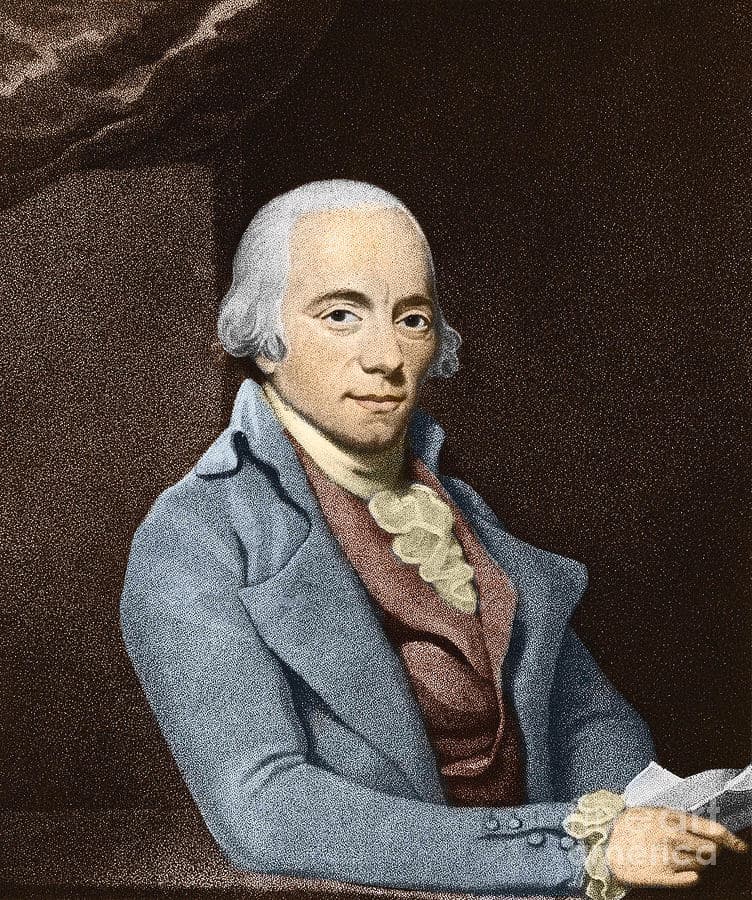
Muzio Clementi
Muzio Clementi was born in 1752 in Rome and began studying music at an early age.
When he was 14, a visiting English aristocrat offered to pay for Clementi’s education in exchange for providing seven years of musical entertainment at his home. Clementi accepted and followed him to Britain.
After his service ended, Clementi worked in London, which became his home base between major tours of European capitals.
In 1781, he participated in a famous keyboard duel with Mozart before Emperor Joseph II in Vienna. (Clementi held his own; the Emperor declared a tie.)
Clementi’s Sonata No. 5 in F-sharp minor
Clementi’s keyboard sonatas were hugely popular and influential in Europe when Beethoven was young. He was one of the first major talents to embrace writing specifically for the modern piano, rather than the nebulous “keyboard”, which could be anything from a harpsichord to a clavichord.
Beethoven would follow Clementi’s example, devoting himself to pushing new instruments to their physical and expressive limits. He was also delighted by Clementi’s virtuoso passagework and sense of theatrical drama: two elements that appear regularly in his own work.
In 1807, Clementi came to Vienna on tour, and the two greats met. While in town, Clementi negotiated the rights to publish many of Beethoven’s compositions in England: a moving vote of confidence from one of the pianists who had most inspired him.
Jan Ladislav Dussek (1760–1812)
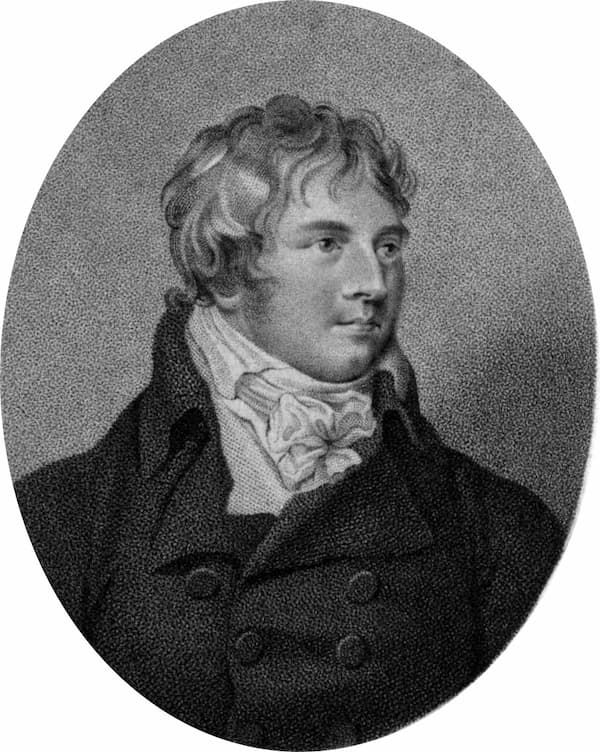
Johann Ladislaus Dussek
Jan Ladislav Dussek was born in Bohemia to a musical family in 1760, a decade before Beethoven.
He studied with Carl Philipp Emanuel Bach in Hamburg, then toured extensively through Europe before settling in London, where he became one of the city’s leading musical lights.
Like Clementi (and Beethoven), Dussek was fascinated by pushing the piano’s limits. In London, he provided feedback to piano manufacturer John Broadwood. In 1794, after Broadwood built its first piano with a six-octave keyboard, Dussek immediately began playing it.
Jan Ladislav Dussek: Piano Concerto in G Minor, Op. 49 (Howard Shelley, piano; Ulster Orchestra; Howard Shelley, cond.)
Not many piano concertos remain in the canon from around the time of Beethoven’s, including Dussek’s, but Dussek’s are remarkably similar in thrust and drama to Beethoven’s. He employs the same epic, extroverted virtuosity of Beethoven’s final piano concertos, revelling in dramatic dynamic contrasts and thrillingly full orchestral textures.
We don’t know whether Beethoven and Dussek ever met, or what they knew of each other’s music. However, both wrote piano sonatas in E-flat major subtitled Les Adieux, roughly a decade apart: an odd coincidence and intriguing musical trivia.
Jan Ladislav Dussek: Piano Sonata in E-Flat Major, Op. 44, “The Farewell” (Alexei Lubimov, fortepiano)
Ludwig van Beethoven: Piano Sonata No. 26 in E-Flat Major, Op. 81a, “Les adieux” (Ethella Chuprik, piano)
However, the most concrete connection between the two men is undoubtedly Broadwood.
Beethoven loved Broadwood pianos. In 1817, Thomas Broadwood, John’s son, gifted Beethoven the six-octave instrument that Dussek had pushed for twenty years earlier.
Although Beethoven’s deafness was near total by then, he was delighted by the piano, and it helped inspire his transcendent late sonatas. Dussek had been dead for five years and would never hear them.
Conclusion
None of these four men wrote a note of Beethoven’s music for him, but each shaped how he wrote it.
These pianists who influenced Beethoven (and his writing) helped to pave the way for the modern piano – and therefore, the musical revolution that Beethoven would launch with it.
For more of the best in classical music, sign up for our E-Newsletter