Having just celebrated her seventeenth birthday, Laura began playing piano at three and composing at seven. At ten, her first composition won awards in Toronto and Milan. She has since released two albums and created dozens of piano and organ works, earning many international awards. Fittingly, she appeared in a BBC documentary about Mozart and has performed at Salzburg’s Mozarteum and Vienna’s Musikverein, wearing costumes of her own design.
Driven by her wish to “bring as much joy to people as possible” and “create something lasting for future generations”, Laura has recently launched a cultural peace initiative, The Code of Harmony. Beyond a sold-out charity organ concert in Bratislava supporting orphans in Transcarpathia, she has released the short musical film Begging for Peace, with a festival edition titled Prayer for Peace in development. We asked her why musical creativity and social purpose are so essential in her artistic vision.
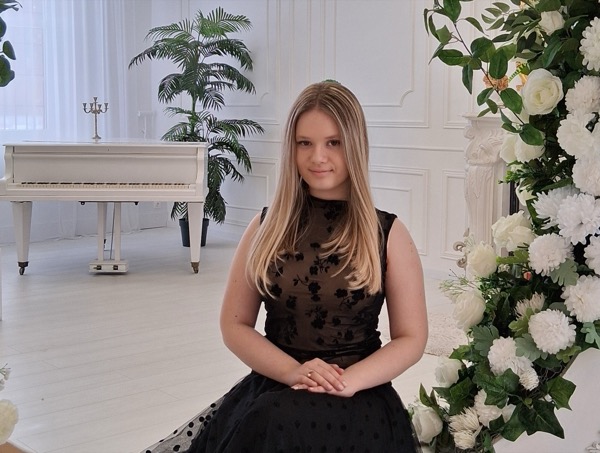
Laura Vitez
Why does organ music attract you?
I started piano very early on, and to this day, it remains my true musical foundation, my primary instrument, and the source from which all my inner melodies and creative energies flow. However, when I first played the organ, a completely new and vast universe opened up before me. For me, the organ is not just another instrument; it is an extraordinary musical machine that carries the sheer power and energy of an entire symphonic orchestra all by itself. When I sit at the manuals and pedals, I feel I can create monumental spaces out of pure air and sound.
Historical and sacred spaces, such as the Franciscan Church in Bratislava or the St. Henry’s Church in the centre of Prague, where I recently performed, bring a truly special, elevated energy. In these historic venues, music undergoes a profound transformation. My composition process is intuitive: I sit down at the instrument, let the silence within me transform, and bring my pieces to life by trusting my instincts. I always create this way because, for me, music is a real bridge between heaven and earth, capable of connecting people and souls instantly, without barriers.
Laura Vitez’s Organ Concert: The Code of Harmony
Which composers have influenced you the most?
Rather than copying a specific style, I focus on developing my own authentic voice. At the same time, I am deeply inspired by pioneering geniuses—the musical visions of Beethoven, Chopin, and Hans Zimmer. They serve as timeless reference points as I walk my own path.
Among them, Wolfgang Amadeus Mozart holds a fateful place in my life. Ever since I was very little, just starting to play the piano and compose, I had a massive, defining childhood dream. At seven years old, my ultimate wish was to visit Salzburg and see Mozart’s birthplace with my own eyes. Fate and hard work eventually led me back to Salzburg: I was 13 when, for my very first international performance, I stepped onto the stage of the Salzburg Mozarteum and connected with the audience with my own compositions.
A year later, I received an invitation from the BBC. I was cast to play Mozart’s student in the docudrama film about the composer’s life. Standing in front of the cameras and becoming part of such a global production felt almost indescribable. I believe these moments are not coincidences. Mozart’s genius, the drama of Beethoven and Chopin, and Hans Zimmer’s modern, cinematic world all resonate within me whenever I sit down at my instrument.
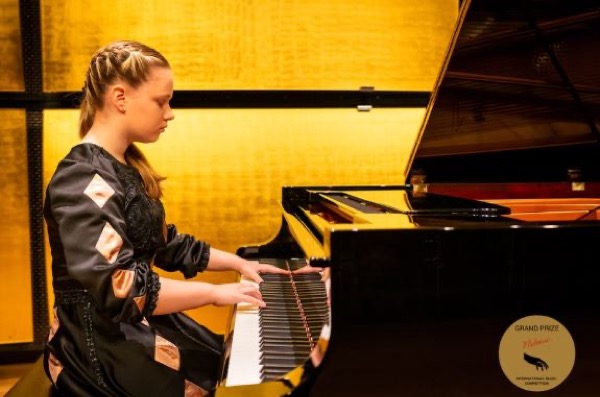
Laura Vitez at Vienna’s Musikverein
Can you talk about your album Fly Free?
Fly Free is the title track of my first independent solo piano album. I was exactly 12 years old when I composed this piece. At that age, I feel my creative energy is still pure and instinctive; that’s why Fly Free embodies limitless freedom and the soaring of the creative soul. I didn’t plan anything—I allowed the deepest melodies within me to be born free on the piano keys.
Working in a studio on this album, alongside excellent musicians and producers, was a massive and defining professional milestone for me. Seeing my melodies come to life was indescribable. This piece is my personal, living proof that if you stay true to your inner vision, no physical or mental barrier can ever limit your creativity and your dreams.
Laura Vitez’s album Fly Free
Why do the themes of war and peace, revolutions, and heroes deeply touch you?
I have always been deeply affected by world events. Themes of war, peace, heroes, or revolutions fought for freedom stir powerful energies within me because behind them lie real human destinies, tragedies, and uplifting moments. I believe a modern artist has a duty to address these questions and give voice to emotions many cannot put into words.
This inner drive led me to launch my international project, The Code of Harmony, and the same philosophy brought my musical short film, Begging for Peace, to life. For me, music represents pure freedom, fulfillment, and self-expression. When I held my charity concert at the Franciscan Church in Bratislava, I donated the entire proceeds of the sold-out event to support orphans in Transcarpathia. I truly believe art can build a bridge between human hearts, and music is a universal language without borders that reaches people’s hearts directly and on a deeper level.
Laura Vitez’s film: Begging for Peace
What inspired you to write your own Four Seasons?
Antonio Vivaldi’s Four Seasons is an extraordinary cornerstone of music history. I have always been fascinated by how classical music captures nature’s eternal cycle of change, decay, and rebirth. My inspiration for Four Seasons Fantasy came from the feeling that our 21st-century world and younger generation deserved their own interpretation of this timeless masterpiece.
I wanted to express how a young girl today experiences the changing seasons, both in nature and within herself. The result is a bold reimagining that blends classical foundations and Vivaldi’s spirit with monumental cinematic sounds and modern storytelling. Reinterpreting such an iconic work requires courage, but I believe it is our generation’s responsibility to make its timeless beauty resonate with contemporary audiences.
Can you share with us your interest in fashion design? You also enjoy singing, don’t you?
Singing was my first musical experience; I was singing at three or four years old, and for a few years after that, I pursued it seriously. My singing voice was the tool through which I expressed the melodies within me, well before the world of instruments captivated me. Building upon this foundation, I won my first international singing competition. This early success gave me the faith and momentum to keep going, laying the groundwork for my career today.
Laura Vitez sings André Rieu’s Mio Angelo
My passion for fashion design also stems from an early, inner experience, and the sketches in my design album have grown into a serious, professional haute couture reality. In this visual universe, the boldness, timeless elegance, and revolutionary vision of Coco Chanel serve as my greatest sources of inspiration. For me, fashion and music represent two completely separate, independent worlds. When I sit at the piano and play, only the sounds exist, and when I sketch dresses, only the shapes matter. Both worlds deserve my full, maximum attention.
Today, at my most important international concerts and in my own multidisciplinary short film, I step out before the audience in unique evening gowns that I designed myself. This completes my art, best encapsulated by my personal motto: “The piano is the echo of my soul, music is my freedom, and my clothes are my presence.”
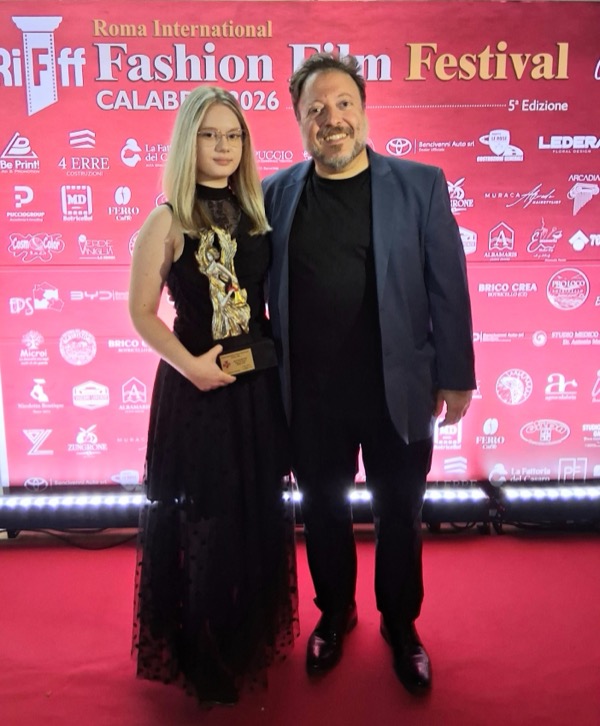
Laura Vitez won Best Fashion Film at the 5th Roma International Fashion Film Festival.
Follow Laura’s latest work at https://www.lauravitez.com/en
For more of the best in classical music, sign up for our E-Newsletter