Camille Saint-Saëns, born on 9 October 1835, was one of the greatest child prodigies in music, and Franz Liszt famously called him the world’s greatest organist. However, he was also a composer, pianist, conductor, expert in ancient music, playwright, poet, philosopher, caricaturist, mathematician, botanist, astronomer, and archaeologist.
There seemed to be nothing Saint-Saëns could not accomplish, and Hector Berlioz quipped, “He knows everything, but lacks inexperience.”
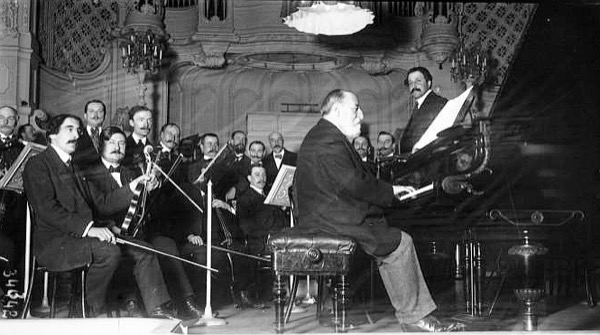
Camille Saint-Saëns, Salle Gaveau, Paris, 1913
Saint-Saëns was certainly aware of the old legend that on certain nights of the year, skeletons of the dead rise from their graves at midnight and dance until morning, with Death himself playing the fiddle. To celebrate his birthday, and as Halloween approaches, let’s listen to one of his absolute masterpieces: the Danse macabre.
Camille Saint-Saëns: Danse macabre, Op. 40
Before the Skeletons Danced
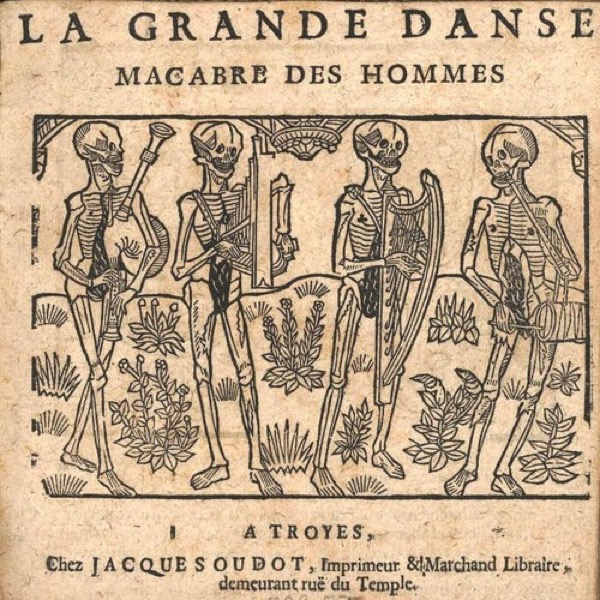
Danse Macabre
While most of us are familiar with the rousing symphonic poem for orchestra, Danse macabre, composed in 1874, Saint-Saëns began his exploration of the supernatural with an art song for voice and piano to a French text by the poet Henri Cazalis, written in 1872.
The poem’s backdrop describes a lustful couple appearing among the skeletons. The woman is said to be a marquise or baroness, and her partner a poor cartwright, with the dance of death erasing the social distinction.
Zig, zig, zig, Death in a cadence,
Striking with his heel a tomb,
Death at midnight plays a dance-tune,
Zig, zig, zig, on his violinThe winter wind blows and the night is dark;
Moans are heard in the linden trees.
Through the gloom, with skeletons pass,
Running and leaping in their shrouds.Zig, zig, zig, each one is frisking,
The bones of the dancers are heard to crack,
But hist! all of a sudden they quit the round,
They push forward, they fly; the cock has crowed.
The poem is structured as a strophic song, and the phrase “Zig et zig et zig” separates the poem’s sections. The final stanza revisits the theme of death’s finality, a concept that Saint-Saëns reflects musically through close attention to the text.
He departs from the familiar “Danse macabre” dance motif and sets two lines of verse to a single, sustained note. The piano accompaniment mirrors this.
Camille Saint-Saëns: Danse macabre (version for voice and piano) (François Le Roux, baritone; Graham Johnson, piano)
When Death Tunes His Fiddle
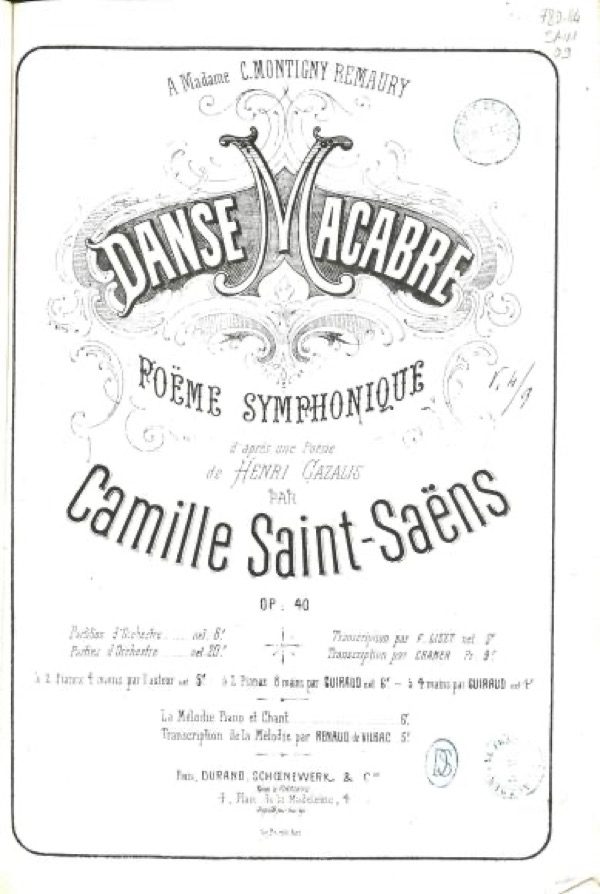
Danse macabre, Camille Saint-Saëns
A couple of years later, Saint-Saëns expanded on the concept and composed his well-known symphonic poem for orchestra, replacing the vocal line with a solo violin part. First performed on 24 January 1875, the work received a cool critical reaction.
Audiences did not take a shine to the deformed Dies irae plainsong, the horrible screeching from the violin, or the use of a xylophone and hypnotic repetitions. Yet in Saint-Saëns’ wonderful imagination, he gives us an image with an almost comic touch.
The concertmaster is asked to play on a deliberately mistuned violin, tuning the E string down a half step. It opens with the sound of a distant church bell striking the midnight hour.
Death then aggressively tunes his fiddle without ever getting it quite right, and the dead quickly rise and begin dancing. The xylophone portrays rattling bones, and eventually the ancient “Dies Irae” chant emerges.
Here, Saint-Saëns recasts the melody as a waltz, and the frenzied activity ends with the crowing cock in the oboe. The party runs its course, and Death plays a final mournful tune on his fiddle.
Camille Saint-Saëns: Danse macabre (trans. Franz Liszt)
Liszt Joins the Dance
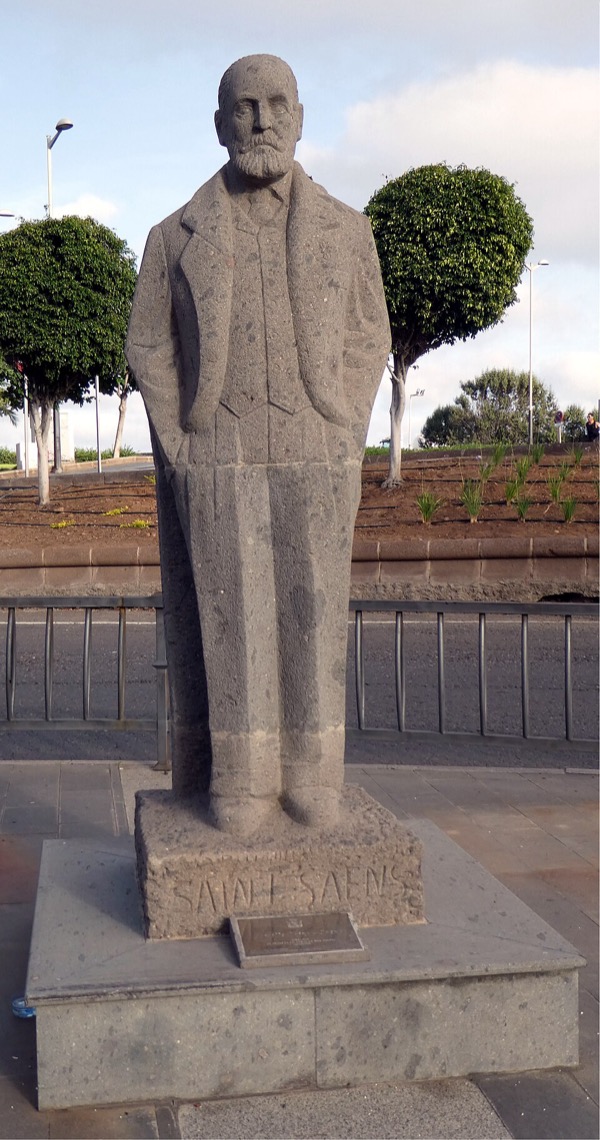
Saint-Saëns, Las Palmas, 2022
Franz Liszt thought highly of Camille Saint-Saëns and considered him the ablest and most gifted among contemporary composers. Long before Saint-Saëns’ Danse macabre, Liszt had worked on his own Totentanz (Dance of Death). This work for piano and orchestra began around 1847 and, after several revisions, was published in 1865.
Once Saint-Saëns’ orchestral Danse macabre became available, Liszt transcribed it for piano. His intricate reworking captures the orchestral richness of the original composition, and plenty of virtuosic passages and dynamic contrasts evoke the chilling atmosphere.
Henri Cramer and Théodore Ritter also fashioned additional piano solo transcriptions, and Ernest Guiraud produced a two-piano four-hand and two-piano eight-hand version. By then, the Danse macabre had become a mega-hit, and Saint-Saëns himself produced his own two-piano arrangement.
He also made a violin-and-piano version, and Vladimir Horowitz substantially reworked the Liszt version in 1942. The Danse macabre has taken on a life of its own and squarely established itself in popular culture today.
For more of the best in classical music, sign up for our E-Newsletter