I learned ensemble playing through the euphonium. At Xinghai Conservatory of Music, breath, intonation and rhythm were daily disciplines, but the larger lesson was how to place one sound inside many others. A euphonium line can support the bass, answer another section or rise briefly to the surface. Its role changes from bar to bar, so listening is never separate from playing.
Chinese instrumental music entered my life much earlier. I began learning the guzheng at five in Guangdong and later took up the sheng. For years, these experiences occupied different parts of my musical life. One belonged to conservatoire brass training and wind ensembles; the other carried the phrasing, ornamentation, and sound world of the Chinese music I had grown up around. Working in Britain has brought them into the same room.
Moving between euphonium and sheng has made me more alert to what musicians assume when we read a score together. We may agree on pitch and rhythm while hearing the shape of a note quite differently. Rehearsal becomes the place where those differences turn into sound and where one instrumental tradition can sharpen the ear for another.
Learning to Listen Twice
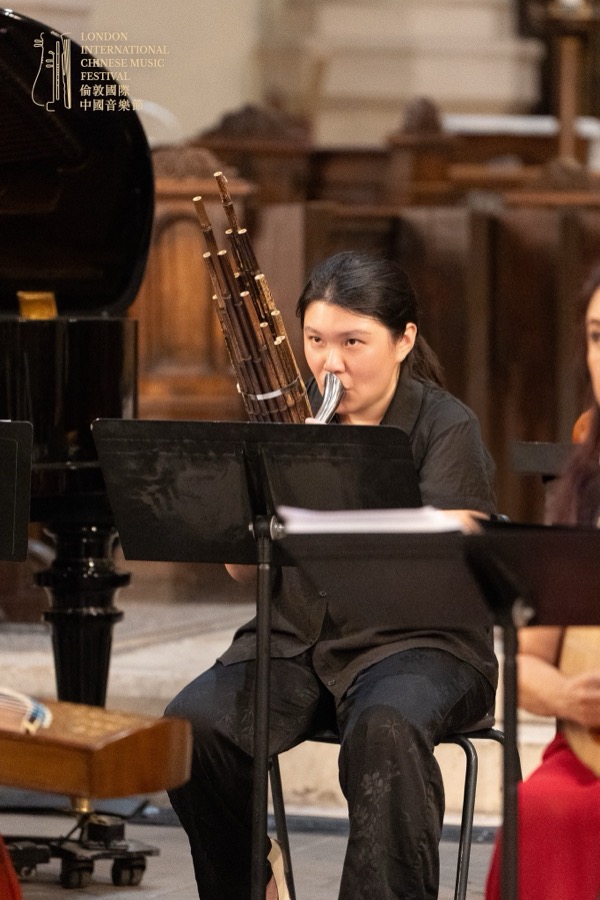
Julia Luo
The sheng is a Chinese free-reed mouth organ. On my 17-reed instrument, several pitches can sound together, and the player can produce sound while breathing in as well as out. This creates possibilities that feel very different from the long, outward air stream of a brass instrument. Chords, sustained notes and melodic fragments can sit close together, and the physical layout of the pipes influences how a gesture lies under the hands.
Yet the two instruments are not as distant as they first appear. Both demand precise control of air, attack, pitch and colour. On euphonium, a slight change of embouchure or air speed can alter the centre of a note. On sheng, the beginning of a note, the pressure of the breath and the movement into an ornament can change the phrase just as decisively. Much of this knowledge is physical. A player learns it through repetition, demonstration and close listening, not through notation alone.
That became especially clear when I began rehearsing contemporary works in London. Composers can write carefully for an instrument and still leave productive questions for the performer. How quickly should a small slide move? How strongly should an ornament lean towards its destination? Should a sustained pitch remain completely stable, or should its colour shift with the breath? These are small decisions, but they determine whether a line sounds idiomatic or merely correct.
What Notation Leaves Open
A score is not incomplete because it cannot prescribe every physical detail. Notation gives musicians a shared structure, but performance depends on knowledge that is harder to put on the page. This is true in both of my instrumental traditions. A brass player reads a dynamic marking through the resistance of the instrument, the register and the surrounding texture. A sheng player reads an ornament through the instrument’s construction, the musical style and the direction of the phrase.
The difference is most audible in gestures that move around a pitch. A printed note can look like a fixed point, while the route into it carries part of its identity. The speed and weight of a slide can suggest speech, song or instrumental gesture. If the movement is treated as decoration added after the note, the phrase may lose its character. I have become increasingly interested in this space between the symbol and the sound it is meant to produce.
My brass background helps me approach that space without treating it as mysterious. In a wind ensemble, musicians constantly adjust balance, articulation and intonation in response to what they hear. The same habit is useful when a Chinese instrument enters a contemporary ensemble: test the written idea in sound, listen across the group and decide what the phrase needs.
Curve in the Rehearsal Room
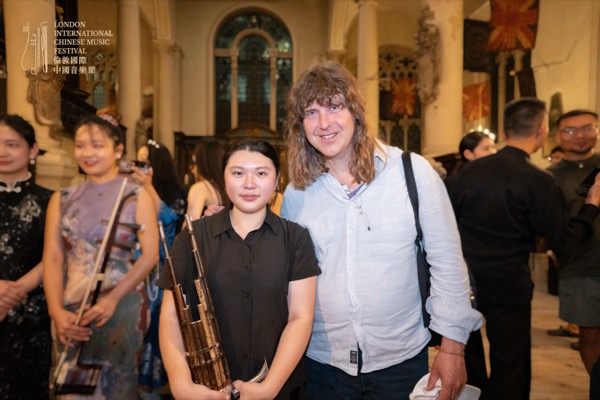
Julia with Michael Ellison
In August 2026, I performed in the UK premiere of Michael Ellison’s Curve at the gala concert of the Fourth London International Chinese Music Festival at Holy Sepulchre London. The work placed Chinese instruments within a contemporary compositional setting, and Ellison was present during rehearsal. That gave us a direct way to examine the distance between an instruction on the page and the sound produced by the instruments.
A marking could be played, heard and reconsidered immediately. An ornament could be demonstrated instead of explained in abstract terms. Questions about articulation and colour became practical as soon as they reached the instrument. The score remained our common reference, while the sheng and the other Chinese instruments supplied information through their response: which gestures spoke naturally, where the balance became crowded and how a small change of timing altered the character of a phrase.
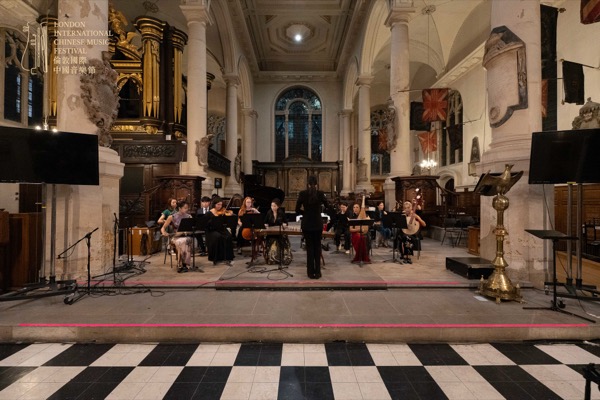
I found myself drawing on both sides of my training. Conservatoire brass playing had taught me to read the architecture of a score and to understand my function inside an ensemble. My experience with Chinese instruments helped me hear when a written gesture needed the kind of detail that players often carry by ear and by touch. The useful part was not choosing between two systems. It was being able to move between them during rehearsal.
By the concert, these discussions were no longer visible. The audience heard the result rather than the negotiation that produced it. For me, however, that process was the most revealing part of the work. It showed how cross-cultural collaboration happens through specific musical decisions: one attack, one breath and one phrase at a time.
Listening Across Traditions
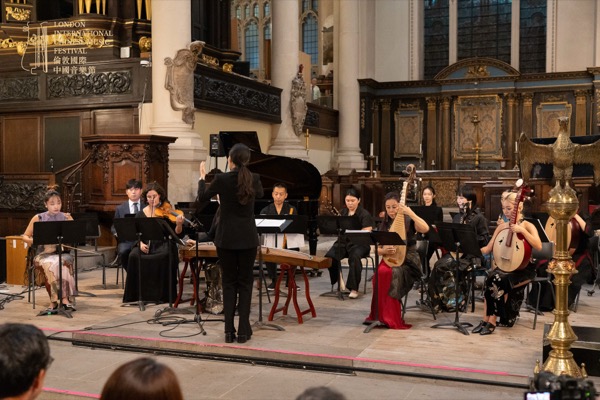
I joined UK Chinese Music as a sheng performer in August 2026, taking part in large Chinese instrumental ensembles as well as contemporary repertoire. This work has not replaced my life as a euphonium player. Years in wind bands and orchestras still shape how I listen for balance, blend and structure. The sheng has added another way of understanding breath, line and the expressive detail around a written pitch.
As I continue developing my practice in Britain, I want to bring the sheng into contemporary composition, chamber music and ensembles where Chinese and Western instruments can meet on equal musical terms. The instrument’s long history matters, but history does not confine its voice. Each new rehearsal asks what the sheng can contribute to the music in front of us.
Moving between these instruments has taught me that listening across traditions begins with attention rather than a grand theory of East and West. The most useful questions are often close to the sound itself. Where does the note begin? What happens inside the breath? What does the instrument know that the page cannot quite say?
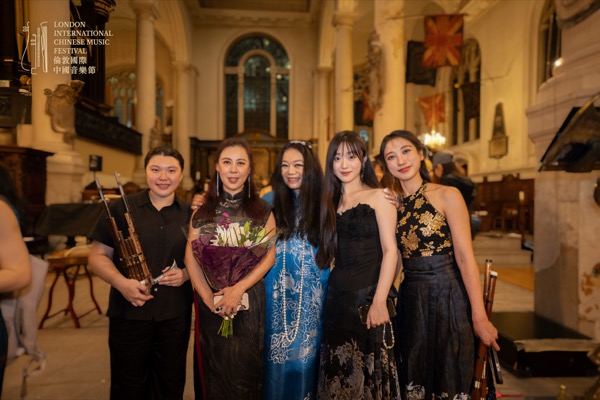
Julia Luo is a London-based musician whose practice spans sheng and euphonium. She trained at Xinghai Conservatory of Music and holds an MMus in Music Education and a PGCE with QTS from UK universities.
For more of the best in classical music, sign up for our E-Newsletter