The Danish tenor Aksel Schiøtz (1906–1975) is probably a name unfamiliar to most today, not least because this musician, whose career was repeatedly disrupted by misfortune, enjoyed a true “solo career” of perhaps less than ten years—possibly considerably less.
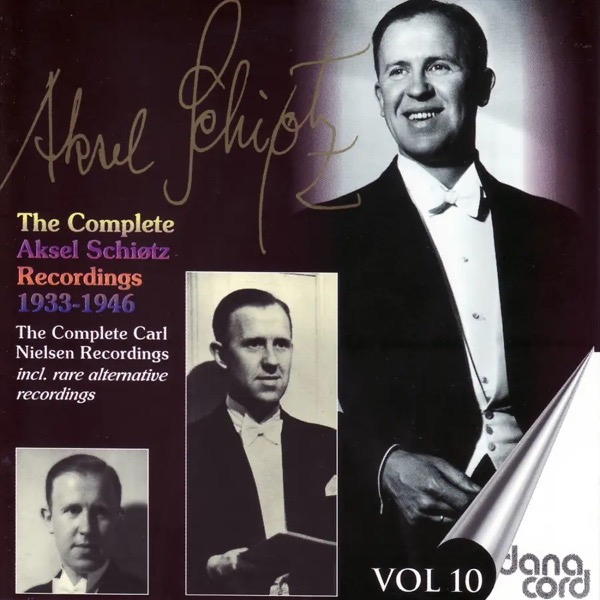
Aksel Schiøtz: Danske Sange, Vol. 1
In 1938, Schiøtz was discovered by HMV in London and began making records, through which his reputation steadily grew. The outbreak of the Second World War and the German occupation of Denmark, however, brought his international development to a halt. After the war, Schiøtz quickly returned to the British musical scene, making a series of new recordings with distinguished collaborators such as Gerald Moore and appearing at the Glyndebourne Festival. Yet in 1946 he underwent surgery for a tumour acousticus, which almost terminated his career. Although he later returned to the stage as a baritone, by then his career as a major soloist had, inevitably, effectively come to an end.
Schiøtz left a substantial recorded legacy from the 78-rpm era. Danacord, the Danish label well known for championing neglected repertoire against prevailing fashions, once assembled his complete recordings in a ten-volume edition. To my ears, the most fascinating hidden treasure in the series is found in the final volume: Schiøtz singing Carl Nielsen’s songs.
During the war years, Schiøtz’s reputation within Denmark rose considerably, due in large part to his recordings of Danish and other Nordic music, and Nielsen’s Danish-language songs in particular. Nielsen’s six symphonies are now frequently performed, while works such as the opera Maskarade and the Violin Concerto also appear regularly in concert programmes. His large body of songs, though genuinely popular at domestic level, remains comparatively neglected in the professional concert world—as is the case with the songs of many major composers. Their artistic ambitions may not always equal those of Nielsen’s acknowledged masterpieces, but they possess a distinctive charm of their own.
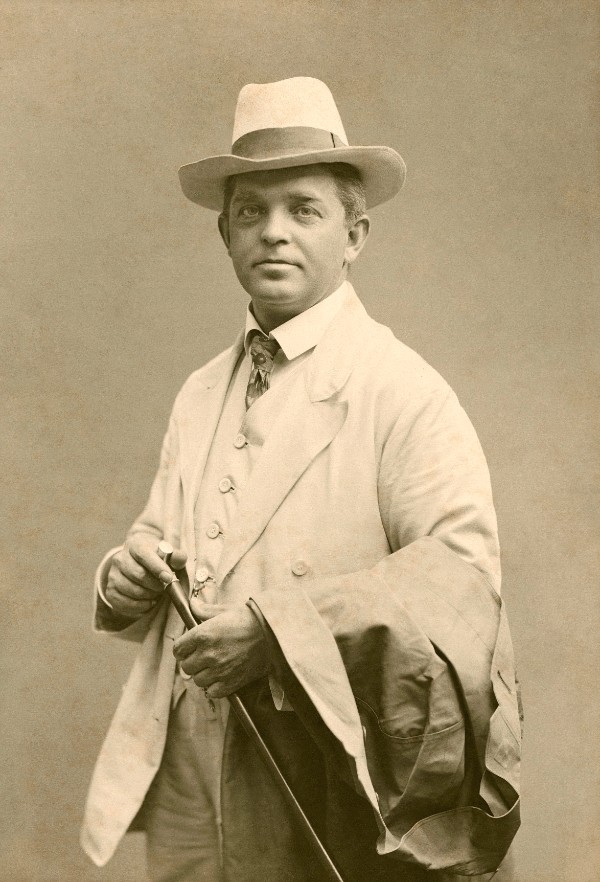
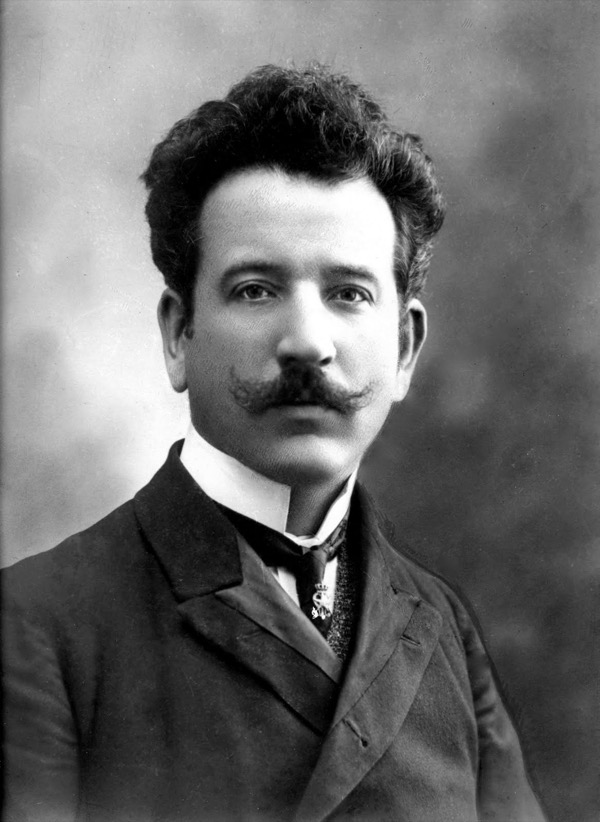
Georg Lindstrøm: Carl Nielsen carte de visite, ca 1908
Nielsen lived during the period associated with the so-called “Modern Breakthrough”, an era of extraordinary cultural flourishing in Denmark and, more broadly, across Scandinavia, when figures such as Kierkegaard, Andersen, Jacobsen and Thorvaldsen emerged, and Danish cultural confidence and national identity reached unprecedented heights. Nielsen’s songs in particular reveal his deep affection for his homeland. He himself composed an alternative setting of the Danish national anthem, and on this recording we hear several songs that directly praise Denmark or express overtly patriotic sentiments—passions that arose naturally from the particular historical circumstances of the age. Emotionally, some of these pieces can perhaps seem somewhat single-minded. Yet, Schiøtz carefully shapes the cumulative progression of each phrase, so that even a rhythmically straightforward hymn such as Hail to Denmark never sounds pallid or monotonous.
Like many composers with a strong national orientation, Nielsen wrote a great number of accessible “tunes” close to everyday life, and he even explicitly labelled a number of them “folk melodies”. Their subjects include farmers, sailors, hunters, workers and many other facets of ordinary society. Many are folk-like strophic songs, built from simple harmonies and recurring melodies. The most extreme example on this disc is Jens Vejmand (“Jens the Roadmender”), in which a folk-like tune is repeated no fewer than six times. With restrained and faintly ironic lightness, the song tells the tragic story of a labourer worked to death. In handling such repetition, Schiøtz finds ample variety of vocal colour while never allowing excessive interpretative refinement to obstruct the natural flow of the music or diminish the beauty of lyrical singing. This is precisely what such unpretentious music demands. In other strophic songs, such as Prinsesse Tove (“Princess Tove”) and Hjemve (“Homesickness”), Schiøtz’s sweet, slightly nasal lyric timbre is especially captivating in its expression of gentle melancholy.
Carl Nielsen: Strophic Songs, Op. 21, FS 42, Vol. 1: No. 3. Jens Vejmand: Hvem sidder der bag skaermen (Jens the Roadman. Who’s there behind the screen) (Aksel Schiøtz, tenor; Holger Lund-Christiansen, piano)
Elsewhere, however, we occasionally encounter the Nielsen who is more immediately familiar to modern listeners. Intriguingly, these technically more sophisticated “art songs” were in fact composed much earlier than many of the folk-like pieces. Irmelin Rose sets a poem by J. P. Jacobsen, a text also set by Zemlinsky and Delius. Nielsen’s version retains traces of folk song, yet subtle changes in the piano accompaniment mark the narrative progression from stanza to stanza, which Schiøtz responds to with corresponding dramatic inflexions. Another Jacobsen setting, Genrebillede (“Genre Picture”), reveals Nielsen’s acute sensitivity to language: he exploits differences in rhythmic duration between individual words to create tension. He invests melismatic phrases with concentrated emotional force, qualities that Schiøtz captures superbly.
Carl Nielsen: 5 Digte (5 Songs), Op. 4, FS 12: No. 4. Irmelin Rose (Aksel Schiøtz, tenor; Herman D. Koppel, piano)
The song I find most unforgettable is I Aften (“This Evening”), also the most harmonically complex work on the recording. Its persistent chromaticism, startling modulations and characteristically Nielsenian use of the subdominant create an unusually elusive and shifting palette of colour. Another song from roughly the same period, Sommersang (“Summer Song”), displays a similarly playful fascination with harmony. Schiøtz’s performances combine imagination with sheer vocal beauty, and they remain examples of song-singing worth hearing in any era.
Carl Nielsen: 6 Songs, Op. 10, FS 18: No. 5. I aften (This Eve) (Aksel Schiøtz, tenor)
Carl Nielsen: 6 Songs, Op. 10, FS 18: No. 3. Sommersang (Aksel Schiøtz, tenor)
For more of the best in classical music, sign up for our E-Newsletter