In the middle of Beethoven’s Pastoral Symphony, a sudden downpour creeps up on us during our pleasant day in the country.
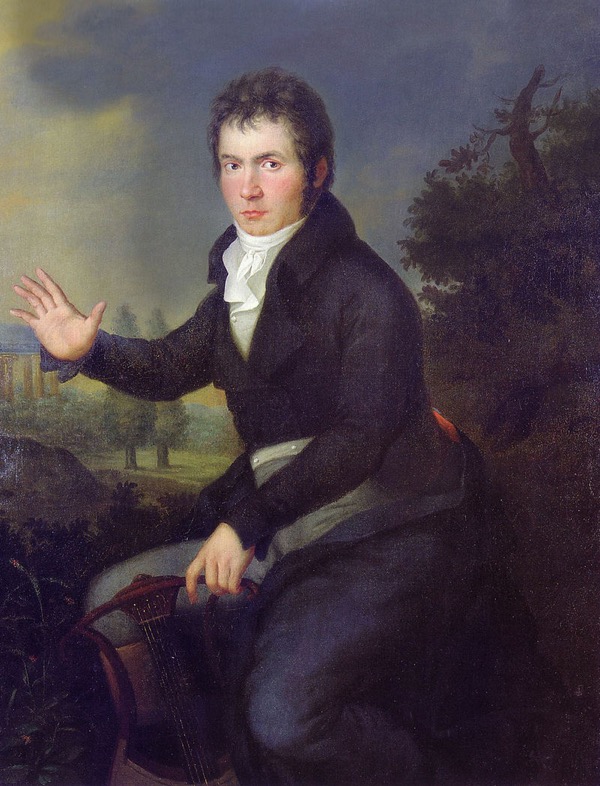
Joseph Willibrord Mähler: Beethoven, 1804 (Vienna Museum)
At first, we hear a hint of timpani – something is coming! Then, on little cat feet, the rain starts to pitter-patter, more thunder, then, all of a sudden, there’s lightning. The rain has gotten louder, and the thunder and lightning are continuous and all around. The drama grows; the rain and the wind battle it out over your head, and you wish you’d brought an umbrella and weren’t sitting under this lonely tree.
Beethoven’s Pastoral Symphony of 1808 was intended not as a tone painting but as an expression of feeling. It’s part of a long tradition of music inspired by the countryside, but it transcends a simple bucolic picture by creating a day-in-the-life picture. The problem with the word ‘Pastoral’ is that for many people, it conjures up the idea of Christmas and the shepherds. Beethoven wanted his audience to think of an idealised life – and this movement titles reveal this:
I. Pleasant, cheerful feelings aroused on approaching the countryside
II. Scene by the brook
III. Happy gathering of villagers
IV. Thunderstorm
V. Shepherd’s song. Thanks to the Almighty after the storm
From his first movement, he’s not painting the countryside, but rather how you feel about escaping the hot city for the coolness of the trees, the rolling hills spreading before you as you come via carriage. By the brook, we’re cooled and soothed by the sound (not the appearance of the waters). The villagers’ gathering is about happy dancing. We’re not given a dance to do, but we can imagine the kind of dancing that Beethoven’s music evokes for us. And so for the storm, which, by the way, he leads us into, it is purely about feeling. The thunder is over there, but who can see thunder? The rain is coming, but so lightly that you can’t see it either – you just have a feeling that a storm is about to break.
And break it does! And where are you? In the middle of it all – thunder to the left of you, thunder to the right of you, but still invisible. We can see the lightning, and can feel the rain, but the thunder, the noisiest part of the whole storm, remains invisible.
Then, at the end, there’s the feeling of emerging from something so big it encompassed your entire world, and now it was elsewhere. This is all about feelings, not pictures. At the end, all is calm.
For the final movement, the birds have returned (heard but not seen), and we are filled with a sense of gratitude.
In this one symphony, Beethoven changed the whole basis of the symphony as a genre: it could reflect the world around you but didn’t have to use any set picture to do it. He could arrange the feelings you had: happiness, calmness, togetherness, fear, and thankfulness into the five movements of his symphony and provide you with not only a successful symphony but also a successful feeling about a day in the country.
Ludwig van Beethoven: Symphony No. 6 in F Major, Op. 68 “Pastoral” – IV. Orage et tonnerre – Allegro
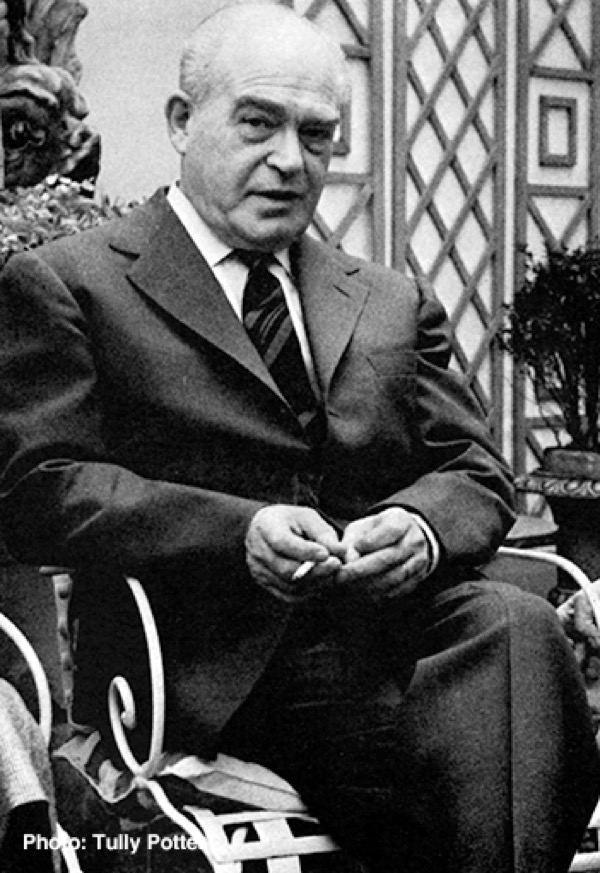
Paul Kletzki (photo by Tully Potter)
This was recorded in 1961 by the National Orchestra of the RTF under the direction of Paul Kletzki. Polish conductor Paul Kletzki (1900–1973) spent WWII avoiding the Nazis, leaving Berlin, where he had conducted the Berlin Philharmonic under the guidance of Wilhelm Furtwängler, and moving to Milan, Italy. Eventually he fled to Russia to escape Italian antisemitism. In 1946, he returned to Milan for the re-opening of La Scala, at the invitation of Toscanini; he eventually settled in Switzerland, becoming a Swiss citizen in 1949. He was known for his championing of the works of Gustav Mahler after the war. In 1954, he was appointed chief conductor of the Liverpool Philharmonic Orchestra, and in 1955, led the first recordings of the Israel Philharmonic Orchestra. From 1958 to 1961, he was principal conductor of the Dallas Symphony Orchestra and from 1967 to 1970, was the General Music Director of the Orchestre de la Suisse Romande. His death in 1973 came while he was conducting a rehearsal of the Liverpool Philharmonic.
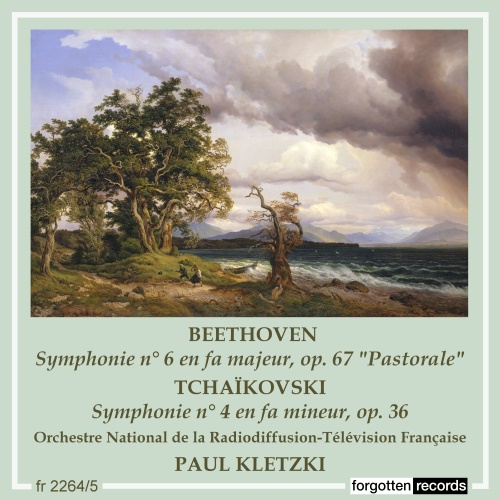
Performed by
Paul Kletzki
Orchestre National de la Radiodiffusion-Télévision Française
Recorded in 1961
Official Website
For more of the best in classical music, sign up for our E-Newsletter