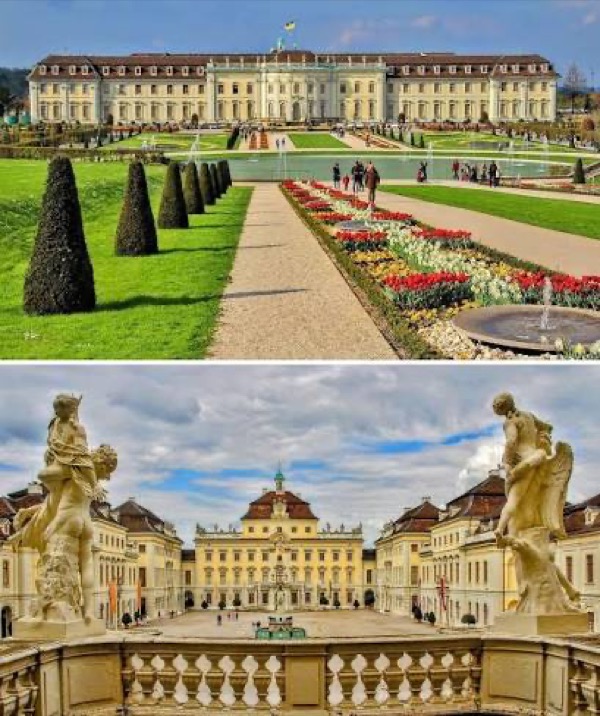
Residenzschloss Ludwigsburg
Imagine a theatre where the orchestra doesn’t just accompany but actively plots the drama. Where the sets literally explode, the dancers act out gory mythological murders between acts, and the leading lady ends the night by throwing herself into a blazing, onstage inferno.
Today, names like Mozart and Handel dominate our operatic imagination of the 18th century. But if you jumped into a time machine and asked a mid-18th-century music lover to name the absolute king of musical drama, they would answer without hesitation: Niccolò Jommelli. The legendary British historian Charles Burney called him “one of the most eminent masters now alive.” The poet Metastasio said his music could move anyone to tears.
For decades, Jommelli’s genius was buried in music history textbooks. But ever since a string of modern revivals kicked off in 1982, audiences have been rediscovering what the Enlightenment already knew. Jommelli was a cinematic visionary born two centuries too early. Nowhere is this clearer than in his 1763 masterpiece, Didone abbandonata (Dido Abandoned), a production that transformed a quiet German court into the most radical, thrilling opera hotspot in Europe.
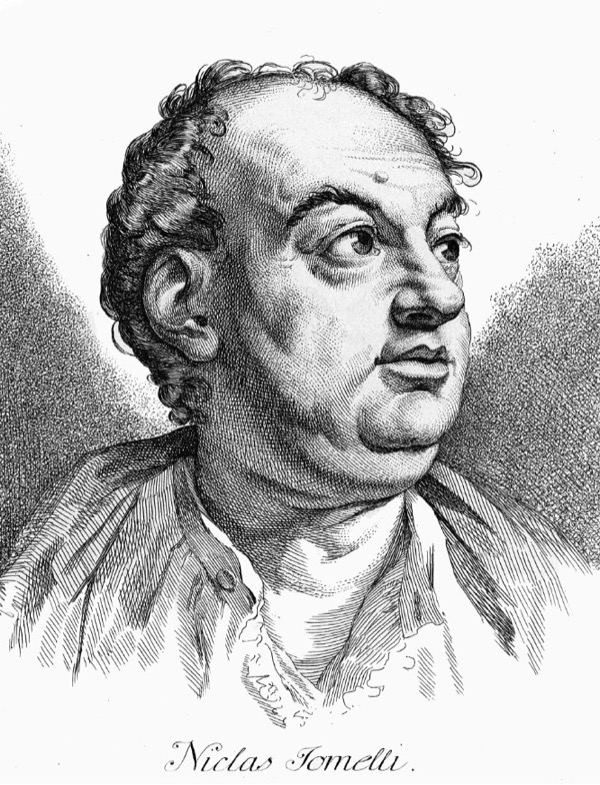
Niccolò Jommelli, by Johann Caspar Lavaters, 1775
The Ultimate Enlightenment Dream Team
To understand how Didone became such a blockbuster, you have to look at the money and the man behind the curtain. Duke Karl Eugen of Württemberg had a massive ego and an even bigger bank account. He wanted Stuttgart to rival Paris and Versailles. He loved Italian vocal fireworks, but he also craved French spectacle, massive choruses, and grand ballets.
The Duke gave Jommelli a blank check and absolute authority. In an era where opera productions were usually chaotic messes, Jommelli became the ultimate director-auteur. Jommelli gathered an international dream team. He hired Jean-Georges Noverre, the great French revolutionary of dance, to choreograph the show. He brought in Paris fashion icon Boquet for costumes, and the brilliant young architect Innocente Colomba to build mind-bending special effects. To sing the lead roles, Jommelli secured superstar vocalists like Maria Masi Giura and Giuseppe Aprile.
Then came the secret weapon: the Stuttgart orchestra. Jommelli built an ensemble famous across the continent for its discipline, precision, and sheer power. If you had a great orchestra, Jommelli believed you had to use it.
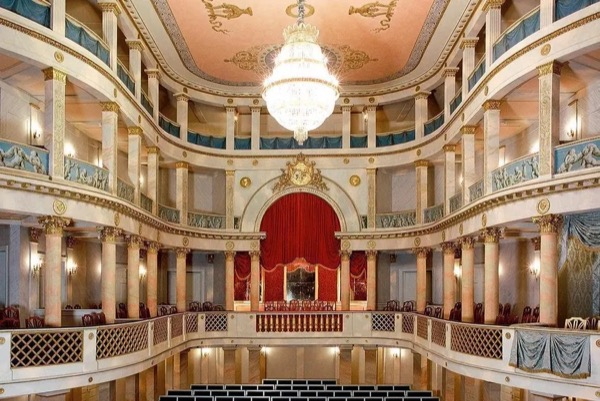
Schlosstheater Ludwigsburg
Rewriting the Rules of Engagement
The script for Didone came from Pietro Metastasio, the undisputed heavyweight champion of opera librettists. His words were elegant, and his formulas were strict. Normally, 18th-century Italian opera followed a rigid pattern: characters walk on stage, sing a bunch of speech-like dialogue with minimal harpsichord backing (simple recitative), pour their hearts out in a solo aria, and then immediately exit the stage to wait for their applause.
Jommelli and his edgy writer friend, Mattia Verazi, looked at these rules and decided to break them. They wanted a relentless, unbroken dramatic flow. To do this, Jommelli greatly modified the standard recitative. Instead of letting the characters speak over dry chords, he flooded the dialogue with the full power of the string section. This “accompanied recitative” allowed the orchestra to track every mood swing in real time. If Dido felt a sudden prick of jealousy, the violins would jab. If Aeneas felt torn by duty, the lower strings would groan.
Even wilder for the time, Jommelli blurred the lines between speech and song. He ditched the long, boring orchestral intros to arias. Instead, a character would be arguing in a heated recitative, and before the audience knew it, the music would seamlessly morph into an aria. The action never stopped.
Breaking the Exit Clause
The biggest shock for the traditional 18th-century audience came at the end of Acts One and Two. Opera etiquette demanded solo arias and clean exits. But Jommelli and Verazi wanted fireworks.
At the climax of Act Two, Verazi designed a brilliant diminishing ensemble. It starts as a high-stakes trio featuring Dido, Aeneas, and her rival suitor, Iarba. The music is a through-composed hurricane of anger and frustrated passion. Suddenly, Aeneas storms off. The trio instantly collapses into a venomous duet between the remaining two. Then, Iarba stomps out in a huff, leaving Dido completely alone on stage to scream her fury into the void. This wasn’t just a showcase for pretty voices. This was musical psychology. It mimicked the natural chaos of a real human argument.
Niccolò Jommelli: Didone abbandonata, Act II Scene 11: Infedel! Ti lascio: addio (Enea, Didone, Iarba) (Stuttgart Chamber Orchestra; Frieder Bernius, cond.)
A Symphony of Woodwinds and Wild Fire
If you were a wind player in Jommelli’s orchestra, you actually had a job to do. Before Jommelli, flutes and oboes mostly just doubled what the violins were playing. Jommelli treated them like independent characters.
In the showstopping aria A trionfar mi chiama, written for the star castrato Aprile, the solo oboes and horns duel with the singer in a breathtaking display of vocal and instrumental acrobatics. In the villain Iarba’s aria Fosca nube, the woodwinds roll in like a heavy storm, driving a massive, slow-building orchestral crescendo that terrified and thrilled contemporary audiences. Jommelli also decoupled the cellos and violas from the double basses, creating a dark, rich, and moody lower-string texture that grabbed listeners by the throat.
Niccolò Jommelli: Didone abbandonata, Act II Scene 5: Fosca nube il sol ricopra (Iarba) (Stuttgart Chamber Orchestra; Frieder Bernius, cond.)
Niccolò Jommelli: Didone abbandonata, Act III Scene 6: A trionfar mi chiama un bel desio d’onore (Enea) (Stuttgart Chamber Orchestra; Frieder Bernius, cond.)
All of this sonic world-building leads straight to the third act’s tragic finale. Metastasio’s Didone is famously the only libretto he wrote that ends in pure tragedy. There is no forced happy ending here.
As Rome calls Aeneas away, Carthage burns. Jommelli unleashes the full weight of his orchestra to paint the picture of a collapsing empire. Dido bounces between simple speech and orchestral madness as the flames close in on her palace. Finally, surrounded by betrayal, she leaps directly into the onstage fire. The curtain falls on a wave of orchestral smoke and fury.
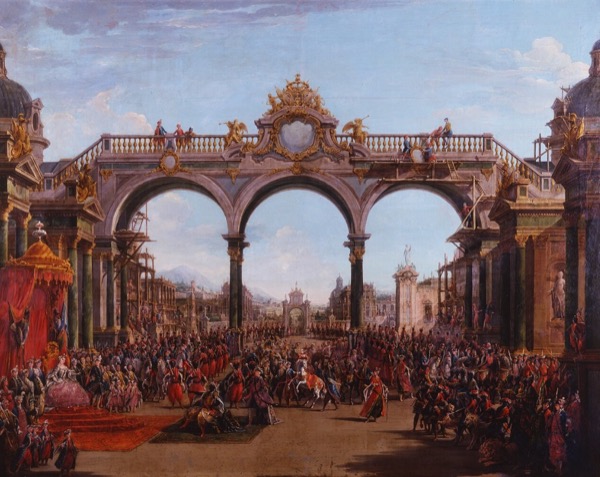
Didone abbandonata, act 1, scene 5; Set Design by Francesco Battaglioli (1754)
Entertainment That Elevates
Between these heavy, tragic acts, did the audience get a break? Not on Jommelli’s watch. He and Noverre replaced the traditional light, comic musical skits with heavy, wordless, dramatic ballets. While the singers rested their vocal cords, the dancers acted out the gory myths of Medea and Jason and the tragic descent of Orpheus and Eurydice. It was an all-out sensory assault of high art.
This balance of raw passion and impeccable craftsmanship captures the Enlightenment’s ultimate goal. Jommelli and his team didn’t want to entertain the crowd with empty, flashy high notes. They wanted to educate the mind, stir the soul, and push the boundaries of what music could achieve, all while maintaining a firm grasp of good taste.
Thanks to the bold visionary Duke Karl Eugen, Jommelli got the sandbox he needed to reinvent opera. The next time you sit in a dark theatre and feel the goosebumps rise as an orchestra swells into a dramatic climax, remember Niccolò Jommelli—the 18th-century maestro who set the stage on fire.
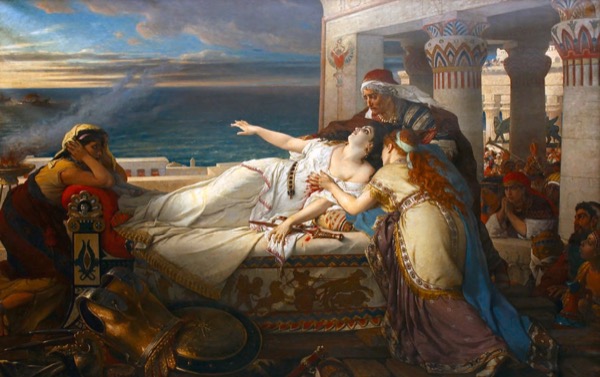
Death of Dido is a painting by Joseph Stallaert.
For more of the best in classical music, sign up for our E-Newsletter