A Composer Worth Rediscovering
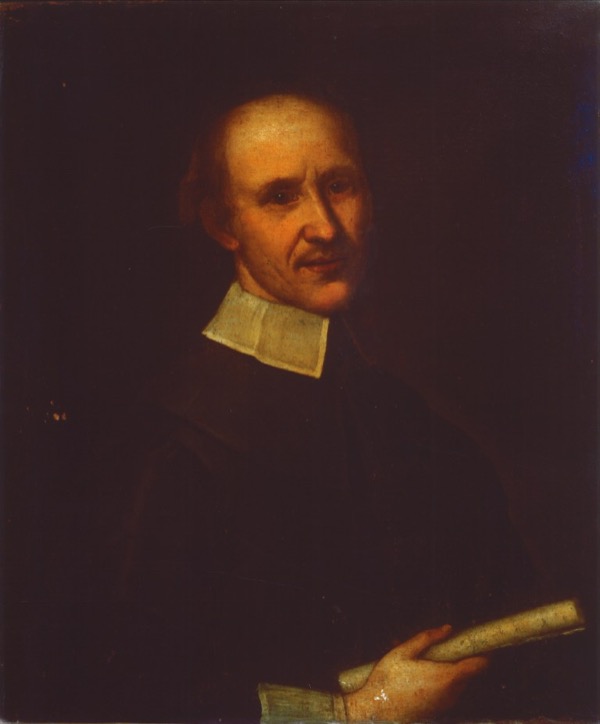
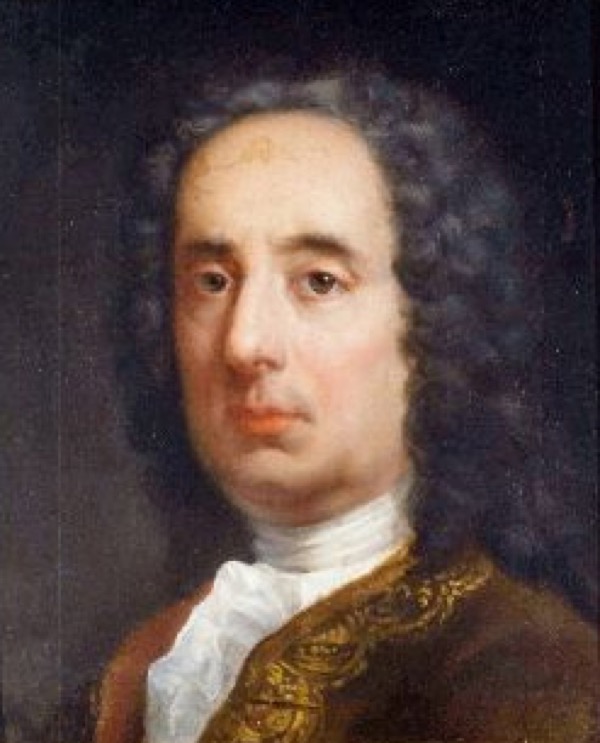
Giovanni Legrenzi
The music of Giovanni Legrenzi (1626-1690), baptised on 12 August 1626, represents the final stage in the formation of the late Baroque style. Legrenzi rose from humble beginnings in the provinces to end his career as maestro di cappella of the ducal Basilica of St Mark’s in Venice.
Extremely influential in the development of the late Baroque idioms across northern Italy, Legrenzi’s music affected not only his documented pupils Antonio Lotti, Antonino Biffi, Giovanni Varischino, and possibly Tomaso Albinoni, but also Arcangelo Corelli and Antonio Vivaldi.
His compositions touch on virtually every genre practised in his time, and, to celebrate the 400th anniversary of his birth in 2026, let us take a closer look at his life and musical achievements.
Giovanni Legrenzi: Dies Irae, “Ingemisco”
From Clusone to Ferrara
Legrenzi was born in Clusone, near Bergamo, then part of the Republic of Venice. His father, Giovanni Maria, was a violinist, and young Giovanni was presumably educated at home. Little is known about his early years, but he is mentioned as organist at S. Maria Maggiore in Bergamo in 1645.
Following his ordination as a priest in 1651, he was appointed resident chaplain. He became first organist in 1653, but his appointment as organist was not reconfirmed in 1654, “owing to his apparent involvement in a minor gambling scandal.” (Wikipedia)
Legrenzi was active in Bergamo in some capacity until April 1656, and the majority of his published output from this period consists of church music, including music for Mass and Vespers. Later in 1656, he became maestro di cappella at the Academy of the Holy Spirit in Ferrara.
Giovanni Legrenzi: Balletti e correnti a 5, Op. 16 (excerpts) (La Serenissima; Adrian Chandler, cond.)
The Ferrara Years
This academy of laymen performed sacred music and oratorios, addressing the needs of the aristocratic community of Ferrara. His position left him ample time for other pursuits, and his first opera, Nino il giusto, dates from 1662. Ferrara also provided him with aristocratic connections, which he cultivated assiduously.
Legrenzi’s output during his Ferrara years remained devoted to church music, yet he composed three operas, one oratorio, and several sonate da camera and dances. He left Ferrara in June 1665 after completing his third opera, Zenobia e Radamisto, but he retained strong ties with the city.
We have little information about Legrenzi’s activities for the next five years, except for positions he sought unsuccessfully or refused. He was apparently offered posts in Modena and Bergamo but refused them.
Giovanni Legrenzi: Sonata “La Frangipana”
Ambition and Setback
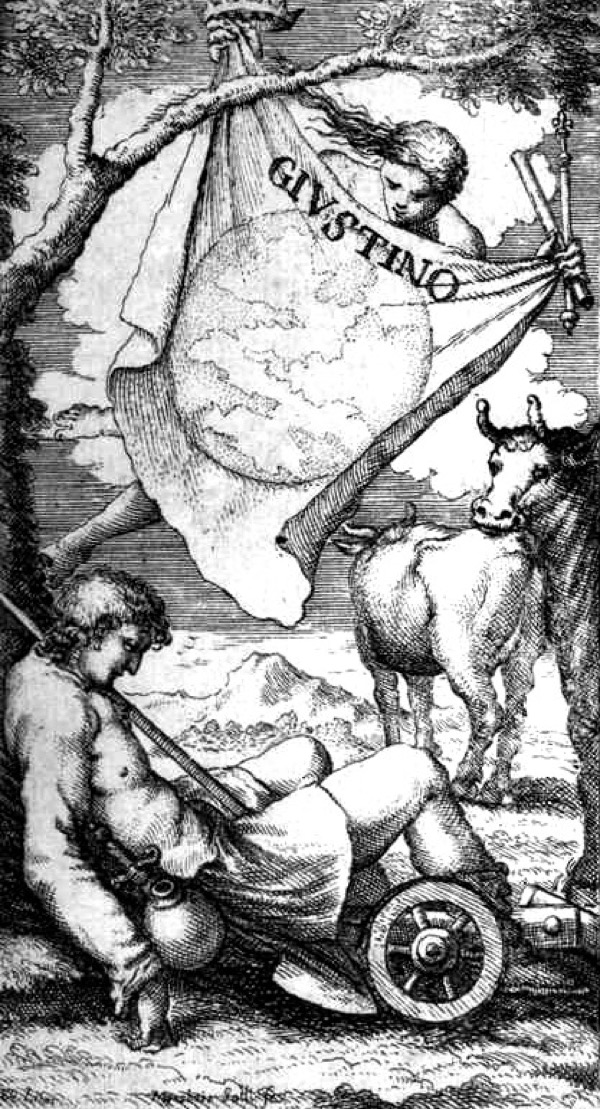
Giovanni Legrenzi: Giustino, image from the libretto, Venice 1683
Stephen Bonta writes, “A letter of 17 July 1665 shows that Legrenzi had enlisted the help of Carlo II Gonzaga, Duke of Mantua, in a bold scheme to obtain the post of Kapellmeister at the Habsburg court in Vienna. His attempt was unavailing; the post was occupied by Antonio Bertali until 1669.” (Bonta, Grove Music Online, 2001)
Legrenzi himself wrote that he was appointed director of music at the court of Louis XIV but was unable to assume the position due to a grave illness. That appointment probably dates from 1668, and in 1669 he competed for the post of maestro di cappella of Milan Cathedral, but G.A. Grossi was elected.
Additional attempts at gaining employment were unsuccessful, but by 1670, Legrenzi was living in Venice. He held posts at several religious institutions, with an eye toward securing a position in one of the major churches in northern Italy.
Giovanni Legrenzi: Il Sedecia (Raffaele Giordani, tenor; Lia Serafini, soprano; Francesca Lombardi, soprano; Andrea Arrivabene, alto; Walter Testolin, bass; Oficina Musicum Chorus; Oficina Musicum Ensemble; Riccardo Favero, cond.)
From Contender to Maestro
Legrenzi remained busy with additional compositions and publications, and he reports that he composed four Masses, more than 70 psalms and 80 motets, five Compline services, hymns, string sonatas, and keyboard sonatas. We don’t know whether any of these works survive.
In 1676 he was a finalist for appointment as maestro at San Marco in succession to Francesco Cavalli, losing by a single vote to Natale Monferrato. Legrenzi continued to receive appointments from religious institutions, and, along with Carlo Pallavicino, he was one of the leading opera composers of his day.
Legrenzi finally succeeded Monferrato as maestro di cappella at San Marco in April 1685. He greatly expanded the choir and the number of instrumentalists, but his health was beginning to fail. He once again turned to the composition of sacred music, but none of the music he composed for the S. Marco cappella seems to have survived.
Giovanni Legrenzi: Confitebor tibi Domine
Legacy and Style
Giovanni Legrenzi died on 27 May 1690 and was buried in S. Maria della Fava. His great-nephew Giovanni Varischino inherited his books and music, and produced four posthumous publications. Legrenzi’s legacy endured for several years.
Stephen Bonta writes, “Legrenzi’s music is characterised by clarity of design achieved through the co-ordination of well-defined tonal drives and incisive themes employed in various repetitive schemes; a contrapuntal style in which line is subordinated to harmony and rhythm is metrically conceived; integration of the bass into the thematic process; and skilful employment of the new violin idiom without its more virtuoso special effects.” (Bonta, Grove Music Online, 2001)
Legrenzi’s style remains virtually the same regardless of genre, and there is little development or change throughout his career, only refinement. Although he is best known as a composer of instrumental sonatas, Legrenzi was predominantly a composer of liturgical music.
Giovanni Legrenzi: Eteocle e Polinice: Che fiero costume (Luciano Pavarotti, tenor; John Wustman, piano)
Legacy and Rediscovery
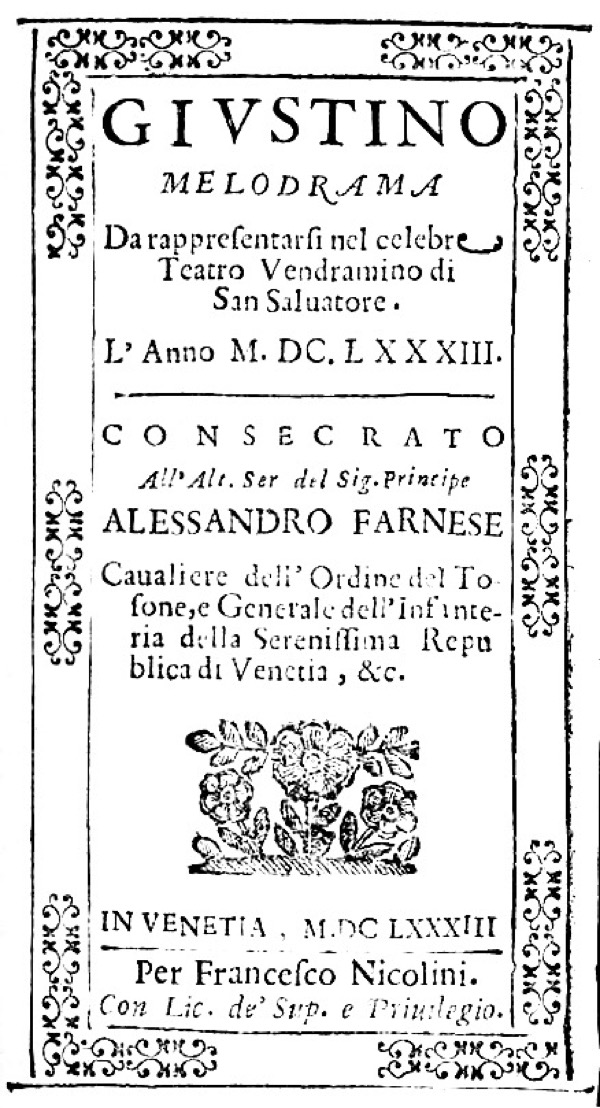
Giovanni Legrenzi: Giustino, title page of the libretto, Venice 1683
He also composed nineteen operas, which were extravagantly presented and immensely popular, yet few have survived. His operatic style featured many short arias, and it is found in his operas, oratorios, cantatas, and motets.
Giovanni Legrenzi was one of the most gifted and important composers of his time. In his hands, traditional counterpoint loses all connotation of an academic exercise and becomes a texture rich in meaning and content.
He bridged the expressive vocal traditions of Monteverdi with the structural foundations later perfected by Vivaldi and Bach. He helped to establish Venice as a dominant musical centre, and shaped the trajectory of Italian instrumental and liturgical music.
As scores and new editions have become available over the last few decades, Legrenzi’s music has gradually gained traction. In addition, some of his surviving operas have seen significant revivals, expanding appreciation of his music beyond specialist circles.
For more of the best in classical music, sign up for our E-Newsletter