One of the central and fully integrated pillars of promoting the life and works of Frédéric Chopin is the Chopin Museum, housed in a fortified mansion in the city centre of Warsaw. The mansion was originally constructed by the powerful Ostrogski family in the 17th century, and it currently houses the Fryderyk Chopin Society and the Fryderyk Chopin Museum.
History of the Museum
The Fryderyk Chopin Museum was actually established in the 1930s, and it purchased a number of manuscripts. It also began to create a collection of photographs, recordings, and a library prior to 1939.
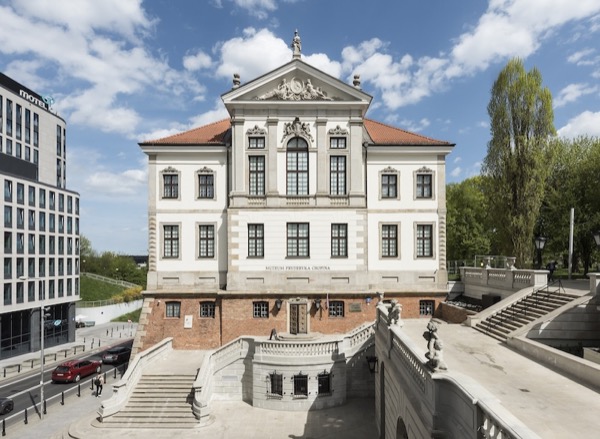
The Fryderyk Chopin Museum in the reconstructed Ostrogski Palace, Warsaw
The Ostrogski Palace, which had served as a military hospital and as the musical institute where Ignacy Jan Paderewski received his education, was destroyed by the Germans during the Warsaw Uprising in 1944. After its reconstruction, it became the home of the Fryderyk Chopin Society. The Fryderyk Chopin Institute was reopened in 1945, and by 1953, it had moved to the Ostrogski Palace.
Under the auspices of the Fryderyk Chopin Institute, which moved into new quarters in 2001, the Chopin Museum houses the world’s largest collection of Chopiniana. Numbering more than 7,500 items, it presents a wide range of memorabilia linked to the composer’s life and work.
2nd International Chopin Competition on Period Instruments (Shun Oi)
Temporary Closure for Renovation
Among its music manuscripts and editions of Chopin’s works, we find his correspondence, historical and contemporary iconography, personal items, and documents linked to criticism of his works and the broad reception of the composer and his oeuvre.
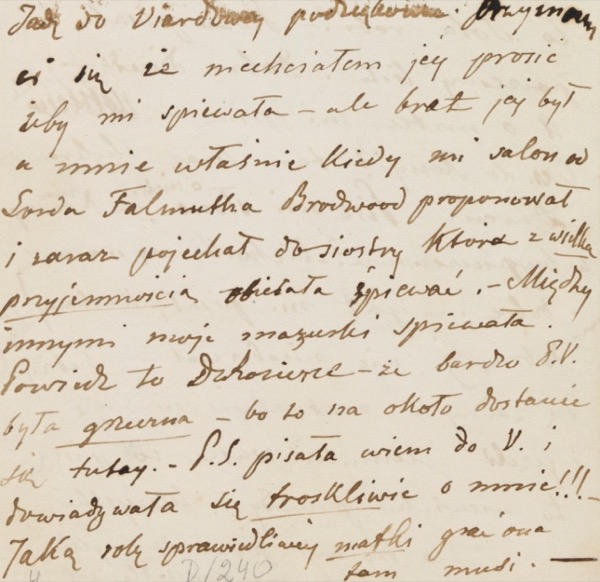
A handwritten letter by Fryderyk Chopin
In 1999, part of the Chopin Museum’s collection was inscribed on UNESCO’s “Memory of the World” list of objects requiring special protection on account of their unique cultural value. By hosting special exhibitions, museum tours can be combined with listening to piano recitals in the Museum’s concert halls.
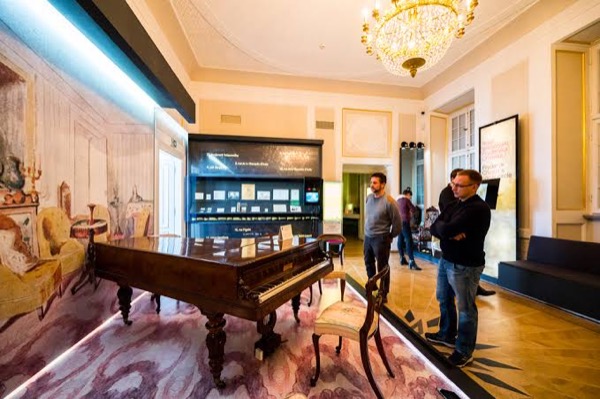
Inside the Fryderyk Chopin Museum, Warsaw
Since the Museum is closed for renovation between January and December 2026, let’s take a closer look at one of its most prized possessions on permanent display, a Pleyel piano from 1848 with the serial number 14810.
Chopin’s Last Piano
What makes this instrument special is the fact that it was the last piano owned by the composer. It was located at the composer’s last apartment on Place Vendôme, and after Chopin’s death on 17 October 1849, the instrument was put up for auction.
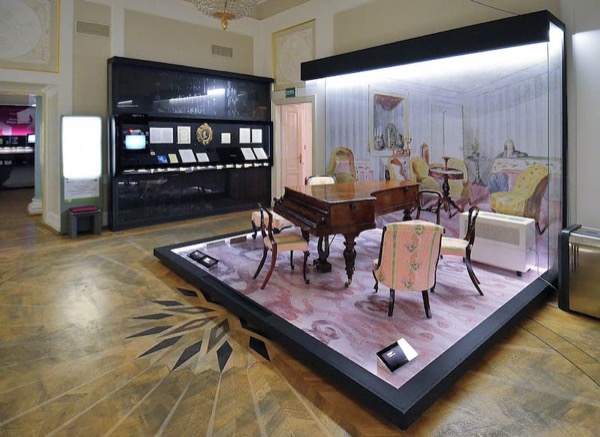
Chopin’s last piano, an 1848 Pleyel (serial no. 14810), on display at the Museum
It was purchased by Jane Stirling, a student and admirer of Chopin, who decided to pass it on “pour Louise.” That is the dedication written in ink inside the instrument frame, identifying Ludwika Jędrzejewiczowa, Fryderyk’s beloved sister.
The beautiful gold-coloured plate lists the achievements of the Pleyel company, including information about the numerous medals awarded to it. There is also a handwritten number under the keyboard, added in 1924, when the piano was donated by Ludwika Jędrzejewiczowa’s heirs to the National Museum of Warsaw.
2nd International Chopin Competition on Period Instruments (Eric Guo)
Historical Instruments in the Collection
The Chopin Institute holds a number of historical instruments and copies, including the 2007 copy of a 1819 piano named the “Graf Wiedeń,” originally crafted by Conrad Graf in Vienna. Most likely, Chopin composed a number of youthful pieces on instruments similar to this one. This copy comes from the workshop of Paul McNulty and was commissioned by the Fryderyk Chopin Institute.
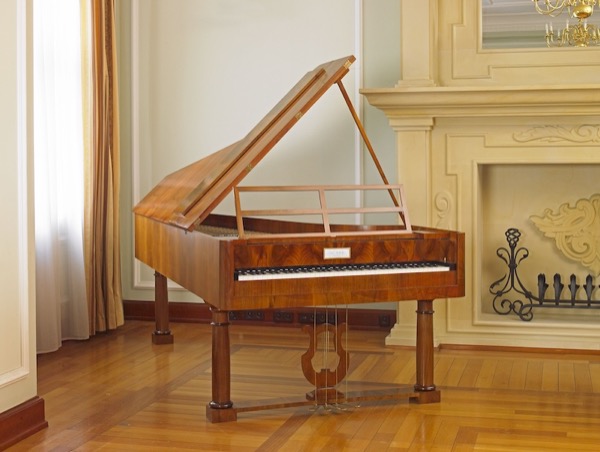
A copy of an 1819 Conrad Graf piano from the workshop of Paul McNulty
Further instruments from the workshop of Paul McNulty include a copy of a grand piano by Fryderyk Buchholtz of Warsaw from between 1825 and 1826, and a copy of a 1830 Pleyel produced in 2009.
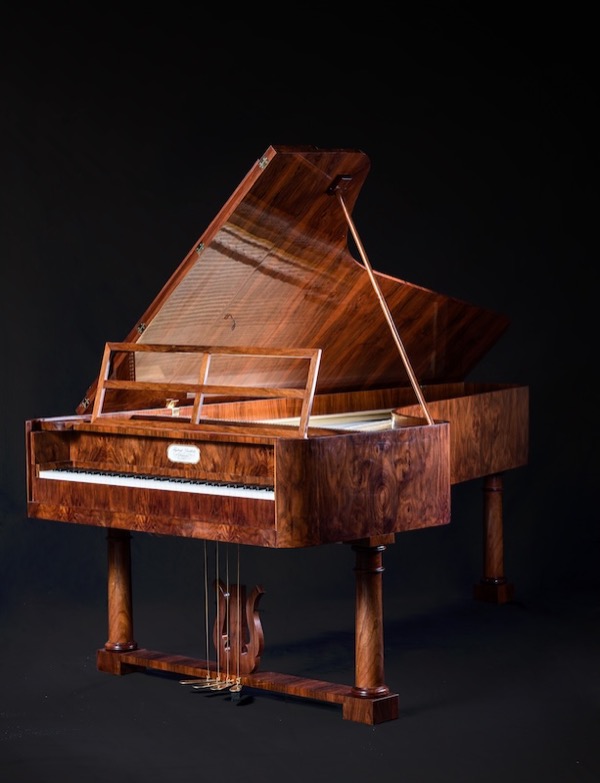
A copy of a Fryderyk Buchholtz grand piano (Photo: Grzedzinski)
In terms of original instruments, we find an Erard with serial number 14214, made in Paris in 1838, and a 1843 Broadwood from London. Chopin played on a similar piano in a “Gentlemen’s Concert” on 28 August 1848. The present instrument has been fully restored and was purchased by the Fryderyk Chopin Institute in 2014. It currently stands in the Birthplace of Fryderyk Chopin in Żelazowa Wola.
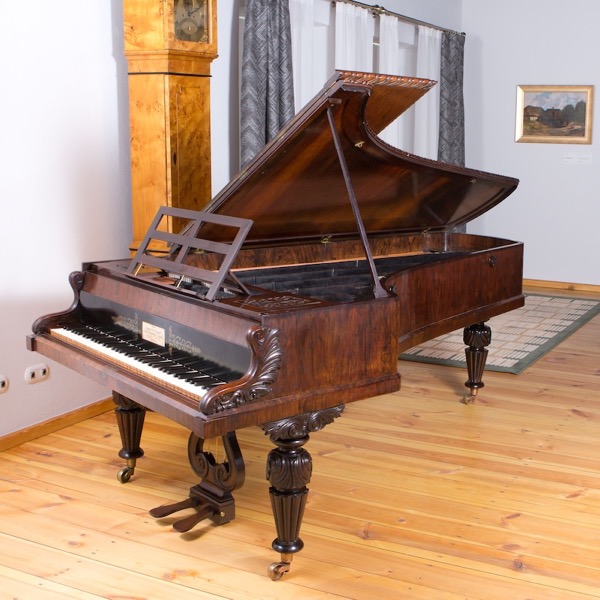
An 1843 Broadwood piano from London
The Erard with serial number 21118 was built in Paris in 1849. Restored by using identical elements, made from the same raw materials and with the same technology, the piano was a gift to the Fryderyk Chopin Institute from the Ryszard Krauze Foundation.
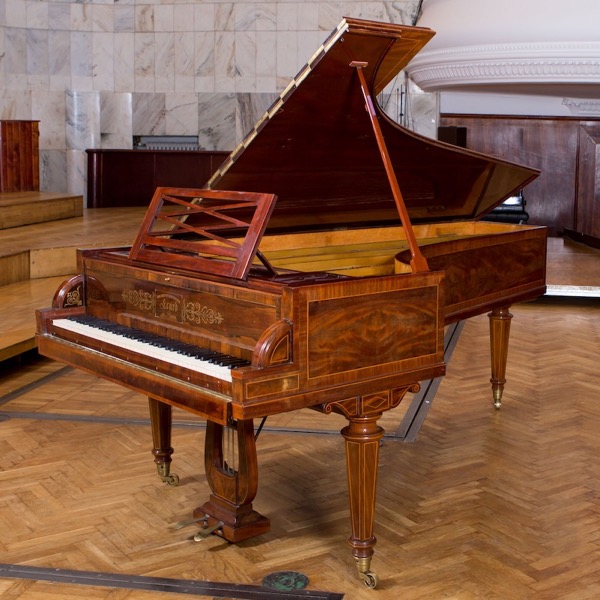
An 1838 Erard piano, made in Paris
A further Erard with serial number 30315, built in Paris in 1858, was bought in 2010, and the Pleyel with serial number 20042 is almost identical to the one Chopin used during 1845/46 in his flat at 9 Place d’Orléans in Paris. Held until 2013 at the Château du Lude on the Loire in France, it is now on loan to the Fryderyk Chopin Institute.
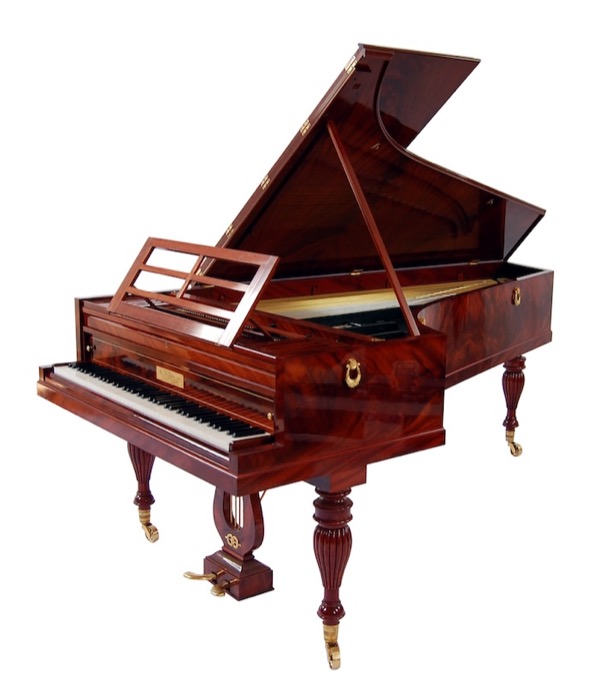
A Pleyel piano copy by Paul McNulty
Additional historical instruments come from the Edwin Beunk collection, the Chris Maene collection, the Andrzej Włodarczyk collection, and additional instruments rebuilt or produced by Paul McNulty, including the “Boisselot Marseille 1846,” an instrument from the peak period of France’s largest piano manufacturer. It is a copy of an instrument owned by Franz Liszt.
2nd International Chopin Competition on Period Instruments (Yuina Hayakawa)
A Living Monument to Chopin
The Fryderyk Chopin Museum, located in the reconstructed Ostrogski Palace in Warsaw, is a wonderful living monument to the composer’s enduring legacy. Chopin’s final 1848 Pleyel piano provides an intimate connection between the artist and his instrument. In original period pianos and meticulously crafted copies, we find a unique bridge into Chopin’s sonic and creative world.
For more of the best in classical music, sign up for our E-Newsletter