Claude Debussy was one of a handful of composers who changed music forever over the course of his career.
Where earlier composers built music around inherited forms with traditional developments and resolutions, Debussy was more interested in exploring atmosphere, colour, and perception.
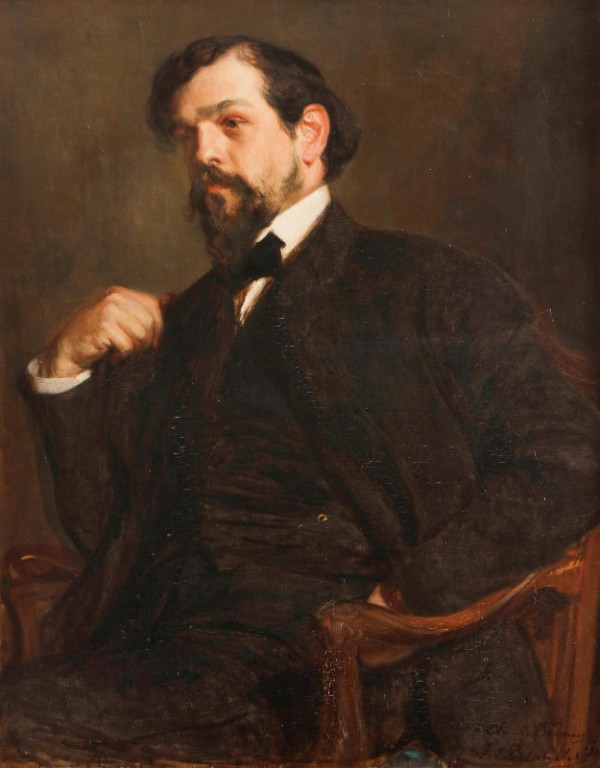
Claude Debussy
Instead of developing in a traditional way, Debussy’s music drifts, glimmers, and dissolves, prioritising mood over narrative.
If you had exactly one hour to understand why Debussy matters – not just why he’s labelled an “Impressionist,” but why he permanently altered the course of modern music – this is the hour.
These nine pieces trace his artistic range across orchestra, chamber music, piano, and song. They show how Debussy broke with 19th-century conventions and opened the door to an entirely new musical language.
Prélude à l’après-midi d’un faune (11 minutes, 30 seconds)
Composed: 1892–94
This piece is sometimes cited as the beginning of modern music, and there’s a good case as to why.
Inspired by a symbolist poem by Stéphane Mallarmé that traces the dreams and erotic thoughts of a faun, the Prélude unfolds like a half-remembered fantasy.
The famous opening flute solo doesn’t establish a key or a clear rhythmic pulse. From there, harmony becomes a tool to create colour, and form becomes fluid.
When this work premiered in 1894, it was a gauntlet thrown – announcing new musical priorities for a new generation.
La mer – II. Jeux de vagues (7 minutes)
Composed: 1903–05
Debussy scholar Simon Trezise wrote that La mer is “not an orthodox symphony, but neither did Debussy want it to be known as a symphonic poem.” Instead, it floats between genres in a distinctly Debussian way.
The second movement, “Play of the Waves”, flickers with shifting textures, darting motifs, and constantly changing orchestral colour. There is no stable ground here; everything is in motion.
La mer represents Debussy’s mature orchestral voice. He treats the orchestra not as a mass of sections, but as a palette of endlessly recombinable sounds.
String Quartet in G minor – I. Animé et très décidé (6 minutes, 30 seconds)
Composed: 1893
Debussy wrote only one string quartet – and what a quartet it was.
The opening movement is restless and driven, but its narrative is cyclical rather than developmental. Themes recur again and again but transformed, as if viewed from inside a kaleidoscope.
This quartet shows Debussy walking a tightrope: engaging with the Germanic chamber music tradition while quietly breaking from it.
More broadly, it’s a declaration of creative independence and is emotionally intense, structurally unconventional, and unmistakably personal.
Violin Sonata – I. Allegro vivo (4 minutes, 30 seconds)
Composed: 1917
This sonata dates from the very end of Debussy’s life.
Terminally ill with cancer and living through the darkest days of World War I, Debussy turned toward clarity and brevity.
It’s urgent and unsentimental, and strikingly concentrated, anticipating neoclassicism in its transparent textures and emotional restraint.
The work was planned as a set of six sonatas to promote French music during the war with Germany, but Debussy died the year after this sonata was finished, leaving the set incomplete.
La cathédrale engloutie (7 minutes)
Composed: 1910
Inspired by a Breton legend of a submerged cathedral rising from the sea, this prelude is one of Debussy’s most iconic piano works.
Massive chords emerge slowly from silence, toll like bells, and then recede again. The effect evokes soaring, awe-inspiring architecture.
This piece also demonstrates how Debussy uses the piano in a way that makes it sound like an orchestra, employing a wide range of pitches and dynamics. Not surprisingly, the piece was eventually arranged (to great effect!) for orchestra.
Clair de lune (5 minutes, 30 seconds)
Composed: 1890 (revised 1905)
Sometimes reduced to background music in a movie, or a track on a Classical Music’s Greatest Hits disc, Clair de lune (Moonlight) is worth taking seriously as a musical accomplishment in its own right.
The pacing is elastic, its main theme unforgettable, and the harmonies deliciously ambiguous. It glows as well as aches.
This piece reflects Debussy’s early Symbolist phase, where subtle suggestions of poetic imagery mattered more than straightforward musical depictions of real-life subject matter.
This is less a moonlit scene and more the feeling of remembering one.
Des pas sur la neige from Préludes, Book I (4 minutes, 30 seconds)
Composed: 1910
Few piano pieces capture isolation as vividly as “Des pas sur la neige” (“Footprints in the snow”).
Marked with the unique performance instruction “this rhythm should have the sonorous value of a sad and frozen landscape,” the music trudges forward with heavy inevitability. The harmony barely moves; time seems suspended.
This prelude showcases Debussy’s late style at its bleakest and most introverted. It’s music about winter and the season’s accompanying stasis and loneliness.
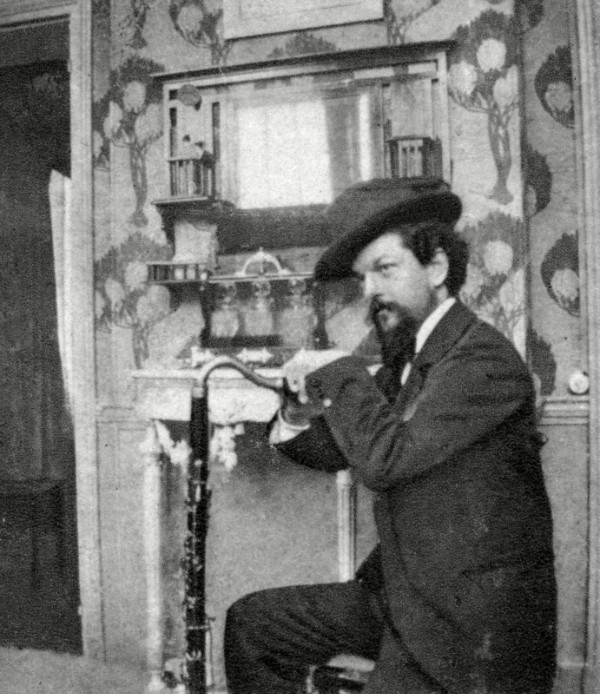
Claude Debussy, 1909
Beau soir (2 minutes)
Composed: c. 1880
Historians disagree on exactly when “Beau soir” (“Beautiful evening”) was written, but it dates from the very beginning of Debussy’s career – his late teens or early twenties. It already shows his instinctive feel for creating atmosphere.
The vocal line floats effortlessly over rippling accompaniment, mirroring the poem’s meditation on twilight and transience.
Even at this early age, the emotion of the piece comes from its intoxicating harmonies and subtle color.
Nocturnes – Sirènes (11 minutes)
Composed: 1897–99
This movement closes the hour in a wash of sound.
Wordless women’s voices blend into the orchestra, blurring the boundary between orchestral timbre and human voices. Rhythm drifts; harmony shimmers.
The ultimate effect is dreamy – and something no other composer could have created.
Conclusion
These works show why and how Claude Debussy stands at the fault line between the 19th and 20th centuries, and how he helped to lay the groundwork for the modern era.
They reveal a composer who didn’t simply tweak existing forms, but fundamentally reimagined what music could be.
More than a century later, Debussy’s music still feels modern. His legacy isn’t just historical; it’s ongoing and evident in the music we listen to and make, even today.
For more of the best in classical music, sign up for our E-Newsletter