Alongside composer Ralph Vaughan Williams and collector Cecil Sharp, Gustav Holst (1874-1934) was a key figure in the early 20th-century English folk song revival. This movement was part of a process in which the English identity became located in an edited and reworked version of the national past.
Attempting to counter industrialisation and promote a distinctly national musical voice, Holst drew directly from folk sources and incorporated their melodies and expressions into his music.
To commemorate his passing on 25 May 1934, let us explore some musical selections that highlight his engagement with the revival movement.
Gustav Holst: A Somerset Rhapsody, Op. 21
Song of the People
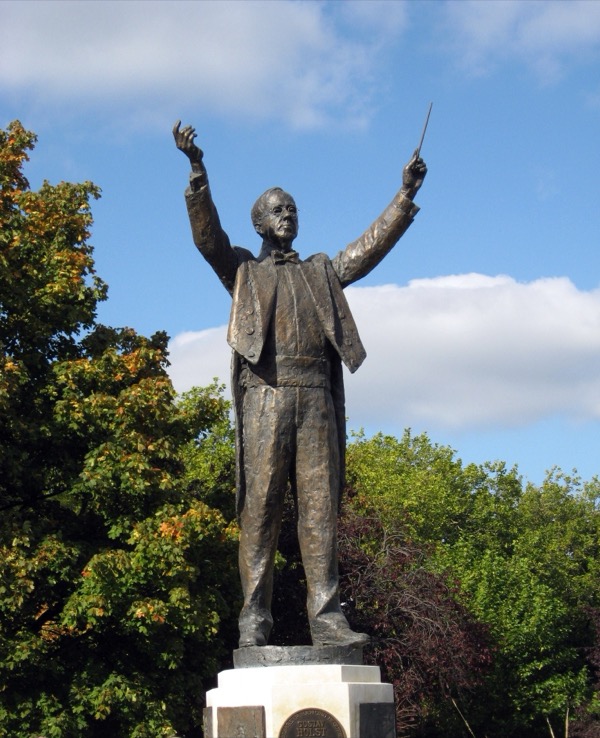
Statue of Gustav Holst
The idea that the national musical idiom of England was to be found in “folk song” became deeply entrenched in English musical culture between 1890 and 1914. Known as the “Folksong Revival,” revivalists strongly believed that folk songs were the songs of the people.
“It was the people’s own creation for their own enjoyment, a communal product devoid of any commercial interest. It had been so since time immemorial, but the encroachments of commercially produced song, facilitated by a revolution in transport and new institutions of entertainment, had left only a few small rural pockets in which folk song was still sung.” (Sykes, Folk Music Journal, 1993)
Gustav Holst: Suite No. 2 in F Major, Op. 28, No. 2 “March” (Central Band of the Royal Air Force; Imogen Holst, cond.)
Restoring England’s Song
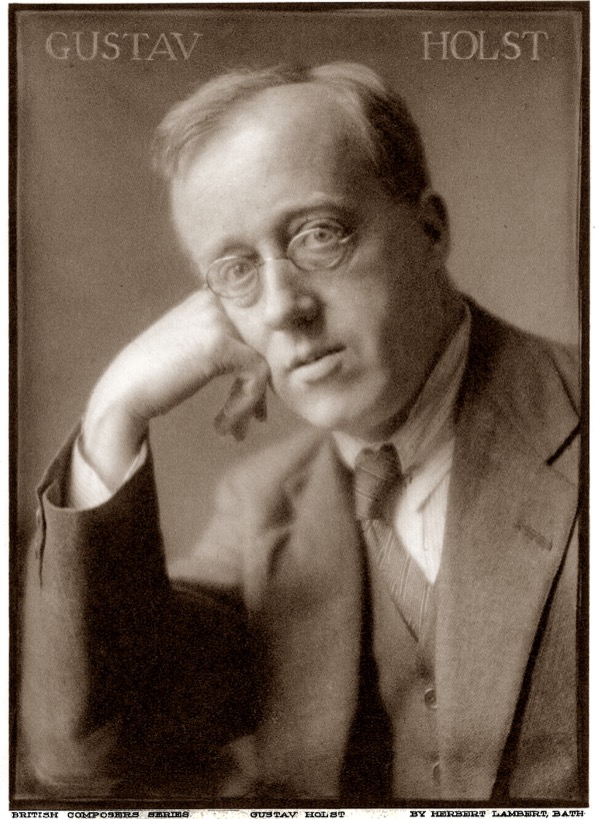
Gustav Holst, 1921 (Herbert Lambert)
This established a clear and urgent mission for revivalists, namely, the collection of folk songs from remaining singers, as it would restore the rightful musical heritage to the English people and rekindle the love of the nation and solidarity amongst compatriots.
While popular song was a commercial product composed to navigate the changing urban fashions and tastes, folk song was essentially unchanging. It held, so it was argued, the true spirit and values of the people.
In addition, and most importantly, a successful English art music school of composition depended entirely on it. And one of the most important and outspoken personalities of the folk movement was Cecil James Sharp (1858-1924).
Gustav Holst: Suite No. 2 in F Major, Op. 28, No. 2 “Song without Words” (Central Band of the Royal Air Force; Imogen Holst, cond.)
The Great Collector
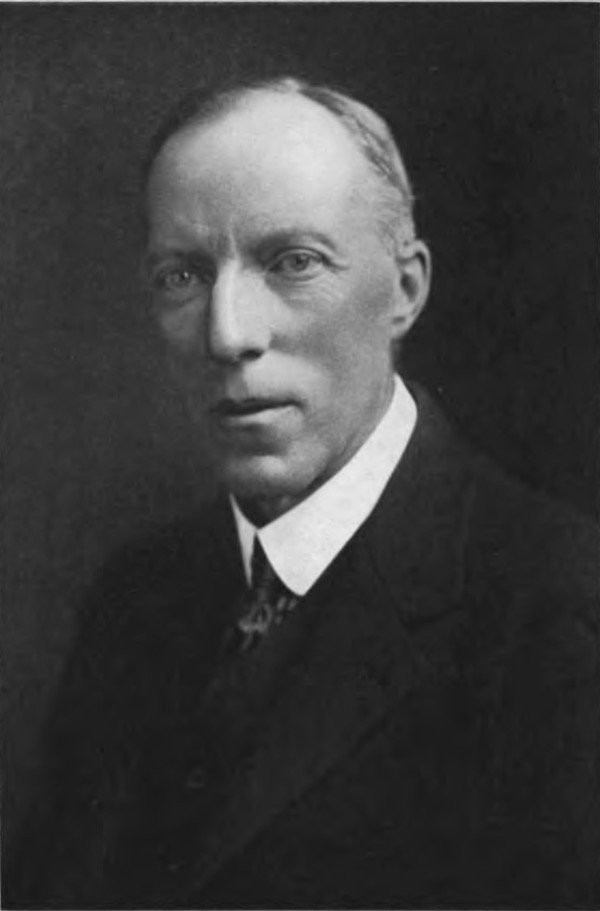
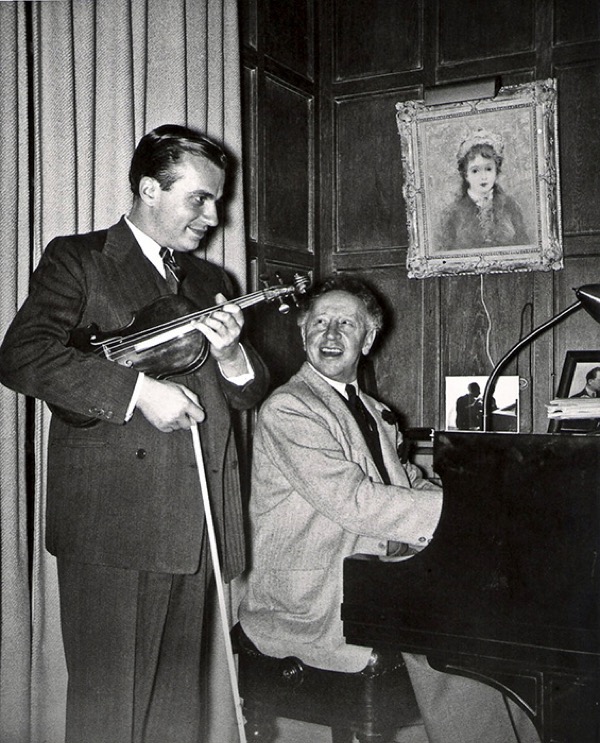
Cecil James Sharp, 1916
During his life, Cecil Sharp (1858-1924) collected almost 5,000 folk songs and tunes, and he played a leading role in the effective relaunch of the Folk-Song Society in 1904. He promoted folk song in the columns and letters page of the Morning Post, and he gave lectures and demonstrations across the country.
One of Cecil Sharp’s great achievements was helping to get folk music into the school curriculum. While his views were seen by some as radical and controversial, “efficient networking and the training of dance teachers and the publishing of books of folk songs aimed at children all played a part in ensuring that many children first encountered folk music at school.” (English Folk Dance and Song Society)
Gustav Holst: Suite No. 2 in F Major, Op. 28, No. 2 “Song of the Blacksmith” (Central Band of the Royal Air Force; Imogen Holst, cond.)
A Historic Friendship
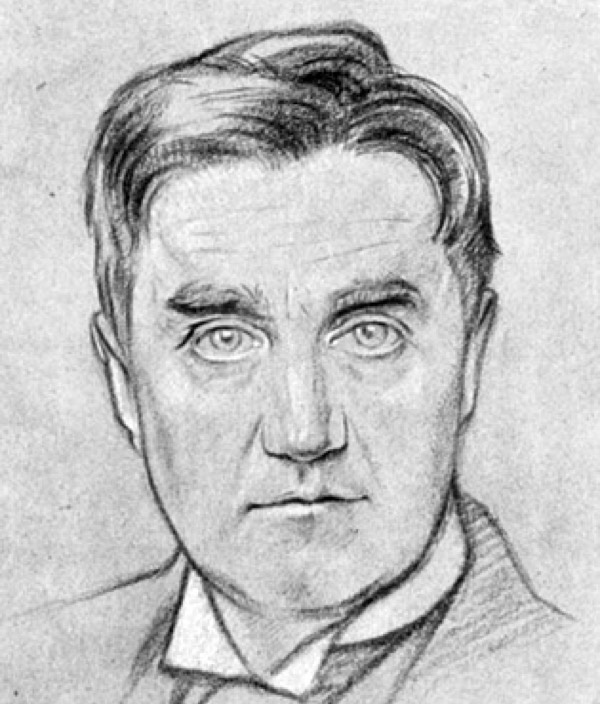
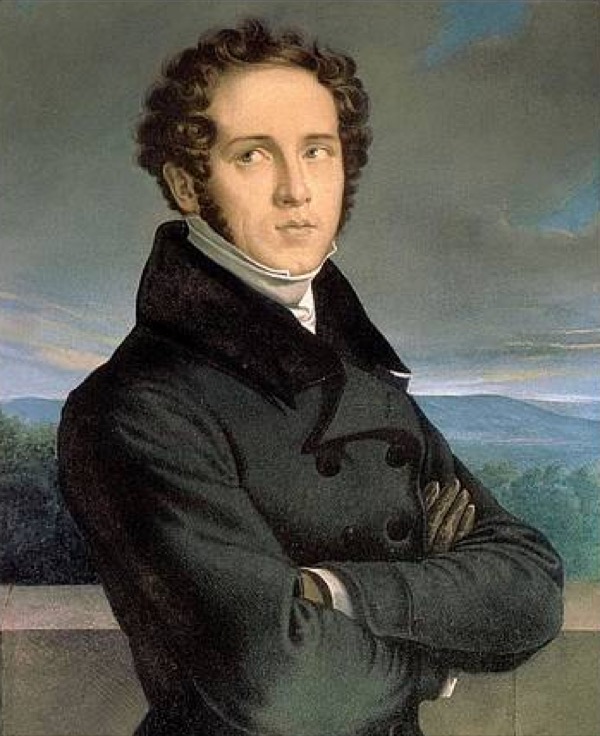
Ralph Vaughan Williams (drawing by William Rothenstein)
Gustav Holst met Ralph Vaughan Williams for the first time in 1895, and they soon got in the habit of playing their compositions to each other. In addition, they would discuss a great deal of poetry and the revival of folk song.
“The English folksong revival, in which his friend Vaughan Williams was one of the pioneers, became the catalyst which enabled Holst to fuse together the disparate formative elements that were to make the mature composer.” (Matthews, Grove Music Online, 2001)
Gustav Holst: Suite No. 2 in F Major, Op. 28, No. 2 “Fantasia on the Dargason” (Central Band of the Royal Air Force; Imogen Holst, cond.)
In Praise of Simplicity
As his daughter Imogen reports, “he had already begun to dream of the possibility of a renaissance in English music, and here, to his delight, he found English music at its best. The tunes had the simplicity and economy that he felt to be essential in any great art.”
“Holst had the deepest admiration for Cecil Sharp, and he believed that when the time came for the English musical history of the twentieth century to be written, Sharp’s name would stand out above all others.” (Holst, Gustav Holst, 1938)
Gustav Holst: Six Choral Folk Songs, Op. 36b “I Love My Love”
Inspired by the Collectors
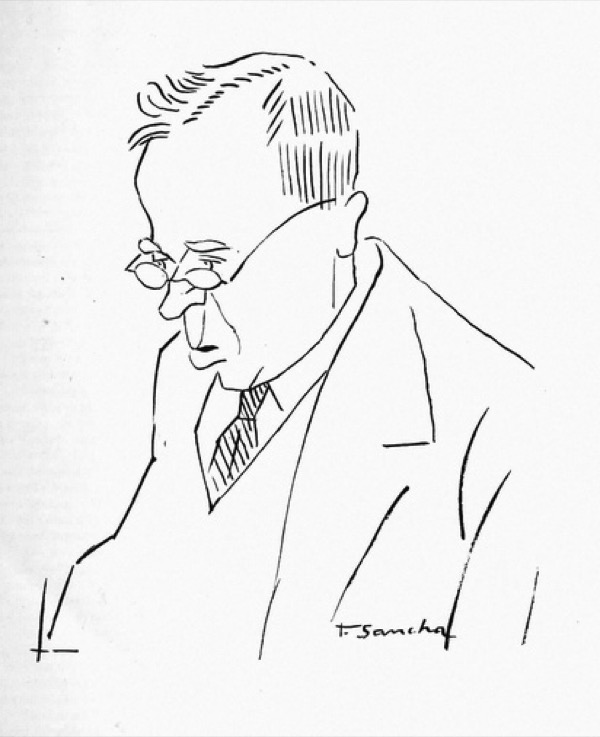
Gustav Holst, 1921 (drawing by F. Sancha)
Gustav Holst was never actively engaged in the collection of English folk song, but he was fascinated by the pioneering work being done by Vaughan Williams, Cecil Sharp, and Percy Grainger.
In 1906, Holst decided to write something based on folk song, and he drew his sources for two separate orchestral works from collections of West Country songs published by Sharp and Baring-Gould.
After extended revisions, A Somerset Rhapsody of 1911, which was dedicated to Cecil Sharp, weaves a number of folk tunes into an orchestral rhapsody. These include “The Sheep Shearing,” “High German,” and “The Lovers’ Farewell.”
Gustav Holst: Six Choral Folk Songs, Op. 36b “Swansea Town” (Baccholian Singers of London)
Folk Songs for Choir
In his set of unaccompanied SATB choral arrangements, composed in 1916, Holst expressed his deep involvement in the English folk song revival. His friend W. G. Whittaker had asked for some new music for his Newcastle choir, and Holst responded with his Six Choral Folk Songs.
As Michael Short writes, “In these arrangements Holst demonstrated his skill in producing a variety of solutions to the problem of how to retain musical interest during several repetitions of a strophic melody, but he later felt that he had virtually exhausted the medium.” (Short, Partsongs by Gustav Holst, 1993)
Gustav Holst: Six Choral Folk Songs, Op. 36b “The Song of the Blacksmith” (Baccholian Singers of London)
Folk Dances for Strings
Gustav Holst was first appointed as Director of Music to St Paul’s Girl’s School in 1905. When he started work on a four-movement suite for the school string orchestra, he had already written his two suites for military band, in 1909 and 1911, respectively.
Based on traditional tunes, the opening “Jig” is an energetic dance alternating 6/8 and 9/8 time, while the “Ostinato” features muted strings against a pizzicato bass and a waltz theme in the solo violin.
“The Intermezzo” features a lyrical theme that becomes more animated over time, and the concluding “Finale,” already used in his second suite for military band, is now slightly extended. The “Dargason,” a 16th-century folk tune, undergoes some variations and Holst weaves in “Greensleeves” as a counterpoint.
The English folk song revival provided Gustav Holst with the stimulus to create a genuine national voice in the twentieth century. Absorbing folk songs collected by Cecil Sharp and extensively arranged by his good friend Ralph Vaughan Williams, Holst turned these traditional melodies into a bridge between the old rural world and modern concert life.
For more of the best in classical music, sign up for our E-Newsletter
Gustav Holst: St. Paul’s Suite for String Orchestra, Op. 29, No. 2