Johanna Bordewijk-Roepman is one of the most compelling – and still unfairly overlooked – figures in 20th-century Dutch classical music.
A largely self-taught composer who came into her own in midlife, she forged a distinctive voice despite formidable obstacles: rigid gender expectations, limited access to formal training, the demands of marriage and motherhood, and the devastation of World War II.
She overcame these obstacles again and again, composing first while raising two young children without the benefit of formal musical training, and later while actively resisting Nazi cultural control.
Today, we’re looking at the life and career of Johanna Bordewijk-Roepman, from her privileged but constrained upbringing and artistic childhood to her late-blooming success as an orchestral and vocal composer, her courageous resistance to the Nazis, and her lasting postwar legacy.
Johanna Bordewijk-Roepman’s Family and Childhood
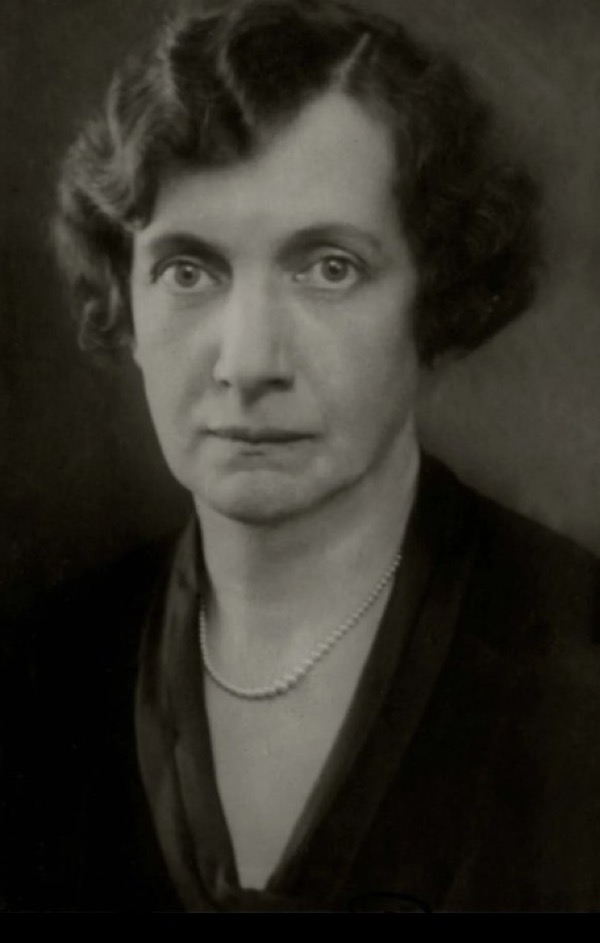
Johanna Bordewijk-Roepman
Johanna Roepman was born in August 1892 in Rotterdam, the Netherlands, the middle child in a family of three girls.
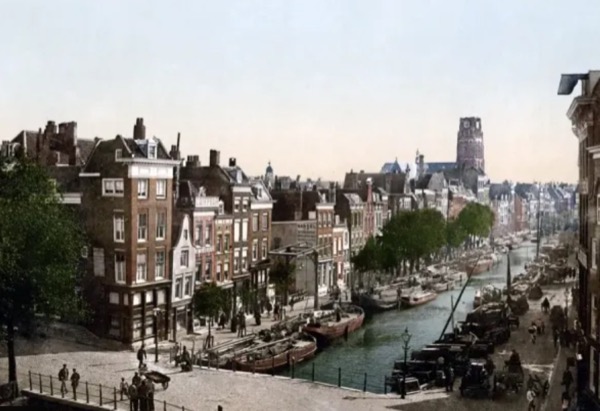
Johanna Bordewijk-Roepman in Rotterdam, 1890s
Her father was a wealthy man who worked in the pharmaceutical industry. However, ill health forced him to retire early, and the family relocated to The Hague.
Johanna was an artistic child. She loved to draw, and as a teenager, enrolled in art school.
She also took years of piano and voice lessons, and sang in a children’s choir until she was sixteen (although she later lamented that she learned hardly anything there).
She was musically gifted, but her gender and her social class prohibited her from even considering a career as a performing musician.
Her academic schedule eventually forced her to prioritise a passion: she could either attend orchestra rehearsal or art classes, but not both.
Luckily for music lovers, she chose the rehearsals.
Johanna Bordewijk-Roepman: Debout, éveille-toi (Irene Maessen, soprano; Marcel Worms, piano)
Johanna Bordewijk-Roepman’s Marriage
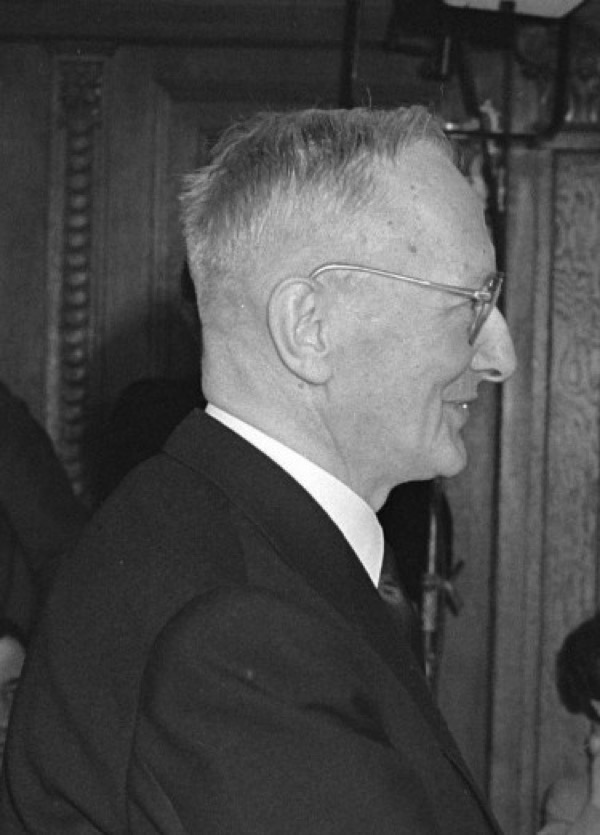
Johanna Bordewijk-Roepman and her husband, Ferdinand Bordewijk
Because she was effectively barred from a career as a musician, when it came time to choose a career, she decided to work as an English teacher.
She did so until 1914. That August, the month World War I began, she married a young lawyer named Ferdinand Bordewijk at the age of 22.
Although Ferdinand worked as a lawyer, his great passions were writing and music. He kicked off his literary career by becoming a published poet in 1916, and he played the violin well enough to help his wife with the string parts she wrote.
Ferdinand would ultimately become one of the great Dutch fiction writers of his generation, known for his magical realism and dystopian fiction.
Johanna and Ferdinand had two children early in their marriage: a son named Robert in 1915 and a daughter named Nina in 1918.
Johanna Bordewijk-Roepman Starts Composing
When Robert and Nina were very small children, Johanna became inspired by the illustrations in one of their picture books, a collection of Rie Cramer’s poems for children, Mijn eigen tuintje (My own garden).
Despite her years of piano and voice lessons, she had never formally studied composition. So she went to a music shop and purchased a copy of Richard Stöhr’s textbook Musikalische Formenlehre (Musical Form Theory).
To start, she wrote some solo piano works and some songs.
Johanna Bordewijk-Roepman: Nursery Rhymes (Irene Maessen, soprano; Marcel Worms, piano)
Then, in 1923, in between caring for her eight-year-old and five-year-old, she wrote her slender but incredibly effective violin sonata. A study group for modern music based in The Hague premiered the sonata, and just like that, she was bitten by the composer bug.
Bordewijk-Roepman’s Violin Sonata
A Bumpy Start to Her Career
However, Johanna did not write these works for private consumption. She wanted them to be performed publicly.
She mounted two concerts of her songs at her own expense, featuring local singer Rodi Deggeler. She also wrote and printed program notes describing her music for her audience.
One critic dismissed her work as “old-fashioned.” When she published her works, critics were harshly critical of her lack of training.
This insecurity ate at her, as it did for many women composers who had found formal training difficult to come by due to societal obstacles.
Johanna Bordewijk-Roepman: 6 Lieder (Irene Maessen, soprano; Marcel Worms, piano)
Writing for Orchestra
But instead of giving up, Johanna grew even more ambitious. She decided she wanted to write for orchestra.
She bought books on orchestral instrumentation by celebrated masters Hector Berlioz and Richard Strauss. As she read these books, she systematically wrote down her questions, then asked local orchestral musicians to come to her home to answer them.
The Garden of Allah by Robert Smythe Hichens
In 1927, she completed her first orchestral suite. It was called The Garden of Allah, and, like her first pieces of music, was inspired by literature: a bestselling novel by Robert Smythe Hichens. (Composer Gustav Holst also wrote an orchestral suite based on Hichens’s work in 1912.)
Johanna’s suite was premiered in Groningen, Holland, in 1927, but tragically, the score has since been lost.
A New Beginning
In 1935, when she was in her early forties and her children were grown, she began to take composition lessons from Eduard Flipse, conductor of her hometown orchestra, the Rotterdam Philharmonic.
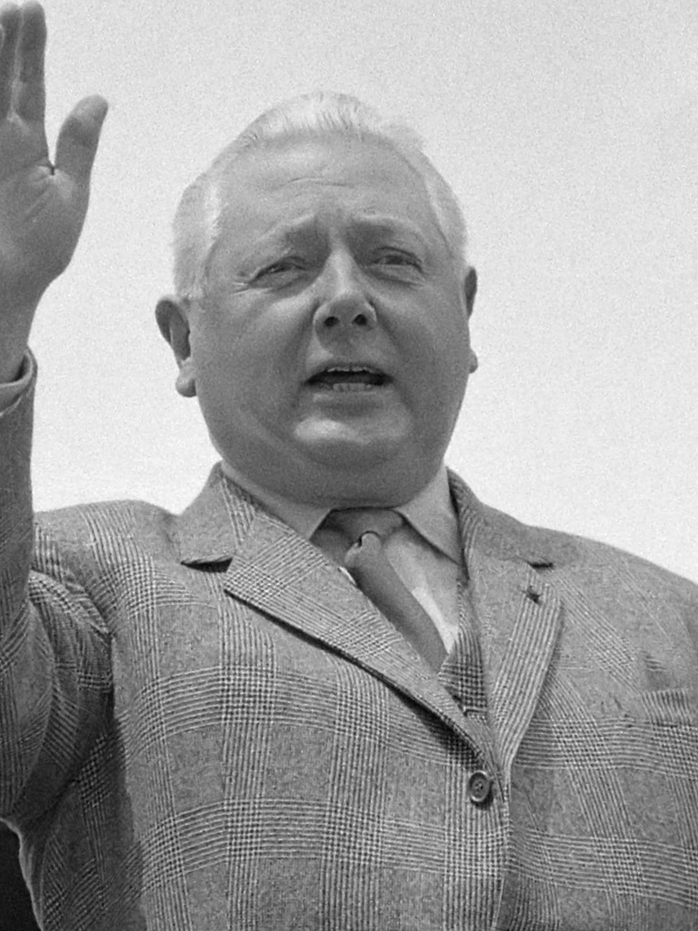
Eduard Flipse (1961)
Flipse was the first conductor to conduct Stravinsky‘s Rite of Spring and Berg’s violin concerto in the Netherlands, and he was famous for his support of Dutch composers.
He began championing her works, and in part due to his belief in her, she began composing more and more.
Johanna Bordewijk-Roepman: Impromptu (Marcel Worms, piano)
War Interrupts
Johanna’s career was on the upswing just as the shadows of World War II descended. Hitler invaded Poland in September 1939. The Netherlands declared neutrality, but was invaded in May 1940.
Johanna’s piano concerto was influenced by the war, beginning with timpani that called to mind falling bombs. Eduard Flipse conducted the premiere in Rotterdam, and his brother Marinus was the soloist.
In 1941, she wrote another major work: a cheerful opera, Rotonde, with a libretto written by her husband.
But the national mood was darkening. In 1942, the Nazis announced that composers, artists, and writers needed to join the Kultuurkamer (Chamber of Culture) to continue to work.
This Kultuurkamer’s goal was to ensure that all art was Nazi-approved and created by certified Aryans. All working artists were forced to register by 1 April 1942.
This meant that Jewish musicians could no longer legally perform. Weeks later, in July 1942, deportations of Dutch Jews to concentration camps began. Anne Frank and her family went into hiding in Amsterdam on July 6.
Resistance
It would have been easy to lay low or to go along to get along.
But both Johanna and Ferdinand refused to join the Kultuurkamer. They claimed they were retired from creating art, which was untrue.
During the war, Johanna and Ferdinand became members of the anti-Nazi resistance. They organised illegal private concerts, programming forbidden music and donating the proceeds to artists in need.
It was a brave move – especially given that they lived next to the Kultuurkamer office.
Composing During the War
One of Johanna’s acts of resistance was continuing to compose.
She wrote a piano sonata called “Sonata 1943” reflecting the harrowing emotions of the wartime experience. This work was premiered at a secret private concert. It received its public premiere at the Concertgebouw in June 1945 at a concert celebrating the liberation.
Johanna Bordewijk-Roepman: Piano Sonata (Marcel Worms, piano)
Another piece that dates from 1943 is “Epilogue” for orchestra, a work that expresses her longing for peace.
A digital performance of “Epilogue”
She also wrote smaller-scale works, including songs with texts by Dutch poets. One of her most famous is “Uit het diepst van mijn hart” (“From the Bottom of My Heart”).
Johanna Bordewijk-Roepman: Uit het diepst van mijn hart (From the Bottom of My Heart) (Irene Maessen, soprano; Marcel Worms, piano)
Postwar Activities
After the war, Johanna continued administrative work, helping to resurrect Dutch musical life.
Both she and Ferdinand worked on the Ereraden (Honorary Council) that worked to purge writers and musicians who had sympathised with the Nazis.
Additionally, her compositions received awards from the Dutch government.
Johanna Bordewijk-Roepman: Holland (Irene Maessen, soprano; Marcel Worms, piano)
In her later years, Johanna gravitated toward writing choral music: a throwback, perhaps, to her years as a teenage choral singer.
Interestingly, as she matured as an artist and as a person, critics came around on her music, although they always had trouble categorising its style.
In the end, her lack of formal training gave her a unique artistic voice all her own.
Six years after her husband passed away, in 1971, Johanna Bordewijk-Roepman died. She was seventy-nine years old.
Her Legacy
So if her music was ultimately valued by the press, government, and audiences, why isn’t Johanna better known today?
One reason may be that in March 1945, Johanna and Ferdinand’s home was bombed. They survived, albeit barely, but many of her manuscripts weren’t so lucky.
Speaking more broadly, the momentum of her career was interrupted first by marriage and motherhood, and then by the war.
Of course, all of that happened on top of the inescapable misogyny and disdain for untrained women composers during this time.
She left behind not only the legacy of her music, but also the inspirational story of how she came to make it: as a woman who never earned a music degree, and who only found lasting success in her musical career in the second half of her life, after she had finished raising her children.
Combined with her and her husband’s wholesale rejection of totalitarianism, she remains a powerful artistic inspiration even today, over half a century after her death.
For more of the best in classical music, sign up for our E-Newsletter