In 1875, the English lawyer Arthur Duke Coleridge, an amateur musician with influential connections, spent some time in Leipzig studying music alongside the young Charles Villiers Stanford. He became acquainted with Bach‘s B-minor Mass, a work that had received its first complete performance in Leipzig only in 1859, and he decided to have it performed in England.
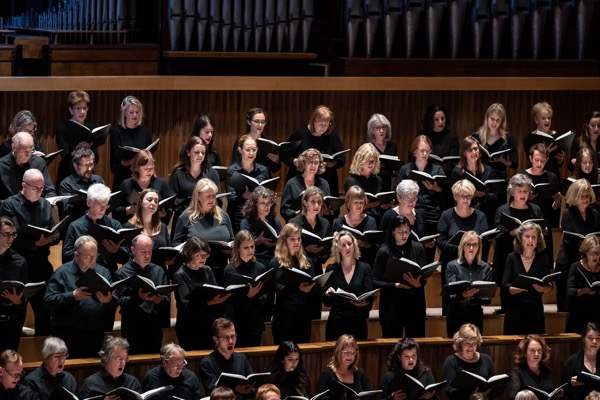
The Bach Choir
Upon his return to England, Coleridge approached Professor Otto Goldschmidt, who taught piano at the Royal Academy of Music, and his wife, the “Swedish Nightingale,” Jenny Lind. He also formed a committee to promote a British performance of the Mass and recruited George Grove and John Stainer.
Legacy Renewed
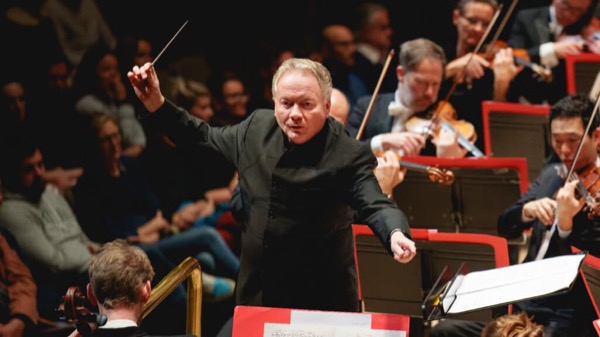
David Hill conducting the Bach Choir
Within six months, the Bach Choir was assembled, and the first full performances of the Bach Mass, under the direction of Otto Goldschmidt, were given on 26 April and 8 May 1876. One hundred and fifty years later, the Bach Choir returns to the work that started it all.
On 26 May 2026, music director David Hill, the Bach Choir, and Florilegium are joined by a distinguished cast of soloists at the Royal Festival Hall for a performance of one of the most profound and awe-inspiring works in Western music.
Johann Sebastian Bach: Kyrie eleison (J.S. Bach Foundation Choir; J.S. Bach Foundation Orchestra; Rudolf Lutz, cond.)
Bach in Victorian Britain
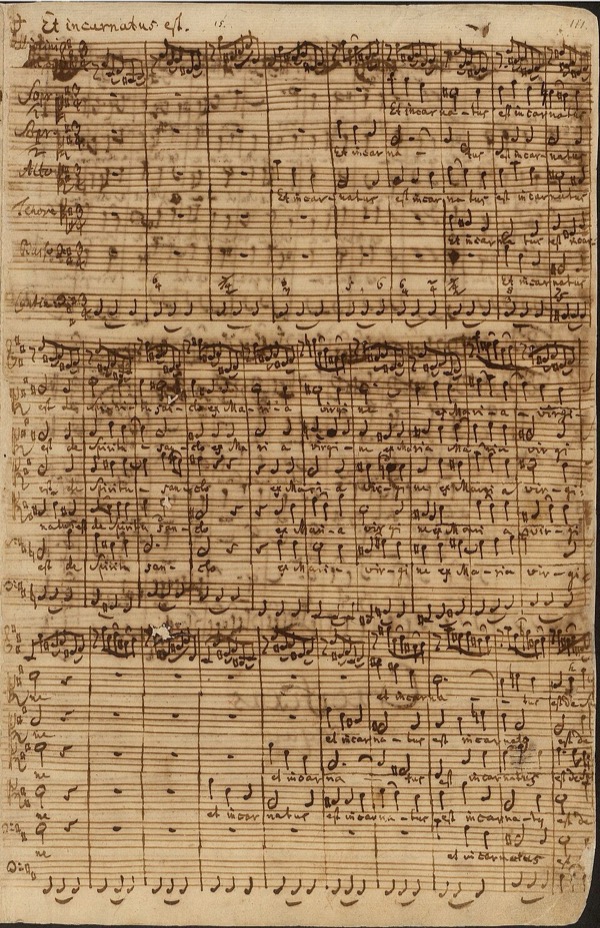
Bach, Mass in B minor, BWV 232: Et incarnatus est (autograph manuscript)
Choral singing had long been associated with church life, but in the second half of the nineteenth century, it expanded into the secular sphere. Large-scale choral festivals during the late Victorian period attracted thousands of participants and audience members.
Choral societies flourished, and participation was seen as a form of moral and civic cultivation. Most remarkably, choral music was no longer confined to cathedrals, as it now belonged to the community.
Within this movement, the music of Johann Sebastian Bach underwent a remarkable revival. While the modern Bach renaissance was initiated by Felix Mendelssohn, it was British choral culture that embraced Bach with particular enthusiasm.
Bach’s music was accorded a moral nobility and architectural strength that aligned with contemporary ideals of spirituality and artistic seriousness. Yet, the Mass in B minor, although individual movements had been performed, was considered extraordinarily demanding, both technically and intellectually.
The founding of the Bach Choir in 1876, with its specific objective of performing the complete B-minor Mass, reflected the growing ambition of amateur choral culture. In time, the choir greatly expanded its repertoire while retaining Bach at the centre of its artistic identity.
Johann Sebastian Bach: Crucifixus (J.S. Bach Foundation Choir; J.S. Bach Foundation Orchestra; Rudolf Lutz, cond.)
Continuity and Renewal
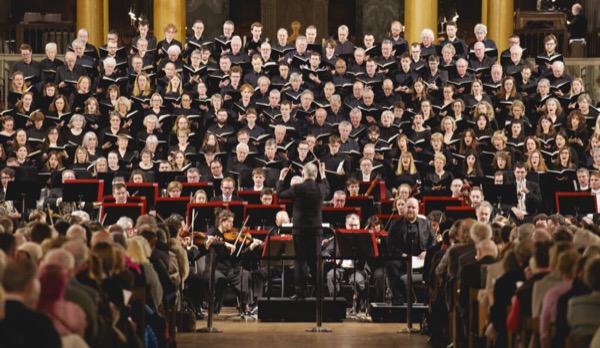
The Bach Choir at Westminster Cathedral conducted by David Hill
Over its 150-year history, the Bach Choir has been in the hands of only nine musical directors. Otto Goldschmidt was succeeded by Charles Villiers Stanford, one of the great architects of the English Musical Renaissance.
Henry Walford Davies and Sir Hugh Allen paved the way for Ralph Vaughan Williams, who championed both Bach and an emerging British repertoire. Sir Adrian Boult bound the Bach Choir to London’s evolving orchestral scene, and Reginald Jacques led the choir for nearly three decades.
With Sir David Willcocks, the Bach Choir established a modern profile, as touring and recording activities were greatly expanded. The current music director, David Hill, was appointed in 1998 and comes from a background of serving as organist and Master of Music at Winchester Cathedral, and as music director of St John’s College, Cambridge.
Under his leadership, the choir continues its Bach tradition, while its commitment to new music has resulted in a number of world-premiere performances and recordings. These distinguished musical directors have guided the Bach Choir with a vision of continuity and artistic renewal for new generations.
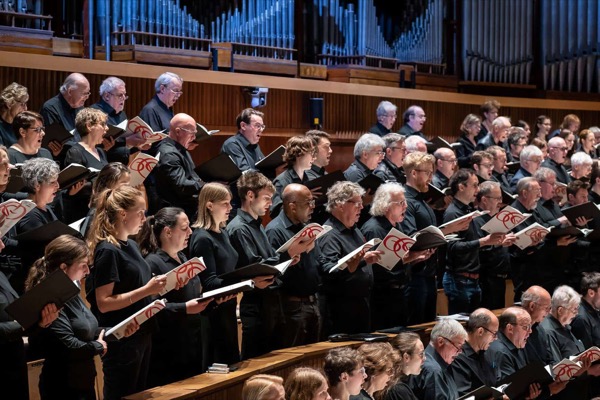
The Bach Choir
Johann Sebastian Bach: Credo in unum Deum – Patrem omnipotentem (J.S. Bach Foundation Choir; J.S. Bach Foundation Orchestra; Rudolf Lutz, cond.)
A Prayer for Peace
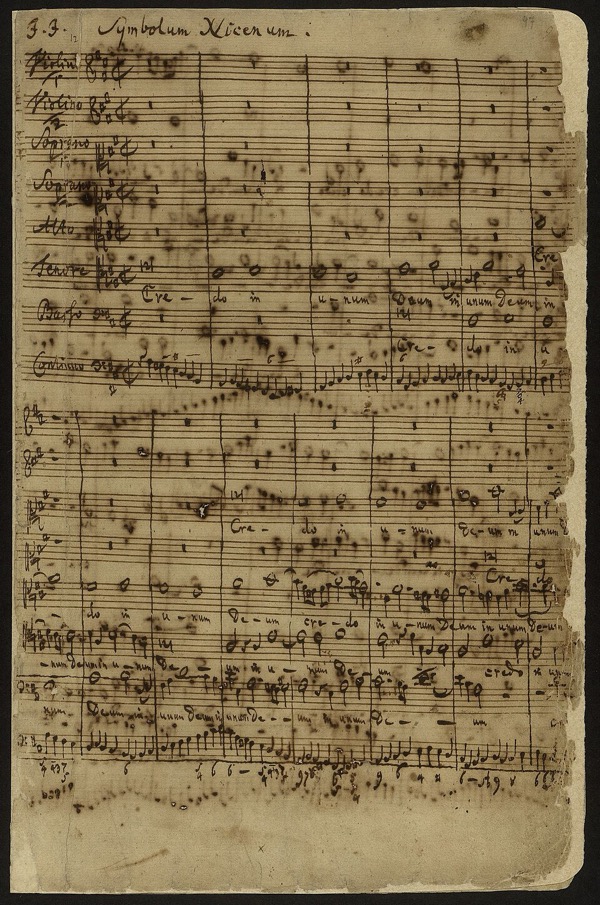
Bach, Mass in B minor, BWV 232: Credo (autograph manuscript)
In 2026, Bach’s concluding plea for peace acquires renewed urgency in a world marked by conflict and humanitarian suffering. In his “Dona nobis pacem,” Bach weaves together two distinct themes in a double fugue. Both universal and deeply personal, this tapestry of sound showcases Bach’s unparalleled contrapuntal skill.
Yet technical complexity never overshadows the text’s heartfelt supplication. Majestic simplicity pairs with emotional resonance to deliver a musical heartbeat grounded in a deeply human appeal.
The Bach Choir, proudly upholding choral excellence for 150 years, has kept this enduring message alive. As an independent choir, it also commissions, performs, and records new works and thereby helps to shape the choral tradition of the future.
For more of the best in classical music, sign up for our E-Newsletter
Bach’s Mass in B minor – The Bach Choir
Johann Sebastian Bach: Dona nobis pacem (J.S. Bach Foundation Choir; J.S. Bach Foundation Orchestra; Rudolf Lutz, cond.)