Twenty-five performances by some of the greatest organists represented on YouTube, here listed in roughly chronological order of recording.
While subjectively chosen, these are nevertheless widely acknowledged as groundbreaking and standard-setting milestones in interpretation.
The majority reflect the influence of the Franco-Belgian organ school, whose roots go back to the early XIXth century.
And although rival approaches to performance have emerged since 1960 ‒ based more or less on historically-informed theories ‒ the indiscriminate generalising of non-legato touch, random ornamentation, unchanging registration and eccentric tempi has yielded mixed results.
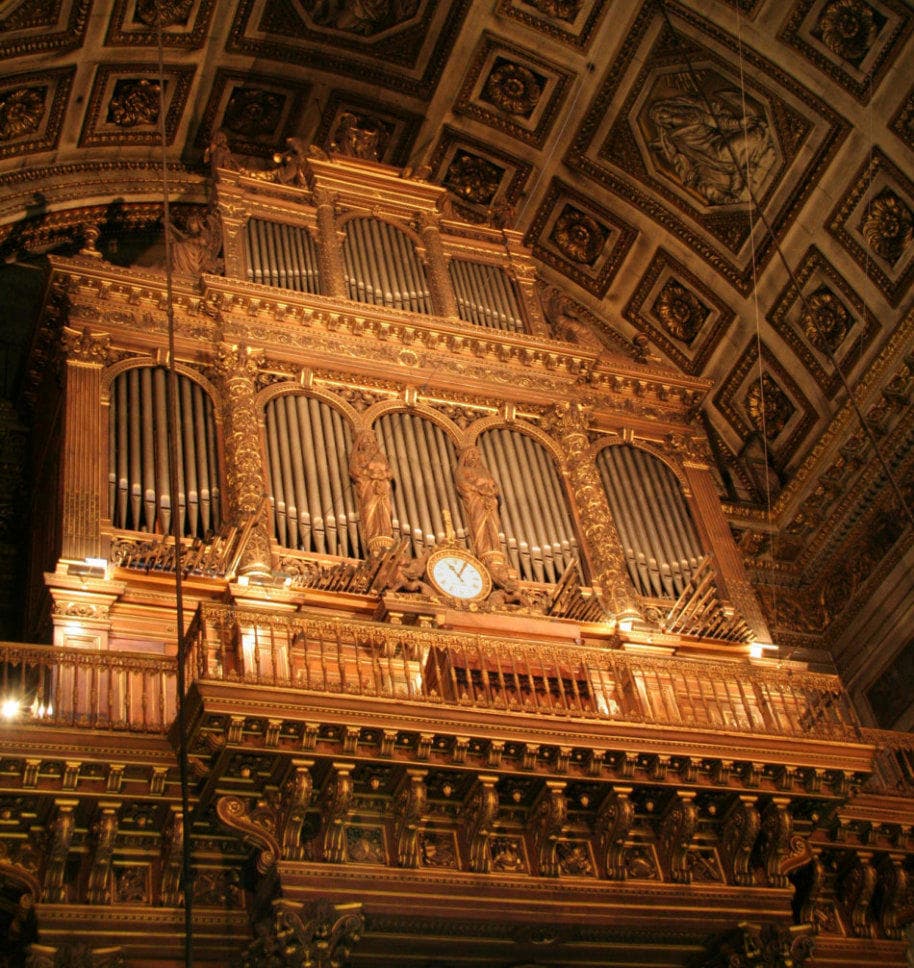
Cavaillé-Coll organ at the Madeleine
Ultimately, such controversies boil down to matters of taste, and should not interfere with musicians’ commitment to their instrument, nor with listeners’ enjoyment of their favourite renditions.
Thanks to enthusiastic online postings, we can now access an unprecedented palette of music, spanning many periods, styles and regions.
Sadly, many famous organists/composers/improvisers were never recorded, while others are not yet uploaded to YouTube.
We must be grateful for what we have!
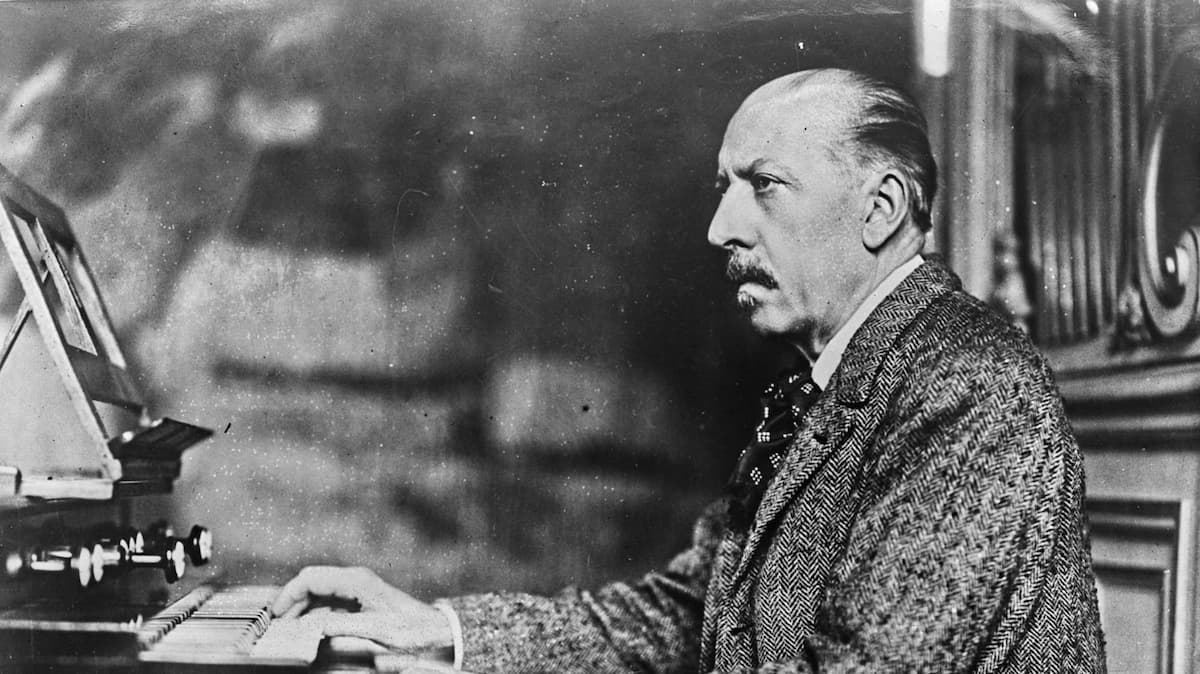
Charles-Marie Widor
Charles-Marie Widor (1844-1937), creator of the organ symphony, was 88 years old in 1932, when he made his only known recording, playing the celebrated Toccata from his 5th Symphony Op 42 No 1. He enjoyed an extraordinarily long 64-year career at the majestic instrument in Saint-Sulpice, Paris ‒ the largest one produced by master organ builder Aristide Cavaillé-Coll (1811-1899). Widor’s sustained rhythm and deliberate phrasing contradict speculation that his slower tempo was due to infirmity or age.
Widor, and also César Franck (1822-1890), were directly linked to the origins of the Franco-Belgian organ school through their Brussels teachers, François-Joseph Fétis (1784-1871) and Jacques-Nicolas Lemmens (1823-1881).
These sought out authentic Bach style, as performed by Adolf Friedrich Hesse (1809-1863), himself instructed by Christian Heinrich Rinck (1770-1846), a student of J.S. Bach’s last pupil, Johann Christian Kittel (1732-1809).
Widor was then among the first teachers in Paris to impose the study of Bach on his students, including Marcel Dupré and Olivier Messiaen (see below).
Ch. M. Widor plays his Toccata from V Symphony Op. 42 No. 1
Fernando Germani (1906-1998), organist of St-Peter’s in Rome during and after WWII, already applied many of the interpretative principles later adopted by the historically-informed movement. A pioneer of recording Bach on Northern European instruments, he could also reveal the best features of every instrument encountered on his numerous international tours. He influenced Marie-Claire Alain and Luigi Ferdinando Tagliavini (see below).
While Italy was under post-War occupation, he recorded this beautifully articulated Noel X by Louis-Claude Daquin (1694-1772).
[IHORC] Fernando Germani – Louis-Claude Daquin, Noël X
Maurice Duruflé (1902-1986) wrote a few, but superbly crafted compositions with enduring appeal to both musicians and the public. Here, he plays his Prelude and Fugue on the Name of Alain Op 7, in 1953, at the National Institute for Blind Youth in Paris. It is the world’s oldest school for the blind (1784), where Braille notation was developed, and where Louis Vierne, André Marchal and Antoine Reboulot (see below) were alternately pupils and teachers. Among Duruflé’s eminent students were his future wife Marie-Madeleine Duruflé, Marie-Claire Alain and Kenneth Gilbert (see below).
Maurice Duruflé plays Prélude et Fugue sur le nom d’Alain (Recorded 1953)
Louis Vierne (1870-1937), the nearly-blind organist of Notre-Dame Cathedral in Paris, was a prolific composer who dramatically died at the console while giving a recital.
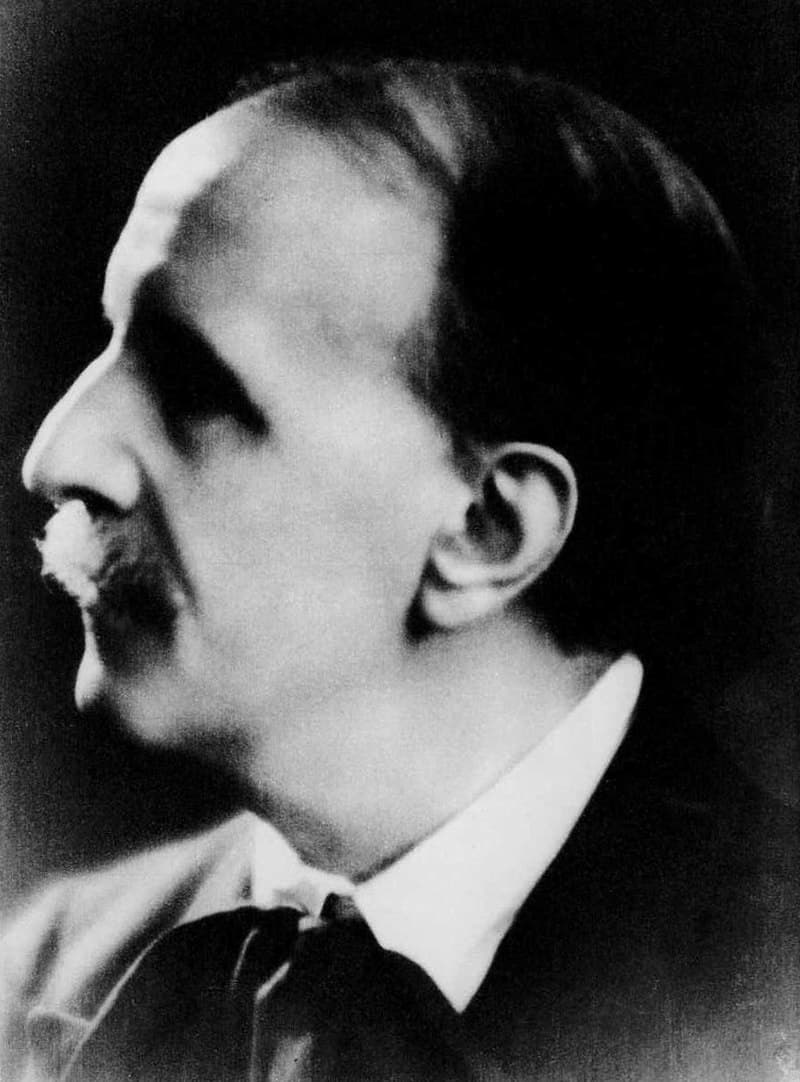
Louis Vierne, 1910
A pupil of César Franck and assistant to Charles-Marie Widor, his works are the backbone of modern organ repertoire.
Carillon de Westminster Op 54 No 6, is played here in 1952 by his friend and collaborator, Maurice Duruflé.
Vierne: Carillon de Westminster – Maurice Duruflé
Louis Vierne’s Impromptu Op 54 No 2, played by Marie-Madeleine Duruflé (1921-1999), a student of Marcel Dupré (see below) and of Maurice Duruflé, her husband.
Mme. Duruflé plays Vierne Impromptu
A legendary performance by Marie-Madeleine Duruflé of the Finale to Louis Vierne’s 3rd Symphony Op 28.
Mme. Duruflé plays Vierne Symphony 3: Finale
Johann Sebastian Bach (1685-1750) Fantasia in g minor BWV 542, in a uniquely inspired 1955 rendition by the charismatic and influential André Marchal (1894-1980), an undisputed pillar of the French tradition.
Among the numerous organists who benefitted from his insights were Antoine Reboulot and Marie-Claire Alain (see below).
Andre Marchal plays Bach BWV 542
Pièce Héroïque FWV37 by César Franck (1822-1890), played by Marcel Dupré (1886-1971) in NY during a 1960 concert tour. Dupré’s groundbreaking compositions, improvisations, thousands of concerts and countless students trained on his annotated editions of Bach, Handel, Mendelssohn, Schumann, Liszt and Franck made him the most influential organist of the 20th century. His students included future stars Olivier Messiaen, Jehan Alain, Marie-Claire Alain, Marie-Madeleine Duruflé, Antoine Reboulot, Carl Weinrich, Luigi Ferdinando Tagliavini and Michael Schneider (see below).
Franck: Pièce héroïque (Remastered 2015)
Antoine Reboulot (1914-2002) plays the Fantasia in f minor K608 by Wolfgang Amadeus Mozart (1756-1791) in 1956 on the Organ of Notre-Dame-de-Versailles, which he helped to restore.
Imbued with energy and elegance, his readings were memorable and authoritative across a broad repertoire.
Unwilling to cope with the winter rigours of cold Paris churches, he gave up a prestigious position at Saint-Germain-des-Près for a teaching post in Montreal, Canada, where vast churches are centrally heated.
Fantaisa for Organ in F Minor, K. 608
Bernardo Pasquini (1637-1710) Works for Two Organs, recorded in the early 1970s by Marie-Claire Alain (1926-2013) and Luigi Ferdinando Tagliavini (1929-2017), both extensive researchers into early keyboard literature.
M-C Alain was the most recorded classical organist and taught almost as many notable students as her teacher, Marcel Dupré.
L-F Tagliavini developed widely applied performance theories.
Marie-Claire ALAIN & Luigi Ferdinando TAGLIAVINI playing PASQUINI EDO 227
Dieterich Buxtehude (1637?-1707) was famously J.S. Bach’s teacher.
His Prelude Fugue and Chaconne in C BuxWV 137 was recorded in Montreal by Kenneth Gilbert (1931-2020) in 1964.
This and the following selections are among Gilbert’s finest works.
He would later concentrate primarily on the harpsichord.
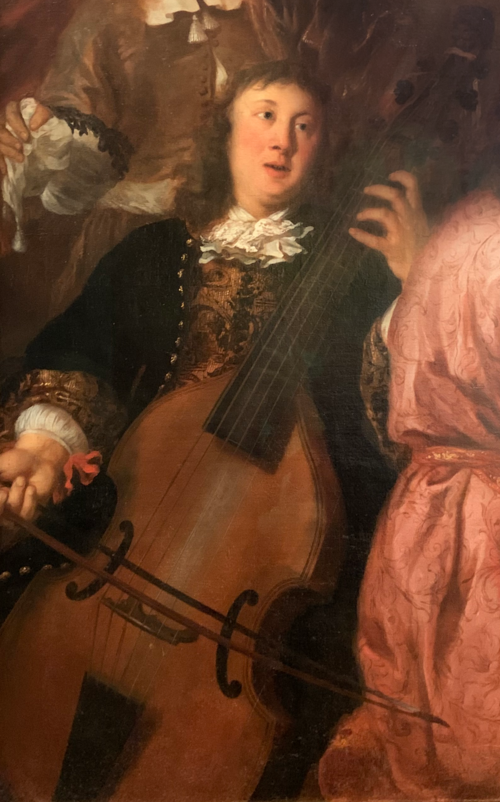
Depiction of the Danish baroque composer Dieterich Buxtehude in the painting
“The Musical Party” 1674 by Johannes Voorhout
Prelude in C Major, BuxWV 137: I. Prelude. II. Fugue. III. Chaconne – Presto
Buxtehude’s Chaconne in e minor BuxWV 160, played by Gilbert.
Chaconne in E Minor, BuxWV 160
Georg Böhm (1661-1733), inventor of the chorale partita, had a stylistic influence on J.S. Bach.
Documentary evidence suggests they were friends ‒ quite likely, given their geographic and social proximity, and Bach’s companionable nature.
Gilbert’s stylistic purity really shines through in this Prelude and Fugue in d minor.
Prelude and Fugue in D Minor
Johann Gottfried Walther (1684-1748) was J.S. Bach’s cousin and exact contemporary. He compiled a comprehensive dictionary of music, Musicalisches Lexicon (1732).
Gilbert delightfully unfolds the many moods of Chorale Partita “Jesu, Meine Freunde”.
Walther: Chorale Partita « Jesu, Meine Freude »
Walther’s transcriptions of Italian composers inspired J.S. Bach to do the same, especially of his favourite Vivaldi.
This Concerto del Signore Torelli sounds playfully narrative in Gilbert’s hands.
Walther: Concerto Del Sig. Torelli, Appropriato All’organo
J.S. Bach’s Fugue in g minor BWV 578, played by Fernando Germani in 1978.
Recorded as the soundtrack to a movie, Germani imparts forward momentum without sacrificing expression, or resorting to fast tempi.
Fuga in Sol minore, BWV 578
J.S. Bach’s Toccata and Fugue in F Major BWV 540, played by Michael Schneider (1909-1994). Schneider blends the most eloquent features of German and French styles, resulting in scintillating structural clarity.
Among his numerous pupils was Johannes Geffert. (see below)
Michael Schneider plays Toccata & Fugue in F Major, BWV 540
J.S. Bach’s “Dorian” Toccata and Fugue BWV 538, played by Carl Weinrich (1903-1991), an American organist with close connections to Europe.
His insightful phrasing, registration and articulation were striking and unforgettable.
Toccata and Fugue in D Minor, BWV 538 “Dorian”
LIVE Olivier Messiaen (1908-1992) improvises at the Cavaillé-Coll instrument of the Paris church of the Sainte-Trinité, where he served for 61 years.
An accomplished ornithologist, he sought inspiration in bird-song. Here, he announces each topic of improvisation. A most valuable document!
Messiaen plays Messiaen
LIVE Handel (1685-1759) Allegro from Organ Concerto in B Flat Major Op 4 No 2 HWV 290, played by the always spirited Marie-Madeleine Duruflé in 1992, during a stay in America ‒ an enlightening opportunity to watch her play.
Marie-Madeleine Durufle at the Crystal Cathedral
LIVE Litanies by Jehan Alain (1911-1940), powerfully executed by his sister, Marie-Claire Alain. His fall in heroic combat led to numerous tributes by post-War composers, notably Maurice Duruflé (see above).
Marie-Claire Alain plays Litanies by Jehan Alain
LIVE Organ demonstration by Marie-Claire Alain.
A beginner’s tour, and a touching document for the many living organists who benefitted from her motivating guidance.
Marie-Claire Alain – Organist Extraordinaire
LIVE Bach Chaconne BWV 1004, its melodic variations enhanced by the harmonies of this organ transcription, richly rendered by Johannes Geffert (b. 1951) in Cologne Cathedral.
Geffert’s erudition and exposure to every facet of XXth century performance practice make him an even-handed arbiter in matters of authenticity and esthetic refinement.
J.S.Bach Chaconne d-moll BWV 1004 (A.Landmann) Johannes Geffert
LIVE Naji Hakim (b. 1955) premieres his Ubi Caritas in Saint-Eustache, Paris ‒ a masterclass in graded crescendo.
Naji Hakim UBI CARITAS – premiere
Naji Hakim plays the Finale of his Hommage à Igor Stravinsky in 1990, during his tenure of the Cavaillé-Coll organ of the Sacré-Coeur Basilica, Paris.
This virtuoso piece showcases XXth century technical and stylistic innovations, suitable for reverberant churches with powerful instruments.
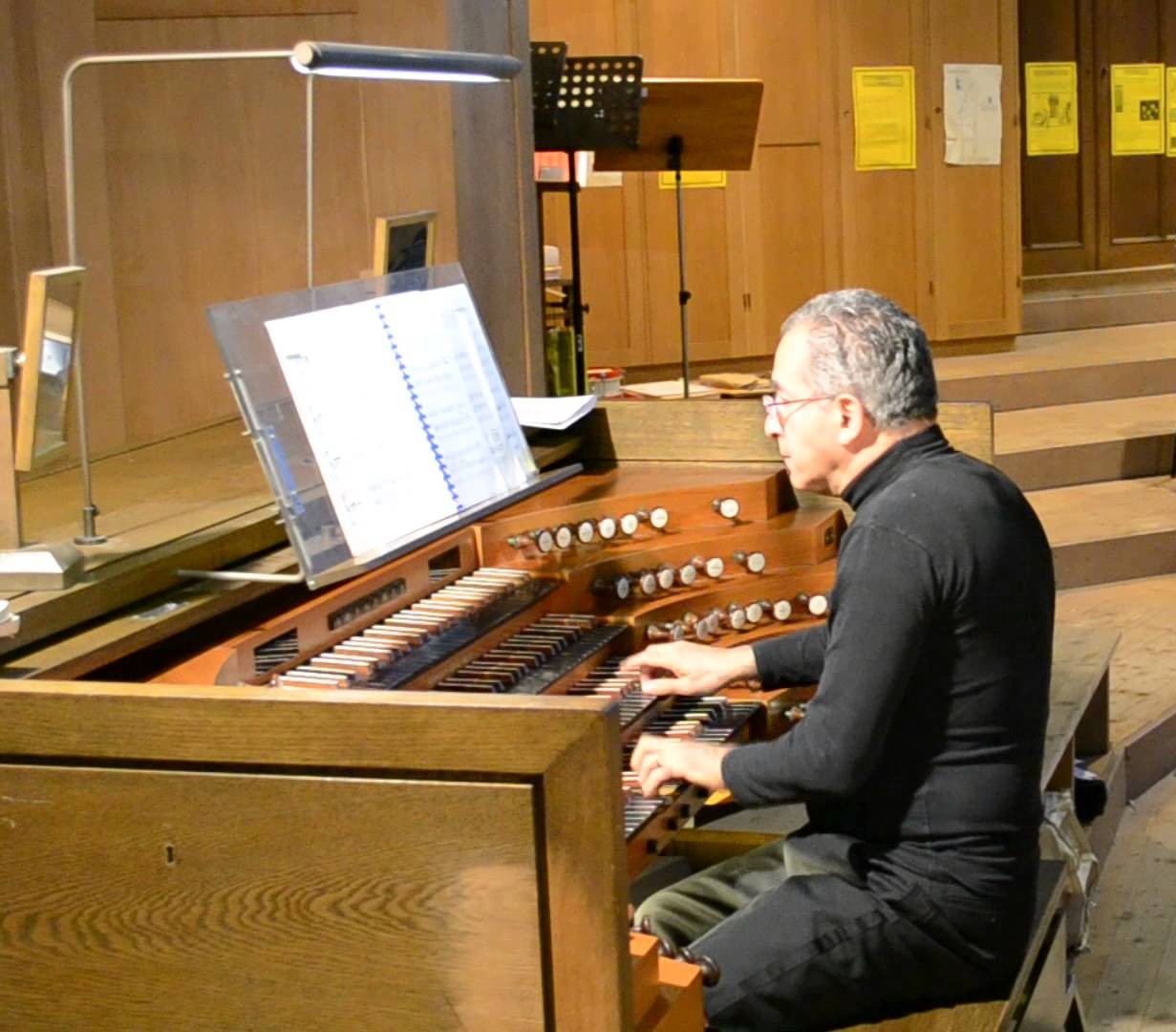
Naji Hakim © orgues-chartres.org
Hakim plays Hakim on the Sacre Coeur organ
For more of the best in classical music, sign up for our E-Newsletter