Prokofiev was an extraordinary pianist, but he also loved his strings. Growing up on a rural Ukrainian estate in Sontsovka, thousands of miles from any major city, Reinhold Glière was engaged as a composition tutor. Prokofiev was only 11, and Glière brought his violin.
That encounter proved endlessly fascinating and eventually led to the compositions for strings. Prokofiev celebrated his birthday on 23 April 1891, and that’s according to the Gregorian calendar.
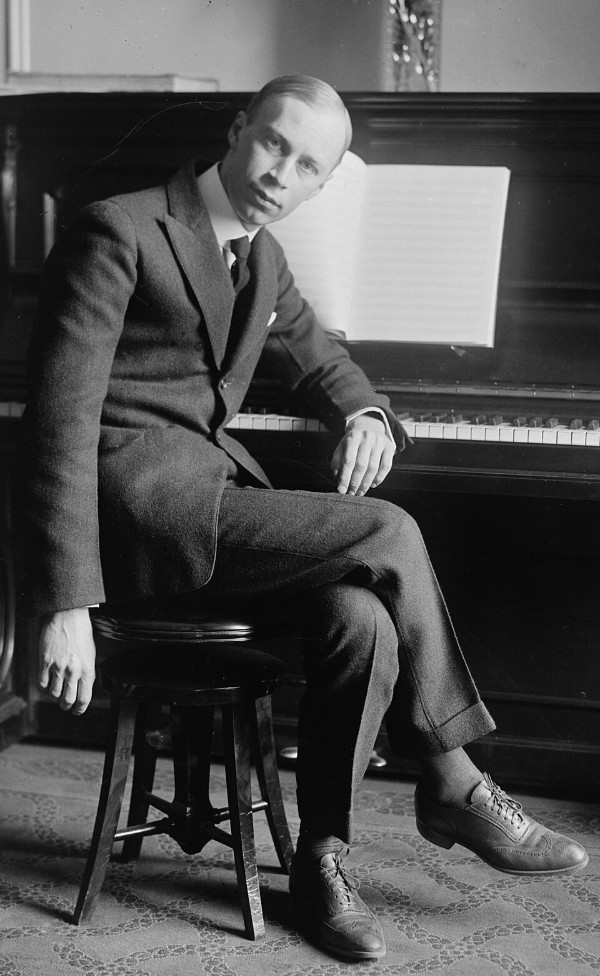
Sergei Prokofiev
However, his birth certificate shows that he was actually born four days later, on 27 April 1891. Apparently, Prokofiev himself never knew. Be that as it may, why don’t we dive into his more elusive and far less extroverted string concertos?
Sergei Prokofiev: Violin Concerto No. 1 in D Major, Op. 19
A Melody of Love
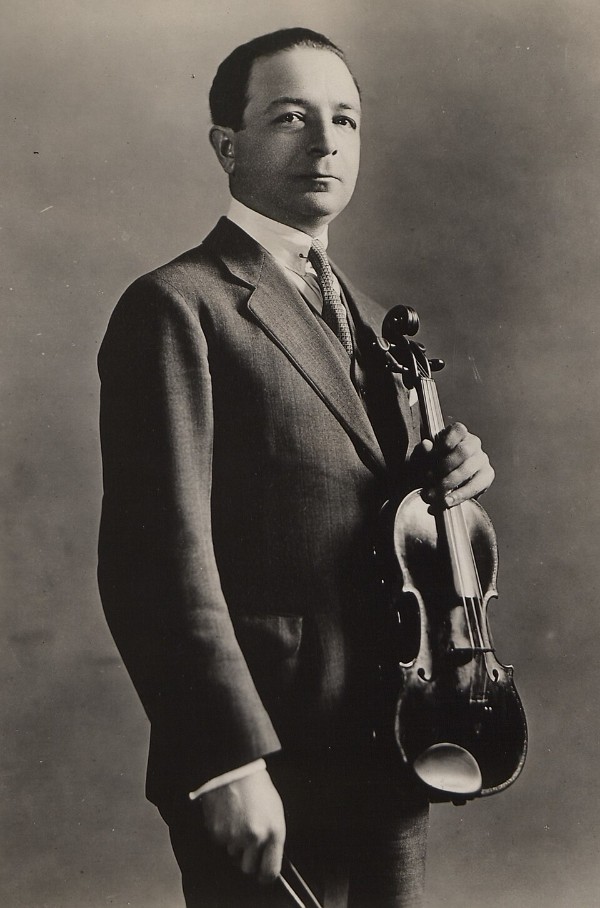
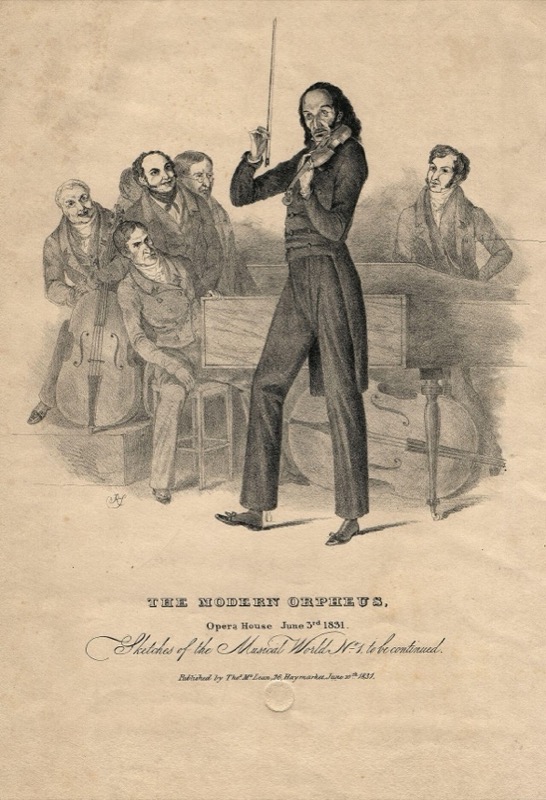
Paweł Kochański
Many years later, Prokofiev had his first serious love affair with Nina Meshcherskaya, the daughter of a wealthy industrialist. Specifically for her, it is said, he composed a long-spun violin melody that would become the start of his first Violin Concerto.
However, Prokofiev initially had no idea how to continue, as this sweet melody really didn’t fit his usually mischievous style at all. But in the spring of 1916, the violinist Paweł Kochański came to the rescue.
Prokofiev had heard him perform the violin suite “Myths” by Szymanowski, and he absolutely loved the opening movement with its fragrant harmonies and multiple string tremolandi.
A Premiere in Turmoil
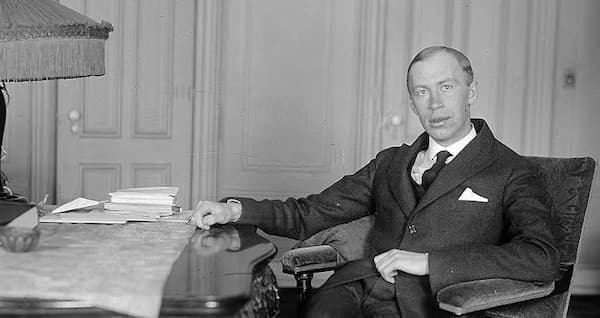
Sergei Prokofiev
Thus, in the summer of 1917, and with the assistance of Kochański, Prokofiev composed the rest of his Concerto in a matter of weeks. In terms of orchestration, he used his “Classical Symphony,” completed in the same year, as a model.
He did add some horns, a tuba, and a harp, plus tambourine and snare drum for the central Scherzo movement. The premiere in Paris was a mixed bag, as Prokofiev had trouble finding a soloist. Kochański was unavailable, Huberman refused to look at the score, and Milstein was still in Russia.
In the end, the solo part was taken by Koussevitzky’s concertmaster Marcel Darrieux. As for the audience already used to modern music with a certain amount of shock value, Prokofiev’s First Violin Concerto was simply too Romantic.
As for the premiere of the work in the Soviet Union, it was performed just three days after the Paris premiere by two 19-year-olds, namely Nathan Milstein and Vladimir Horowitz. Horowitz played the orchestral bits on the piano, and Milstein wrote in his memoirs, “If you have a great pianist like Horowitz playing with you, you don’t need an orchestra.”
Sergei Prokofiev: Violin Concerto No. 2 in G minor, Op. 63
Composed in Transit
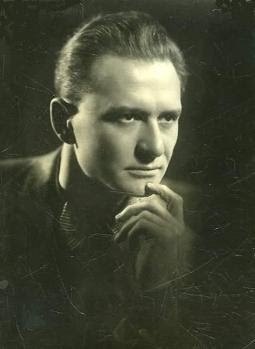
Robert Soetens
Over the next decade, Prokofiev wrote a number of compositions for the violin, including his Five Melodies and a Sonata for Two Violins. That sonata was first performed in the West by Samuel Dushkin and Robert Soetens. And when Dushkin received a new concerto from Stravinsky, Soetens demanded a dedicated concerto from Prokofiev.
The 2nd concerto dates from 1935, composed just before Prokofiev and his family resettled in the Soviet Union. In fact, he was on a concert tour with Soetens while working on this concerto, and he later wrote, “the number of places in which I wrote the Concerto shows the kind of nomadic concert-tour life I led then.”
The main theme of the 1st movement was written in Paris, the first theme of the 2nd movement at Voronezh, the orchestration was finished in Baku, and the premiere was given in Madrid. Indeed, the premiere performance was given on 1 December 1935 at the Teatro Monumental in Madrid with Soetens as the soloist.
A Cosmopolitan Voice
The Spanish audience loved it, and Prokofiev consciously changed his compositional style to a “new simplicity,” entirely different from that of the earlier concerto. That means that the orchestra is more muted and at times even sombre, combining classical clarity with modern harmonic edges.
Stylistically, it’s not easy to classify. It sits somewhere between the biting sarcasm of his early modernist works and the far less monumental tone of his Soviet-period symphonic ruminations.
More transparent than his first Concerto, this work is melodically direct yet harmonically unpredictable. Prokofiev uses some Spanish-inflected rhythms, and the sparse orchestration leaves plenty of space for the violin. If there is irony, it’s certainly subtle and subdued. Some commentators ascribe a nomadic and cosmopolitan character to the work.
Sergey Prokofiev: Cello Concerto in E Minor, Op. 58 (Steven Isserlis, cello; Frankfurt Radio Symphony Orchestra; Paavo Järvi, cond.)
Collaboration Cut Short
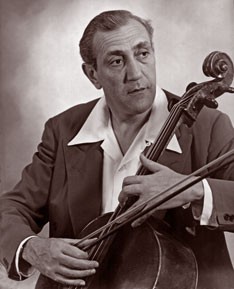
Gregor Piatigorsky
Things get a bit more complicated when we talk about the Prokofiev Cello Concerto in E minor. Initially, it seems that the great Russian cellist Gregor Piatigorsky asked Prokofiev for a cello concerto. The composer was interested and asked the cellist to demonstrate various effects on the cello.
Prokofiev, in the end, agreed to write the concerto and the first movement was completed in 1933. Piatigorsky was thrilled with the opening of the scherzo, but then Prokofiev decided to return to the Soviet Union.
As Piatigorsky had escaped the Soviet Union, he could no longer be the dedicatee, nor would he be allowed to give the first performance. That honour fell to Russian cellist Lev Berezovsky on 28 November 1938.
A Work Rejected
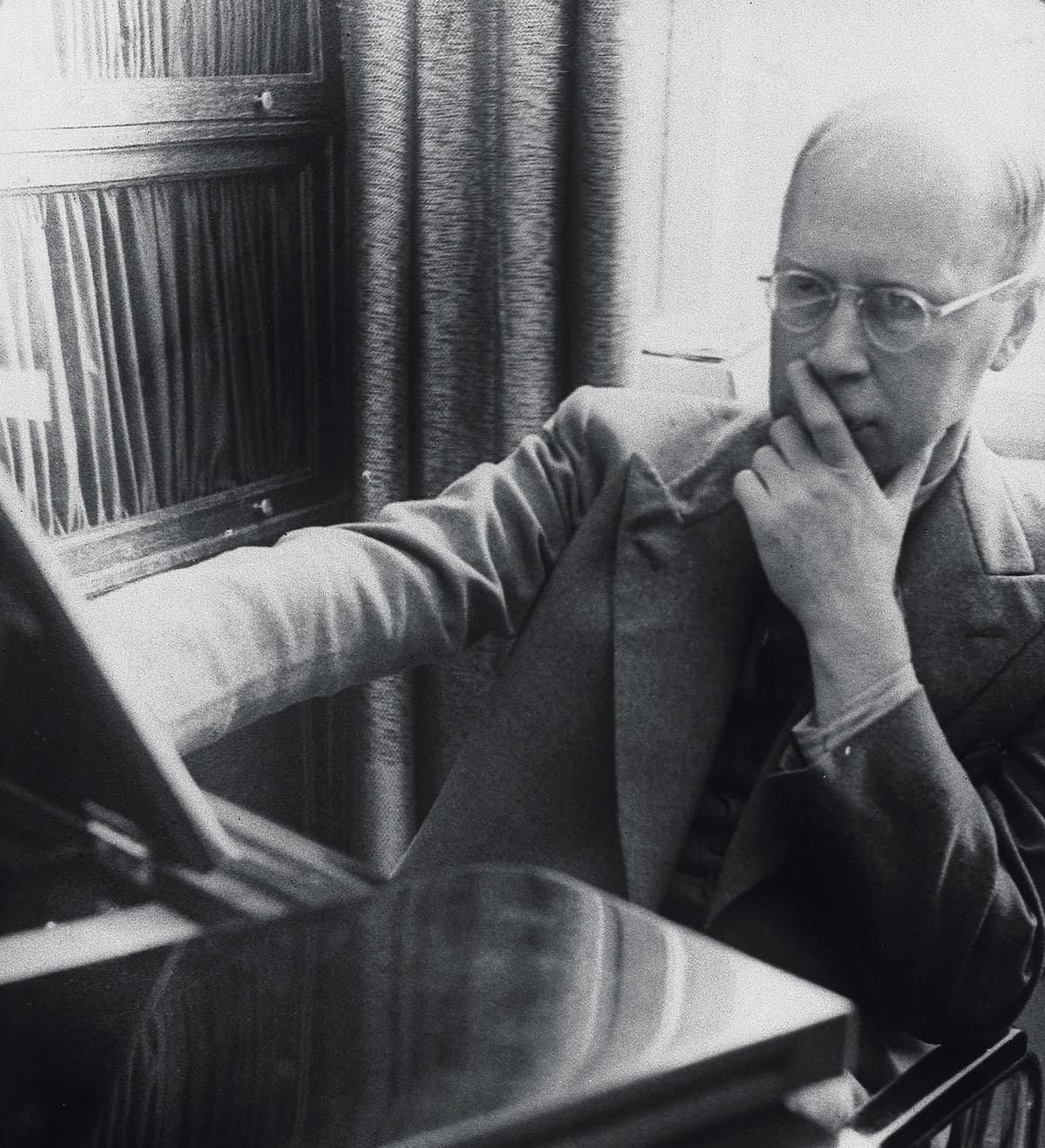
Sergei Prokofiev
The premiere was a dismal failure, and Sviatoslav Richter, who had played the initial piano rehearsals, blamed both cellist and conductor. The cellist wanted to play it sentimentally, and the conductor had no feeling for the piece. As such, as Richter reported, it was “a total fiasco.”
Piatigorsky got his turn in Boston in 1940, but it was less than a triumph. Since Prokofiev was busy with some film projects, he simply withdrew the work. There was an attempt to revive it by the cellist Daniil Shafran in the late 1930s, but it all came to nought.
And thus it took until 1947 for the young Mstislav Rostropovich to revive it in a piano performance in Moscow. An anecdote reports that Prokofiev told Rostropovich that he liked the themes of the concerto, but was unconvinced by the forms.
A Second Life in New Form
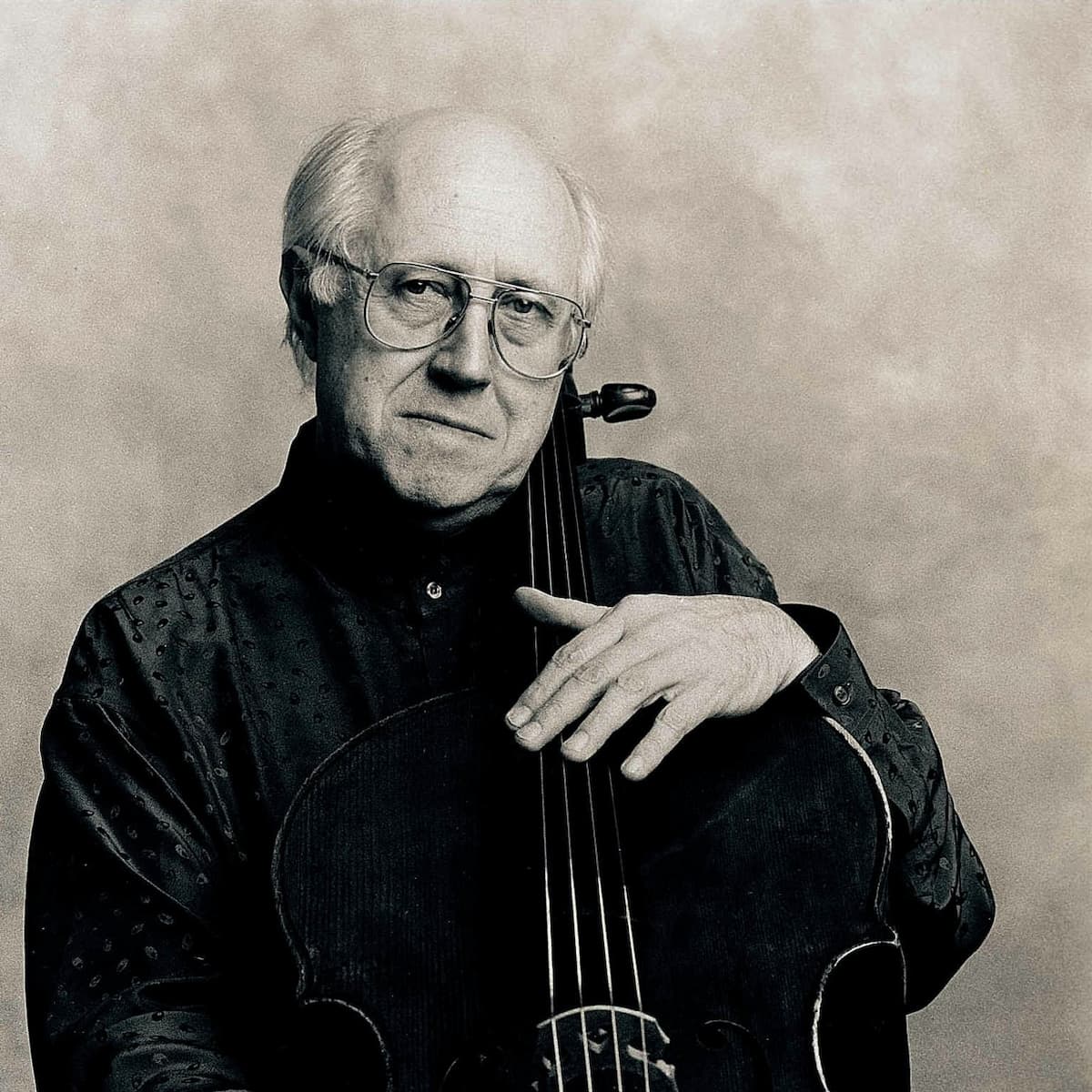
Mstislav Rostropovich
Prokofiev decided to rewrite the piece, and after initially calling it his “Cello Concerto No. 2,” changed the name to “Symphony-Concerto.” And while most of the themes are directly derived from the Cello Concerto, the two works are very different in spirit.
The Symphony-Concerto turned out to be more popular than the Cello Concerto. For one, Rostropovich had his hand in the score, specifically the solo part. And let’s not forget that Rostropovich played this version all over the world.
Sergei Prokofiev: Symphony-Concerto in E minor, Op. 125
Unfinished Farewell
Prokofiev and Rostropovich actually became good friends, spending a number of summers together at the composer’s dacha. They collaborated on rewriting the early cello concerto and a number of other projects.
They started on a Cello Concertino, but the work was unfinished by the time of Prokofiev’s death. Composer Dmitry Kabalevsky, with the cellist’s memories of conversations about how the work should end, completed and orchestrated the unfinished Concertino.
Once they had completed the final movement, Rostropovich gave the first performance in March 1960. Nowadays, it is rarely performed and valued mainly by specialists. With a kind of late-style honesty that avoids display, it is simply not deemed attractive enough.
In his string concertos, we find a composer far removed from the virtuoso persona of his piano works. These works seem to me to be a deeply personal journey not at all interested in spectacle. They offer a quieter portrait of Prokofiev, as these concertos prize refinement and the search for an elusive poetic voice.
For more of the best in classical music, sign up for our E-Newsletter