
The Baroque Era, lasting roughly from 1600 to 1750, was a golden age for classical music, yet the names most often celebrated today are almost entirely male.
However, a remarkable group of women composers were writing music for royal courts, church services, and private salons across Europe.
These women not only mastered composition but often had to fight to get anyone to take them seriously as artists.
Here are twelve female composers of the Baroque and early Classical eras whose works deserve to be heard and celebrated once again.
Élisabeth Jacquet de La Guerre (1665–1729)
Jacquet de La Guerre’s Violin Sonata No. 1
Élisabeth Jacquet de La Guerre was born in Paris in 1665 to a musical family.
She was a prodigy and performed for Louis XIV at the age of five. She ultimately joined the French court as a musician and continued dedicating works to the king for the rest of her life.
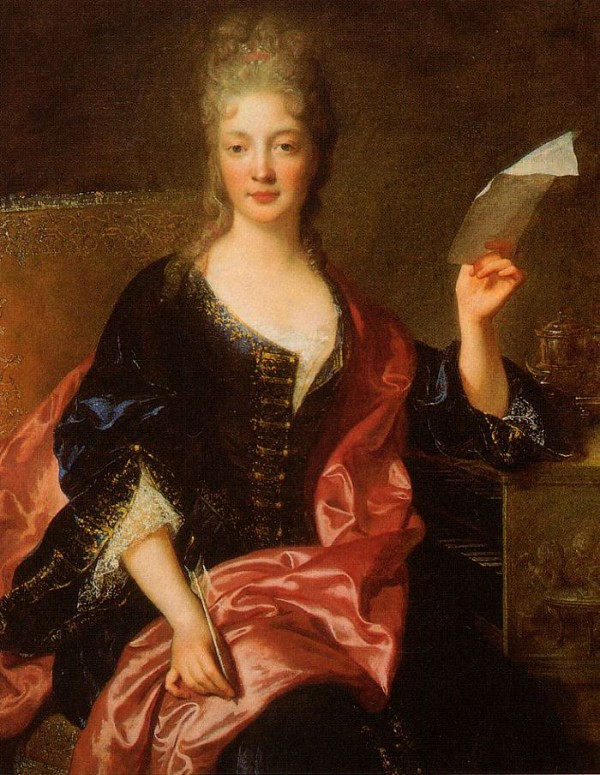
Élisabeth Jacquet de La Guerre
She published her first works – a book of harpsichord pieces – in 1687, when she was 22.
She went on to compose sonatas, cantatas, ballets, operas, and more.
Françoise-Charlotte de Senneterre Ménétou (1679–1745)
Ménétou’s “On dit qu’Amour vient surprendre”
Françoise-Charlotte de Senneterre Ménétou was born to an aristocratic French family in 1679. When she was nine, she (like Jacquet de La Guerre) appeared before Louis XIV.
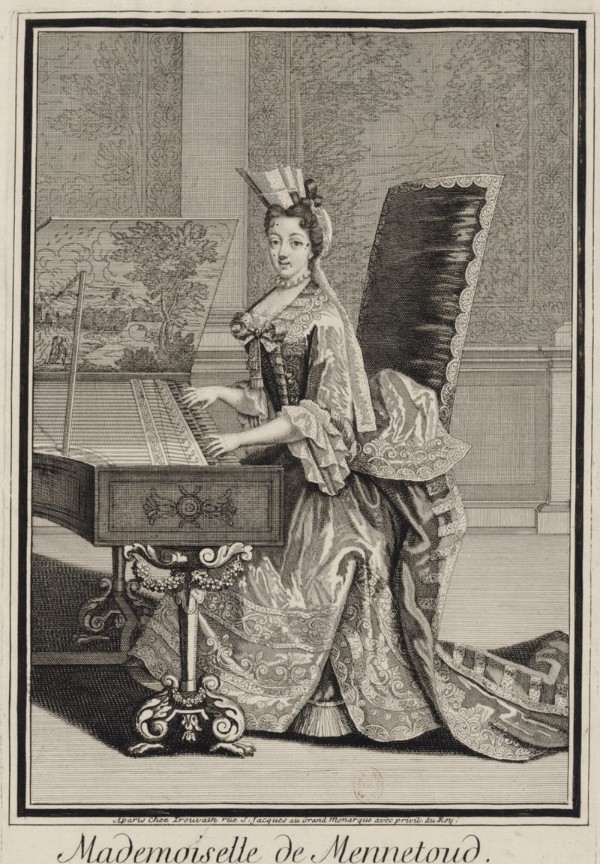
Françoise-Charlotte de Senneterre Ménétou
In 1691, when she was twelve, the first collection of her works was published. She became the youngest woman composer to have her music published by the royal printer.
She married at nineteen and gave birth to her only surviving son the following year.
Camilla de Rossi (fl. 1670–1710)
de Rossi’s “Il Figliuol Prodigo”
There is much we still don’t know about Camilla de Rossi, such as her birth and death dates.
We do know that she was active in the late part of the seventeenth century and early part of the eighteenth century in northern Italy and Austria.
She was commissioned by Emperor Joseph I of Austria (who reigned between 1705 and 1711) to write four oratorios, which were all performed at the royal chapel.
She has been praised by performers and scholars for the emotional impact of her vocal parts and her expertise at instrumental writing.
Maria Margherita Grimani (1680–fl.1720)
Grimani’s Sinfonia to Pallade e Marte
Maria Margherita Vitalini was born in 1680. She married a lawyer professor who worked at the University of Bologna.
During the eighteenth century, Italian composers were fashionable to hire in Vienna. Grimani became the first woman to have an opera performed at the Vienna Court Theater.
She also wrote oratorios to celebrate Emperor Charles VI’s military triumphs.
We don’t know when or where she died.
Rosanna Scalfi Marcello (ca. 1704–fl. 1742)
Marcello’s “Corre al lume” from Cantata 4
We don’t know when Rosanna Scalfi Marcello was born or died, but she was professionally active in Vienna between 1723 and 1742.
A dramatic legend survives about her life. Apparently, as a young woman, she was a Venetian gondola singer.
Composer and nobleman Benedetto Marcello was enchanted by her voice, took her on as a student, and then married her.
Unfortunately, it was illegal for a nobleman to marry a commoner, and after Marcello died, Rosanna was left scrambling for financial support…which his family would not provide to her.
Wilhelmine of Prussia (1709–1758)
Wilhelmine’s Harpsichord Concerto in G-minor
Wilhelmine is best remembered today as the older sister of Frederick the Great. Both suffered extensive physical and emotional abuse during their childhood.
After her brother was caught attempting to flee the country with his male lover, the family was in need of some good publicity.
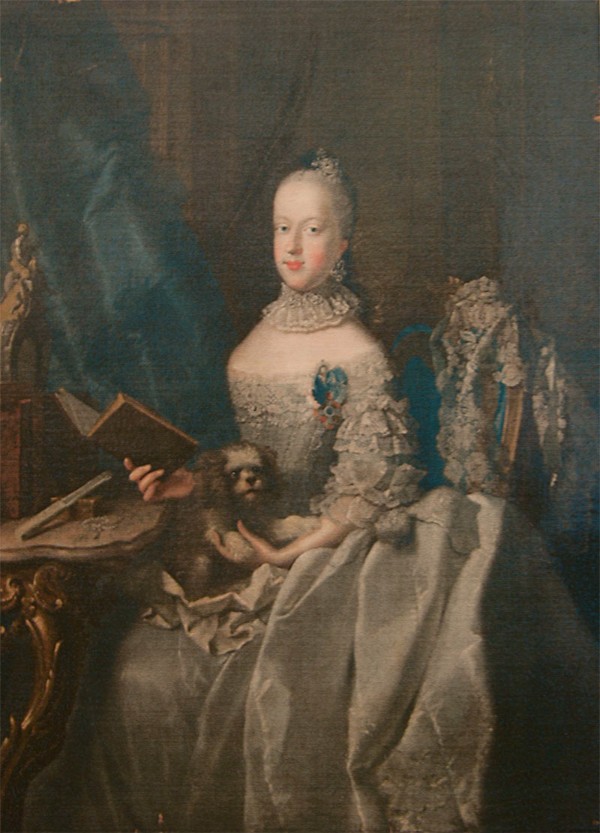
Wilhelmine of Prussia
A reluctant Wilhelmine agreed to get married to Frederick, Margrave of Brandenburg-Bayreuth. The couple worked to make Bayreuth a center of architecture and intellectualism.
Wilhelmine was a talented musician and composer. In 1740, she wrote an opera for her husband’s birthday.
Maria Teresa Agnesi Pinottini (1720–1795)
Agnesi’s “Non piangete, amati rai”
Maria Teresa Agnesi was born in Milan in 1720 to minor nobility. Her sister Maria Gaetana Agnesi, two years her senior, was a mathematics and language prodigy.
Maria Teresa’s music was being performed and commented upon by foreign travelers when she was still in her teens.
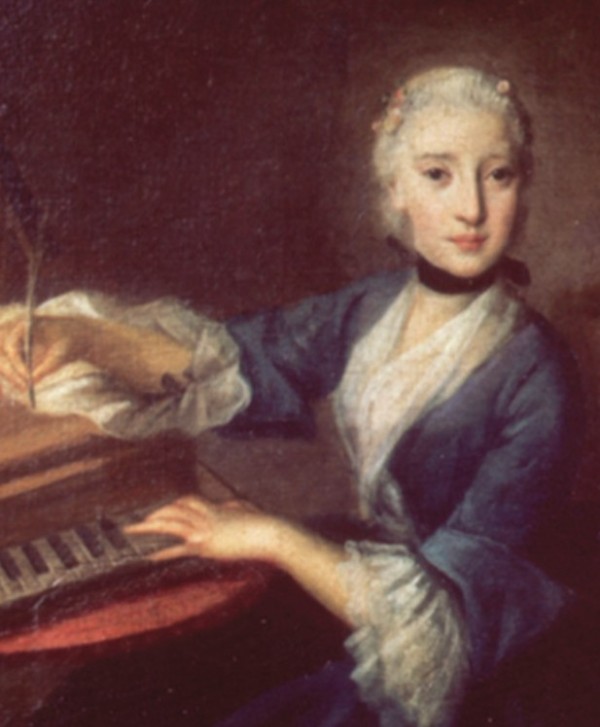
Maria Teresa Agnesi Pinottini
She married in 1752, but unfortunately struggled financially, especially after her husband died young.
Anna Amalia of Prussia (1723–1787)
Anna Amalia’s Flute Sonata in F-major
Princess Anna Amalia of Prussia was the much younger sister of Wilhelmine.
She suffered the same abusive childhood that her siblings had, and used her music studies to escape the cruelty she endured.
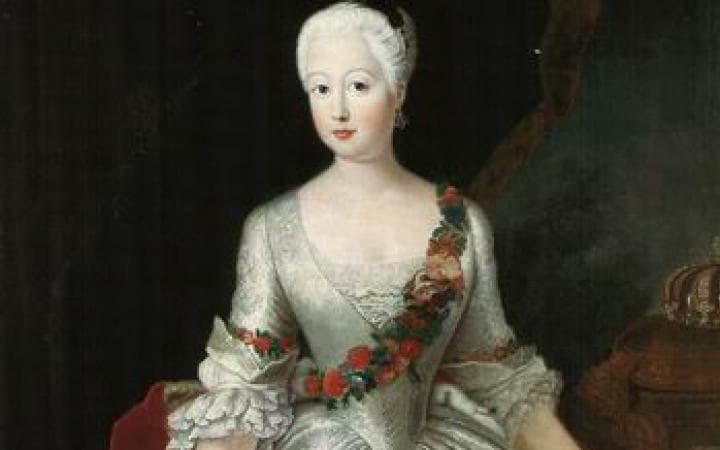
Anna Amalia of Prussia
Her first teacher was her older brother Frederick, and she learned to play the violin, harpsichord, and the flute (his specialty).
She managed to avoid being married off to a foreign stranger, albeit narrowly, and in 1755 was elected princess-abbess of the Free Secular Imperial Abbey of Quedlinburg.
This position gave her the income and prestige and allowed her to study music and compose.
During her adulthood, she took lessons from Johann Kirnberger, who had once studied with Johann Sebastian Bach.
Elisabetta de Gambarini (1731–1765)
Gambarini’s “Se dir, non lice”
Elisabetta de Gambarini was born in Middlesex, England, in 1731 to a nobleman from Lucca, Italy.
She sang in a production of Handel’s Occasional Oratorio in February of 1746, when she was fourteen. The oratorio had been finished just days before the performance. She later went on to sing in a number of other Handel performances.
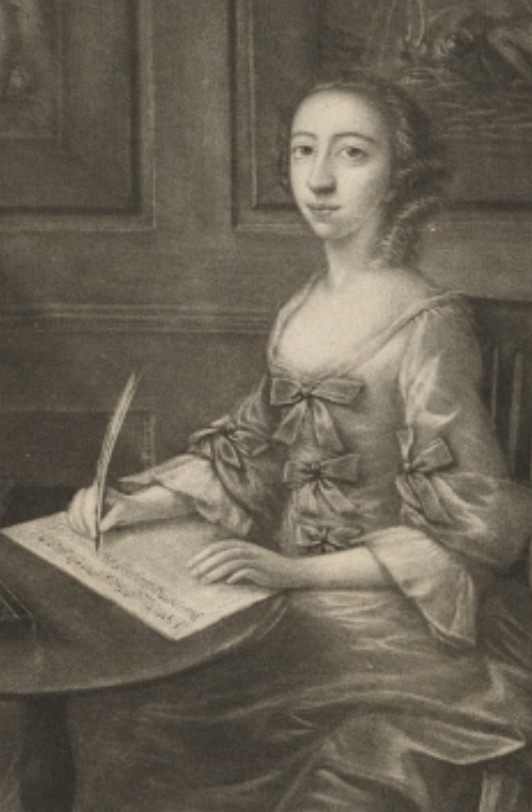
Elisabetta de Gambarini
Her Opus 1, The Six Sets of Lessons for the Harpsichord, was published in 1748, making her the first British woman to publish keyboard music. She continued composing and publishing for years to come.
She married in March 1764 and died less than a year later, in February 1765. She left behind one daughter, birth date unknown; it is possible that she died in childbirth.
Anna Bon (1738–post-1769)
Bon’s “Astra coeli iam intonate”
Anna Bon was born in 1738 in Bologna to a librettist father and singer mother.
She began studying at the Ospedale della Pietà in Venice when she was just four years old. The school was famous for its effective training of high-level women musicians.
By eighteen, she rejoined her family, who had settled in Bayreuth. She was named court “chamber music virtuosa”, and dedicated her Op. 1 to the reigning margrave there in 1756.
By 1767, she had married a singer and gone to Thuringia, but we don’t know much more about her, or when she died.
Duchess Anna Amalia of Brunswick-Wolfenbüttel (1739–1807)
Anna Amalia’s Overture to Erwin und Elmire
The duchess was born in 1739 in Schloss Wolfenbüttel in Wolfenbüttel, part of a genealogical web of European royalty. Her niece would become Queen Caroline, wife of Britain’s George IV.
As part of her royal education, she studied theology and music. Music was in her blood; her mother was an amateur composer.
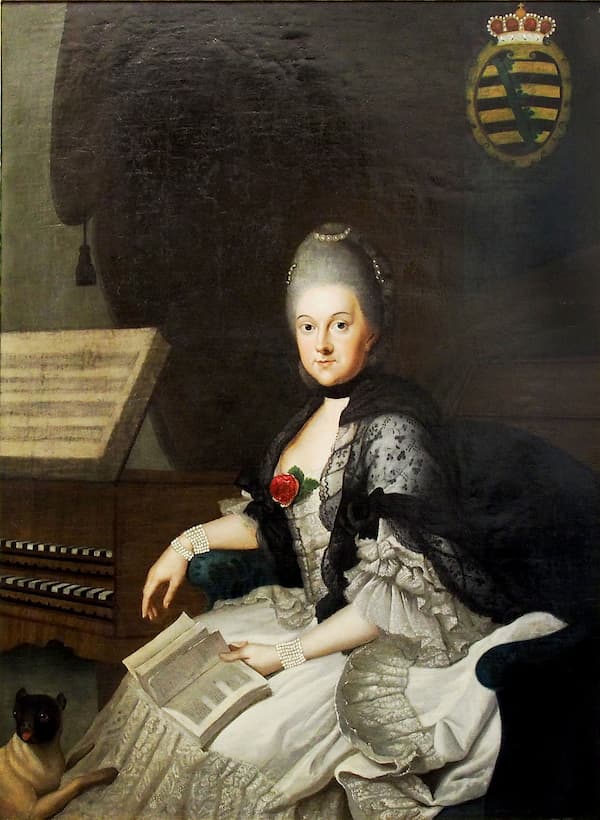
Duchess Anna Amalia of Brunswick-Wolfenbüttel
She married the Duke of Saxe-Weimar-Eisenach in 1756, when she was just sixteen. Her husband died two years later while she was pregnant with their second son, so she stepped up to lead the regency.
She used her new power to promote the arts and intellectualism in Weimar. Although her court was never wealthy, she helped to attract and support Goethe and Schiller during pivotal times in their artistic development.
She died in 1807 at the age of 67.
Anne Louise Brillon de Jouy (1744–1824)
Brillon de Jouy’s Trio Sonata in A-minor
Anne Louise Brillon de Jouy was born in Paris in 1744 to a royal tax clerk and his wife. She began her keyboard studies as a little girl.
In 1763, she married a tax clerk named Jacques Brillon de Jouy, who was more than twice her age at the time. They had two daughters together.
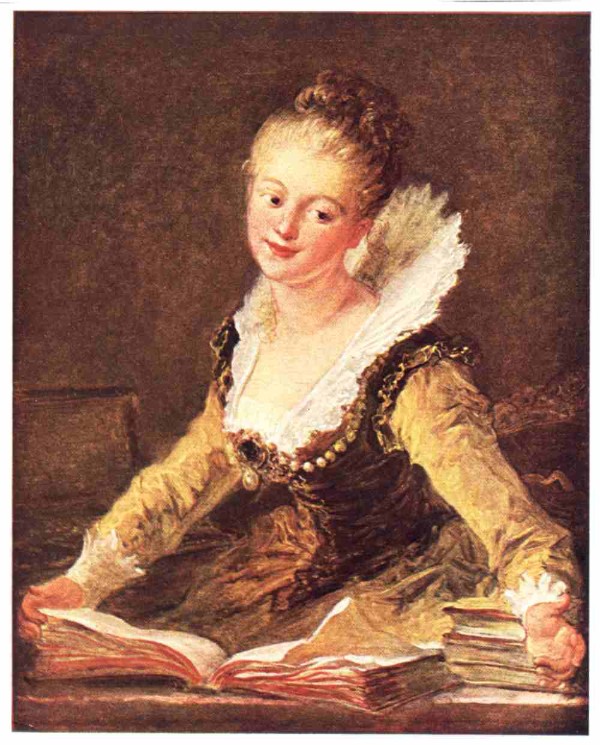
Anne Louise Brillon de Jouy
She continued composing and music-making even after her marriage. (She would eventually write close to a hundred works.)
Instead of making a name for herself on the public stage, she became famous for her twice-a-week salons in her home, which were attended by the greatest musicians of the age.
In 1767, Boccherini dedicated his Six Sonatas for Pianoforte and Violin, Op. 5, to her, praising her abilities. (The pianoforte was, at the time, a relatively new instrument.)
Meanwhile, composer and music historian Charles Burney declared her “one of the greatest lady-players on the harpsichord in Europe.”
She also befriended political figures such as Benjamin Franklin, who became a long-term correspondent.
Conclusion
The stories of these women from France, Italy, Austria, Prussia, and beyond remind us that the Baroque era’s musical landscape was far richer and more diverse than its surviving canon suggests.
Each of these composers carved out a space for female creativity and musicality in a world that rarely made room for it.
Who is your favourite woman composer from the Baroque Era?
For more of the best in classical music, sign up for our E-Newsletter





Excellent article. I didn’t know any of these lady composers apart from Anne-Louise Brillon de Jouy ! Thank you for posting this information which, for me, is a real discovery.