Born on 30 March 1959 in the rolling hills of southern Germany, Sabine Meyer grew up in a family dedicated to the clarinet. Her grandfather, her father, and her older brother all played the clarinet, and by the age of eight, she made the instrument her own.
As she later recalled, “The modulation of the sound, playing with your breath… right from the start I had the feeling: That’s my instrument.” And she was incredibly talented, making her professional debut at the age of sixteen and accepting an invitation from Herbert von Karajan to join the Berlin Philharmonic at twenty-three.
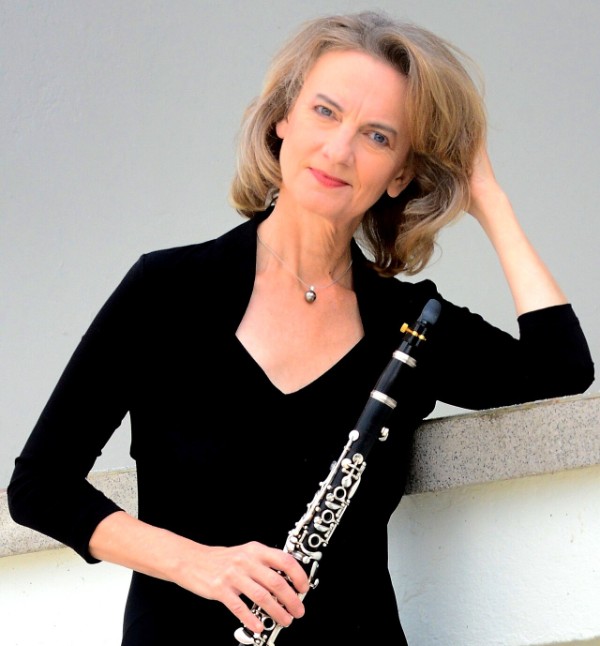
Sabine Meyer
The appointment caused a sensation and met with plenty of resistance from some colleagues, and after a brief period of orchestral playing, she embarked on a glittering international career as a soloist.
On the occasion of Sabine Meyer’s birthday, let us explore her lifelong love affair with Mozart, and specifically with the Clarinet Concerto K. 622.
Sabine Meyer/Armida Quartet perform Mozart: Clarinet Quintet in A Major, K. 581
Unrivalled Masterpiece
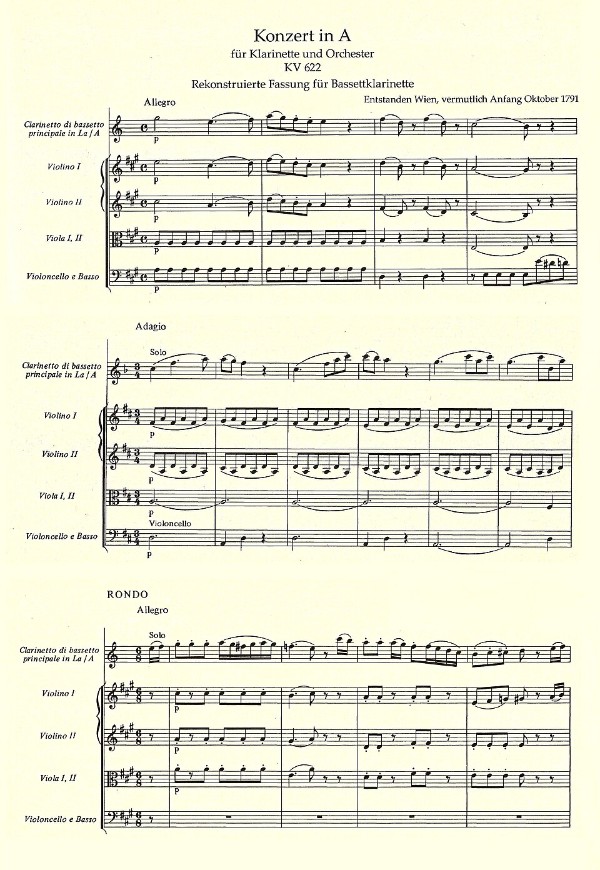
Mozart’s Clarinet Concerto, KV 622 music score
In an interview, Meyer called the Mozart Clarinet Concerto “the best composition ever written for a wind instrument. Everything else pales in insignificance beside it. The concerto lives alongside me. It is incredibly deep and rich in expression, colour, and compositional ideas.” (Schwarz, Bachtrack, 2018)
Meyer finds in Mozart’s works a remarkable inner richness. Although the surface unfolds gracefully and seemingly effortlessly, Mozart reveals an incredible depth of expression. Economy and elegance are ever-present, but Mozart is able to say profound things in the most natural and unforced way.
With Mozart, every melodic line carries emotional weight, and the interaction between soloist and orchestra feels perfectly balanced. For Meyer, no other wind-instrument composition comes close to this level of perfection in blending emotional profundity with pure beauty.
Wolfgang Amadeus Mozart: Clarinet Concerto in A Major, K. 622 – I. Allegro (Sabine Meyer, clarinet; Berlin Philharmonic Orchestra; Claudio Abbado, cond.)
Basset Clarinet
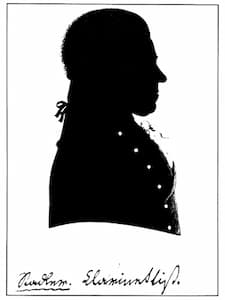
Silhouette of Anton Stadler
Mozart composed the Clarinet Concerto for Anton Stadler and for the basset clarinet. Yet, for much of its history, it has been performed on the modern instrument. The basset clarinet is essentially an extended version of the soprano clarinet featuring additional keys that extend the lower range down a major third.
And according to Meyer, it is the only instrument that should be exclusively used. “The work was composed for a basset clarinet, and today we know much more about its history and original version than 40 years ago.”
“Of course, you can play it on the flute or viola or even on a normal A clarinet. But those are adaptations, and these instruments don’t have the astounding range of the basset clarinet which Mozart explicitly used in his concerto.” (Schwarz, Bachtrack, 2018)
Wolfgang Amadeus Mozart: Clarinet Concerto in A Major, K. 622 – II. Adagio (Sabine Meyer, clarinet; Berlin Philharmonic Orchestra; Claudio Abbado, cond.)
No Compromise
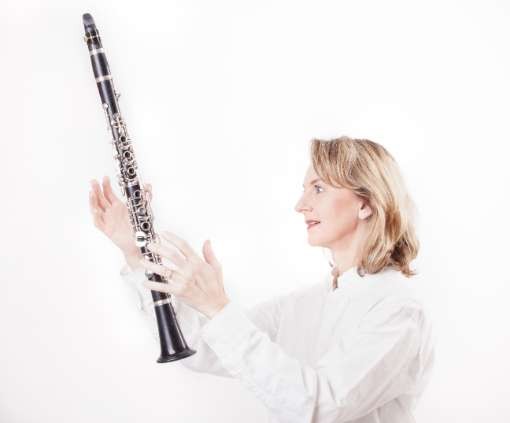
Sabine Meyer © Christian Ruvolo
In an earlier interview with Bruce Duffie, Sabine Meyer and her husband Reiner forcefully argued for the use of the basset clarinet. “You have to use the basset clarinet as it is the original instrument for this concerto… This is what Mozart wanted.”
Asked if it was wrong to use the standard clarinet, she answered resoundingly yes. Her husband explained in more detail. “You should imagine a pianist who plays a Mozart concerto on a piano that has four tones missing.”
“For any Mozart Concerto, it is impossible. No one would do it, but it has been done to the Clarinet Concerto for nearly two hundred years. I don’t think anybody should play it on a normal clarinet with orchestra, but students and music schools must do it because it’s very expensive to buy a basset clarinet for only this one piece.” (Duffie, Sabine Meyer, 1994)
Wolfgang Amadeus Mozart: Clarinet Concerto in A Major, K. 622 – III. Rondo: Allegro (Sabine Meyer, clarinet; Berlin Philharmonic Orchestra; Claudio Abbado, cond.)
The Perfect Union
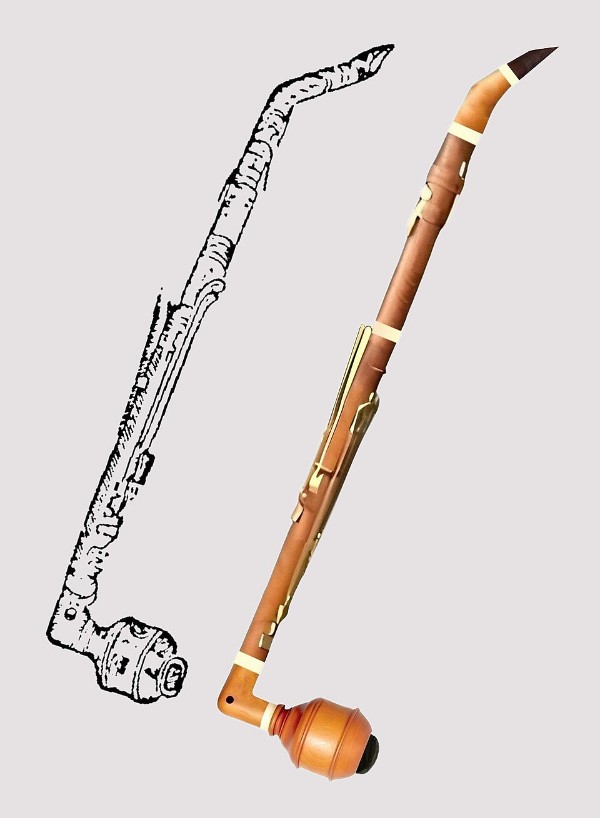
Basset clarinet by Anton Stadler 1789 (sketch) with replica
The combination of Sabine Meyer and the basset clarinet provides a compelling interpretation of Mozart’s clarinet masterpiece. The instrument restores Mozart’s original intentions and allows every passage to flow naturally without transpositions.
Because the lower range is extended, we hear a darker and more velvety tone that produces a richer palette of colours. Some critics have suggested that those low passages now descend with natural elegance, giving the music a more satisfying architectural shape.
Once you combine Meyer’s refined artistry with the authentic sound of the basset clarinet, you are treated to a new listening experience. I would suggest that this combination produces an intuitive understanding of the concerto’s true character.
For more of the best in classical music, sign up for our E-Newsletter