History remembers Rose and Ottilie Sutro not only as America’s first internationally recognised piano duo, but also as two schemers who stole the score of one of the most beloved violin concertos ever.
Born in Baltimore in the 1870s into a prominent family, the Sutro sisters dazzled audiences on both sides of the Atlantic, studied at Berlin’s Hochschule für Musik alongside future greats, and performed with the New York Philharmonic and other major orchestras.
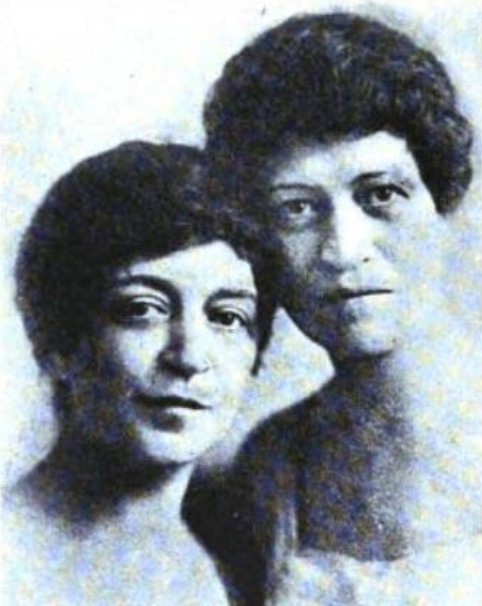
Sutro sisters
Yet today their fame rests less on their artistry and more on the scandals that surrounded them. In 1915, they convinced the elderly composer Max Bruch to entrust them with his newly written Concerto for Two Pianos…only to secretly rewrite it and perform their own version!
And that’s not even getting into the aforementioned theft!
Today, we’re looking at the lives and careers of the Sutro sisters, one of the first – and possibly most villainous – piano duos in American history.
The Childhood of the Sutro Sisters
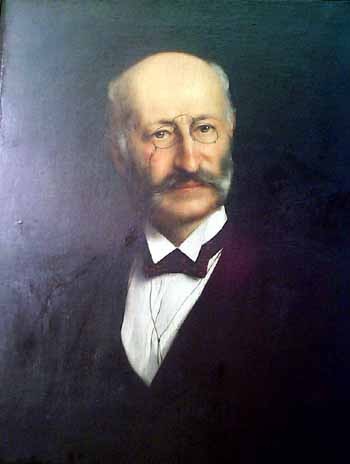
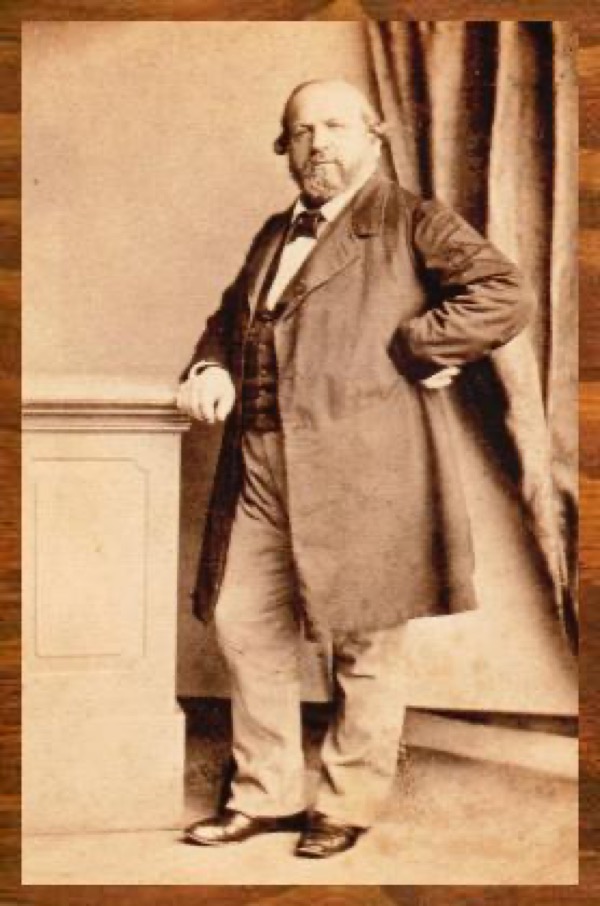
Otto Sutro
Rose Sutro was born on 15 September 1870, and Ottilie Sutro was born on 4 January 1872.
They came from an ambitious and well-connected Baltimore family.
Their father, Otto, was a German immigrant who was an organist, publisher, music store owner, and composer. He also worked with the Steinway family. (In fact, William Steinway wrote about the Sutros in his diaries…and he wasn’t always complimentary.)
Their mother, Arianna, was a Southern belle and the daughter of a Mississippi Supreme Court chief justice. She sang and played piano.
Importantly, they weren’t the only successful Sutros. Their uncle Adolph was the first Jewish mayor of San Francisco, and their aunt Florence was a lawyer who founded the National Federation of Women’s Music Clubs.
To sum, these girls were being raised in an environment full of high achievers and social butterflies…and it showed.
Studying Piano in America and Abroad
Their mother was their first piano teacher. They began playing as a piano duo early on, imitating their parents playing keyboard duets and improvising back and forth.
When Grover Cleveland was President, glamorous First Lady Frances Cleveland invited the two to come perform at the White House.
As young women, they (along with Arianna) traveled to Europe to study at the Royal Hochschule für Musik in Berlin.
According to a later biography, there were only four spots available at the conservatory at their audition…and the sisters secured two of them.
Their teacher there was Karl Heinrich Barth, who taught Arthur Rubinstein, Heinrich Neuhaus, and Wilhelm Kempff.
Their Early Cross-Atlantic Career
Rose and Ottilie Sutro play Brahms’s arrangement of Chopin’s Étude Op. 25, No. 2
The Sutro sisters made their British debut in July 1894 and their American debut in November 1894.
That American debut was a prestigious one: a tour with the New York Philharmonic under Anton Seidl.
After that tour, they returned to Europe and were invited to give a number of performances there (including, apparently, one for Queen Victoria).
The Musical Opinion and Trade Review offered praise with caveats.
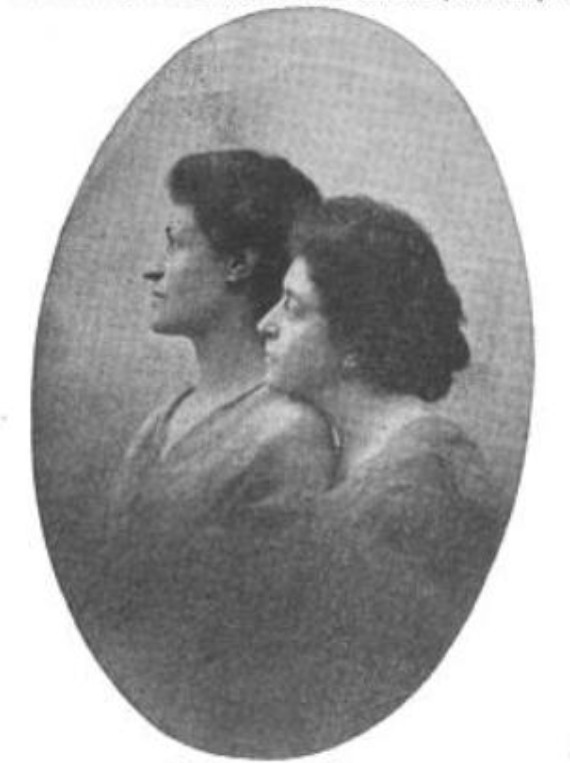
Sutro sisters
“The Misses Rose and Ottilie Sutro, ‘ensemble pianists,’ from Baltimore and of the Berlin Conservatoire, displayed praiseworthy technical precision in works for two pianos by Bach, Mozart, Chopin, Liszt, Brahms, and others; but more energy and variety of expression were needed to enliven the performances.”
Their European tour was cut short after the death of their father in January 1896, when they hurried home to Baltimore.
The Mystery Years
Historians aren’t quite sure what happened next, but a later biography in a Philadelphia Orchestra program mentions that their mother was stuck dealing with “litigation” surrounding Otto’s death for years.
Another tragedy befell them in 1904, when Ottilie injured her hand so severely that she was unable to return to the stage for six whole years.
The nature of the mysterious injury, or how she recovered, is unknown.
Returning to the Stage and Meeting Bruch
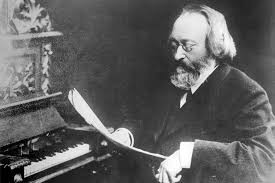
Max Bruch
After Ottilie’s recovery, the sisters were eager to learn a showpiece to mark their return to the concert stage.
In 1911, elderly composer Max Bruch attended one of their concerts at which the sisters played his Fantasy in D-minor for Two Pianos.
Max Bruch’s Fantasy in D-minor for Two Pianos
They asked him if he would write a two-piano concerto for them. According to the program notes from the concerto’s premiere, he had come to “love and value” them, and so he said yes.
Over a few weeks in the spring of 1915, Bruch created his Concerto for Two Pianos and Orchestra in A-flat minor. He wrote quickly since the concerto was based on material from a pre-existing orchestral suite.
The Sutros ran through the piece in April 1915 with Bruch playing the orchestra part on a third piano. Later that month, they did another run-through during a private rehearsal with the Berlin Philharmonic.
Bruch was pleased enough to give them permission to bring the concerto back home to America…but, interestingly, only to America.
This may have been because he wanted to keep the material from the orchestral suite in Europe, but truth be told, we don’t know for sure.
Rewriting Bruch
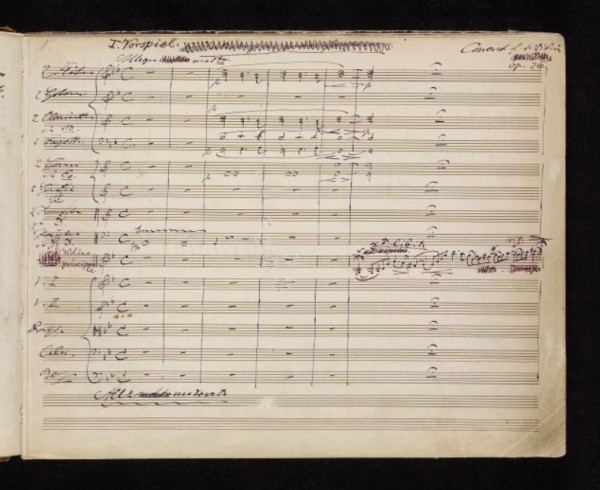
Bruch’s manuscript
The story of the concerto soon took a shocking turn.
The Sutros began rewriting the solo and orchestral parts without informing Bruch or seeking his permission.
Then they performed their version at a Philadelphia Orchestra concert under Leopold Stokowski in December 1916.
We have no first-hand account of why exactly they found it necessary to do so.
They received lukewarm reviews. One from the Philadelphia Public Ledger is typical:
“The work was dedicated to the two interpreters of yesterday, the Misses Rose and Ottilie Sutro, of Baltimore, into whose hands the work was committed less than two months after the composition was begun. With the pianos dovetailed beneath one appraised lid – the other lid removed – the effect of a single instrument at many points was conveyed.”
Another snippet of the review reads:
“It is not the sort of thing most pianists would choose for a display of their mettle. Their part in it was submerged often, and so it was not easy to tell just what the artistic calibre of the Misses Sutro is. They would appear to be finished and accurate, without a great deal of passionate intensity or vigour of phrasing.”
The following year, on 30 November 1917, they performed a re-edited version with the New York Philharmonic.
Max Bruch’s Concerto for Two Pianos
It appears that after these two public performances in Philadelphia and New York, the sisters never gave another one. But, intriguingly, they still kept tweaking the score…for decades.
In fact, the last recorded changes were made by Ottilie in the 1960s, after Rose had died!
Later Years
The Sutros didn’t stop at promoting the work of Max Bruch.
In 1924, the sisters gave the premiere of Amy Beach’s Suite for Two Pianos in Paris. Amy Beach dedicated the piece to them.
Amy Beach’s Suite for Two Pianos
A few years later, in 1930, they gave a series of concerts devoted to the work of American composers. According to the press, these concerts with American works were popular with the political crowd living in Washington, D.C.
Social standing appears to have been important to the Sutro sisters throughout their lives, which makes sense, given their family’s political connections.
The Death of the Sisters
Unfortunately, the historical record grows cold about what happened to the sisters after 1930. More digging will have to be done to find out more about their later life.
Rose died in 1957 at the age of 86, and Ottilie died in 1970 at the age of 98.
It appears that neither Rose nor Ottilie married or had children. Nobody inherited their estate in its entirety, so after they both died, their possessions were sold off.
Rediscovering the Bruch Concerto
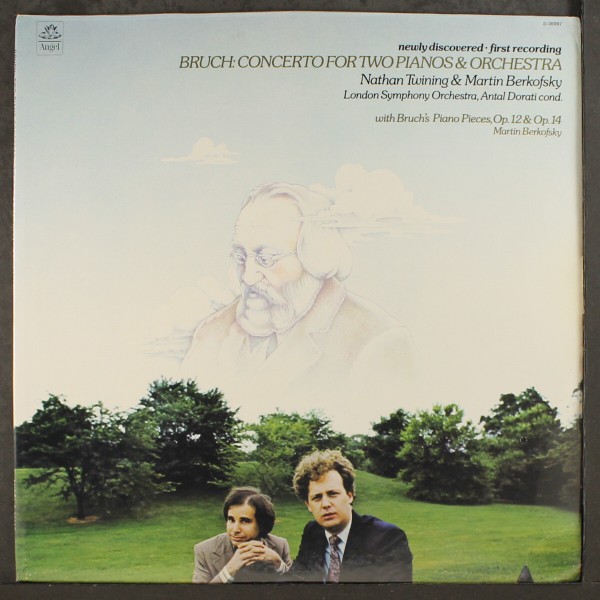
Nathan Twining album cover
At the Sutro sale, a young pianist named Nathan Twining couldn’t afford the books he wanted, but he did splurge on a box of sheet music for $11.
What he found inside astonished him: a Max Bruch manuscript of the two piano concerto.
The orchestral parts had been placed in another box, but Twining managed to find them.
He and a friend reconstructed the concerto and recorded it with the London Symphony Orchestra in 1973, which is the only reason why we can hear the work still today.
The version he reconstructed was closer to Bruch’s original than to the Sutros’ rewrite.
The Sutro Sisters’ Biggest Scandal
The unauthorised piano concerto edits weren’t the only sheet music scandal the sisters were involved in.
By the end of World War I in 1918, life had become extremely difficult for many citizens of war-torn Germany, and the elderly Bruch found himself destitute amid soaring inflation.
During one of their visits with him, he asked the Sutros if they could sell his surviving manuscript to his best-known work – his violin concerto – in America and return the proceeds to him. They agreed and packed it into their trunks.
Bruch’s Violin Concerto No. 1
However, for reasons that can only be guessed at, they decided to keep the score.
Max Bruch died in October 1920 before the Sutros sent him a dime. Until the very end, the gullible and good-natured Bruch expected the money to arrive any day and solve his financial troubles.
After he died, the Sutros sent over worthless paper money to his family, with no invoice or any kind of acknowledgement of what had happened to the score.
Understandably, Bruch’s family was deeply upset…but there wasn’t much to be done.
It eventually came out that in 1949, the Sutros had quietly sold the manuscript to Mary Flagler Cary, the granddaughter of Standard Oil co-founder Henry Flagler.
Cary later donated her collection to the Morgan Library & Museum in New York, which is where the Bruch manuscript can be found today. They’ve digitized it and made it available online here.
Conclusion
So were the Sutro sisters trailblazers or narcissists or villainesses…or maybe a mix of all three?
Although what we know is certainly fascinating, the historical record is still pretty spotty. More research will be needed to learn more about their story.
In any case, their lives and careers offer a fascinating glimpse into the development of the piano duo, a forgotten work by Max Bruch, the fate of his famous violin concerto, and what life was like for women pianists in the early twentieth century.
For more of the best in classical music, sign up for our E-Newsletter