
The symphony is the blockbuster movie of classical instrumental music: big, bold, and meant to move audiences.
The first symphonies were heard in eighteenth century salons and concert halls. Nowadays, thousands of them can be found on YouTube, with millions of listeners listening and watching.
Today, we’re looking at the seven most popular symphonies on YouTube.

Before we begin, a caveat: if a video only consists of audio with a static image or a score, we didn’t count it. We wanted to focus on video performances today, not solely audio.
With that said, here in reverse countdown order are seven of the most popular symphonies on YouTube, as of early 2026.
7. Mahler – Symphony No. 5 – Lucerne Festival Orchestra
5.6 million views
Mahler’s Fifth Symphony, composed between 1901 and 1902, begins with a military march and ends in a blaze of orchestral triumph.
The work’s narrative follows an archetypal journey from darkness to light that mirrors the composer’s own life circumstances.
He had just recovered from a near-fatal illness, fallen in love and married a beautiful woman twenty years his junior named Alma, and he was brimming with creative energy.
The fourth movement, Adagietto, has become one of Mahler’s most famous creations: a tender love letter to Alma, written for strings and harp alone.
6. Mozart – Symphony No. 40 – Sinfónica de Galicia
6.4 million views
Mozart’s Symphony No. 40 is one of only two he composed in a minor key. It’s restless, dramatic, and intensely personal.
It’s also a bit of an enigma. This 40th symphony was written alongside the 39th and 41st during a whirlwind of creativity in the summer of 1789, but we still don’t know exactly why Mozart wrote them. (That said, generations of music lovers are glad he did!)
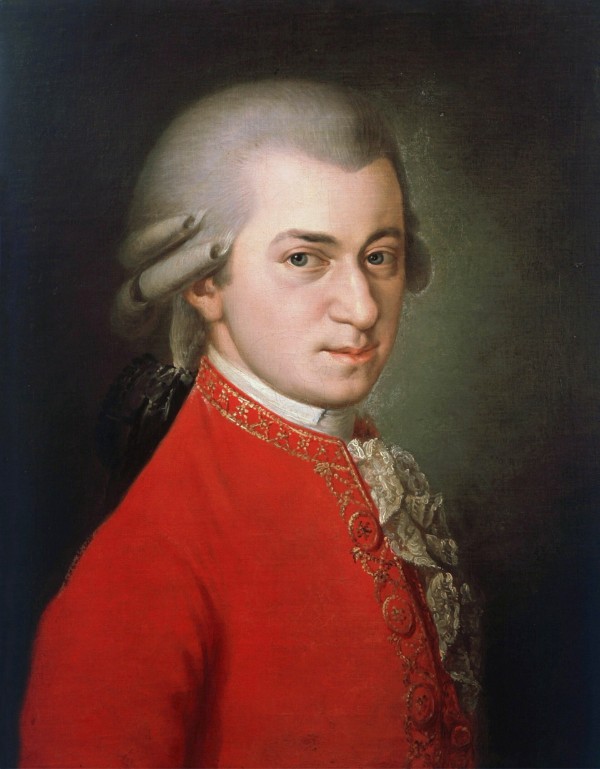
Wolfgang Amadeus Mozart
Mozart’s Symphony No. 40 has often been described as a precursor to Romanticism. The opening theme, with its tense repetitive sighs, is instantly memorable.
According to the YouTube heatmap, the most popular part of this performance is around the first movement development, around 4:00 in this recording. If you only know the symphony’s opening theme, it’s heartbreaking to hear it torn apart and put back together again here.
5. Beethoven – Symphony No. 9 – Oslo Philharmonic
7 million views
Beethoven’s Ninth Symphony, premiered in 1824, is one of the most revolutionary works in music history, not least because it includes a chorus and vocal soloists.
The famous “Ode to Joy” theme in the final movement sets a famous Friedrich Schiller poem proclaiming universal brotherhood and hope.
Over the centuries, it became a soundtrack for important cultural moments, like the opening of Wagner’s Festspielhaus in Bayreuth, the fall of the Berlin Wall, and the opening ceremony of the 1998 Winter Olympics.
Even with dozens of legendary recordings available, this performance by the Oslo Philharmonic has drawn in millions of viewers, partly due to the star power of their music director, up-and-coming twenty-something Finnish conductor Klaus Mäkelä.
4. Dvořák: Symphony No. 9 – Frankfurt Radio Symphony
10 million views
Written during Dvořák’s stay in America in the early 1890s, the New World Symphony is inspired by the spirit of Native American melodies and African American spirituals, albeit filtered through his Czech sensibility. The result is a work that is both homesick and hopeful.
The slow second movement, the Largo, with its haunting English horn solo, became an instant hit. It was later rearranged as a hymn called “Goin’ Home.”
However, according to the YouTube heat map, the most popular moment in this particular performance is the start of the fourth movement. (That beginning has been likened to the famous theme from the movie Jaws…or maybe it’s more accurate to say Jaws is like Dvořák’s Ninth Symphony!)
3. Beethoven – Symphony No. 6 – West-Eastern Divan Orchestra
13 million views
Beethoven was an avid walker who loved roaming the countryside outside Vienna, and in his sixth symphony, he painted scenes of rustic life: a babbling brook, a peasant dance, a sudden thunderstorm, and finally a hymn of thanksgiving.
According to the YouTube heatmap, there are a few popular moments in this video. One of them is a stunningly gorgeous flowing passage beginning at 8:30 that perfectly demonstrates the big-hearted humanity of Beethoven’s musical personality.
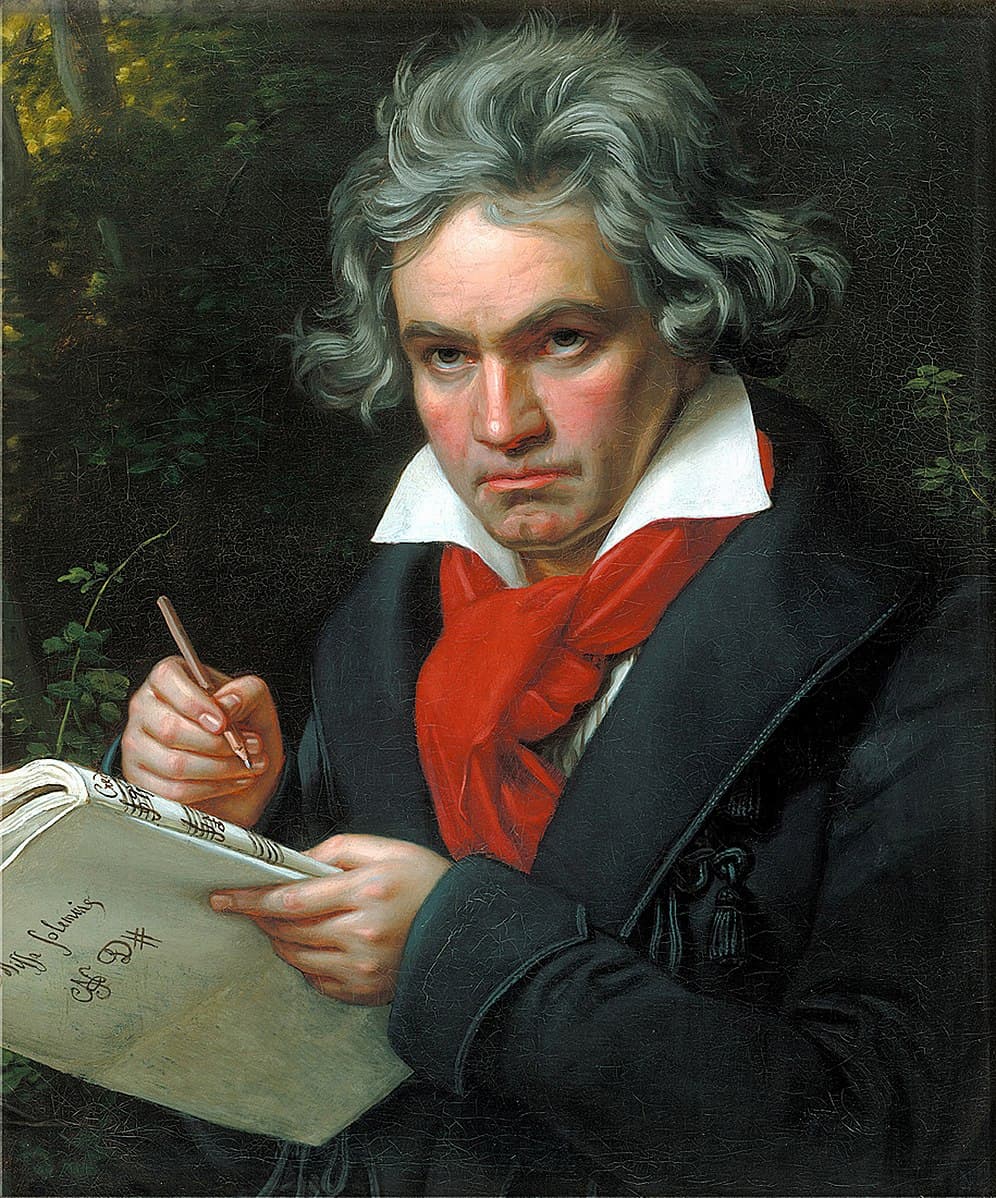
Portrait of Ludwig van Beethoven
The West–Eastern Divan Orchestra, founded by Daniel Barenboim and Edward Said, of Israeli and Palestinian backgrounds respectively, gave this performance at the Proms in London in 2012.
2. Beethoven – Symphony No. 7 – Concertgebouw Orchestra
15 million views
Wagner famously called Beethoven’s Seventh “the apotheosis of the dance,” and it’s easy to hear why. Premiered in 1813, it bursts with rhythmic drive from start to finish.
The second movement, Allegretto, became an instant hit. In fact, it was so popular that it had to be encored at the premiere.
The symphony was written during a patriotic wave in Vienna as Napoleon’s forces were retreating, and Beethoven dedicated the premiere to the wounded soldiers of the Austrian campaign.
The Royal Concertgebouw Orchestra’s performance has drawn over 15 million views. It’s beautifully played and beautifully filmed; the Concertgebouw is one of the most beautiful halls in the world, and it adds a visual element of delight to the already satisfying performance.
1. Beethoven – Symphony No. 9 – Chicago Symphony Orchestra
55 million views
The most popular symphony video on YouTube is a 2014 performance of Beethoven’s Ninth by the Chicago Symphony Orchestra under its music director, Riccardo Muti. It has garnered a truly jaw-dropping 55 million views.
It’s an amusing coincidence that there are two performances on this list of Beethoven’s Ninth, one by Riccardo Muti, the last music director of the Chicago Symphony, and another by Klaus Mäkelä, the next music director of the Chicago Symphony.
According to the YouTube heatmap, the most popular part of this performance is its final half hour or so, starting around 53:00, toward the beginning of the final movement.
This makes sense because it’s the lead-up to the most famous part of the entire piece: the quiet spark of the Ode to Joy theme beginning in the lower strings at 55:25.
Conclusion
It’s worth noting that just these seven videos alone have garnered nearly 112 million views.
Hopefully, that’s an uplifting statistic to keep in mind the next time you hear that people aren’t interested in classical music. Clearly, in the right contexts, they are…and these seven videos prove it!
For more of the best in classical music, sign up for our E-Newsletter





O really enjoyed reading the nine most played symphonies on YouTube. Really informative. I have a passion for classical music