In July 1884, Edward MacDowell (1860–1908) married his pupil Marian Nevins (1858–1956), and they immediately left for England for their honeymoon. Daughter of a Wall Street banker, Marian had gone to Europe to study with Clara Schumann at the Hoch Conservatory; in her absence, Marian ended up with MacDowell as her teacher. They returned to the US and were married in Waterford before departing for Europe once again for their honeymoon.
Once they arrived in London, they devoted their time to Shakespeare’s plays. At the Lyceum Theatre, they saw performances by the greatest of the 19th-century English Shakespeareans: Henry Irving and Ellen Terry.
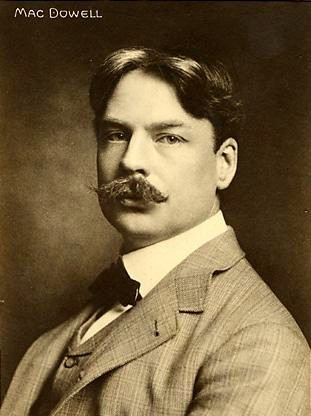
Edward MacDowell, ca 1900
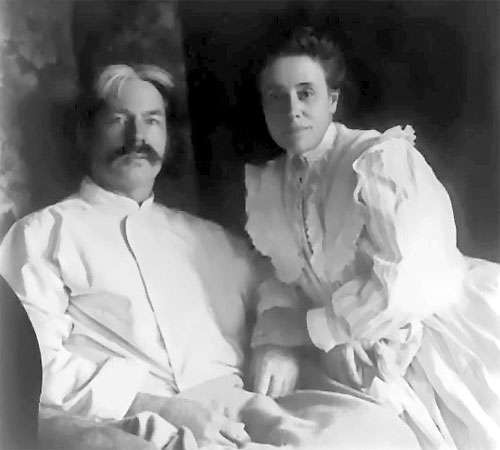
Edward MacDowell and Marian Nevins
The highlight of their honeymoon trip was a performance of Hamlet, with Irving as the prince with Ellen Terry as his doomed intended.
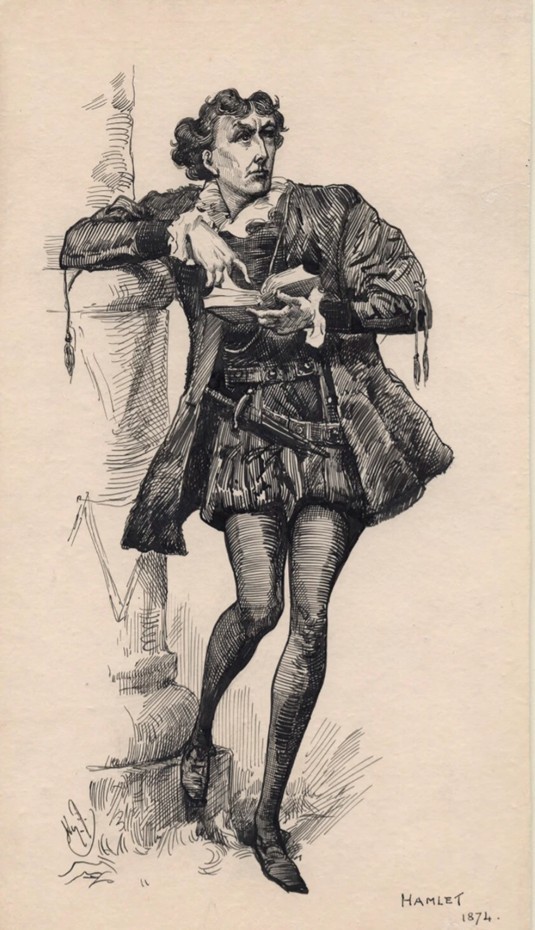
Harry Furniss: Sir Henry Irving as Hamlet, 1874 (London: National Portrait Gallery)
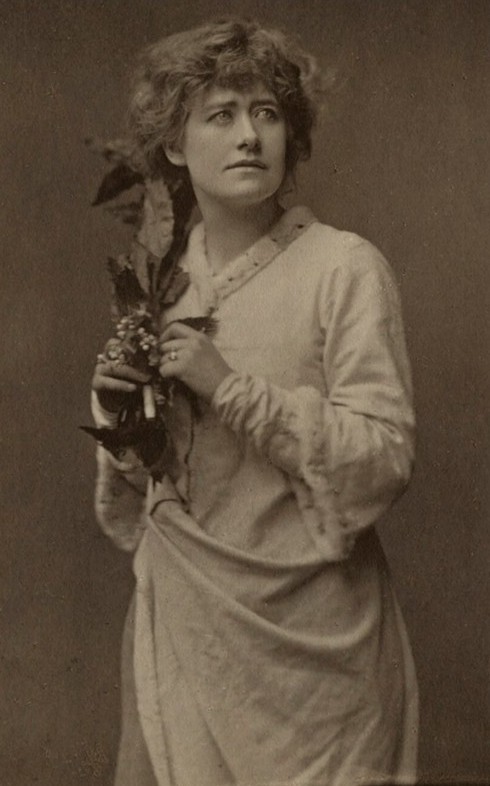
Ellen Terry as Ophelia, 1878 (London: National Portrait Gallery)
Irving was credited as being ‘the veritable Hamlet, in his dignity, his melancholy, his humour, his blasting irony, in all that was lovable in his nature’.
All of these elements come out in MacDowell’s Hamlet / Ophelia, completed in 1884. Although MacDowell had originally conceived of creating three paired symphonic poems: two each for Hamlet (Hamlet and Ophelia), Much Ado about Nothing (Benedick and Beatrice), and Othello (Othello and Desdemona), he only completed the Hamlet pair. Originally intended as a work for two pianos, the work soon headed for the orchestra as the honeymoon continued in Frankfurt and Bad Hamburg. Orchestral performances followed in several cities in Germany, although one performance in Wiesbaden in 1886 was ruined by the ‘intoxicating effects of the festive season’.
MacDowell’s tone poem does not take us through the play but provides us with character sketches of Hamlet and Ophelia. Much like Liszt in his symphonic poems, MacDowell seems to be analysing the psyches of his characters and picking up on their undertones and thoughts. The opening of Hamlet may be more forceful and driven, giving something closer to the Victorian view of the character as not a dreamer, but a personality thwarted by his circumstances. In the middle of the ‘unsettling chromatic passages’ and the ‘strident distonic main theme, a new theme emerges. Lyrical and expansive, it is Ophelia, and so she becomes an integral part of Hamlet’s personality.
Edward MacDowell: Hamlet and Ophelia, Op. 22 – I. Hamlet (BBC Philharmonic Orchestra; John Wilson, cond.)
MacDowell gives Ophelia a much less fleshed-out character than Hamlet, using the same lyrical theme from Hamlet that disrupted his agitation. It is signalled by horns that may be a reference to Tristan und Isolde’s ‘Longing’ motif. Although many composers who use Hamlet and Ophelia as inspiration for their work cast Ophelia into a subsidiary or secondary position, MacDowell, by giving Ophelia her own work, moves her to a more important position. Just as on the stage, where Ellen Terry would not be cast into the shade, in his music, MacDowell gives her prominence with a ‘romantically expressive meditation.’ There’s less fully defined character in the music and more impressionistic writing. Some of the Hamlet themes appear in Ophelia, but in a subdued manner, as if in shadow. As though signalling her death, the work ends abruptly.
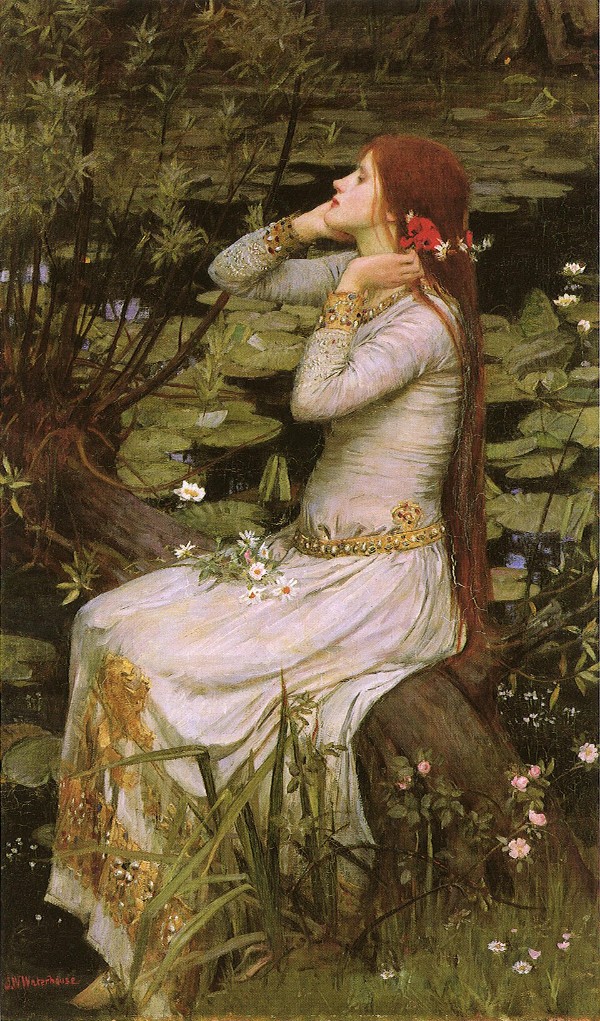
John William Waterhouse: Ophelia, 1894 (private collection)
Edward MacDowell: Hamlet and Ophelia, Op. 22 – II. Ophelia (BBC Philharmonic Orchestra; John Wilson, cond.)
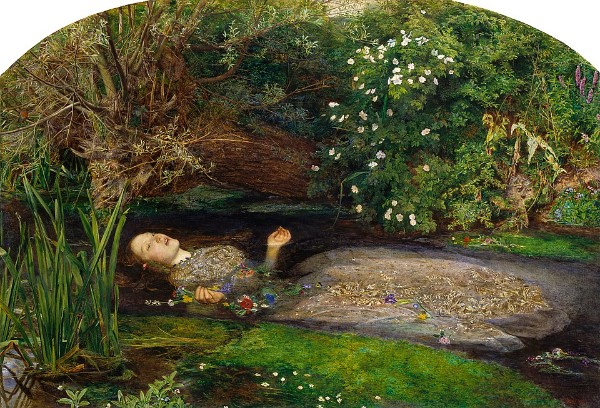
John Everett Millais: Ophelia, 1851–1852 (Tate Britain)
Hamlet and Ophelia were MacDowell’s first tone poems, written when he was only 23. Both characters come off very differently than they do on the modern stage: Hamlet is more striving and driven, fighting an inevitable doom, but with Ophelia as an important part of his life; Ophelia’s music starts with her own theme and gradually mixes in elements of Hamlet’s theme. Today, he’s viewed as weak and she’s viewed as ignored, but that’s not how they were portrayed on the London stage in the late 19th century.
Inspired by the fabled acting of Irving and Terry, Edward MacDowell was able to create in music the magic he’d seen on stage.
For more of the best in classical music, sign up for our E-Newsletter