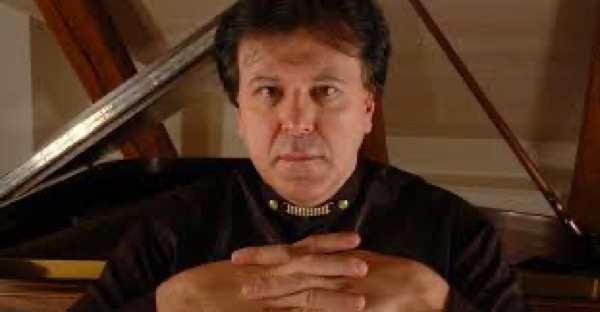
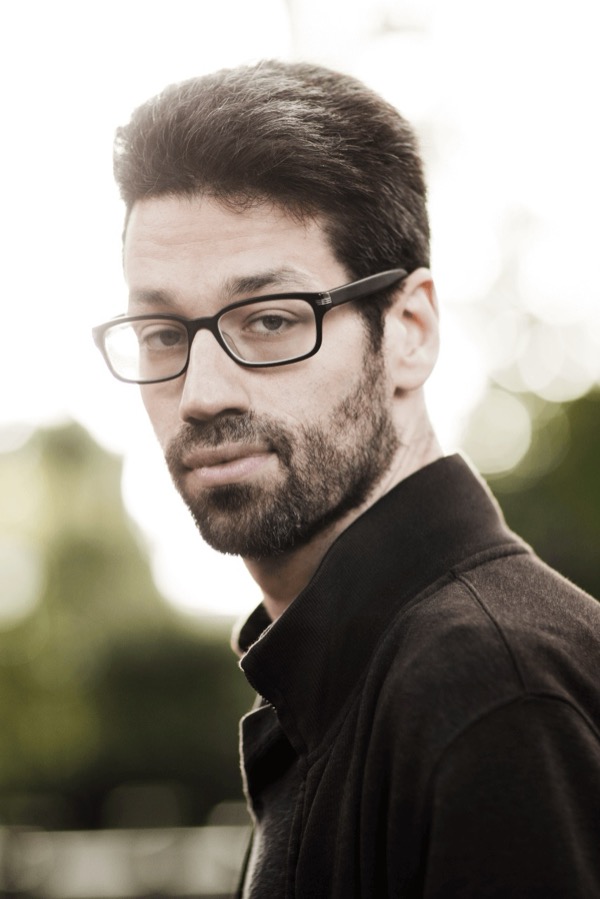
Gidon Kremer is considered one of the most original and compelling violinists of his generation. A winner of the Queen Elizabeth, Paganini and Tchaikovsky International Competitions, he has released an astonishing 120 CD albums with music ranging from the early Baroque to contemporary masterpieces.
Eager to pass on his vast musical knowledge and wisdom to future generations, Kremer founded the Kremerata Baltica in 1997. Together, they bring music to audiences in a way that respects tradition while remaining contemporary.
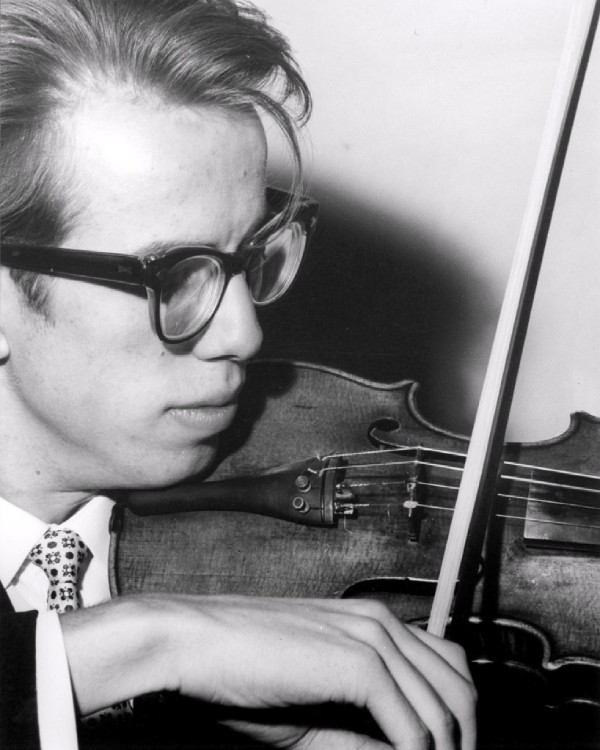
Gidon Kremer at the Queen Elizabeth Competition
Gidon Kremer has a special affinity for the music of his Baltic compatriot Arvo Pärt, having performed and advocated his music at a time when the composer was still isolated in the Soviet sphere. On the occasion of Kremer’s birthday on 27 February 1947, let us explore this decades-long artistic relationship.
Arvo Pärt: Fratres
Restless Spirit
Gidon Kremer
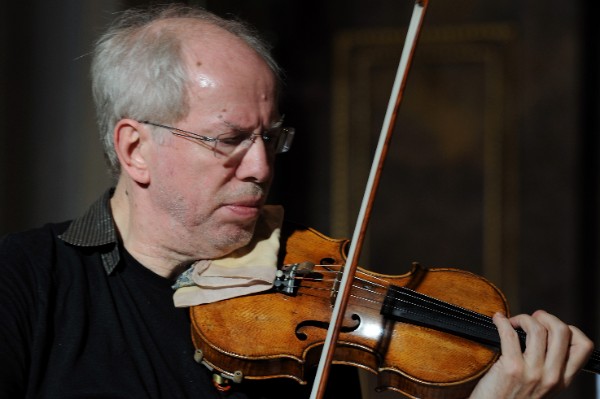
Gidon Kremer was born in Riga, Latvia, in 1947. The only child of German parents, he began playing the violin at age four and later studied at the Latvian Academy of Music under Voldemārs Stūresteps. He went on to study at the Moscow Conservatory between 1965 and 1973, counting David Oistrakh and P. Bondarenko among his teachers.
Kremer won a number of important competitions, which led to some 150 concerts in the USSR. For undisclosed reasons, he was not allowed to travel abroad until 1975, and Karajan was in the audience when he played his debut in London. Concerts at the Salzburg Festival and Carnegie Hall, New York, soon followed, and he left the Soviet Union in 1980.
Gidon Kremer plays Tchaikovsky: Violin Concerto “Tchaikovsky Competition 1970” (excerpt)
As Kremer explained, “It shouldn’t be forgotten that I grew up in a totalitarian system, and I was often feeling the pressure of the ideology of the Communist system. In music, I found my freedom, the space that the system didn’t allow me to feel. So music became a tool for me to be myself and find my own voice.” (Kremer, ABC)
As one of the most gifted and awarded musicians of his generation, Kremer could have chosen to endlessly play the same repertoire. Yet, he always believed that music was not just a matter of comfort, but also an expansion of the spirit.
He discovered entirely new music in the West, composers like Cage, Stockhausen and Ives. But he also advocated for his Russian composer friends like Alfred Schnittke and Sofia Gubaidulina. In time, he played a substantial part in the rediscovery of Mieczysław Weinberg.
Gidon Kremer plays Schnittke: Concerto Grosso No. 1
Spiritual Reckoning
Arvo Pärt
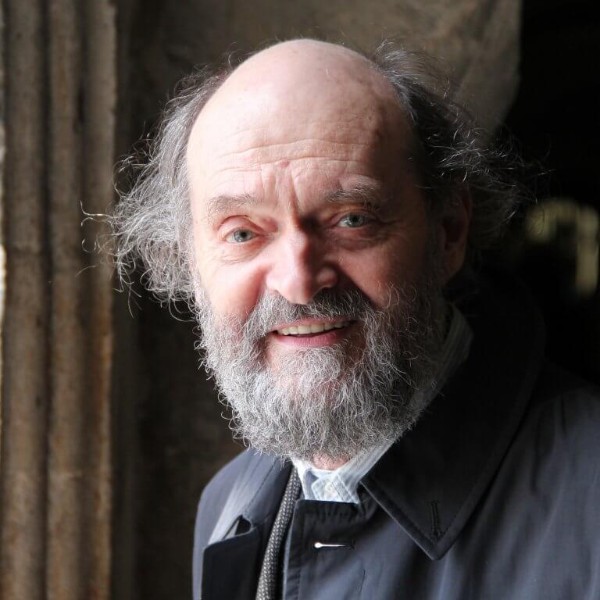
Arvo Pärt’s musical journey began in Estonia, where he studied at the Tallinn Conservatory under Heino Eller. His early compositions are marked by experimentation and innovation, culminating in the Credo of 1968.
It was a controversial piece that fused quotation of Bach’s Prelude in C major with avant-garde techniques, tone clusters, and religious texts. This work marked a turning point, as Pärt retreated into a period of introspective silence, into a crisis of artistic identity.
Arvo Pärt: Credo (excerpt)
He distanced himself from modernist compositional techniques and began studying medieval and Renaissance sacred music, particularly Gregorian chant, the Notre Dame school, and early polyphony.
Between 1968 and 1976, Pärt composed very little, but he now emerged from this silence with a radically new voice. The tintinnabuli style, a term derived from the Latin for “little bells,” is characterised by a two-voice structure.
A melodic voice moves diatonically around a central pitch, and a tintinnabuli voice outlines the tonic triad. This creates a hypnotic, bell-like resonance grounded in simplicity and spiritual reflection.
Arvo Pärt: Spiegel im Spiegel
Speaking Through Sound
Gidon Kremer lost his childhood fluency in Latvian, but he speaks Russian, English, German, and French. He strongly believes that music is a language, one that can express emotion in its rawest form. In interviews, he frequently talks about music with a “human heart,” and undoubtedly, this is what attracted him to the music of Pärt.
As he explained, “Some people just appear out of nowhere. They appear as if they had always been there. Arvo Pärt is one such person. His music is more than just exciting. It requires listeners to immerse themselves in it and breathe with it.”
“It doesn’t address you from the outside; it acts as if from within, as something that lives inside you. Pärt requires you to ‘listen to yourself,’ to banish your restlessness and to believe in the meaning of every note written. Every image and sound is precisely calibrated and absolutely necessary. His music has the power to transform us.” (Kremer, Carnegie Hall)
Illumination and Silence
Gidon Kremer
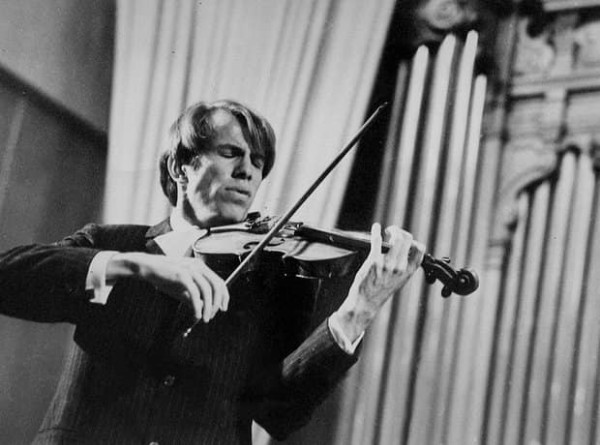
For Kremer, Pärt’s music is like “a white light which contains all colours. Only a prism can divide the colors and make them appear; this prism could be the spirit of the listener.” (Kremer, medici.tv) In 1977, the conductor Eri Klas together with Gidon Kremer asked Pärt to write a piece for an ensemble similar to Schnittke’s Concerto Grosso, No. 1.
The scoring called for two violins, prepared piano, harpsichord, and string ensemble. Pärt cast Tabula Rasa in two large movements, and dedicated the work to Gidon Kremer. In fact, Kremer premiered the piece in Tallinn, Estonia, on 30 September 1977, with his wife Tatjana Grindenko, on solo second violin, Alfred Schnittke on the prepared piano, and the Tallinn Chamber Orchestra, conducted by Eri Klas.
Arvo Pärt: Tabula Rasa “Ludus”
When Silence Speaks
The two movements of Tabula Rasa are in stark contrast in terms of mood and speed. “Ludus” (Game) consists of eight variations and a forceful cadenza, while “Silentium” (Silence) is pure tintinnabulation. Kremer has described the work as a declaration of silence, a manifesto of concentrating on important things. He has also admitted that this piece changed his life. (Kremer, Tabula Rasa)
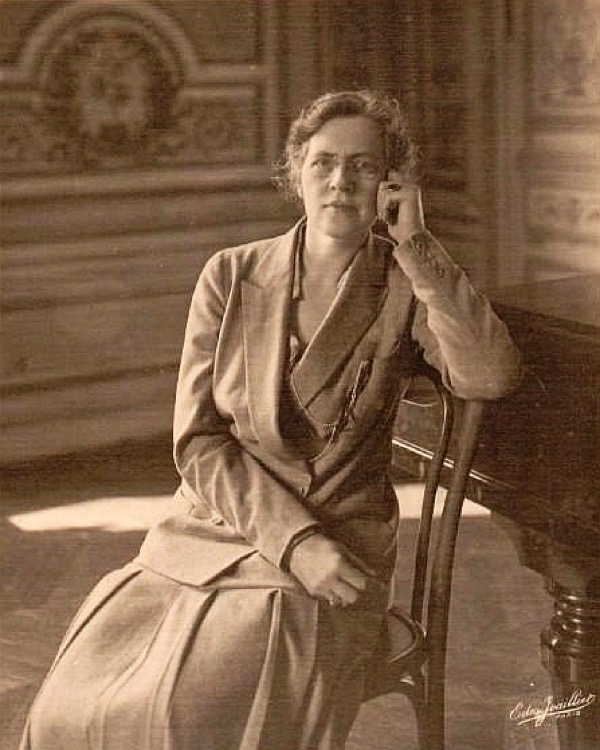
It took Kremer a long time to realise the subtlety and intelligence hidden in these sounds, and as Nora Pärt recalls, the musicians all felt powerless before the composition. When the musicians saw the score, they cried out: “Where is the music?” But then they went on to play it very well, it was beautiful, it was silent and beautiful.” (Pärt, Tabula Rasa)
In this way, the creation and performance of Tabula Rasa created a special bond between the composer and Gidon Kremer. Pärt confessed that Kremer’s playing has “served as a benchmark for the sound of the violin for me… He revealed my own music to me, and for that I am eternally grateful!” (Pärt, Kremerata Baltica)
For more of the best in classical music, sign up for our E-Newsletter