One of the leading Italian lirico-spinto sopranos of her day, Renata Scotto was one of the defining voices of the postwar era. She invested her roles with a rare combination of vocal agility and dramatic power, always grounded in her superb stage presence and the inner meaning of the text.
She might not have been able to equal Tebaldi in purity of tone nor rival Sutherland in sheer technique. However, her biggest strength lay in her ability to completely inhabit a role and project the character’s emotional state.
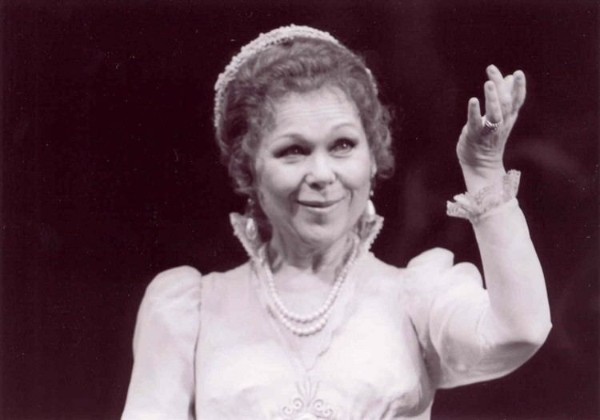
Renata Scotto
Renata Scotto was, as Barry Millington writes, “a singer who relished the role of diva both on and off stage.” (Millington, The Guardian 2023) In the event of celebrating her birthday on 24 February 1934, let us dive into the roles that made her a global sensation.
Renata Scotto sings Puccini: Suor Angelica (excerpt)
Humble Beginnings
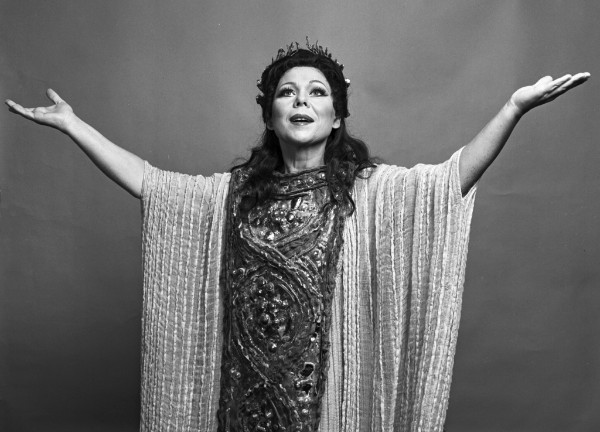
Renata Scotto
Renata Scotto hailed from Savona, an industrial port town on the Ligurian Sea. Surrounded by shipyards and factories, her father worked as a police officer and her mother as a seamstress. As the dangers of World War II approached, her mother took the family into the nearby mountains.
They performed menial tasks like sewing for whoever needed their skills, and that included Fascists, Nazis, and later American soldiers. Some say this was a stark lesson in survival, adaptability, and resilience, all qualities that would subsequently define her career.
In her 1984 autobiography More Than a Diva, Scotto details the singular experience that changed her life. When she was twelve, she attended a performance of Rigoletto with Tito Gobbi in the title role. Something about the immediacy of live opera, the sweep of the music, the rawness of the drama, and the commanding presence of Gobbi made her decide to become an opera singer.
When Scotto left home at sixteen, she studied at the Milan Conservatory with Emilio Ghirardini, who carefully and methodically built her technique. She lived in a convent run by nuns and supported herself by sewing and taking on cleaning jobs. (Scotto, More Than a Diva)
Renata Scotto sings Catalani: La Wally, “Ebben?”
Breakthroughs
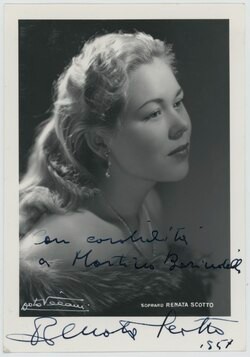
Renata Scotto
Scotto won a competition in 1952, leading to a performance of La Traviata at the Teatro Nuovo in Milan. Her La Scala debut took place in 1954 in the role of “Walter” in La Wally, with Renata Tebaldi and Mario del Monaco in the lead roles.
Her international breakthrough, however, took place at the Edinburgh Festival in a La Scala production of Bellini’s La Sonnambula. Stepping in for Maria Callas in an unscheduled additional performance, Scotto transformed from a promising young singer to a major opera star.
Scotto performed extensively during the 1960s, and her American debut as “Mimì” in Puccini’s La bohème, a role close to her heart and connected to her experience as a seamstress, took place at the Lyric Opera in Chicago in 1960. And her “Mimì” was decidedly different.
Renata Scotto sings: Puccini: La Bohème, “Mi chiamano Mimì”
Transformative Portrayals
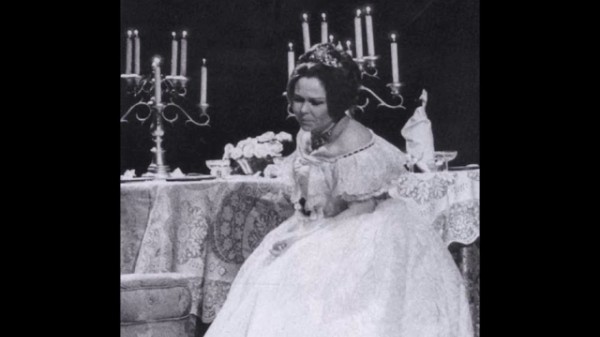
Renata Scotto
Here was not a fragile little character waiting for tragedy, but a young woman with inner life and pride. Critics immediately praised the freshness of her voice and the naturalness of her phrasing. Most importantly, they praised the sincerity she brought to the character, as it felt she was speaking directly to Rodolfo, not performing for an audience.
Scotto’s “Mimì” followed in the footsteps of her “Violetta,” a character she performed very young, and a role that would define her. Scotto’s portrayal didn’t feel like a stock tragic heroine. She was more like a living and breathing woman who just happened to be dazzling at a party.
Her voice had brilliance and bite, and you could hear the nerves beneath the glitter. Bravura wasn’t a celebration; it was self-defence. Things tightened emotionally in Act II, and Scotto’s colouring of words made you feel like Violetta was thinking in real time. In fact, it was heartbreak unfolding step by step.
Scotto/Carreras sing Verdi: La Traviata, “Un di felice”
Commanding the Met
On 13 October 1965, Scotto made her Metropolitan Opera debut as Madama Butterfly, with John Alexander as Pinkerton. Louis Snyder from the New York Herald Tribune wrote, “Miss Scotto, as a prima donna, harks back to the days when it was assumed that, to be imported by the Met, you had substantial voice and experience, and the New York test was one of communication of personality.
Wednesday night, Miss Scotto arrived with all three, and if she went her own way in portraying Cio-Cio-San, that is, outside the proscribed bounds of the effective Aoyama production, hardly anyone cared. For she sings musically and affectingly, with pathos and colour and humour in the voice, in a manner to enfold the listener in the first row of the orchestra or the last row of the family circle, Miss Scotto is a singer for all price ranges.” (Snyder, New York Herald Tribune 1965)
Renata Scotto sings Puccini: Madama Butterfly, “Un bel di”
Voice and Vision
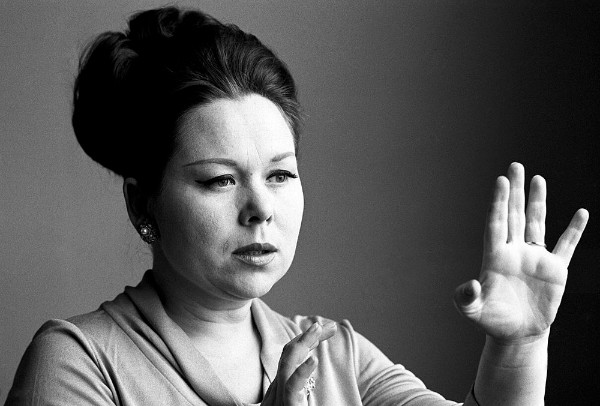
Renata Scotto
Scotto’s popularity at the Met was enormous, as she appeared in over 300 performances in 26 roles between 1965 and 1987. She established a harmonious partnership with James Levine, and drew 100,000 people to a concert performance of Madama Butterfly in Central Park. Scotto also directed her last production at the Met of that particular opera, “becoming the first woman at the house to stage an opera and star in it.”
Renata Scotto retired from the stage in 2002, concluding a career that had lasted 50 years. She will be remembered for the beautiful sound of her voice, and her rare ability to fuse musical intelligence with dramatic truth. It was her emotional courage and psychological engagement, however, that distinguished her from the voices of her contemporaries.
For more of the best in classical music, sign up for our E-Newsletter