Kandinsky is well-known for often being credited as one of the pioneers of abstraction in Western art. A late starter in the world of painting — he began his studies at the age of thirty, he was as much a painter as a musician — in fact, as a young child, he learned to play the piano and the cello. If he is, of course, celebrated for his works as a painter, his musicianship has influenced his output in many ways. In fact, his theory of painting and colours takes inspiration from the world of music and often uses musical examples.
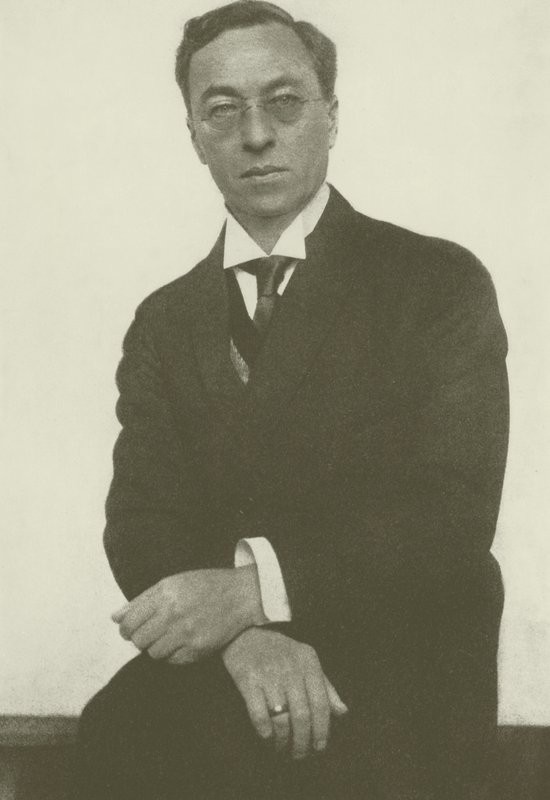
Wassily Kandinsky © meisterdrucke.uk
Like many synesthete painters, such as Hockney, Kandinsky found colours in sounds. A gift for a painter and musician, this has allowed Kandinsky to translate musical ideas and concepts into painting, such as in his “Impression III (Concert)”, a work which connects colour and sounds in painting. In fact, Kandinsky often approached the creation of his art with a musical state of mind; his impressions — direct sensations received from nature —, improvisations — sensations received from his inward nature —, and finally compositions — connecting imagination with intuition and rational —, are direct consequences of Kandinsky’s condition.
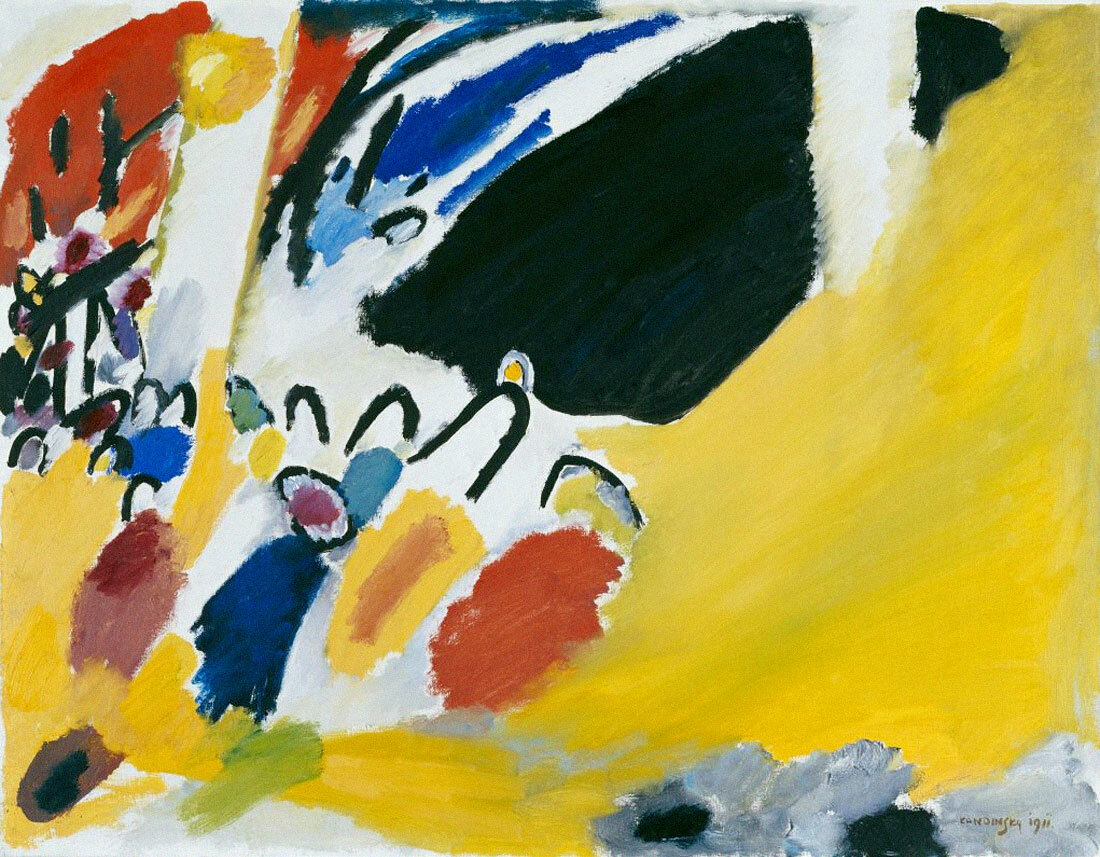
Kandinsky: Impression III (Concert) (1911) (The Städtische Galerie im Lenbachhaus, Munich)
This also led him to theorise his understanding of music, translating sound into colour and vice versa. In Concerning the Spiritual in Art, Kandinsky describes how he associates the colours of painting with the colours of the orchestra. Blue, the first primary colour, when light is the sound of flutes, whilst when dark, the sound of cellos and contrabasses, and to its darkness, a deep organ. Yellow, the second primary colour for Kandinsky, is also the colour of high trumpets. Kandinsky then goes on to associate more colours with the orchestra, such as red, with the violin. Black is the colour of closure; it is extinguished. White is the harmony of silence and possibilities, whilst grey, the balance between white and black, is soundless. Throughout his life, Kandinsky was close to composers. Actually, he was friends with Schoenberg, who both met in their intentions of breaking from traditional approaches to creating music and art. He also designed the stage for some of Mussorgsky’s Pictures at an Exhibition performances, balancing his principle of universality through forms, colours and sounds.
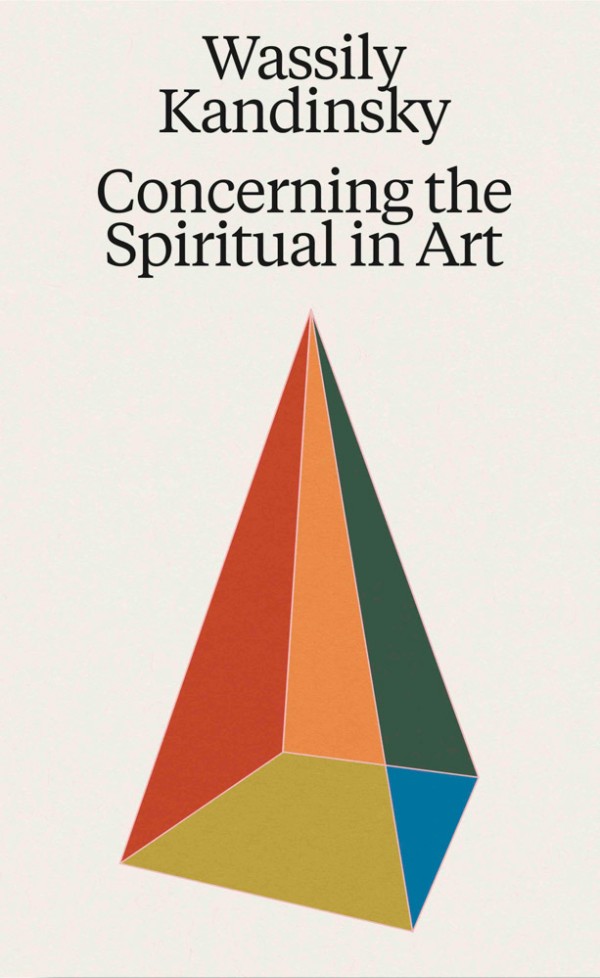
Wassily Kandinsky: Concerning the Spiritual in Art © s.turbifycdn.com
Arnold Schönberg: String Quartet No. 2
Music was for Kandinsky the ultimate teacher, and it has accompanied his artistic journey throughout his life. Although not a synesthete like Kandinsky, Mondrian also explored connections between musical and visual principles, and so did Matisse, but none of them explored the creative connection between both artistic mediums as well as Kandinsky. In 2021, with the help of machine learning, the Centre Pompidou and Google Arts & Culture created a Play Kandinsky experience where the audience is invited to interact with a Kandinsky painting and hear the music out of it.
Play a Kandinsky — Google Arts & Culture
For more of the best in classical music, sign up for our E-Newsletter