The name Frederick Delius (1862-1934) conjures misty landscapes, long-breathed melodies, and music that gently drifts rather than argues. He is usually associated with orchestral tone poems, such as On Hearing the First Cuckoo in Spring or Brigg Fair.
Frederick Delius is not the first composer who comes to mind when one thinks of concertos. Yet, tucked away within his output are four concertos that reveal a surprisingly different side of his musical personality.
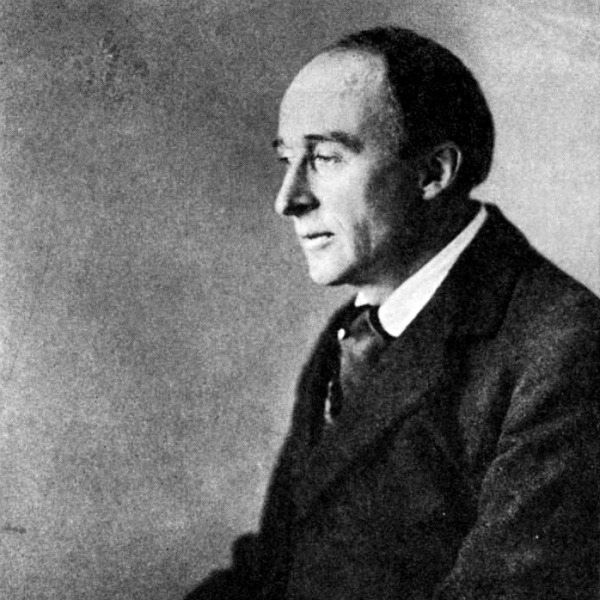
Frederick Delius
To celebrate his birthday on 29 January, let’s explore the Delius concertos as a personal response to a genre he never fully embraced. However, he could not entirely ignore it either.
Frederick Delius: On Hearing the First Cuckoo in Spring
Concertos Without Combat
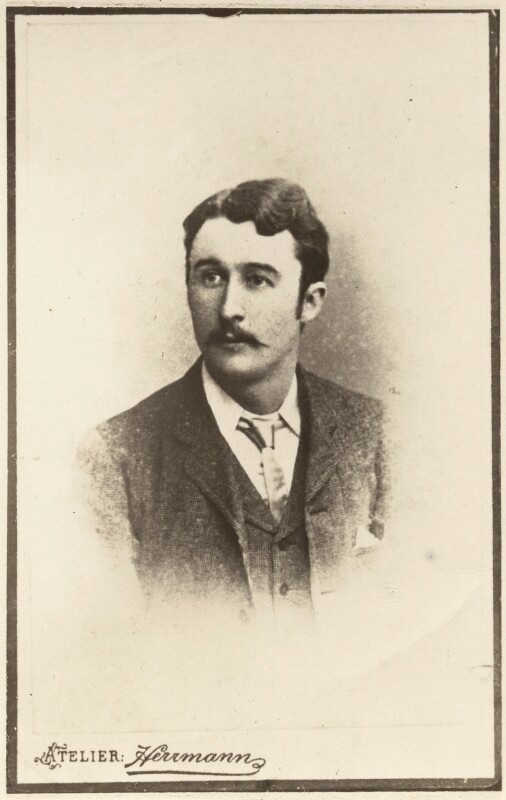
Frederick Delius (National Portrait Gallery)
The Delius concertos, the Piano Concerto, the Violin Concerto, the Cello Concerto, and the Double Concerto for Violin and Cello, do not conform neatly to the grand Romantic concerto tradition of heroic struggle and dazzling display.
Instead, they absorb the idea of the concerto into Delius’ own musical imagination. The rhetoric of struggle and triumph is replaced with continuity and introspection.
These concertos ask different questions. Instead of “how can the soloist dazzle?” they ask, “how can the solo voice belong?” Instead of drama through contrast, they offer drama through atmosphere and emotional accumulation.
These works are fluid, rhapsodic, sensuous, and quietly radical. Andrew Clements describes Delius’s three string concertos as tending away from “conventional concerto dialogues” toward a more rhapsodic, less confrontational interaction between soloist and orchestra. (Clements, The Guardian, 2011)
An Outsider’s Ear
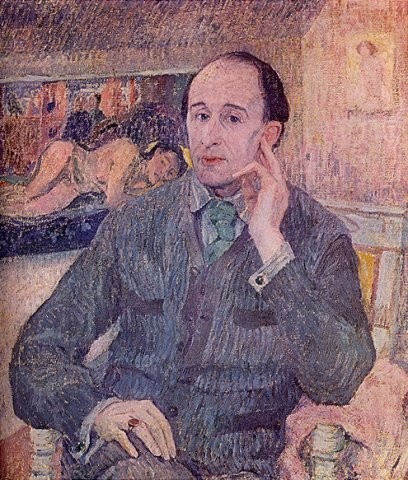
Jelka Rosen: Portrait of Frederick Delius
Born on 29 January 1862 to German parents in the English town of Bradford, Delius spent much of his life in exile. He rejected a conventional career in business, drifted through Florida, Paris, and Leipzig, and eventually settled in France.
He absorbed influences from Wagner, Grieg, and Debussy, and was deeply sceptical of rigid musical forms. He certainly disliked overt displays of virtuosity for their own sake. For Delius, music was about atmosphere, sensuality, and emotional suggestion rather than argument.
The concerto traditionally thrives on contrast, pitting the soloist versus the orchestra. Delius’ philosophy makes his approach to the concerto rather intriguing. However, instead of rejecting the concerto idea outright, Delius went ahead and quietly reshaped it.
Restless Beginnings
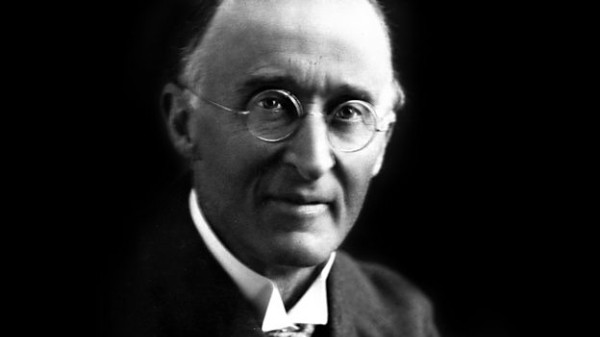
Frederick Delius
The Piano Concerto is the earliest and most ambitious of Delius’s concertos, and also the most problematic. The first completed version dates from 1897, and it was reshaped multiple times. The first public performance of any version occurred in October 1904 in Elberfeld, Germany, with Julius Buths as the pianist and Hans Haym conducting.
As Delius was not fully satisfied with this early version, the concerto continued to evolve. A significantly revised version was premiered in October 1907 at London’s Queen’s Hall, with Hungarian pianist Theodor Szántó as soloist, to whom the work is dedicated, and Henry Wood conducting.
From the outset, the Piano Concerto announces itself as something different. Rather than launching into a bold orchestral statement followed by a flamboyant piano entrance, the music unfolds almost improvisationally.
Virtuosity is certainly present, but it is not really showy. The difficulty lies in sustaining long melodic arcs and in maintaining momentum in music that resists clear-cut climaxes.
What makes the Piano Concerto particularly fascinating is its emotional volatility. At times, it surges with youthful bravado, while at others, it drifts into introspection. The process of revisions suggests that Delius struggled to find a balance between formal control and expressive freedom.
Frederick Delius: Piano Concerto in C minor
A Private Song
If the Piano Concerto is restless and experimental, the Concerto for Violin and Orchestra represents Delius at his most lyrical. It was composed in 1916, at a time when he was deeply engaged with string writing and produced some of his richest chamber music works.
This concerto was written for the English violinist Albert Sammons, a musician with whom Delius enjoyed a fruitful collaboration. The work is cast as a continuous movement with a rhapsodic, improvisatory quality, unfolding much like a long and reflective song.
World events delayed the premiere. Because of the First World War, the first public performance did not take place until 30 January 1919 in London. It featured Albert Sammons as the violin soloist and the Royal Philharmonic Orchestra conducted by Adrian Boult.
The reception was enthusiastic, and Delius himself reported that the performance made a “wonderful impression…Even the criticisms are splendid.” (Delius Society Journal, 2019)
In fact, the violin was an ideal instrument for Delius’ imagination. Its ability to sustain long, singing lines suited his melodic instincts perfectly. Fittingly, the concerto unfolds as a continuous flow rather than a series of individual movements.
The solo writing is demanding, but the real challenge lies in maintaining the illusion of effortlessness. The violinist must sound as though the music is being spun in real time, without strain or calculation. The Violin Concerto inhabits a world of longing and quiet intensity. It is not a public statement but more like a deeply personal confession.
Frederick Delius: Violin Concerto
A Darker Meditation
The Concerto for Cello and Orchestra explores a darker emotional terrain as Delius delves into a more sombre and reflective world. Tinged with melancholy and resignation, this work owes its existence to a personal plea.
English cellist Beatrice Harrison, one of the foremost British cellists of her day, encouraged Delius to write a concerto for her after he’d composed his Cello Sonata. Delius began sketches in 1920 and completed the work in May 1921. Deeply expressive and intimate, it apparently was his favourite among his concertos. (Fenby, Delius as I Knew Him, 1937)
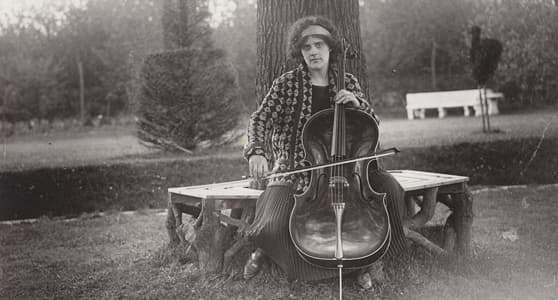
Beatrice Harrison
The world premiere took place in January 1923 in Vienna, with the Russian cellist Alexandre Barjansky as soloist and Ferdinand Löwe conducting. Beatrice Harrison later gave the British premiere in July 1923 at a London concert where Delius himself conducted. And she also took the work to American audiences in October 1927 with Fritz Reiner and the Philadelphia Orchestra.
The concerto unfolds without breaks between its five interconnected sections and often feels like a personal meditation. It feels less pastoral than many of Delius’ orchestral works, with the cello frequently singing in its lower register.
This concerto is perhaps the least frequently performed of the four, yet it offers some of Delius’s most affecting writing. It demands a cellist sporting technical mastery and a deep understanding of pacing, colour, and emotional restraint.
Frederick Delius: Cello Concerto (Jacqueline Du Pré, cello; Royal Philharmonic Orchestra; Malcolm Sargent, cond.)
Quiet Dialogue
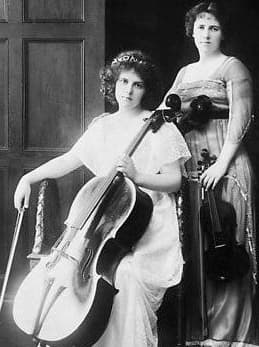
Cellists May and Beatrice Harrison, c. 1920s
The Double Concerto for Violin and Cello brings Delius’s concerto thinking to its most refined expression. Here, the traditional opposition of soloist and orchestra is further softened by the presence of two solo instruments engaged in dialogue with each other.
Delius heard the sisters May and Beatrice Harrison in a Hallé Orchestra concert performing Brahms’s Double Concerto in 1914. The Harrison sisters were celebrated figures in British music, and both became closely associated with Delius’ music.
Shortly after the Brahms performance, Delius apparently said to Beatrice, your performance was superb, so much so that I am inspired to write a double concerto and dedicate it to you and your sister. (Delius Society Journal, 2019)
The composer frequently consulted the Harrison sisters, and May reports, “When Delius began the Double Concerto at our house in Cornwall Gardens, he wrote a lot of it in unison. We both said, ‘you can’t do that, it doesn’t sound right.’”
And when we played bits, he said, ‘No, you are quite right. I see what you mean.’ Delius used to come over with two pages, sit at the piano and then say, ‘This is what I want.’ He then brought two more pages, and so in this way it was built up.” (Delius Society Journal, 2019)
The Double Concerto is also one of Delius’s most intimate works. Its emotional world is tender and reflective; we might even call it quietly luminous. Listening to it feels less like witnessing a performance and more like overhearing a private conversation.
The Delius concertos show a side of the composer that many people might not expect. Instead of flashy solos or dramatic battles between instruments, Delius created spaces for reflection and dialogue.
These works reside outside the mainstream concerto tradition as Delius asks us to listen differently. In a way, these concertos reveal themselves slowly, with performers and listeners surrendering to restraint and a quieter form of expression.
For more of the best in classical music, sign up for our E-Newsletter