When it comes to classical music generally and orchestral music specifically, most double bass players have, historically, been men.
Even today, many orchestras feature an all-male bass section, even as violin and cello sections have become increasingly female.
Some women bassists, however, have trumped the stereotype. Today, we’re looking at seven examples.
From early pioneers like Ida Carroll and Lucille Dixon Robertson to modern virtuosos like Nina Bernat and Chi-chi Nwanoku, all of these women bassists have left a profound mark on the art.
Ida Carroll (1905–1995)

Ida Carroll
Ida Carroll was born outside of Manchester, England, in 1905 to composer Walter Carroll and his wife. She began her musical studies as a child.
When she was sixteen, she began studying at the Matthay School of Music in Manchester.
During her time there, the school orchestra found itself in need of a bass player. She took up the instrument out of necessity – and found that she liked it.
After her graduation, she began working as a secretary at the Matthay School’s successor school, the Northern School of Music.
She eventually became the principal there and helped to oversee the merger with and creation of the Royal Northern College of Music in the early 1970s. She retired in 1976.
She became a composer on the side, writing several works for double bass between the 1950s and 1980s.
She may not have specialised in professional performance, but her visibility, successful career as a music school administrator, as well as her love of teaching and composing, land her on this list.
Ida Carroll’s Fantasia
Lucille Dixon Robertson (1923–2004)
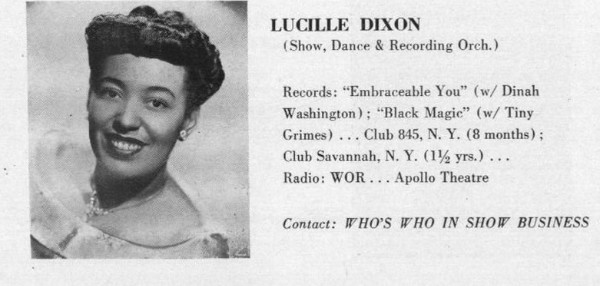
Lucille Dixon Robertson
Lucille Dixon was born in Harlem in February 1923.
She began playing the bass in high school and was a quick study, gaining admittance into the studio of New York Philharmonic bassist Frederick Zimmermann, known as the “father of bass teaching in the United States.”
Despite her race and gender, she secured a spot in both the All City High School Orchestra and the National Youth Administration Orchestra. During her time in the NYAO, she played under mid-century conducting giants Fritz Reiner and Otto Klemperer.
In the words of Local 802’s website, “She played with numerous symphony orchestras including the Boston Women’s Symphony, National Symphony of Panama, Bridgeport Symphony, Scranton Symphony, Westchester Philharmonic, Ridgefield Symphony and Orchestral Society of Westchester.”
In 1964, she became one of the founders of the Symphony of the New World, which was one of the first American orchestras to be deliberately racially integrated after the passage of the Civil Rights Act. Its membership was 40% people of colour and 30% women: a striking makeup in a time when orchestras were almost entirely white and male.
In 1972, she became the orchestra’s manager, but then, as now, funding orchestras was difficult, especially ensembles addressing societal issues like sexism or racism. The orchestra performed for the final time in Carnegie Hall in 1978.
A performance by the International Sweethearts of Rhythm
She also enjoyed a thriving jazz career. Many Black musicians felt unwelcome in the classical music world and turned to jazz.
In 1941, she toured with an all-girls’ jazz band called the International Sweethearts of Rhythm (the first female jazz band to be racially integrated).
She then founded her own band, the Lucille Dixon Orchestra, which performed between 1946 and 1960.
She retired in Puerto Rico, but eventually found her way back to the instrument and began playing jazz again, even appearing on a live jazz recording. She died in September 2004.
Jane Little (1929–2016)
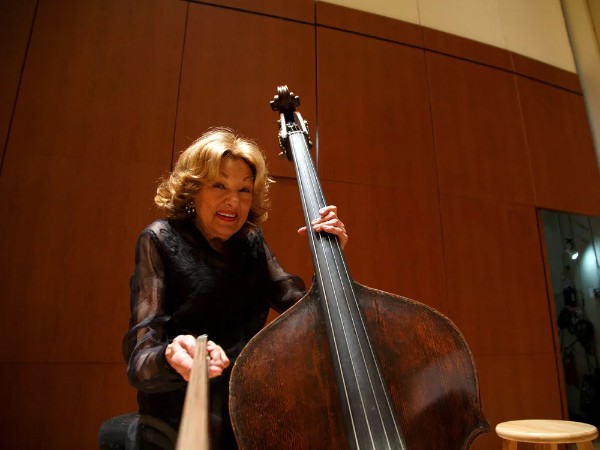
Jane Little © Dustin Chambers/Atlanta Symphony Orchestra
Jane Little was born Jane Findley in Atlanta in 1929 to a self-taught amateur pianist and her husband.
While attending the Girls High School in Atlanta, Little took up the double bass because the orchestra needed a bass player.
In 1945, at the age of sixteen, she joined the Atlanta Youth Symphony Orchestra. Two years later that orchestra became the Atlanta Symphony Orchestra, and Little stayed on.
In 1953, she married ASO principal flute Warren Little. She was 4’11” and he was 6’2”. To her amusement, he carried her bass for her while she carried his flute.
Little went on to play in the ASO for an astonishing 71 years. She collapsed and passed away in 2016 while the orchestra was playing an arrangement of “There’s No Business Like Show Business.”
She holds the record for longest tenure with a single orchestra.
A mini documentary from The New Yorker about Jane Little’s career
Orin O’Brien (1935–)
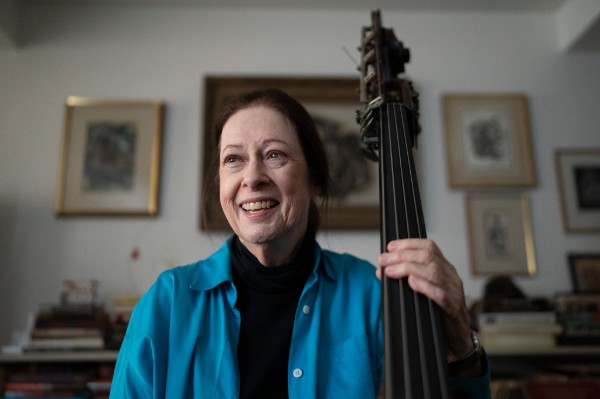
Orin O’Brien
O’Brien was born in 1935 to two Hollywood actors, George O’Brien and Marguerite Churchill.
She began learning piano at the age of six, then switched to bass when she was fourteen so she could join the Beverly Hills High School orchestra.
She took to the instrument immediately. She studied with Milton Kestenbaum and Herman Reinshagen, eventually enrolling at Juilliard to study with Frederick Zimmermann.
She played with a number of major orchestras, including the Metropolitan Opera Orchestra and the American Symphony Orchestra, where she performed Ginastera‘s Variaciones Concertantes under Leopold Stokowski in 1962.
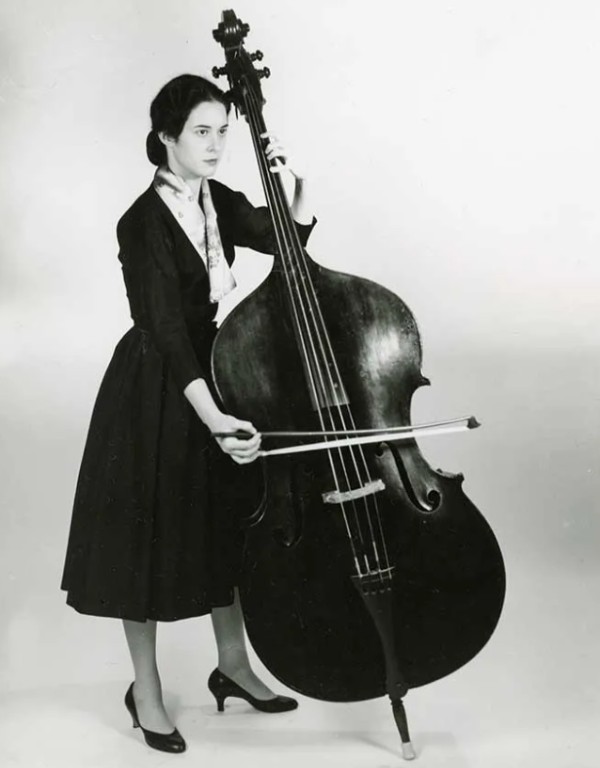
Orin O’Brien
Four years later, in 1966, she joined the New York Philharmonic, arriving during Leonard Bernstein‘s transformative tenure. The press took note of her, focusing on her looks and gender. She kept her head down and focused on the work.
She spent fifty-five years with the Philharmonic, only retiring in 2021 at the age of 86.
Her niece Molly O’Brien made a documentary short about her aunt’s life and career called The Only Girl in the Orchestra. It was released in November 2023 and won an Academy Award a few months later.
Trailer for The Only Girl in the Orchestra
Chi-chi Nwanoku (1956–)
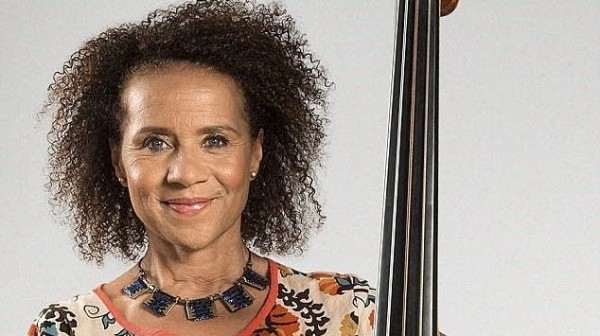
Chi-chi Nwanoku
Chi-chi Nwanoku was born in London in 1956 to a Nigerian father and Irish mother. She began studying the piano at seven and the bass at eighteen, attending the Royal Academy of Music.
In 1986, she became a founding member of the Orchestra of the Age of Enlightenment, an ensemble that specialises in historic performance practice. She served as that orchestra’s principal bass player for thirty years.
She has also played in the London Mozart Players and the Academy of St Martin in the Fields.
In 2015, she founded the Chineke! Orchestra. According to its website, its mission is “to provide outstanding career opportunities to established and up-and-coming Black and ethnically diverse classical musicians in the UK and Europe.”
Nwanoku also teaches bass at the Royal Academy of Music and has hosted a number of educational television programs.
In 2022, she was selected as a Commander of the Order of the British Empire.
Interview with Chi-chi Nwanoku
Christine Hoock (1969–)
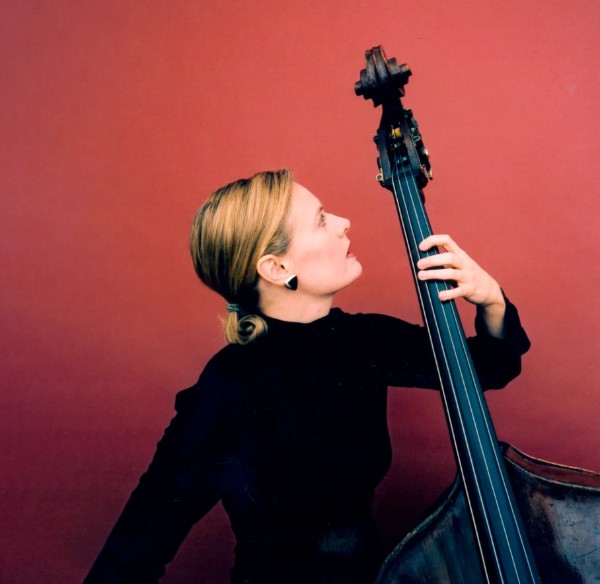
Christine Hoock
Christine Hoock was born in Mainz, Germany, in 1969.
She was named to the bass section of the WDR Symphony Orchestra Cologne in 1987, the year she turned eighteen. She served in that position until 2002, working in principal roles.
She then shifted focus to solo and chamber performance, as well as education. In 2002, she was appointed Professor of Double Bass at the Mozarteum University in Salzburg, a prestigious post where she continues to mentor young bassists.
She has also appeared on a number of competition juries.
In the words of her website, “Her versatility is reflected in an impressive discography, spanning from classical masterpieces to cross-genre projects in world music, jazz, and electronic music—always blending artistic excellence with an insatiable curiosity.”
Christine Hoock playing de Falla’s Canciones populares Españolas
Nina Bernat (2000–)
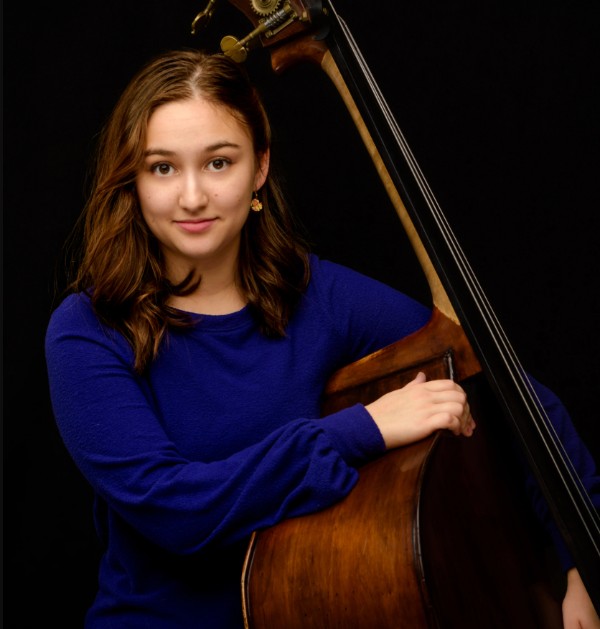
Nina Bernat
Nina Bernat was born in 2000 to Mark Bernat, a well-known bass player in his own right, and a veteran of the Israel Philharmonic and Seattle Symphony. Her father is Polish and her mother is Korean.
She began her music studies on the piano at five and started learning bass from her father at seven.
She spent seven years at the Juilliard School, studying under Tim Cobb and cellist Astrid Schween.
In 2023, she won a prestigious Avery Fisher Career Grant and has been racking up prize after prize throughout her twenties.
She has even performed as a soloist with the Minnesota Orchestra, the Israel Philharmonic, and the Oslo Philharmonic…no small feat given how rarely bass players get to shine in the solo spotlight. Clearly, the future of bass playing is in good hands!
For more of the best in classical music, sign up for our E-Newsletter