Classical music lovers don’t always like acknowledging it, but every idolised canonical composer has been deeply inspired by the people who surrounded him.
And in many cases, one of the most inspirational people in any artist’s life is their spouse.
In fact, some of the most cherished works in the late Romantic classical canon were inspired by composers’ wives.
These were women who loved their husbands deeply – who often suffered and sacrificed for them – and who shaped their partners’ legacies in profound ways. These women weren’t incidental to the creation of these works: they were essential.
Today, we’re looking at some of the classics they inspired and had dedicated to them.
6 Romances, Op.8, by Nikolai Rimsky-Korsakov (1868-70)
Nadezhda Purgold Rimskaya-Korsakova
Rimsky-Korsakov: Four Songs, op.26/4 “Zuleika’s Song” – Olena Tokar & Igor Gryshyn
Rimsky-Korsakov may be best known for his operas and big orchestral works, but he also wrote a number of lovely romances.
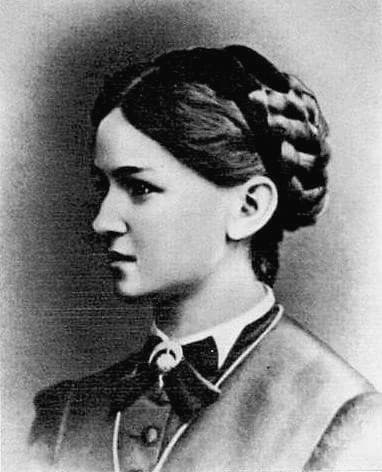
Nadezhda Rimskaya-Korsakova
Some of them he dedicated to his beloved wife, Nadezhda Rimskaya-Korsakova, whom he married in 1872. At the time of their marriage, she was a more accomplished musician than he was! She proved to be a vital sounding board for Rimsky-Korsakov throughout his career.
His Six Romances were composed between 1868 and 1870. He wrote the second song for her shortly after meeting her in the spring of 1868. They became engaged in December 1871 and got married the following July.
Salut d’Amour by Edward Elgar (1888)
Alice Roberts Elgar
Itzhak Perlman – Elgar: Salut d’amour for Violin and Piano – Rohan De Silva
Edward Elgar composed his Salut d’Amour in 1888 for Caroline Alice Roberts, the piano student who would soon become his fiancée.
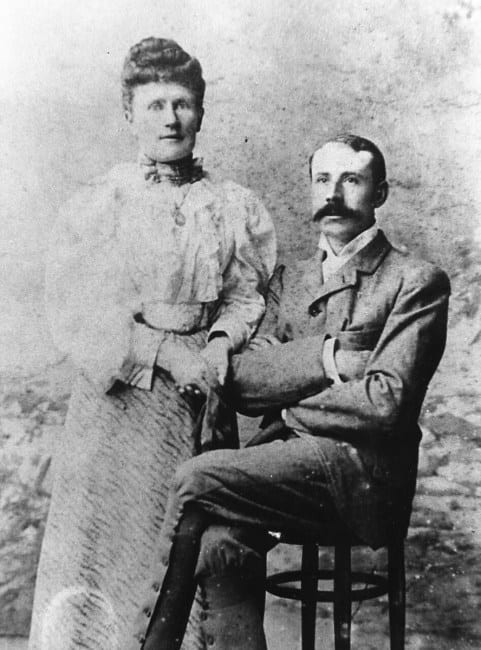
Alice Roberts and Edward Elgar
Their connection had a hint of scandal to it, as by the time of their marriage, she was forty, and Elgar was nine years her junior…a somewhat unusual age difference in Victorian England.
This tender, lyrical miniature for violin and piano was originally titled Liebesgruss (“Love’s Greeting”), in a nod to Alice’s fluency in German.
Alice was a professional writer, and she responded to her future husband’s composition with a poem entitled “The Wind at Dawn.” He would immediately set to writing the poem to music. He ended up returning to her poetry for inspiration throughout his career.
In the published version of Salut d’Amour, Elgar dedicated the work “à Carice,” an amalgamation of Caroline Alice’s first and middle names. Adorably, they would name their daughter Carice when she was born in 1890.
Wedding Day at Troldhaugen by Edvard Grieg (1896)
Nina Hagerup Grieg
Lugansky – Grieg, Wedding Day at Troldhaugen, from Lyric Pieces
“Wedding Day at Troldhaugen” is one of Edvard Grieg’s most famous piano works. It was composed to celebrate the 25th wedding anniversary of the composer and his wife, Nina Hagerup Grieg.
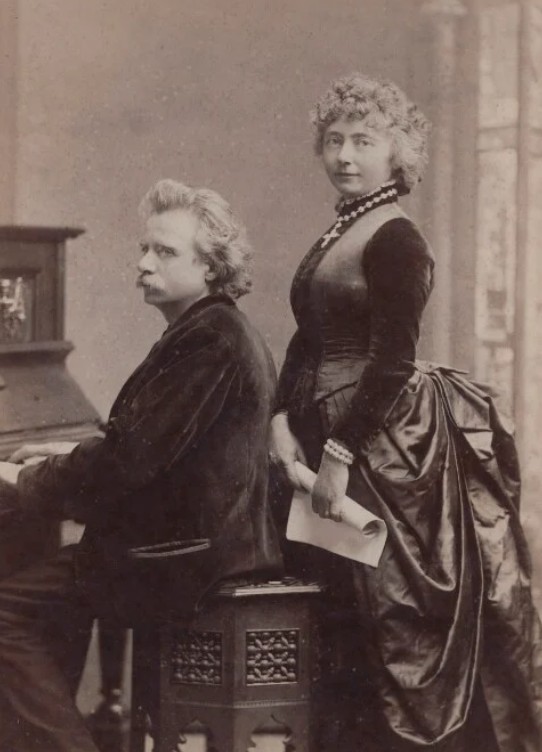
Edvard and Nina Hagerup Grieg
Originally titled “Gratulanterne kommer” (“The Well-Wishers Are Coming”), the piece captures the festive atmosphere of a wedding day at their home, Troldhaugen.
Nina was also deeply musical: she was a lyric soprano who often performed alongside her husband. (In fact, the following year, the couple would appear together before Queen Victoria!) Grieg wrote most of his nearly 180 songs for her.
Symphony No. 8 by Gustav Mahler (1906)
Alma Schindler Mahler
MAHLER | Symphony no. 8 | Netherlands Philharmonic Orchestra | Marc Albrecht | Concertgebouw
Gustav Mahler’s eighth symphony – nicknamed the “Symphony of a Thousand” due to the massive performing forces it requires – is one of the biggest symphonies in the standard repertoire…and one of classical music’s most extravagant declarations of love.
In his eighth symphony, Mahler unites Latin liturgical text (“Veni, Creator Spiritus”) with the final scene from Goethe’s Faust, culminating in a vision of salvation through the “eternal feminine.”
The final words the chorus sings are “The eternal feminine draws us on high.”
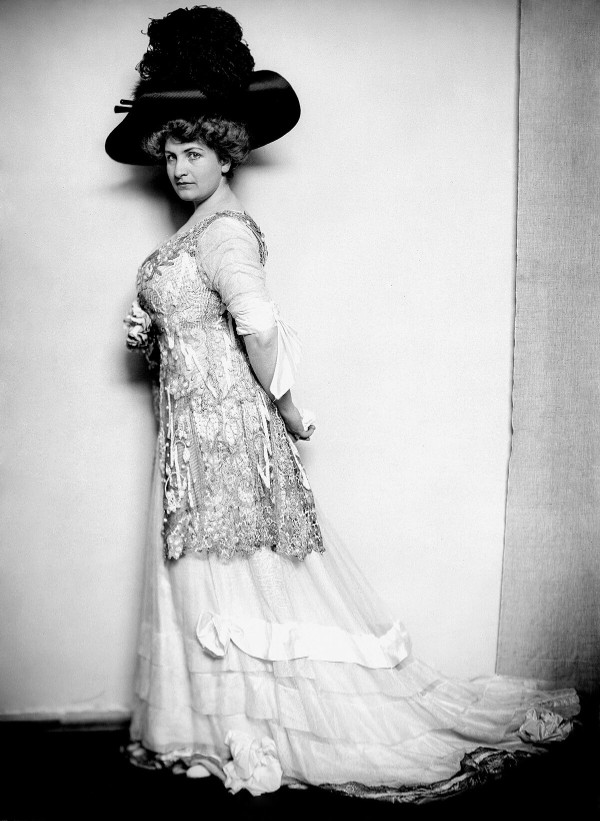
Alma Schindler Mahler
The complicated love that Mahler felt for Alma – a young, vibrant, musical, devastatingly beautiful woman, with a tendency toward infidelity – was always a major creative inspiration in Mahler’s life. The dedication of his biggest symphony to her underlines it.
String Quartet No. 2 by Arnold Schoenberg (1908)
Mathilde Zemlinsky Schoenberg
SCHOENBERG String Quartet No. 2 / TMC Fellows
Arnold Schoenberg wrote his second string quartet during a time of deep emotional turmoil.
He married his wife Mathilde Zemlinsky, the sister of his composition teacher, in October 1901. In January 1902, their daughter Gertrud was born, and in June 1906, they had a son, Georg.
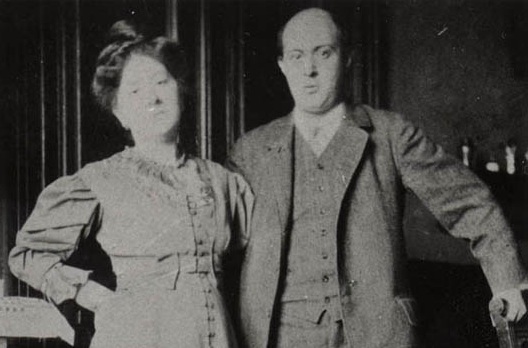
Mathilde and Arnold Schoenberg © richardgerstl.com
However, disaster struck in 1907 when Mathilde fell in love with a family friend, painter Richard Gerstl. The relationship became serious, to Schoenberg’s despair. He began writing his emotions into the string quartet he was composing at the time.
The quartet’s first two movements use the standard instrumentation of a string quartet, but the last two feature a soprano voice singing poetry by Stefan George.
He wrote:
I was inspired by poems of Stefan George, the German poet, to compose music to some of his poems and, surprisingly, without any expectation on my part, these songs showed a style quite different from everything I had written before. … New sounds were produced, a new kind of melody appeared, a new approach to expression of moods and characters was discovered.
The work would become a major landmark on Schoenberg’s creative journey to embracing atonality.
The dedication to the quartet is simply: “To my wife.”
Learn more about Mathilde Schoenberg and Richard Gerstl’s fraught relationship.
For more of the best in classical music, sign up for our E-Newsletter