My earliest memories of music are probably my parents listening to BBC Radio 3 and playing LPs of their favourite pieces and performers. When I was older, probably around 8 or 9, they took me to concerts and it was then that I began, in a very naïve way, to appreciate the artistry of the musicians, the etiquette of the concert hall and the excitement of “being there” at a live music event. I loved the plush red seats in the concert hall, the sudden expectant hush that enveloped the audience just before the performance began, the glossy programme and the interval ice cream…. This love has stayed with me, and I still find live music performance really thrilling, especially when there is that special ‘collective breath’ of the audience sharing the experience.
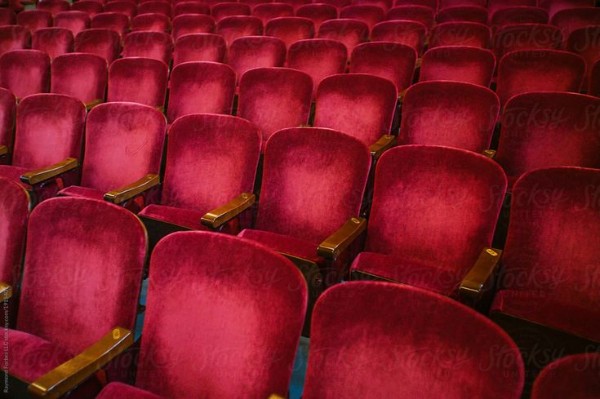
Concert seats
My father was a very competent amateur clarinettist. He took very few lessons but played to a sufficient standard to join a local orchestra and various chamber groups for amateur musicians. I often heard him practicing at home, and one of my most cherished musical memories is listening to him playing Mozart’s Clarinet Concerto with Music Minus One (which in those days – the early 1970s – was a vinyl LP). I would go off to sleep imagining him playing with a full orchestra in the living room. His commitment to improving his playing influenced mine when I started taking piano lessons: he demonstrated the importance of regular practicing, and when I was more advanced as a young pianist, I would accompany him, and we would practice together.
Wolfgang Amadeus Mozart: Clarinet Concerto in A Major, K. 622 – II. Adagio (Martin Fröst, basset clarinet; Bremen Deutsche Kammerphilharmonie; Martin Fröst, cond.)
I’ve always enjoyed practicing – it has almost never felt like a chore – and as I developed as a pianist, I learnt the importance of focussed, thoughtful, and deep practicing as the route to noticeable improvement and great proficiency, both technically and artistically.
I was a keen member of the choir at both senior school and university, which gave me the opportunity to enjoy the thrill of many voices producing sound and that special collective excitement of performance, from the point of view of performer rather than audience. Perhaps the most memorable experience with this regard was being part of a massed choir in a performance of Elgar’s The Dream of Gerontius at the Royal Albert Hall.
Edward Elgar: The Dream of Gerontius, Op. 38 – Part I: Profiscere, anima Christiana (The Priest) – Go, in the name of Angels (Chorus) (Roderick Williams, baritone; Helsinki Music Centre Choir; Cambridge University Symphony Chorus; Dominante Choir; Helsinki Chamber Choir; Cambridge Clare College Choir; Finnish Radio Symphony Orchestra; Nicholas Collon, cond.)
At senior school the music teacher directed the choir – a man of huge energy and imagination. Every Christmas we would perform Handel’s Messiah and I will never forget the music teacher exhorting us to “pretend you’re a trumpet!” to create the sound of fanfares in the Hallelujah! Chorus. That ability to “imagine the sound” stayed with me and I often encouraged my piano students to imagine a particular instrument when bringing their music to life. I also use this technique in my own music practice. It’s hard to explain how it happens, but there is definitely something in the connection between the mind, the imagination and the fingers….
George Frideric Handel: Messiah, HWV 56: Part II – Hallelujah (Chorus) (Collegium Musicum 90; Richard Hickox, cond.)
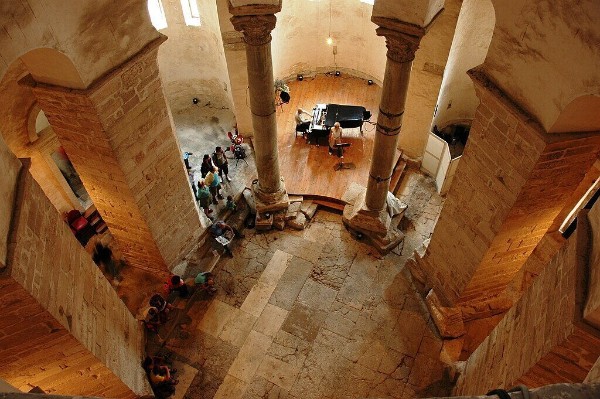
St Donat, Zadar
In the early 1980s I became friendly with the Yugoslavian girl who came to stay with us as an exchange student. When I went to stay with her family, in their home in a small town on the Dalmatian coast, they took me to a string quartet recital in an ancient Medieval chapel. It was August, the evening was very warm, and a beautiful light filtered into the space. I can’t remember what we heard, but the setting was exquisite, adding to the emotional impact of the performance. Since then, I have been to a number of quite unusual places for live music, including Brunel’s Shaft in south-east London, to hear Messiaen’s Quartet for the End of Time – another instance where the setting enhanced the emotional depth of the music, and proof that one doesn’t have to experience music in a standard setting to be engaged, moved or delighted by it.
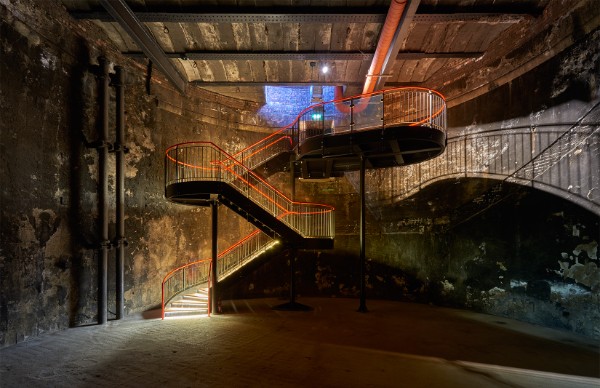
Brunel’s Shaft
Olivier Messiaen: Quatuor pour la fin du temps (Quartet for the End of Time) – VIII. Louange a l’immortalite de Jesus (In Praise of the Immortality of Jesus) (Martin Fröst, clarinet; Janine Jansen, violin; Torleif Thedéen, cello; Lucas Debargue, piano)
For more of the best in classical music, sign up for our E-Newsletter