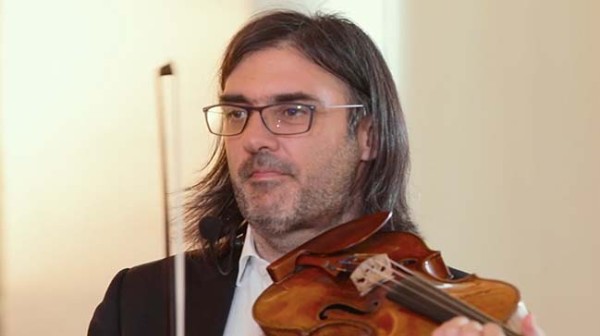
Leonidas Kavakos, born on 30 October 1967 in Athens, Greece, emerged as a violin prodigy whose early life was steeped in the rhythms of a musical household. His father, a violinist, and his mother, a pianist, created an environment where music became a dominant force.
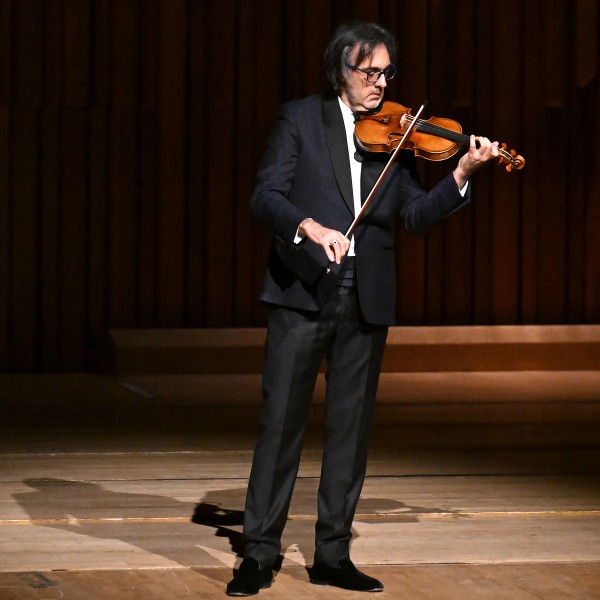
Leonidas Kavakos
From the tender age of five, Kavakos grasped the violin, not as a mere instrument, but as a familial heirloom of sound. His early experiences laid the foundation for a career that would blend Eastern Mediterranean heritage with Western classical mastery.
Leonidas Kavakos performs Bach: Partita No. 3 in E Major, “Gavotte en Rondeau”
Forging a Prodigy
His formal education began at the prestigious Hellenic Conservatory, under the tutelage of Stelios Kafantaris, a revered pedagogue whose rigorous methods emphasised technical precision fused with emotional depth. Kafantaris, himself a product of the post-war Greek classical revival, instilled in Kavakos the discipline of scales and etudes while encouraging interpretive freedom drawn from Byzantine chant influences and folk melodies.
By his early teens, Kavakos was performing publicly, navigating Paganini’s caprices with a maturity that stunned audiences. Yet, Athens’ vibrant yet insular scene, rich in tradition but limited in global exposure, posed challenges.
Greece’s classical music infrastructure, scarred by the 1940s civil war and the 1967-1974 junta, prioritised national composers like Manolis Kalomiris over international repertoires. Kavakos’s breakthrough came through the Onassis Foundation scholarship in the mid-1980s, which transported him across the Atlantic to Indiana University.
Leonida Kavakos performs Paganini: Caprice No. 24
From Fire to Rediscovery

Leonidas Kavakos
He took masterclasses with the legendary Josef Gingold, a survivor of the Russian Revolution and pupil of Eugène Ysaÿe. Under his guidance, Kavakos refined his bow arm and vibrato, blending his fiery temperament with Gingold’s emphasis on tonal purity and rhythmic vitality.
As Kavakos later reflected, “My Greek heritage gave me the fire; America taught me control.” His early years exemplify resilience and synthesis, as his journey illuminates how prodigies transcend borders and how scholarships ignite futures.
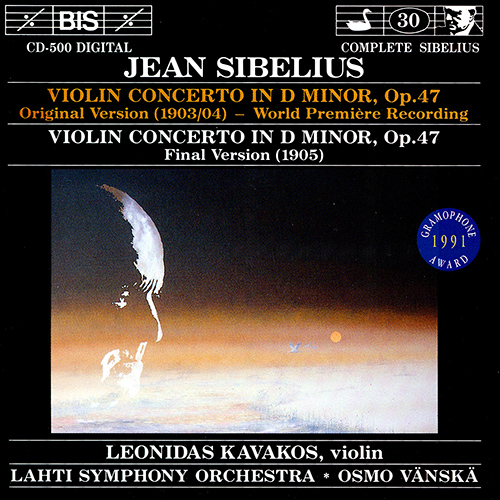
His breakthrough came in 1991, as Leonidas Kavakos performed in the world premiere recording of the original 1903/04 manuscript of the Sibelius Violin Concerto. Partnered with Finnish conductor Osmo Vänskä and the Lahti Symphony Orchestra on the BIS label, this endeavour unearthed a “mostly unknown” draft, suppressed by the composer himself after its tepid 1904 premiere.
Jean Sibelius: Violin Concerto in D Minor, Op. 47 (original 1903-04 version) – I. Allegro moderato (Leonidas Kavakos, violin; Lahti Symphony Orchestra; Osmo Vänskä, cond.)
Unearthing Sibelius
Leonidas Kavakos
Sibelius, dissatisfied with the work’s technical demands and orchestral balance, revised it in 1905 for publication, rendering the initial version a relic gathering dust in Helsinki archives.
Kavakos’ passion project, greenlit by the composer’s heirs, captured this raw prototype with untamed Nordic fervour and earned a prestigious Gramophone Concerto of the Year Award.
Where the familiar version gleams with crystalline lyricism, the earlier draft roils with youthful angst detailing Sibelius’ post-romantic struggles amid Finland’s independence movement.
Jean Sibelius: Violin Concerto in D Minor, Op. 47 (original 1903-04 version) – II. Adagio di molto (Leonidas Kavakos, violin; Lahti Symphony Orchestra; Osmo Vänskä, cond.)
Poetic Ferocity
Kavakos’ rendition, with its searing intensity and micro-dynamic control, illuminated these differences. The first movement’s brooding themes pulse with primal urgency, while the finale’s gypsy-inflected rondo erupts in unbridled virtuosity. Critics hailed it as “a revelation,” comparing original vs revised like sketches to masterpieces.
Kavakos’ technical prowess shone through as his flawless double-stops and stratospheric shifts captured the draft’s “raw emotion.” This triumph followed his 1985 Sibelius Competition victory in Helsinki, where at 17, he clinched first prize performing the revised concerto.
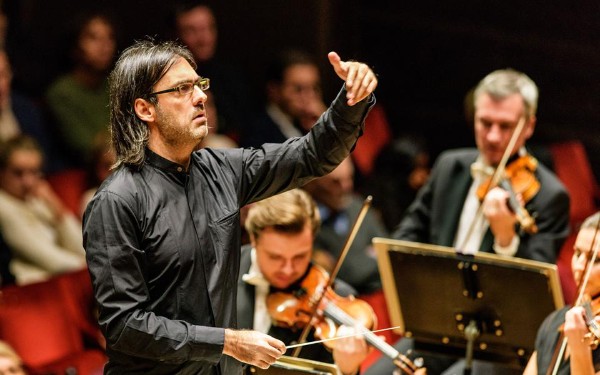
Kavakos’ approach embodied interpretive daring. He navigated the manuscript’s asymmetries, awkward fingerings and exposed violin lines, with “poetic ferocity.” In essence, Kavakos became a guardian of forgotten voices. He not only revived a concerto but also reignited discourse on the fragility of creation.
Jean Sibelius: Violin Concerto in D Minor, Op. 47 (original 1903-04 version) – III. Allegro (ma non tanto) (Leonidas Kavakos, violin; Lahti Symphony Orchestra; Osmo Vänskä, cond.)
Synthesis of Heritage and Innovation
Leonidas Kavakos © Jan Olav Wedin
Leonidas Kavakos’ journey from a musically enriched childhood in Athens to international acclaim exemplifies the transformative power of talent, discipline, and opportunity. His early immersion in Greece’s vibrant yet constrained classical music scene, coupled with the pivotal Onassis Foundation scholarship, propelled him toward global stages.
His story underscores how prodigies can transcend cultural and geographical boundaries, turning personal heritage into universal artistry through resilience and synthesis. His 1991 landmark recording of the original 1903/04 Sibelius Violin Concerto manuscript stands as a testament to his interpretive genius and dedication to musical rediscovery. His legacy inspires future generations to explore the uncharted corners of art with courage and reverence.
For more of the best in classical music, sign up for our E-Newsletter