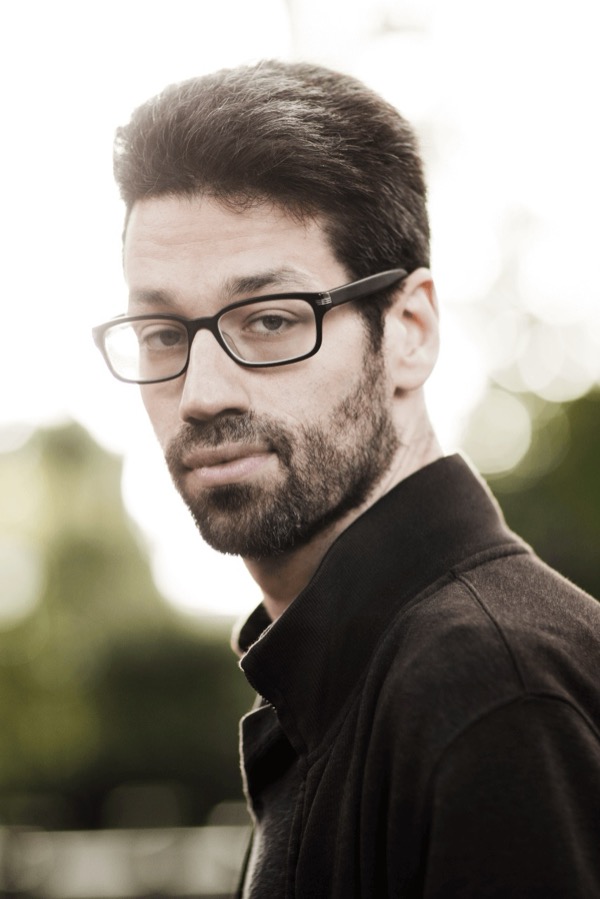
In the madcap world of classical piano, where competitions can make or break reputations overnight, Freddy Kempf stands as a testament to the alchemy of talent, controversy, and quiet resilience.

Freddy Kempf
Born on 14 October 1977 in Croydon, England, to a German father and Japanese mother, Kempf was no stranger to the spotlight from an early age. By eight, he had already conquered the Royal Festival Hall, but it was the seismic ripple of the 1998 International Tchaikovsky Competition, not a victory but a perceived injustice, that truly ignited his ascent.
To celebrate his birthday on 14 October, let us look at Kempf’s post-Tchaikovsky journey, a global odyssey of sold-out halls and boundary-pushing recordings that reveal a pianist thriving on the pulse of the music itself.
Freddy Kempf plays Chopin: Etude Op. 10, No. 12
A Stage Set For Scandal
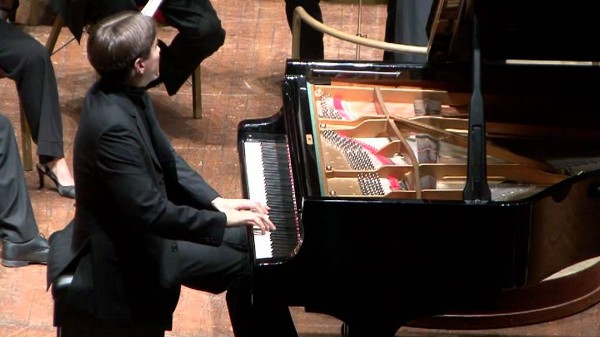
Freddy Kempf
The Tchaikovsky saga unfolded like a dramatic overture. At just 20, Kempf dazzled with a technically flawless yet soul-stirring performance of Prokofiev’s Second Concerto in the semifinals. This was followed by what was described as an “unforgettable Rachmaninoff Third” in the finals.
The audience and the Russian press were sold, and when Kempf was awarded only third prize, accusations began to fly. It was alleged that the competition was fixed, with judges favouring their own protégés. Protests erupted, and the press decried the decision as a travesty.
Kempf downplayed the uproar in interviews, but the fallout was electric. Named the “hero of the competition,” within six months, he returned to perform sold-out recitals at the Great Hall of the Moscow Conservatoire. The hall was overflowing with fervent fans, and television broadcasts captured a pianist who played not for vindication, but with the unbridled joy of creation.
Freddy Kempf plays Rachmaninoff: Piano Concerto No. 3 in D minor, Op. 30 (excerpts)
Breaking Boundaries
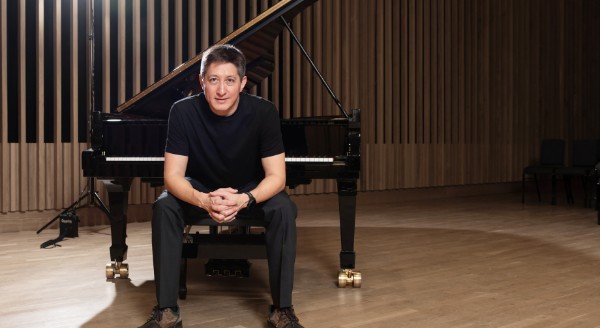
Freddy Kempf
Freed from the competition’s shadow, Kempf’s career blossomed into a tapestry of collaborations that spanned continents and genres. No longer bound by prodigy expectations, he embraced a breadth of repertoire that reflected his multicultural roots and insatiable curiosity.
In Europe, he became a fixture, collaborating with luminaries such as the Philharmonia Orchestra and the Gothenburg Symphony, under batons as diverse as those of Sir Colin Davis, Riccardo Chailly, and Vasily Petrenko. His 2001 Classical BRIT Award for Best Young British Classical Performer cemented his domestic stardom.
His debuts with the San Francisco Symphony and Philadelphia Orchestra opened American doors. Asia beckoned, and recitals at Tokyo’s Suntory Hall and Singapore’s Esplanade Concert Hall drew enraptured crowds. His tours with the NHK Symphony underscored his affinity for Eastern audiences.
Sergey Prokofiev: Piano Sonata No. 3 in A Minor, Op. 28 (Freddy Kempf, piano)
Solo, Trio, Maestro
Kempf’s 2018 BBC Proms debut was a high-wire act, yet he was equally at home in the intimate realms of chamber music. Already in 2000, he co-founded the Kempf Trio with violinist Pierre Bensaid and cellist Alexander Chaushian.
In interviews, Kempf assessed that “Chamber music is selfish in the best way, each voice a solo, yet woven into something greater.” This collaborative spirit extended to playing and conducting engagements, like his 2023 tour of Beethoven’s Third and Fifth Piano Concertos with the New Zealand Symphony Orchestra, where he wielded the baton and played the keyboard in equal measure.
By the 2020s, Kempf had settled in Germany with his family, assuming a professorship at Munich’s City Music School. If Kempf’s live performances paint him as a globetrotting alchemist, his recordings immortalise him as a sonic innovator.
Kempf/Punzi play Poulenc: Sonata for clarinet and piano
Romantic Fire, Modernist Edge
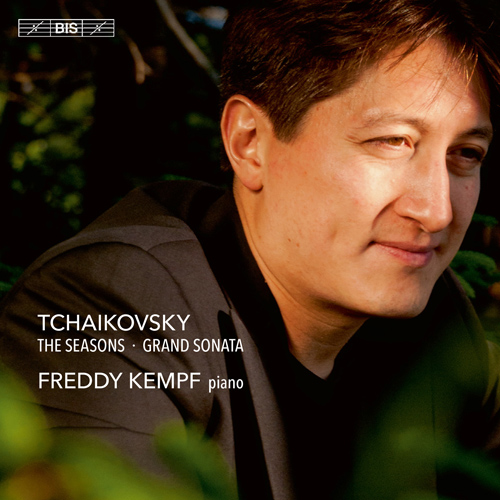
Under exclusive contract to BIS Records since the early 2000s, his discography is a survey of Romantic firebrands and modernist edge. Few capture his essence like the 2010 release of Prokofiev’s Piano Concertos Nos. 2 and 3 with the Bergen Philharmonic under Andrew Litton, a Gramophone Award nominee.
The 2015 Tchaikovsky recital disc, born from his Moscow homecoming, is equally iconic. Tchaikovsky’s Grand Sonata in G Major simmers with introspection, and is deliciously paired with the evocative miniatures of the Seasons.
Today, at 47, Freddy Kempf embodies the pianist’s art at its most vital. He is unpretentious, voracious, and profoundly human. The Tchaikovsky “snub” that could have soured him instead sweetened his resolve, transforming controversy into catalyst. His career isn’t just a victory lap, it is a perpetual crescendo.
For more of the best in classical music, sign up for our E-Newsletter
Pyotr Il’yich Tchaikovsky: Grand Sonata in G Major, Op. 37 (Freddy Kempf, piano)