In 2009, the young Benjamin Appl was going to a masterclass with Dietrich Fischer-Dieskau. Nerves everywhere, but not when he got up to perform the Schubert songs that Dietrich Fischer-Dieskau had requested. By the end of the masterclass, Dietrich Fischer-Dieskau had asked Appl to come and be his student, and so started a mentorship that profoundly affected Appl’s life.
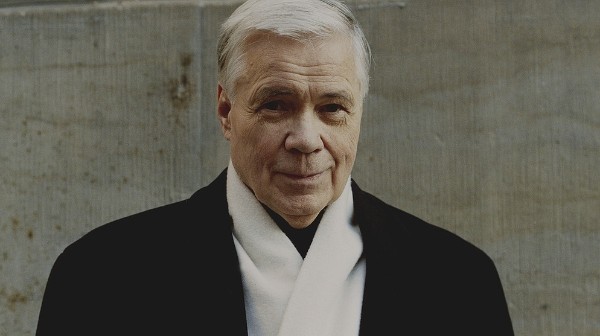
Dietrich Fischer-Dieskau
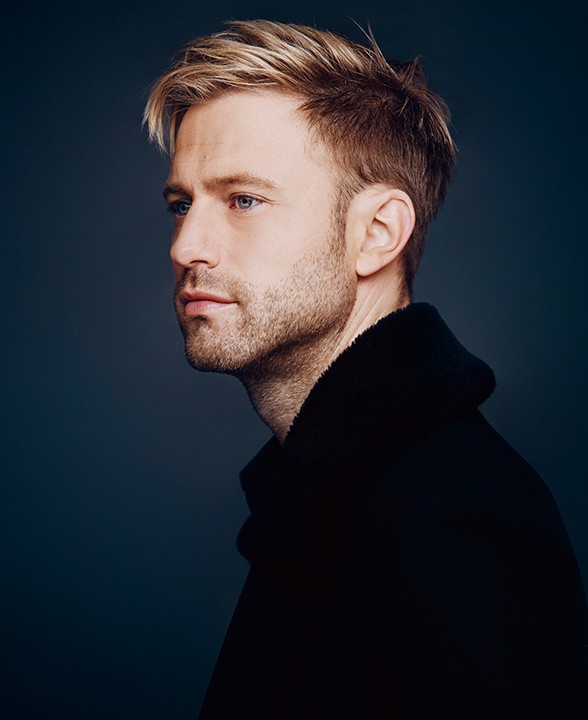
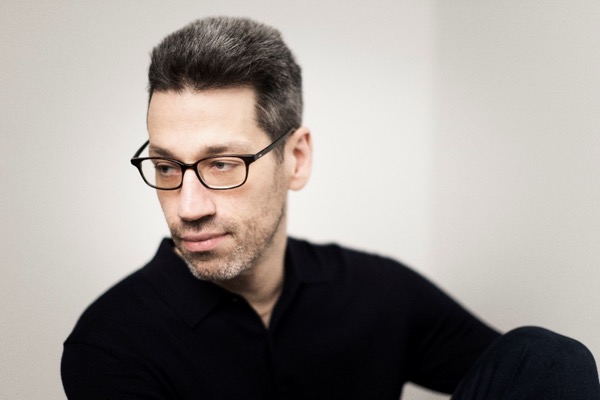
Benjamin Appl (Photo by David Ruano)
Dietrich Fischer-Dieskau was born in 1925, and to honour his teacher, Appl developed a song program (and recording) that tracks the points of development of this man who would change singing for the 20th century. German lied has a long tradition, with some of the most famous composers being Franz Schubert (1797–1828), Robert Schumann (1810–1856), and Johannes Brahms (1833–1897). It’s a tribute to the language of music that those works still live today, with each new generation of singers contributing to the language of lied. Yet, it’s a song in other countries that was important to Dietrich Fischer-Dieskau.
His skill as a singer made no difference to the career of Dietrich Fischer-Dieskau, the soldier. He was sent off to the Russian front, as inadequately prepared as most of his fellow soldiers, and was particularly good to the horses who drew their artillery, singing to them and comforting them. Eventually, he was captured by the Americans and sent to a prison camp in Italy. There, his voice was discovered again, and he toured around the prisoner-of-war camps with a piano, giving song recitals. He started with an a cappella Die schöne Müllerin, and later, a pianist was liberated to accompany him. He was only 20 years old. Once the war was finished, he expanded his repertoire to include English, Russian, and French songs. He also ventured into operetta and other popular songs for the first and only time in his career, finding them great compromises from his usual repertoire. Dietrich Fischer-Dieskau returned to Germany only in mid-1947.
One of the challenges for Appl in telling Dietrich Fischer-Dieskau’s life through his music was that his teacher was an intensely private individual who did not reveal much of his life in his public persona. Appl has been able to tease out this hidden biography from his access to his teacher’s letters, contracts, programmes, diaries, and photo albums, now largely in the hands of his family. Through his reading of these documents, Appl has been able to construct a life while being careful not to distort the image after the fact.
Johannes Brahms: 9 Lieder und Gesänge, Op. 32: No. 9. Wie bist du, meine Königin (Benjamin Appl, baritone; James Baillieu, piano)
In discussing repertoire, Appl said he thought that Dietrich Fischer-Dieskau’s favourites were not the Schubert song cycles he continues to be identified with, but rather Brahms. One of his earliest discoveries was Brahms’ Vier ernste Gesänge, the work that would become one of his personal favourites, starting with his first performances when he was 16 and carrying through to his last years.
Although an interviewer declared to him in 1972 that ‘German song was dead’ and asked him to confirm, for Dietrich Fischer-Dieskau, German song, and, indeed, song in many languages, was a living entity. He was an active commissioner of and performer of music by contemporary composers, with one of his great performances coming in Britten’s War Requiem.
Britten’s work was performed for the consecration of the rebuilt Coventry Cathedral, following its destruction in the infamous German Bombing raid of 14–15 November 1940. Britten’s setting juxtaposes the traditional Latin texts with extra-liturgical poems by WWI war-poet Wilfred Owen. The premiere was intended to be sung by a Russian soprano, an English tenor, and a German baritone. In the end, Galina Vishnevskaya was unable to get a travel permit from the Russian authorities, and Heather Harper stepped in for her at 10 days’ notice. Peter Pears was the English tenor, and Dietrich Fischer-Dieskau the German baritone. The work received its premiere on 30 May 1962 and was considered a triumph. Parallel premieres were given that same day in New Zealand, with the then–New Zealand National Orchestra, and at Tanglewood in Massachusetts, with the Boston Symphony Orchestra.
Benjamin Britten: War Requiem, Op. 66: Hörnersang (Benjamin Appl, baritone; James Baillieu, piano)
Benjamin Appl and accompanist James Baillieu bring the musical life of Dietrich Fischer-Dieskau to Hong Kong on 4 September 2025 at City Hall Concert Hall, and with it, music from Schubert to Hanns Eisler and Samuel Barber. A celebration of the century since Dietrich Fischer-Dieskau’s birth is matched by the repertoire, which is far more extensive than one might expect at first. As a tribute to his teacher, Benjamin Appl has created both a lasting memorial and a look at the innovations in modern art song that could have only come from Dietrich Fischer-Dieskau’s love of the genre.
Star Baritone Benjamin Appl: “To Dieter” – Premiere Performances
For more of the best in classical music, sign up for our E-Newsletter