In her new album Abracadabra, pianist Beatrice Berrut explores the worlds of sorcerers and dances of death, traditional fairy tales and fairy tales for the modern world.
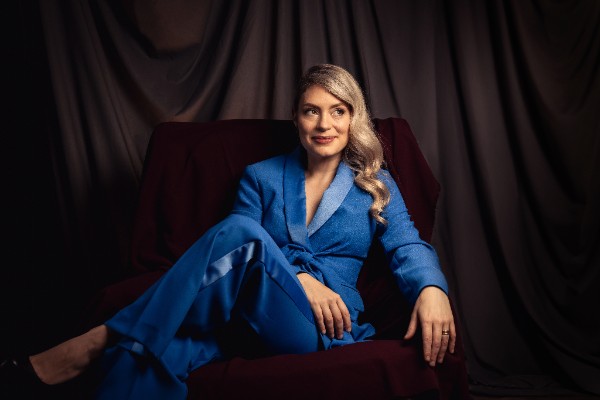
Beatrice Berrut (photo by Christian Meuwly)
In her survey of the worlds of Dukas and Stravinsky, film music composers the Sherman Brothers and John Williams, and Saint-Saëns filtered through the hands of Franz Liszt, Berrut has put together an enchanting group of pieces that carry us to all parts of the imagination.
In her notes, Berrut speaks of the importance of fairy tales in her life from her childhood. As an adult, however, she found the children’s stories unsatisfying and incompatible with the society of today, so she created her own fairy stories for the piano.
She opens with Dukas’ The Sorcerer’s Apprentice, familiar to many from Disney’s Fantasia, but very closely tied to the original poem by Goethe.
Camille Saint-Saëns’ symphonic poem for orchestra, Danse macabre, Op. 40, tells the story of Halloween, when Death appears at midnight and calls all the dead to come from their graves to dance for his fiddle. The dance continues until the cock crows at dawn. Shortly after the work was given its premiere, it was claimed by Franz Liszt for a spectacular piano arrangement and played here with great vigour that sweeps us up in the dance.
Camille Saint-Saëns / Franz Liszt: Danse Macabre, Op. 40, D. 555
Stravinsky’s Firebird is represented in three pieces: Infernal Dance of King Kastchei, the Lullaby, and closes with the Finale. The Infernal Dance is played with the focused fury that we expect, and she doesn’t disappoint.
Berrut’s Untold Tales are stories you never see in The Brothers Grimm’s stories, but which are closer to modern life: La marâtre bienveillante / Caring Stepmother, La sirène bipolaire / Bipolar Mermaid, and Elle n’a pas attendu son baiser pour se réveiller / She didn’t wait for his kiss to wake up. These are the stories we need in today’s family society. The stories that are about women’s rights are models for life today. In The Caring Stepmother, Berrut recognises the ‘women who look after other people’s children with such tenderness’.

Arthur Rackham: The Daughters of the Old Man of the Sea, 1922
In The Bipolar Mermaid, which she says she based on both Ravel’s Ondine and the stories of the Rhine’s Lorelei, she’s created a mermaid who covers ‘the emotional intensity of women’, from reverie to rage.
Her third tale, She didn’t wait for his kiss to wake up, isn’t about the wait for Prince Charming but the Princess discovering for herself the dimensions of her soul, from its first wakening to its final fulfillment.
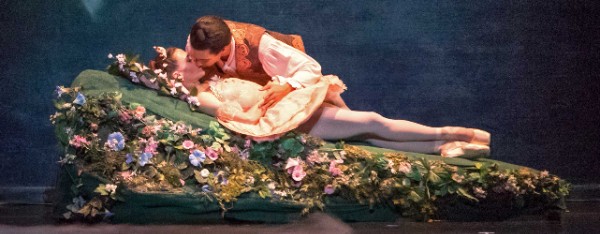
The Sleeping Beauty, 2017 (Kansas City Ballet)
Returning to an older style of storytelling, Berrut’s includes Pavel Pabst’s paraphrase on Tchaikovsky’s 1889 ballet The Sleeping Beauty. Tchaikovsky was an admirer of Pavel Pabst as a teacher and performer and appointed him as the editor of his piano works from 1884. His piano transcriptions were highly admired in his day and are considered on a par with Liszt’s transcriptions.
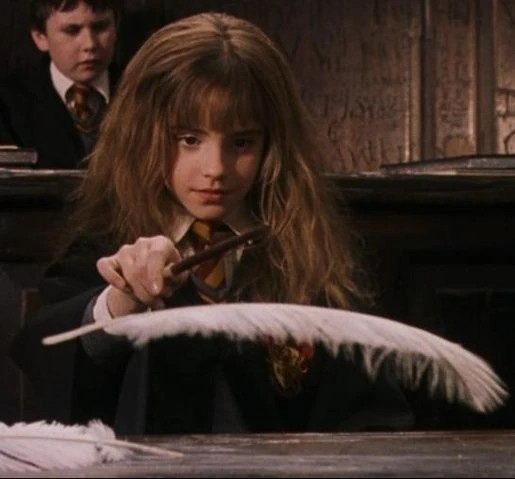
Hermione invokes Wingardium Leviosa
The last two works on the album carry us to modern-day fairy tales of Arthur and Harry. Higitus Figitus from Disney’s The Sword in the Stone, based on T.H. White’s telling of the youth of King Arthuts in The Once and Future King. In the film, the song is sung by Merlin to back his entire household into his carry back. The use of Latin-sounding conjurations makes us think of the more recent Harry Potter movies (Wingardium Leviosa!), and that takes us to the final track: Hedwig’s theme from Harry Potter.
Berrut’s journey through fairy tales old and new is a wonderfully played evocation of works that are familiar, but which benefit from her deft touch. You will hear many works with a new appreciation for the internal delicacies, often obscured in the hands of less delicate players.

Beatrice Berrut: Abracadabra
La dolce volta LDV136
Release date: 28 February 2025
Official Website
For more of the best in classical music, sign up for our E-Newsletter