Russian pianist Youri Egorov (1954–1988) was one of the most brilliant and tragic figures in twentieth-century classical music.
As a young man, he won prizes at major competitions before shocking the music world with his disappearance and eventual defection.
He continued his career in exile, stunning audiences with his deeply emotional performances.
His tragic death at the age of 32 cemented him as one of the great what-ifs of twentieth-century classical music. He ended up becoming a kind of cult figure amongst piano lovers, and his influence still lives on today.
Today, we’re looking at the life of Youri Egorov.
Youri Egorov’s Childhood
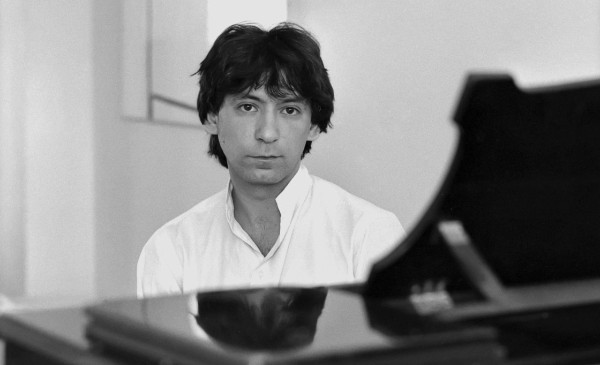
Youri Egorov
Youri Aleksandrovich Egorov was born on 28 May 1954 in Kazan in the Soviet Union, a city about 850 kilometers to the east of Moscow.
His mother was an amateur singer who sang for her three sons on request. From an early age, Youri was musical. He would cry if she sang a sad song, and cheer up if she sang a happy one.
“He was an ordinary little boy,” his mother later recalled in an interview. “Very normal. Not with strange character traits, or a kind of child prodigy. Not a wunderkind. But his musical gifts showed up very actively.”
He started studying piano at the local conservatory at the age of six, graduating at seventeen.
Egorov’s Early Career
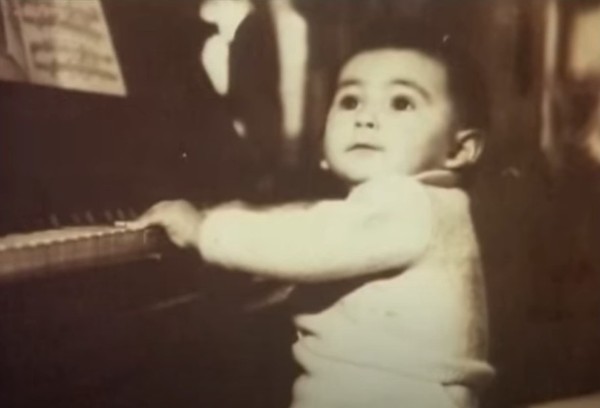
Youri Egorov
When he was seventeen, he entered the Marguerite Long-Jacques Thibaud Competition and took fourth place.
He then moved to Moscow to study at the Moscow Conservatory with teacher Yakov Zak. He spent the next six years there.
He had some major competition successes in the 1970s, winning the bronze medal at the Tchaikovsky Competition in 1974 and third prize at the Queen Elisabeth International Music Competition in 1975.
Egorov playing Chopin’s Etude, Op. 10, No. 3
Egorov was a gay man. When he came to Belgium for the Queen Elisabeth competition, he began to realise that it was possible to live a life out of the closet.
He was terrified that if he stayed in the Soviet Union, he might be found out and prosecuted, and that it would be worse for his family if he stayed and was found out than if he defected.
Egorov’s Defection
In May 1976, during a tour of Italy, he had concerts scheduled on the 17th and 18th in Brescia and Bergamo. Before the first one, he vanished.
He stayed at a refugee camp outside of Rome for a month, during which he kept a diary of his experiences.
The brief document reveals that he was deeply homesick and especially terrified about the fate of his family. He even contemplated suicide, but survived.
Eventually, he received a passport and was sent to Brussels. He ultimately ended up settling down in Amsterdam, where he made his home.
Liszt’s La Campanella
Meeting Jan Brouwer
A few days after his arrival in Amsterdam, he met his future partner, architect Jan Brouwer.
Brouwer said in a later interview, “He appeared out of nowhere for me, really. I saw him in the street, in front of a shop window. And…we got talking.”
The two would stay together until their deaths (although their loving relationship didn’t keep Egorov from enjoying romance with other men).
Brouwer would one day find Egorov’s refugee camp diary tucked into a photo frame.
Egorov’s American Career
In 1977, he entered the Van Cliburn Competition, charming audiences even as he failed to reach the final round.
Although he didn’t win, a committee of trustees assembled a special prize for Egorov that included the guarantee of a New York recital debut. Nothing like this had ever been done in the Cliburn Competition history.
A Youri Egorov television recital, 1978
He appeared at the Alice Tully Hall in January 1978. That December, he returned to New York to play Carnegie Hall.
John Rockwell wrote for the New York Times:
“What was unusual about Mr. Egorov’s work was the way he projected so much personality without lapsing into excess. The word that kept coming to mind was ‘refinement,’ but that never meant performances that were attenuated. Technically, he was masterly, even if he did miss a few notes, especially in the Schumann. He was able to shape his musical ideas without making concessions to technique or calling undue attention to his virtuosity.”
He toured the United Kingdom for the first time in 1980, giving eighteen concerts in thirteen cities in one month. He also returned to Carnegie a few times.
However, the majority of his career in the 1980s was spent in Europe.
A 1987 Egorov recital in Amsterdam
Egorov’s Diary
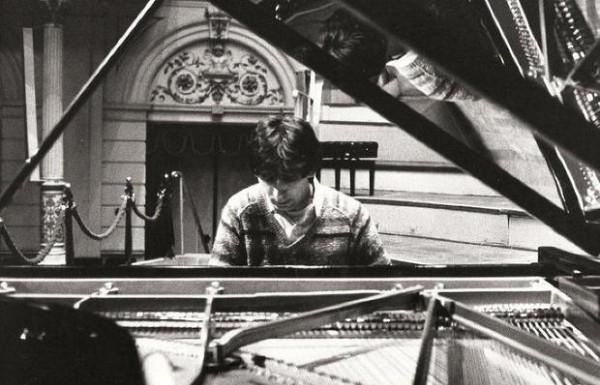
Youri Egorov
In early 1986, he began a diary.
In it, he shared all manner of thoughts, including which pianists he admired most (he praised the playing of Richter, Gilels, and Horowitz, but was more skeptical of Pogorelich, Ashkenazy, and Barenboim).
He included earthier details, too, down to his alcohol and drug use. (He was often hung over and had a fondness for hashish.)
He also recorded details about his flirtations and romantic relationships with men.
In March 1986, AIDS was mentioned for the first time in the diary: “a damned virus,” he wrote.
Six months later, he began to lose weight. He could guess what it meant.
In the 1980s, the AIDS crisis began claiming more and more lives, and both Egorov and his partner, Jan Brouwer, were diagnosed. At the time, it was a death sentence.
Egorov wasn’t particularly surprised. He’d always felt that he would die young, and had burned the candle at both ends accordingly.
Egorov died of complications from AIDS in April 1988. Brouwer passed away four months later. Their remains were buried together.
Egorov’s Legacy
In 1989, filmmaker Eline Flipse made a documentary about Youri Egorov. In it, violinist Gidon Kremer remarks:
“What was striking was his natural approach to music. I would not be ashamed to use the word ‘romantic’ approach. He was not a performer or human being who was rigid in looking at life. He wanted it to be beautiful, and I think he tried to make whatever he did onstage or in his life as beautiful as he could. But life is not only beautiful. Life is very cruel. And to me, the fact that Youri’s not with us anymore is…confirmation that there’s some injustice in life, as well. But it’s not for us to judge.”
The Flipse documentary about Egorov
Youri Egorov left behind a number of recordings that have proven to be inspirational to later generations.
Pianist Yunchan Lim, the superstar pianist who won the 2022 Cliburn competition, has told multiple interviewers that Egorov’s playing is a major inspiration to him. He has even included Egorov recordings in playlists he’s assembled while doing promo for his own albums. Clearly, despite his short life, Egorov’s legacy will live on for a very long time.
For more of the best in classical music, sign up for our E-Newsletter