In the grand tradition of symphonic music, few works capture the raw anguish of human suffering quite like Dmitri Shostakovich’s Symphony No. 8 in C minor. Composed amid the rubble of World War II, this five-movement epic stands as a requiem for the lost.
The nickname “Stalingrad Symphony” was suggested by some Soviet cultural apparatchiks, yet there is no evidence that Shostakovich ever approved of it.
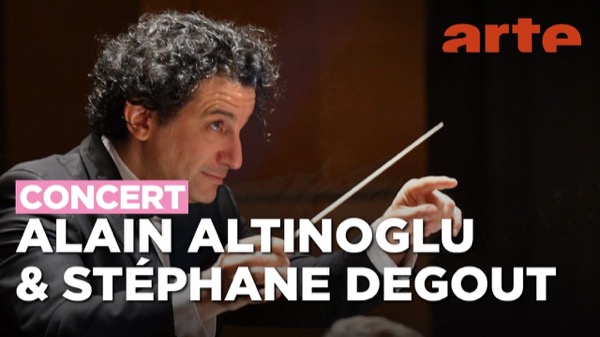
Alain Altinoglu leads the Frankfurt Radio Symphony Orchestra through this monumental score, confronting history’s darkest chapters in a performance that stands as a testament to resilience and reflection.
Alain Altinoglu conducts Shostakovich: Symphony No. 8 in C minor, Op. 65
Available until 08/05/2026
Fragile Hope Amid Devastation
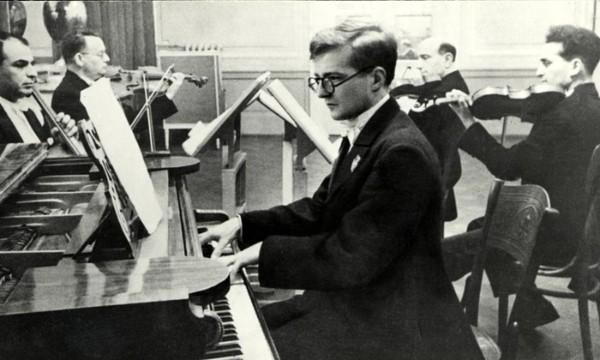
Dmitri Shostakovich, 1940
Shostakovich penned his Eighth Symphony in the sweltering summer of 1943. The Battle of Stalingrad, a turning point that claimed over two million lives, had just ended in Soviet victory, yet the composer’s mood was far from triumphant. Unlike the Seventh Symphony’s rousing call to arms, broadcast globally as a symbol of defiance against fascism, the Eighth delves into profound grief, its pages haunted by the spectre of total war.
Premiered on 4 November 1943 by the USSR State Symphony Orchestra under Yevgeny Mravinsky in Moscow, the work was dedicated to the conductor who championed so many of Shostakovich’s visions.
The symphony’s structure defies convention, unfolding in five continuous movements that blend tragedy and tentative hope. The symphony begins with a desolate “Adagio-Allegretto,” where a mournful string lament surges into cataclysmic brass fanfares, evoking the mechanised terror of invasion.
The relentless scherzo of martial frenzy thunders with the percussion of distant bombs. The spectral third movement offers no reprieve, its ghostly waltz teetering on madness with wailing woodwinds, while a mournful Largo passacaglia descends into introspective sorrow. Although the final Allegretto in pastoral C major attempts a hollow resolution, its folksy tunes are a fragile assertion of life amid devastation.
Forbidden Lament
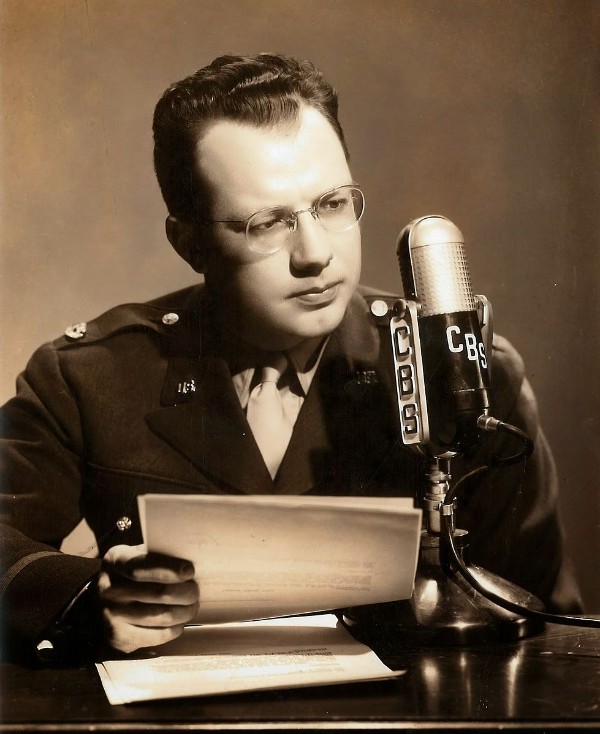
CBS war correspondent Bill Downs sits before a microphone in London, 1942
Shostakovich’s friend Isaac Glikman deemed it “his most tragic work,” a sentiment echoed by the composer’s own doubletalk. Publicly, he hailed it as an “optimistic, life-asserting” ode to Soviet victories. Privately, he confided it was a requiem for the war’s “horrible extermination machine.”
Critics at the time were merciless. Sergei Prokofiev lambasted it in 1944, and Stalin’s cultural enforcer Andrei Zhdanov branded it “pessimistic” and “formalist” in 1948. The work was effectively banned until the mid-1950s.
The symphony arrived in the Western Hemisphere via CBS war correspondent Bill Downs Jr. Downs had been stationed in Moscow from 1942 to 1944, and after 13 months in the Soviet Union, Downs returned to the United States by plane.
He carried with him the full orchestral score of the Eighth Symphony, smuggled out at a time when cultural exchanges were rare. This act was no accident, as CBS had negotiated exclusive U.S. broadcast rights. Shostakovich himself was reportedly pleased by the arrangement.
Forged in Passion
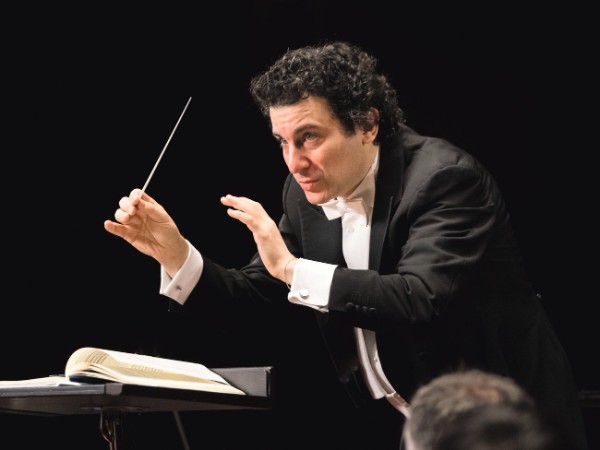
Alain Altinoglu
The French-Armenian conductor Alain Altinoglu graduated from the Conservatoire National Supérieur de Musique de Paris, where he now teaches conducting. Since 2021, he has led the Frankfurt Radio Symphony, with his tenure extended through 2028. Known for his versatile repertoire, Altinoglu has a particular affinity for Shostakovich, whose complete symphony cycle he is currently performing with Frankfurt.
Altinoglu’s conducting is marked by economical yet electrifying gestures, reflecting a deep empathy, especially for Shostakovich’s music. It resonates with his own experiences of navigating cultural and historical complexities.
The Frankfurt Radio Symphony, a 95-year-old ensemble founded in 1929, is an ideal partner for Altinoglu’s vision. Renowned for its precision and passion, the 100-member ensemble excels in delivering both technical brilliance and emotional depth. Under Altinoglu, the orchestra’s vivid brass and woodwinds, alongside its expressive strings, bring Shostakovich’s turbulent soundscapes to life.
Altinoglu’s Vision
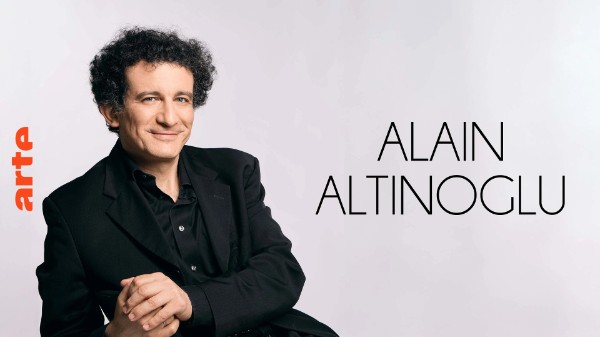
Filmed for ARTE Concert, Altinoglu’s reading of the Eighth marks a pinnacle in his Shostakovich odyssey. Here, the Frankfurt forces deliver with “extraordinary gravity,” their sound captured in crystalline detail.
Altinoglu’s tempo in the opening is deliberate, allowing every motif to develop its breath. The scherzo’s frenzy is unrelenting, yet the conductor reins in excess for razor-sharp clarity. The Largo intones a passacaglia of exquisite melancholy, and the finale resolves not in jubilation but “bleak acceptance.” Altinoglu’s Shostakovich reveals not consolation but positions the work as a witness to history.
Altinoglu’s Eighth resonates as more than a relic; it is actually a mirror of our fractures. Shostakovich, ever the survivor, encoded protest in ambiguity and Altinoglu, with his Armenian roots and French finesse, unlocks its universality.
Alain Altinoglu conducts Shostakovich: Symphony No. 8 in C minor, Op. 65
For more of the best in classical music, sign up for our E-Newsletter