For centuries, the specter of tuberculosis – once known as “consumption” – haunted every person’s life. In fact, in the 1800s, tuberculosis caused about a quarter of all deaths in Europe and the United States. If you yourself didn’t die of it, chances are, someone you loved had…or would.
Tuberculosis became especially linked in the popular imagination to artists, writers, and musicians.
The disease’s slow agonising progression naturally paired with the archetype of a sensitive genius who creates his greatest work while suffering.
Long before antibiotics made it treatable, tuberculosis claimed or changed the lives of some of history’s greatest composers.
Today, we’re looking at how tuberculosis shaped the lives – and in some cases, the deaths – of six great composers.
Giovanni Battista Pergolesi (1710–1736)
Stabat Mater
The story of Giovanni Pergolesi is one of the most tragic what-ifs in classical music history.
Not much solid biographical information about him survives, but we know that he died of tuberculosis at the age of 26.
During his brief and brilliant career, he influenced the development of Italian opera with a number of works, including his famous opera buffa La serva padrona.
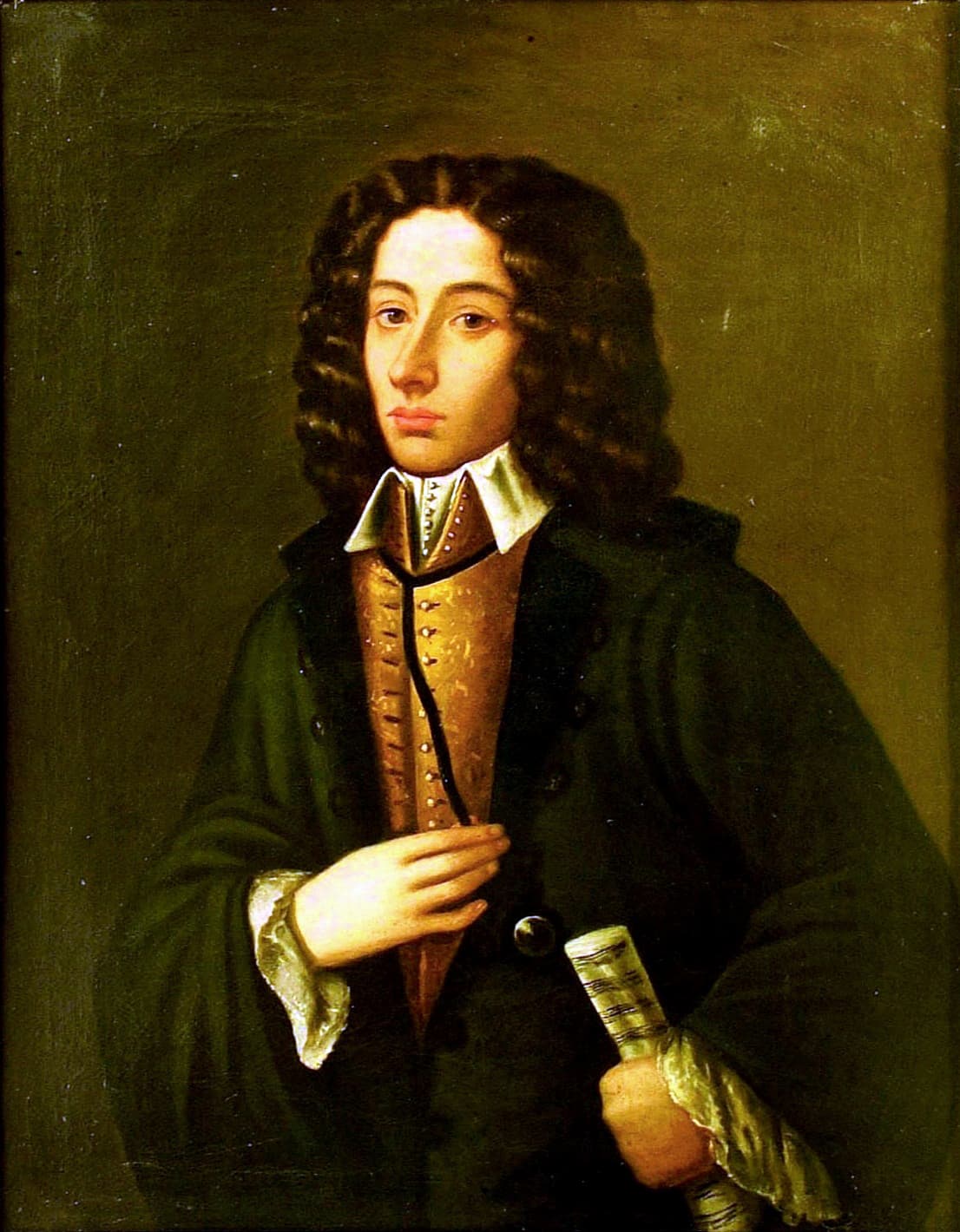
Giovanni Battista Pergolesi
He wrote his most famous work, his Stabat Mater, in his final months while bedridden in a Franciscan monastery.
It became one of the eighteenth century’s most beloved sacred works and is a haunting testament to a promising life cut short.
Luigi Boccherini (1743–1805)
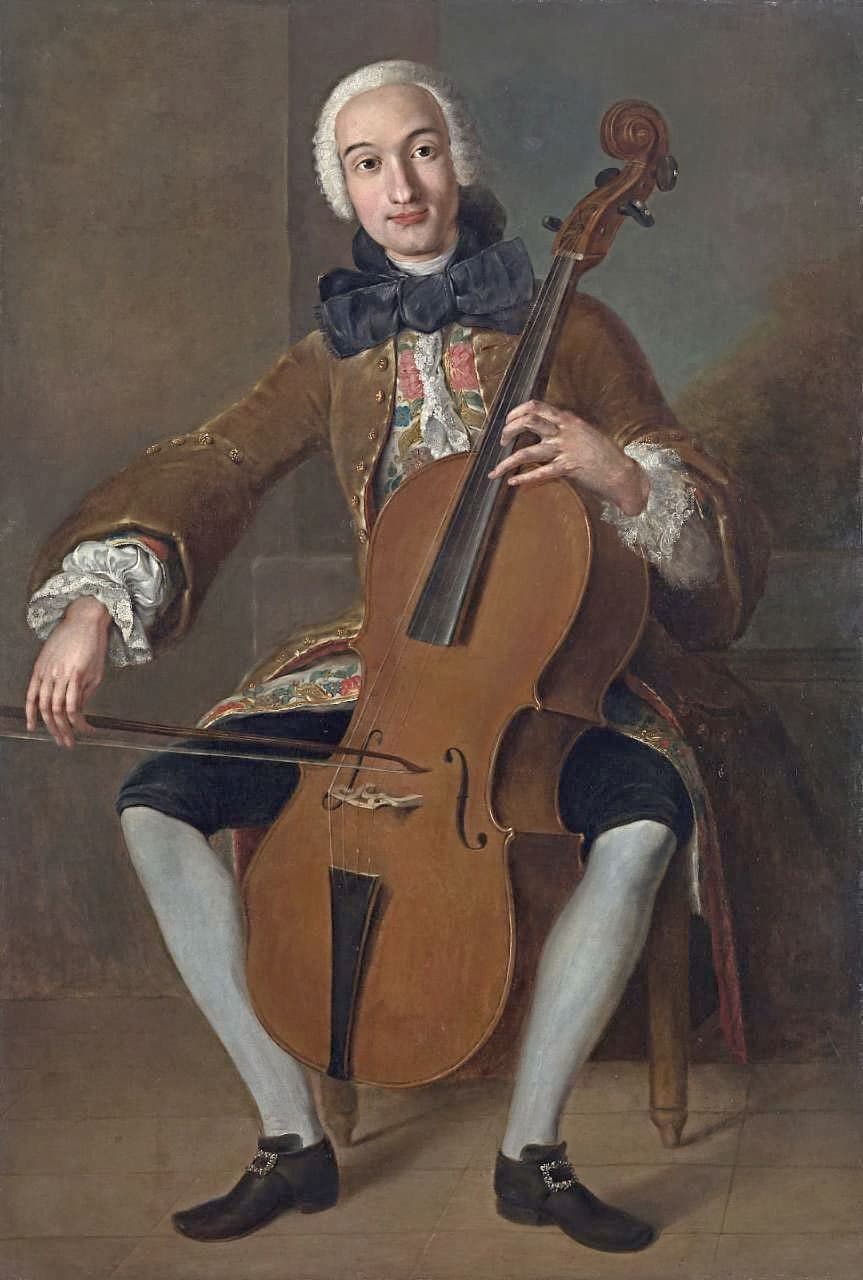
Pompeo Batoni: Luigi Boccherini playing the violoncello, ca 1767 (National Gallery of Victoria)
Luigi Boccherini: String Quartet in F Major, Op. 64, No. 1, G. 248 (Quartetto d’Archi di Venezia, Ensemble)
Luigi Boccherini was born into a family of musicians in Lucca, Italy, in 1743. He joined the family business and spent his young adulthood studying or working in Rome, Vienna, Lucca, Milan, Paris, and Madrid.
In 1765, he withdrew from some performances in Lucca, which might be an indication of a worsening tuberculosis infection.
The following year, his musician father/manager died, leaving him to direct his career on his own.
In 1770, he began working for Infante Luis Antonio of Spain, the younger brother of the king. He worked for royalty and the aristocracy for the rest of his career.
By 1801, his health was seriously deteriorating. On top of that, two of his daughters died in 1802, and his wife and another daughter died in 1804.
These shocks no doubt contributed to the waning of his physical strength.
Around this time, he began a set of six string quartets for Napoleon’s younger brother, who had been sent to Madrid as a French ambassador. But in the end, Boccherini was only able to complete one, his Op. 64, No. 1.
He died of tuberculosis on 28 May 1805.
Carl Maria von Weber (1786–1826)
Overture to Oberon
Weber was born in the town of Eutin in present-day Germany in 1786. His father was the municipal music director, and his mother a former opera singer. (She would die of tuberculosis in 1798, the year Carl turned twelve.)
Weber was a physically delicate child who was born with a congenital hip disorder that kept him from walking until he was four.
Despite his illness, he proved to be a child prodigy musician, learning piano and voice from an early age.

Caroline Bardua: Carl Maria von Weber, 1821 (Berlin: Alte Nationalgalerie)
He went on to make a career as a composer and conductor.
Unfortunately, by the mid-1820s, it became clear he was suffering from a tuberculosis infection, like his mother.
In 1824, a letter arrived from Britain with an opera commission. Weber’s doctors discouraged him from accepting, but he did anyway.
Two years later, in the spring of 1826, he traveled to London to conduct the British premiere and twelve performances of his opera Oberon.
He stopped in Paris along the way to visit Rossini, who remarked, “I am shocked at finding him so pale and wasted, coughing so much and exhausted by the efforts of climbing the stairs.”
The effort drained him completely. He ended up dying in his sleep on 5 June 1826 at the age of 39.
Learn more about how the exertion of composing Oberon made Weber so deathly ill.
Frédéric Chopin (1810–1849)
“Raindrop” Prelude
No composer is more famously associated with tuberculosis than Frédéric Chopin.
Frail from childhood, Chopin began showing tuberculosis symptoms in his twenties. He spent much of his life coughing up blood, suffering night sweats, and struggling with chronic fatigue.
Sadly, tuberculosis ran in his family. His vivacious younger sister Emilia had died of it in 1827 when she was fourteen.
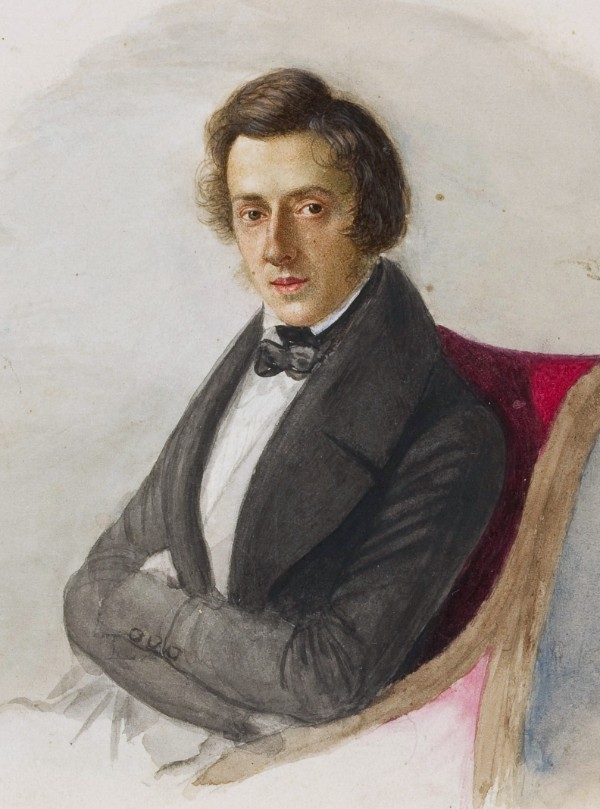
Maria Wodzińska: Frédéric Chopin, 1836 (Wasaw: National Museum)
During his infection, his relationship with writer George Sand offered both solace and strain. She had a tremendous physical vitality that helped to revive him, and she was willing to help take care of him.
They spent their first winter as a couple on the island of Majorca between 1838 and 1839. Unfortunately, the damp monastery they stayed in aggravated his symptoms.
(It also, according to legend, inspired the famous Raindrop Prelude, which is said to echo the dripping of rain off eaves.)
Even as his disease kept advancing, Chopin kept producing a string of profound and beloved works: the Preludes, the Nocturnes, and the Mazurkas, among others, all conveying grace, intimacy, melancholy, nostalgia, and so much more. Given his struggles with his health, all of them are works of quiet heroism.
Chopin broke up with Sand after a decade for a variety of reasons, but one of the longstanding tensions between them had been his physical delicacy and chronic health troubles.
He didn’t get into another relationship after her, and he died in 1849, just months after touring Britain while ill.
Learn more about what happened at Chopin’s deathbed.
Karol Szymanowski (1882–1937)
Violin Concerto No. 2
In 1926 at the age of 44, Polish modernist composer Karol Szymanowski was named director of the Warsaw Conservatory.
Just two years later, a tuberculosis diagnosis forced him to step down. He traveled to Switzerland to convalesce in clearer mountain air.
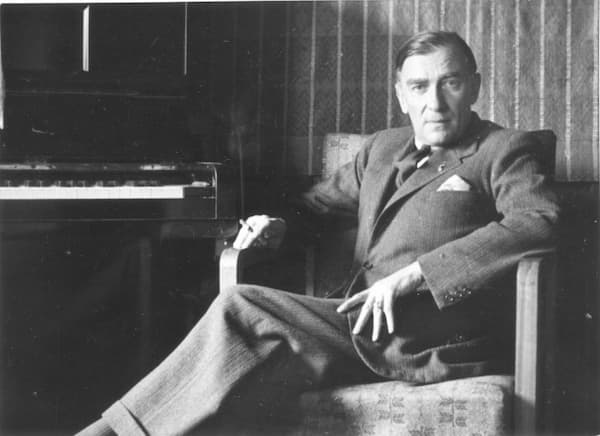
Karol Szymanowski
He improved enough that he briefly returned to the Conservatory in 1930. Unfortunately, the government shut down the conservatory two years later.
Newly out of a job and still not completely recovered, Szymanowski moved to a seven-room rustic house near the town of Zakopane in current-day Poland. It was believed that country living could slow or even reverse tuberculosis infections.
While there, he wrote late works like his fourth symphony and second violin concerto.
In 1936, his health declined again, and he moved to a sanitarium in the French town of Grasse. The following year, he relocated again, this time to a sanitarium in Lausanne, Switzerland.
His poor health contributed to feelings of loneliness, stress about money, and his general depression.
He died in 1937.
Igor Stravinsky (1882–1971)
Dumbarton Oaks (1938)
In January of 1914, Igor Stravinsky’s wife, Yekaterina, gave birth to their fourth and final child in Lausanne, Switzerland.
Soon after, she began showing signs of a tuberculosis infection, so that year she and Igor spent three months at a sanitarium in the Swiss town of Leysin.
In the mid-1920s, her health declined. While in Rome, she came down with the flu and pleurisy, and fluid had to be drained from her lungs. It was discovered that her tuberculosis infection had worsened.
At some point, she transmitted the disease to her husband and second child, Lyudmila.
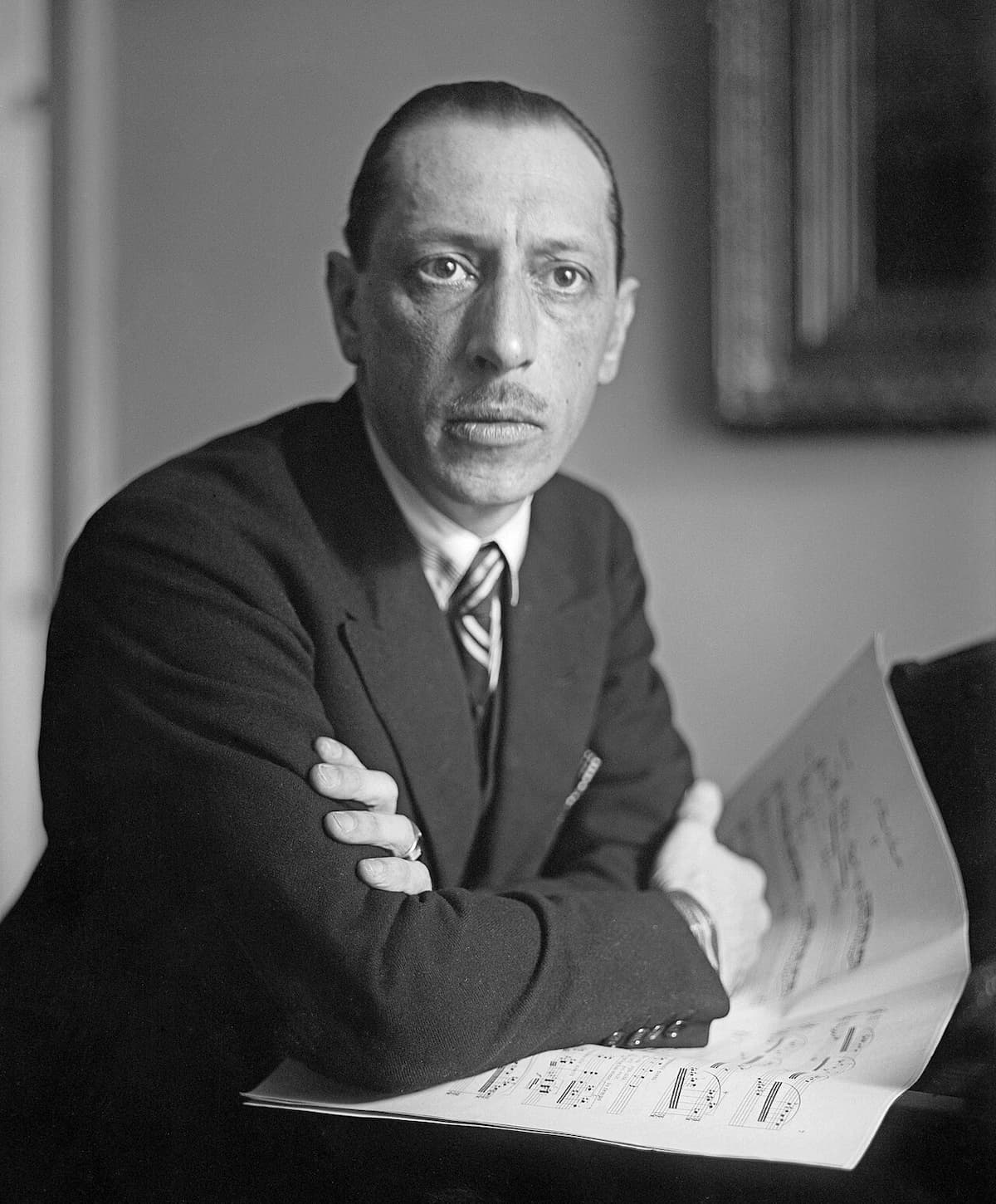
Igor Stravinsky
Between 1938 and 1939, Stravinsky’s tuberculosis infection became increasingly apparent. It grew severe enough that he had to also move to a sanitarium, where he spent five months.
While there, he wrote lectures on poetics in music (which he would be hired to give in the United States the following year).
The family had been trying to outrun tragedy for a long time, but in late 1938, it finally caught up with them. In November, Lyudmila died of tuberculosis and pneumonia. A few months later, Yekaterina died of tuberculosis. And then a few months after that, Stravinsky’s mother died, also of tuberculosis.
After these losses and the start of World War II in 1939, he resolved to leave Europe. He arrived in the United States in 1940, ready to escape the heartbreak and to pursue the next chapter of his long career.
Conclusion
In 1943, there was a breakthrough in tuberculosis treatment when the antibiotic streptomycin was discovered.
Almost overnight, tuberculosis ceased to be a death sentence, and sanitariums around the world closed their doors.
Sadly, it was too late for Szymanowski, let alone Chopin or Pergolesi. But the treatment ensured that composers who lived past that point – including Igor Stravinsky – had much less reason to feel a recurrence or new infection.
For more of the best in classical music, sign up for our E-Newsletter