Born in December 1851, Eugenie Schumann was the seventh of Robert and Clara Schumann’s eight children.
In 1920, she wrote a memoir about her life and family. It offers priceless insight into the genius of her mother and their entire musical social circle.
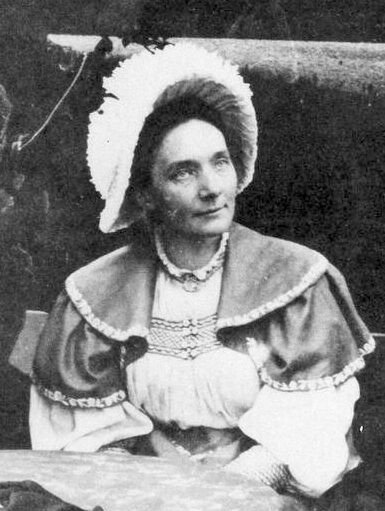
Eugenie Schumann
As you can imagine, one of the most interesting figures in the book is Johannes Brahms. He had met Robert and Clara in 1853 when he was just twenty years old, and quickly befriended both. He also, inconveniently, fell in love with Clara.
After Robert nearly died by suicide in 1854, Johannes came to Clara’s side to support her and help with the children.
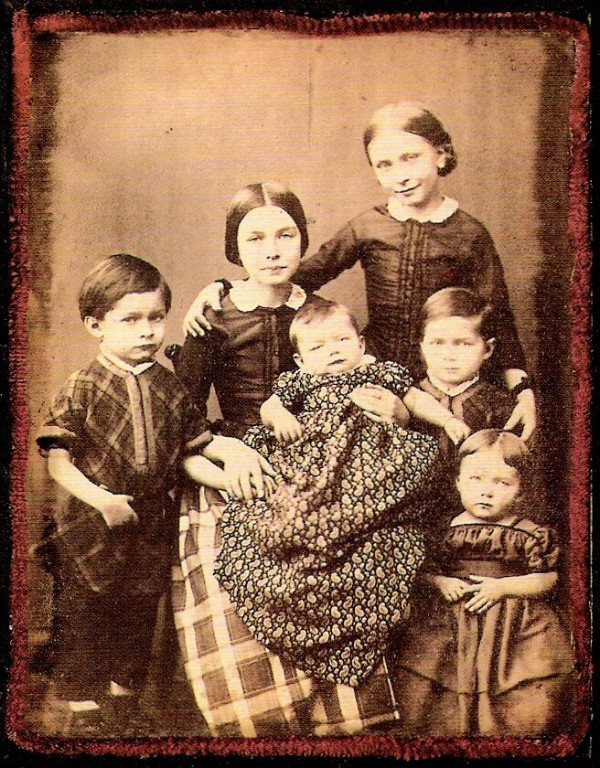
Robert and Clara Schumann’s children
Robert died in 1856. It is possible that Clara and Johannes discussed marriage after she was widowed, but ultimately, they both decided they wanted to pursue their careers instead of each other.
But that decision didn’t mean that Johannes pulled away from the family. On the contrary, Eugenie writes, “Brahms we took for granted. There he was, always had been, and always would be; he was one of us.”
Here are some tidbits from the memoir that provide a window into his personal warmth, his quirky personality, and the oft-hidden emotional depth that shaped his music.
1. Brahms was awkward.
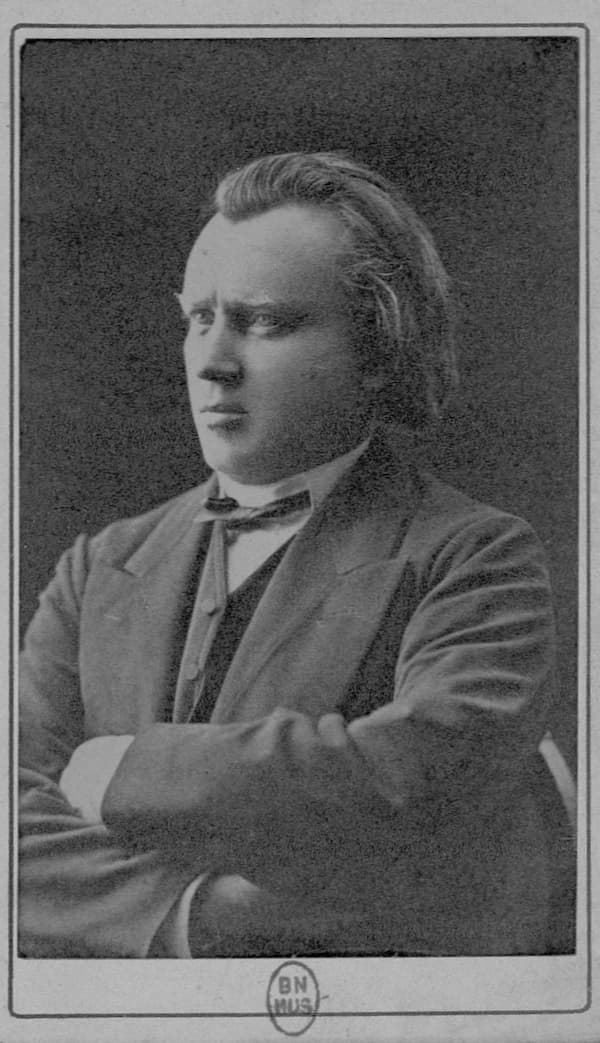
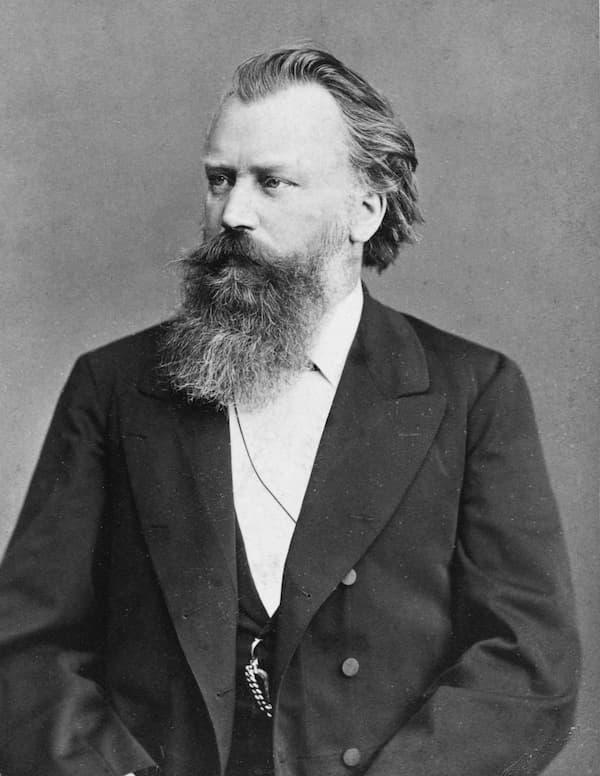
Johannes Brahms in 1872 (Gallica: ark:/12148/btv1b84160058
Eugenie writes:
The schoolgirl in me resented his neglect of appearances; his coloured shirts without collars, his little alpaca coats, and the trousers which were always too short, were a thorn in my flesh.
But the elasticity of his gait, with the weight thrown on the heels, pleased me when I saw him coming towards the house, hat in hand.
He cared nothing for polite manners, but as he was at times painfully conscious of his awkwardness, he was rather shy as a young man and tried to hide this shyness under a certain bluntness.
His cover was always laid for him, and he came and went as he liked, in good or bad mood, bringing now good, now bad hours. Like [conductor Hermann] Levi, he would frequently come to our room and play to us: Schubert dances or his own Valses, op. 39, and wonderful, melancholy Hungarian melodies for which I have looked in vain among his published works; perhaps he never wrote them down.
Johannes Brahms’s Valses, op. 39
2. Brahms entertained the Schumann children by doing gymnastics on their staircase.
Eugenie remembered:
I see, as though it were in a picture, a group of children standing in the hall of our house in Düsseldorf.
With amazement and admiration, they are looking up at the bannisters, on which a fair young man is performing the most daring gymnastics.
He hoists himself from right to left and up and down; at last, he raises himself firmly on his arms, with his legs high in the air, and a final leap lands him below in the midst of the admiring crowd of children.
I and my elder brothers and sisters were the children, and the young man was Johannes Brahms.
3. Brahms called himself an ass.
One day, shortly before my lesson, Mamma said to Marie and me, “Children, what has been wrong between you and Brahms? He complains that you are not nice to him.” We were indignant, said we had always been nice and did not know what he meant.
“Well, ask him yourselves; I believe he is coming directly.”
“If he is offended,” we said, “he will probably not come.”
But he came, punctually at eleven. We hustled him into a corner, barred the way, and said, “Now, Herr Brahms, we want to know what the trouble is; we shall not let you out till you tell us. You have complained of us to Mamma.”
He looked like a dear schoolboy in disgrace, put both his hands in his pockets, shifted his feet, and stammered, “Oh, it is only because I am such an ass.”
4. Brahms helped teach the Schumann children as a favor to Clara Schumann, and also gave them gifts.
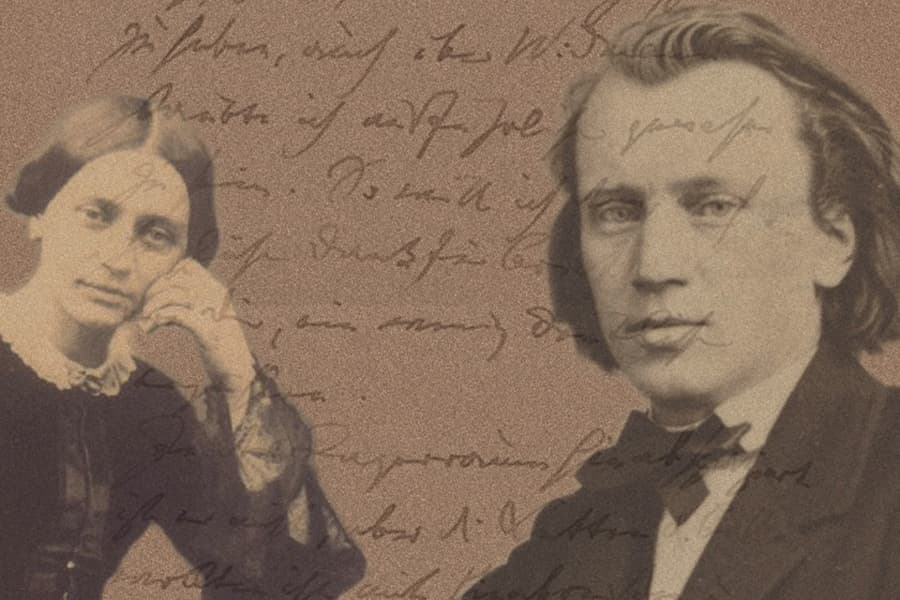
Clara Schumann and Brahms © londonsymphonia.ca
[Marie and Elise were the eldest Schumann children, born in 1841 and 1843. Learn more about the Schumann children.
I see from Mamma’s diary that Brahms took an interest in Marie’s and Elise’s musical development when they were still children.
Once he taught them the ‘Bilder aus Osten.’ They had wanted to give my mother, who was travelling, a surprise on her return, but could not manage the pieces alone, so Marie wrote a little note to Brahms asking for his help, and he came at once.
He seems to have assisted them on other occasions and taken an interest in their little concerns.
Marie told me that once, when she had accompanied him on a long walk and chattered all the time, he bought her a lovely Easter egg when they returned to the town.
5. Brahms had deep feelings for Robert and Clara Schumann’s daughter Julie…but Eugenie wasn’t convinced it was love.
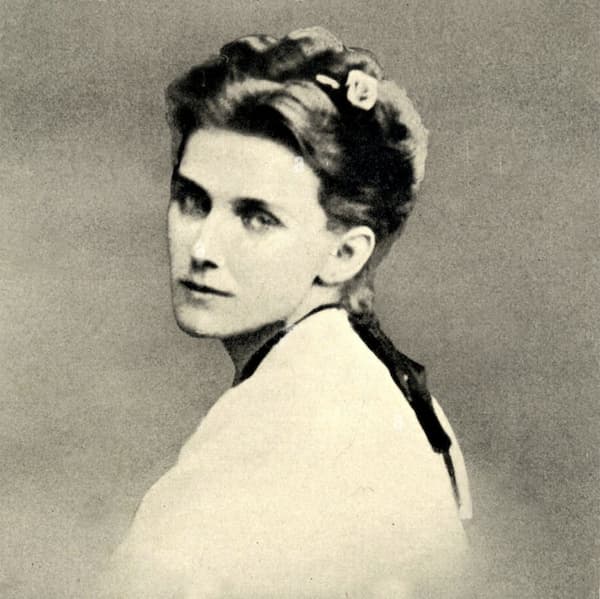
Julie Schumann
Most historians believe that Johannes Brahms fell in love with Robert and Clara’s beautiful daughter Julie, who was born in 1845.
However, she married an Italian count in the autumn of 1869.
He channeled his sadness about her marriage and his own loneliness into his Alto Rhapsody, which he presented as a wedding gift.
Tragically, Julie died in 1872, pregnant with her third child.
Eugenie describes their connection:
He had had an admiration for Julie from the time when, as a girl of sixteen, she had accompanied our mother on a concert tour to Hamburg.
His admiration grew as she developed in more and more exquisite loveliness, and in the summer of 1869, when she was just engaged and brimful of vitality, I often saw his eyes shining when he looked at her.
I do not venture to guess how near his feelings came to the passion of real devotion. Perhaps Julie’s self-possessed, unvarying friendliness towards him had excluded a deeper affection from the first.
6. Brahms didn’t need a lot of room in his living quarters, but he did need natural light and space to pace.
Twice we visited him, once in Ziegelhausen on the Neckar, once in Nildbad near Zurich.
In both places, he had taken in a farmhouse, two or three nice rooms with many windows and little furniture. They showed how few were his needs as regards comfort, but what he did need was a lavish supply of air and light, and room to pace up and down.
7. Brahms became passionate about random things…including surgeries.
Not all of Brahms’s friends were professional musicians. Some were talented amateurs.
One of those talented amateurs was Theodor Billroth, one of the pioneers of abdominal surgery, who was also a talented pianist and violinist.
Brahms often sent his chamber works to Billroth to hear his input on them, and even dedicated his first two string quartets to him.
Eugenie writes about Brahms’s passions:
When we had taken up our abode in Frankfurt, Brahms visited us there every year, and his visits were always stimulating.
It was astonishing how full of life the house seemed as soon as Brahms set foot in it. This was primarily due to the eagerness with which he absorbed and communicated everything of interest.
Usually, the thing which was uppermost in his mind at the moment came out within the first few hours; it poured itself forth, and this abundant enthusiasm gave him a touch of boyishness even in his advanced years.
Once it was an operation performed by Billroth, which he had explained to him, and of which he was so full that he must try to retail it all to us.
Read our article talking about Brahms’ friendship with Theodor Billroth.
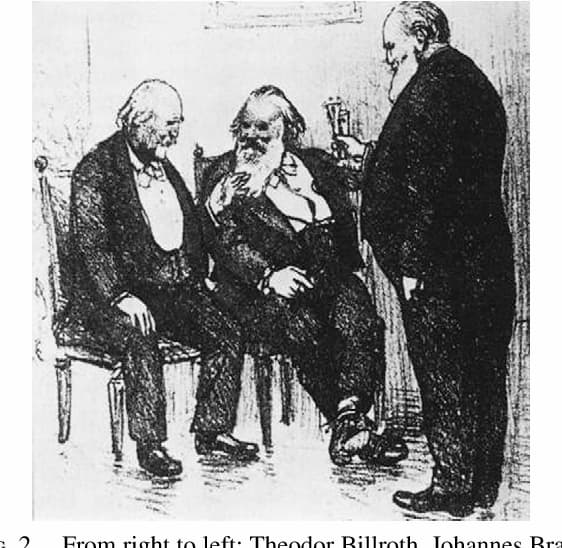
Eduard Hanslick, Johannes Brahms, and Theodor Billroth
8. Brahms liked Dvořák’s work and championed it, but also felt that he had published “many inferior things.”
Johannes Brahms was one of the first famous composers to advocate for the work of Antonín Dvořák.
However, he couldn’t convince Clara Schumann to become a fan…and he had some reservations himself.
Eugenie writes:
One might indeed say that it was he who had discovered [Dvořák].
He tried hard to make my mother like his music, but without success. She maintained her independence of judgment against him as she had maintained it against our father when she had defended Bellini and not cared for Sterndale Bennett.
Brahms had all Dvořák’s music sent to her; he played all the piano duets with her, and she looked conscientiously through the other works.
She was genuinely glad when, in part, she could join in her friend’s appreciation, but the compositions as a whole did not appeal to her, and she made no secret of it.
Brahms, however, has told me himself that he regretted Dvořák’s having published many inferior things.
9. Brahms was a morning person and liked being outside in the woods by 5AM. (And he wasn’t averse to some breakfast gossip.)
The nicest time of the day used to be breakfast time.
When I came down into the dining-room, I saw nothing at first except thick clouds of tobacco smoke, pierced by Mamma’s affectionate good-morning glance.
Brahms was more difficult to discover, and I read a slight disapproval of my late appearance in his look.
He was an early riser and often used to tell us in Baden, “You don’t know what you are missing when you are not in the woods by five o’clock.”
I admit that it was a bad habit to get up so late. Now I am glad of the first rays of morning light, when I can get up, but at that time I found it dreadfully hard to get out of bed.
The awkward moment passed, and, kind Marie having given me my tea, I still managed to catch some of the cosy morning talk, which embraced large and small interests; even a little gossip did not come amiss.
10. Brahms didn’t like dealing with the press.
Like all lonely people, Brahms formed his opinions quietly and independently of outside influences. He disliked arguments and evaded them where he could, but when he was drawn into them, he could become very passionate. This did not happen very often, as most people admitted his superiority without demur.
He and my mother agreed in most things of real importance, as I have already had occasion to mention.
“Of course,” he once said with reference to a question of general interest – “of course I entirely agree with you. But,” he continued, turning to us, “your mother is the only person who can take her stand on a matter like this openly. Others simply can’t do it. If I were to say about Wagner what she does, the papers would make a stunt of it, and I would never let myself in for that. If a newspaper were to print today that I had murdered my father, I wouldn’t reply.”
This may explain why he has often answered evasively or even ambiguously questions bearing upon the above-mentioned subject. I will not presume to judge whether he was right in this.
11. In Eugenie’s estimation, Brahms considered playing the piano “a necessary evil.”
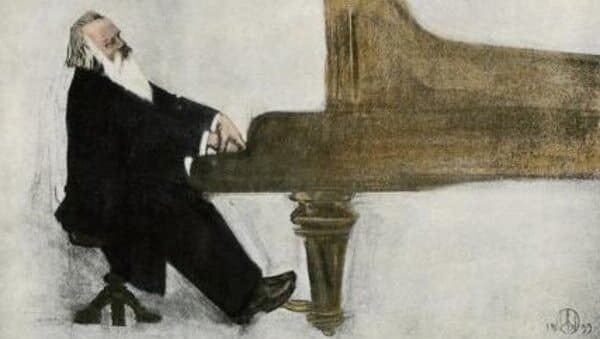
Brahms at the piano
We would often sit talking for a long time, but [Eugenie’s sister] Marie reminded him sometimes, “Herr Brahms, you really must practise now, or you will not play properly at the concert.”
Then he always got up obediently, went into the music-room with his beloved cigar, and presently we heard the vigorous attack of his two fifth fingers, one at each extreme end of the keyboard, and arpeggios in counter movement through endless modulations followed.
Interesting as this playing was, there was always something of a fight or animosity about it. I do not believe that Brahms looked upon the piano as a dear, trusted friend, as my mother did, but considered it a necessary evil with which one must put up as best one could.
It’s a striking impression about someone who wrote some of the most beloved piano music of the nineteenth century.
For more of the best in classical music, sign up for our E-Newsletter