Joseph Haydn, the father of the symphony, crafted over a hundred works that blend wit, structure, emotional depth, and flair. His best symphonies stand as timeless monuments to Haydn’s genius for surprise, elegance, and innovation.
The symphonies of Joseph Haydn are a testament to his revolutionary spirit, and they showcase the breadth of his genius. They also span distinct phases of his career. They range from the emotional intensity of his “Sturm und Drang” works to his colourful Paris symphonies, works that dazzle with vivid orchestration and playful character.
His later London symphonies represent the pinnacle of his craft, combining elegance with subtle innovation. Clarity and charm are masked by intricate craftsmanship, and his unparalleled ability to fuse emotional depth with formal mastery solidified his role as the architect of symphonic form.
Selecting 10 of Haydn’s most magnificent symphonies is no easy task, but let’s get started with a work from Haydn’s Sturm und Drang period.
Symphony No. 44 in E Minor, “Trauer” (1772)
Composed around 1771–1772, Haydn’s Symphony No. 44 in E minor is nicknamed “Trauer”, the German word for “mourning.” This striking work comes from the so-called “Sturm und Drang” period, roughly spanning the late 1760s and early 1770s. It aligns with a broader artistic movement emphasising passion and individuality.
During this time, Haydn experimented with intense emotional expressions, dramatic contrasts, and unconventional structures. According to an anecdote, Haydn requested that the third movement of this symphony was to be played at his funeral, adding a mournful mystique to this work.
It’s not a “sad” symphony, however, but a journey through tension, reflection, and defiance. What makes it special is how Haydn balances raw emotion with his trademark cleverness. The opening movement is all sharp edges and restless energy, and the minuet feels like a conversation where everyone is speaking at once. The moment of calm in the “Adagio” has a bittersweet tinge, and the finale doesn’t bother to comfort; it’s a wild sprint full of fire and resilience.
Symphony No. 45 in F-sharp minor, “Farewell” (1772)
The “Farewell” Symphony dates from 1772 and was written during his tenure at the
Esterházy court. It is one of Haydn’s most famous and theatrical symphonies, and the nickname comes from the closing movement, where musicians gradually leave the stage until only two violinists remain.
According to a widely circulated anecdote, Haydn composed this gesture as a subtle hint to Prince Nikolaus, whose extended stay at Eszterháza had kept the musicians away from their families. The prince, getting the message, reportedly allowed the court to return to Eisenstadt. While the authenticity of the story is debated, it nevertheless showcases Haydn’s wit and his ability to weave narrative into music.
What makes the “Farewell” so special is how it is both a great symphony and a piece of theatre. Haydn doesn’t just write music but stages a story. The F-sharp minor angularity and driving rhythms place it within the Sturm and Drang period, and it is a symphony that is both brilliant and decidedly human.
Symphony No. 82 in C Major, “The Bear” (1786)
Haydn’s Symphony No. 82, nicknamed “The Bear”, is the first of six symphonies written for a Paris concert series. They were commissioned to showcase Haydn’s skill and reflect his growing international fame as Europe’s leading composer.
The nickname does not originate with Haydn, but it likely came from the rustic, drone-like accompaniment in the Finale. It seems to evoke the lumbering dance of a trained bear, a popular street entertainment in 18th-century Europe.
The work is written for the large ensemble of the Paris orchestra, and includes trumpets, timpani, and a full complement of winds. Designed to impress a cosmopolitan audience, the vivid orchestration and theatrical flair show Haydn tailoring his music to a much grander stage. It balances the emotional intensity of his earlier Strum and Drang works with the polish of his later style.
Symphony No. 83 in G minor, “The Hen” (1785)
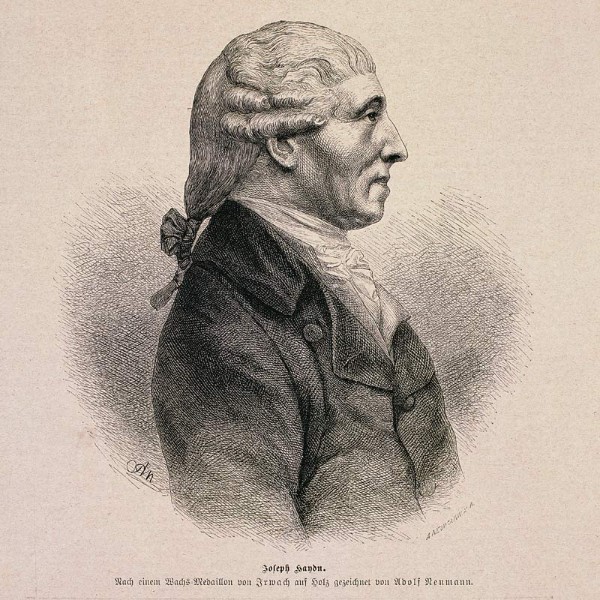
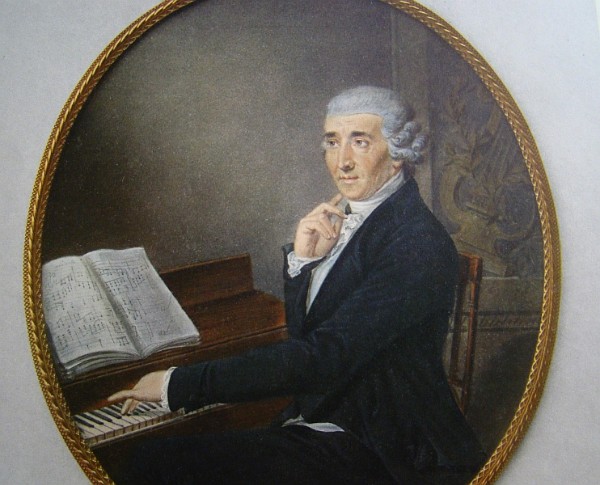
Portrait of Joseph Haydn
Another Paris symphony, No. 83, carries the nickname “The Hen.” That nickname was applied after Haydn’s time and is derived from the second theme of the first movement. You can hear a clucking, staccato figure in the oboe mimicking the jerky pecking of a hen. Such vivid imagery reflected an 18th-century taste for programmatic elements in music, with orchestral effects evoking animals or scenes from nature.
Unlike the bright C Major of “The Bear,” the minor key initially gives “The Hen” a darker and more restless character. It also reflects Haydn’s mastery of the Classical style during a pivotal moment in his career, as he transitioned from the experimental Sturm und Drang to a more accessible cosmopolitan world.
The spirited Finale returns to the major key, and its infectious momentum and playful character make it a perfect capstone, transforming early tension into a joyful romp. Haydn is at his most delightful in “The Hen” symphony, pairing stormy passion with a playful peck or two.
Symphony No. 88 in G Major (1787)
A favourite among conductors and audiences, Haydn’s Symphony No. 88 in G Major is a gem from his mature period. In essence, it bridges the vibrant Paris Symphonies to the sophisticated London Symphonies.
Composed in 1787, this symphony reflects Haydn’s mastery of orchestral colour and structure while showcasing a more intimate and refined style. The major key lends it a warm and optimistic character, though we find the composer’s trademark wit and unexpected twists. Its accessibility and brilliance earned praise from later composers, including Brahms, who admired its craftsmanship.
Haydn serves up a musical smile that is impossible to resist. It all feels completely effortless, and it’s not as flashy as the Paris works. But that’s part of the charm and the magic. It is warm, radiant and human; a joyful masterpiece that feels like a warm embrace.
Symphony No. 92 in G Major, “Oxford” (1789)
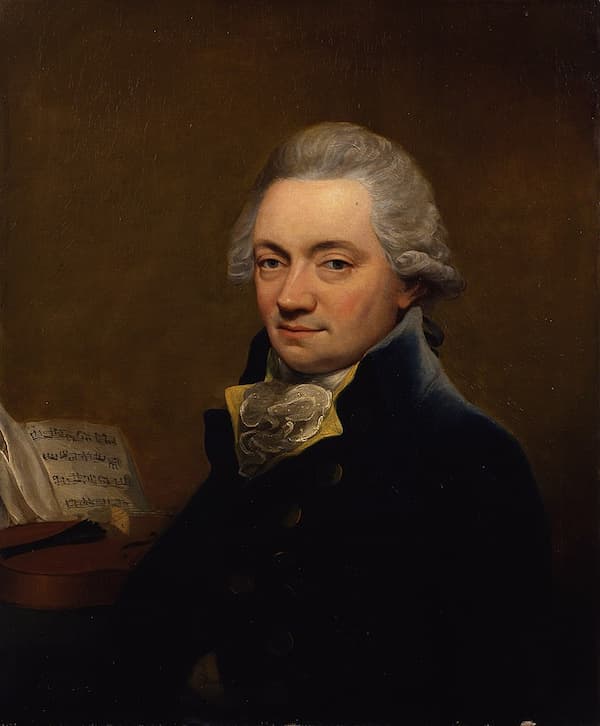
Thomas Hardy: Johann Peter Salomon, ca 792 (London: Royal College of Music)
Although the Haydn Symphony No. 92 eventually received the nickname “Oxford,” the origins of the work go back to Paris. In the event when the impresario Johann Peter Salomon brought Haydn to England in 1791, the composer was in line to receive an honorary doctorate degree from Oxford University.
Since the degree required the candidate to prove his skill in composition, Haydn completed some examinations and conducted the Symphonie he had brought from Paris. Haydn later told a friend, “I felt very silly in my gown, and I had to drag it around the streets for three whole days.”
The “Oxford” is a masterpiece of balance and invention. A slow introduction sets a grand tone, which is followed by a spirited “Allegro.” The serene melody of the “Adagio” is contrasted with dramatic outburst, and the “Menuet” is stately. And the contrapuntal wit and rhythmic drive of the Finale is simply exhilarating.
Symphony No. 94 in G Major, “Surprise” (1791)
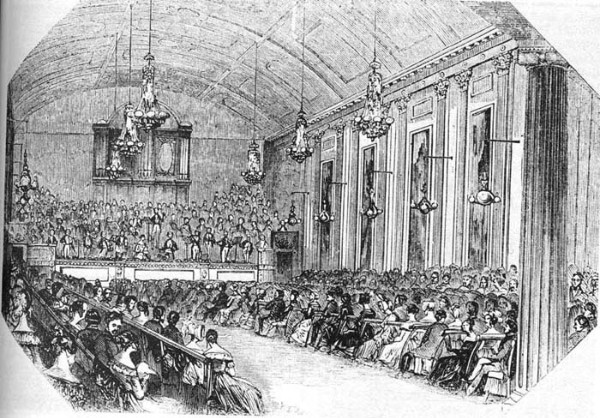
Hanover Square Rooms concert
The Symphony No. 94 in G Major, nicknamed “Surprise”, is one of the twelve “London Symphonies” written for his first visit to England. Haydn was at the peak of his fame, and these symphonies were performed by a large orchestra designed to impress with bold orchestration, inventive structures, and crowd-pleasing charm.
The “Surprise” nickname comes from the second movement, where a sudden, loud chord interrupts a quiet, serene melody. Supposedly, this musical prank startled dozing audience members. Haydn said his intent was simply to surprise, but the moment has become iconic.
Scored in G Major, the symphony radiates warmth and optimism, but it is Haydn’s wit, emotional engagement and structural genius that elevate it beyond mere entertainment. It is both clever and totally approachable, and the surprise chord is pure Haydn. It’s not surprising that Haydn was celebrated as Europe’s greatest composer.
Symphony No. 100 in G Major, “Military” (1794)
The so-called “Military” symphony was composed in 1794, during Haydn’s second trip to London. That nickname derives from the second and fourth movements, which feature the prominent use of percussion instruments, including triangle, cymbals, and a bass drum. It evokes the martial sound of military bands, particularly those associated with the Turkish Janissary bands, which were popular in Europe at the time.
The opening movement features a slow introduction, where a lyrical melody in the strings creates a serene and expectant mood. It soon transitions into a lively “Allegro,” radiating great optimism. The “Allegretto” is the military heart of the work, blending march-like pomp with simply folk-like charm.
A robust and sturdy “Menuetto” feels like a lively peasant dance, and Haydn’s orchestration with bright contributions from the flute and oboe adds a festive touch. Haydn then provides a dazzling “Presto,” driven by rapid string figurations and the return of the military elements. Haydn crafted music that is both intellectually sophisticated and broadly appealing.
Symphony No. 101 in D Major, “The Clock” (1794)
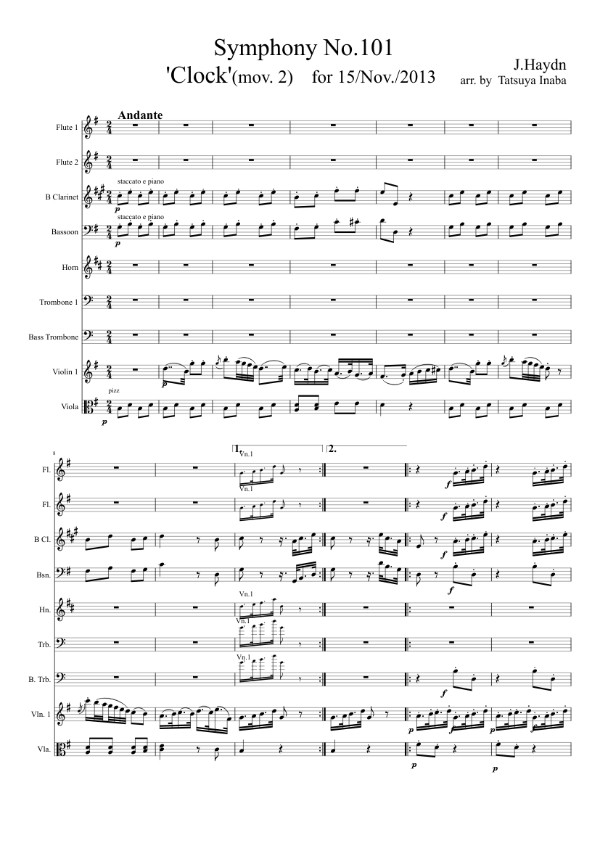
Haydn’s Clock Symphony music score
The “Clock” nickname for Haydn’s Symphony No. 101 derives from the second movement, where a steady, ticking rhythm in the accompaniment evokes the sound of a mechanical clock. This vivid imagery, likely applied after Haydn’s time, reflects the 18th-century fascination with precision and technology.
It is a musical masterpiece, with a dark and moody intro exploding into a sunny tune of pure joy. The second movement is the star, while the “Menuetto” is a hearty dance that seems to invite a twirling village party. And the finale is a wild sprint, fast and very lively.
The “Clock” is both clever and totally inviting. That ticking beat in the second movement is pure Haydn; simple, smart, and turning a little idea into a whole story. Composed at the peak of his creative powers, the “Clock” taps into the Enlightenment’s fascination with science and precision, while the symphony’s clear structure and emotional range embody the era’s ideals of balance and expression.
Symphony No. 104 in D Major, “London” (1795)
Haydn’s final symphony, nicknamed “London”, is the triumphant summation of his symphonic art. The “London” nickname is sometimes applied to all twelve symphonies, but it is most strongly associated with No. 104. To be sure, the grandeur and polish reflect the cosmopolitan spirit of London.
This is the grand finale to Haydn’s symphonic adventure. The bold intro to the first movement gives way to a glowing slow movement, and the lively dance of the “Menuetto” feels like a twirling and fancy ball. The Finale zips along with a catchy tune, and the entire symphony radiates majesty and optimism, blending Haydn’s musical trademarks.
The featured Haydn symphonies showcase his unparalleled genius in blending humour, emotion, and innovation in works that range from stormy intensity to radiant joy. From the dramatic “Farewell” to the majestic “London,” they cement Haydn’s legacy as the father of the symphony, each a timeless treasure that continues to captivate and inspire.
Read more about Haydn’s Nickname Symphonies.
For more of the best in classical music, sign up for our E-Newsletter