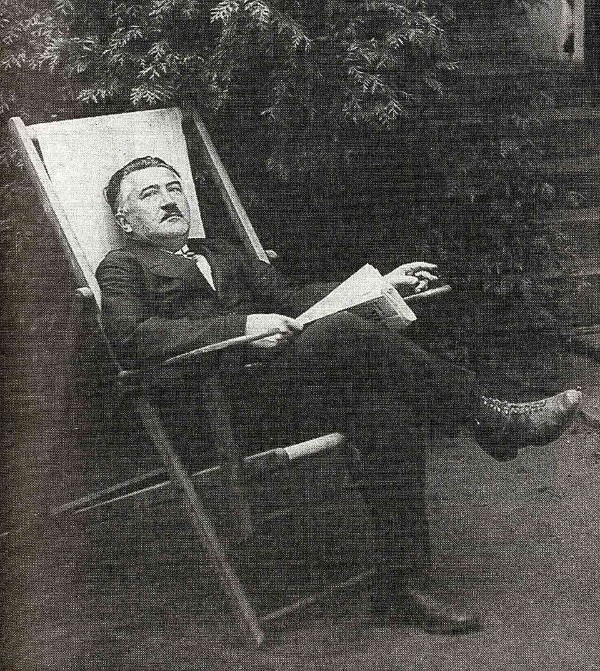
Josef Suk, born on 4 January 1874, occupies a distinctive position in Czech music history. He stands at the crossroads between late Romanticism and early twentieth-century modernism.
A student, son-in-law, and artistic heir to Antonín Dvořák, Suk inherited a powerful musical legacy yet ultimately forged a voice marked by harmonic daring, psychological depth, and existential seriousness.
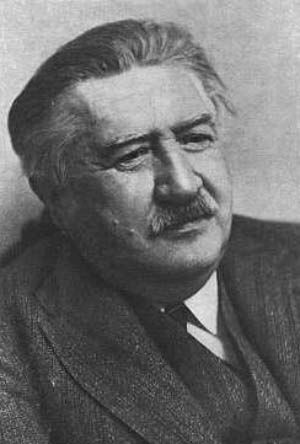
Josef Suk
His Symphony No. 2 in C minor, Op. 27, subtitled “Asrael” represents both a personal reckoning with devastating loss and a decisive break from inherited stylistic models. John Tyrrell and others consider “Asrael” a foundational work of Czech musical modernism, comparable in ambition and emotional scope to the symphonic monuments of Mahler and Strauss.
On the occasion of Suk’s birthday on 4 January, we turn to “Asrael,” a symphony shaped by grief and transfigured into music.
Josef Suk II: Asrael, Op. 27 – Part I: I. Andante sostenuto – Andante con moto e resoluto – Più pesante e maestoso – (Bavarian Radio Symphony Orchestra; Jakub Hrůša, cond.)
Origins and Apprenticeship
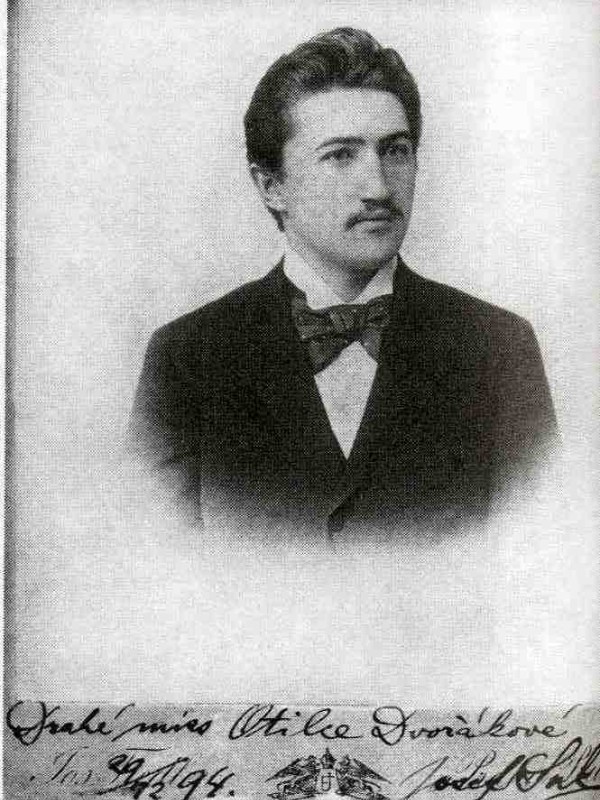
Josef Suk
Josef Suk was born in the village of Křečovice in Bohemia, then part of the Austro-Hungarian Empire. His father, also named Josef, was a village schoolmaster and church musician who provided his son with early instruction in violin, piano, and organ.
Suk’s prodigious abilities led to his admission to the Prague Conservatory in 1885, where he studied violin with Antonín Bennewitz and composition with Karel Stecker and later Antonín Dvořák.
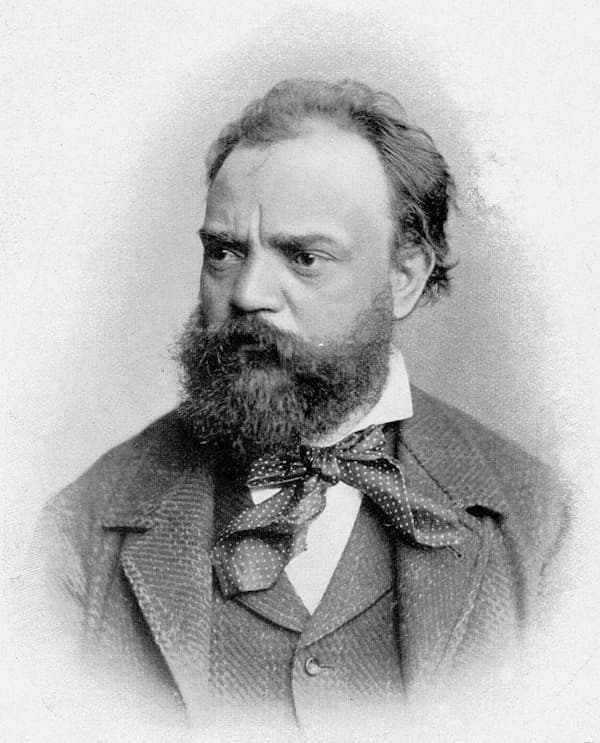
Antonín Dvořák, 1882
Dvořák’s influence on Suk during these formative years was decisive but not merely technical. According to John Clapham, “Suk absorbed his teacher’s belief in organic musical development, melodic clarity, and emotional directness, while also internalising a strong sense of ethical responsibility toward artistic sincerity.”
This relationship became personal as well as professional when Suk married Dvořák’s daughter Otilie in 1898, binding his artistic identity ever more closely to that of his mentor.
Performer and Early Works
Parallel to his compositional studies, Suk enjoyed a distinguished career as a chamber musician. In 1892 he became a founding member of the Czech String Quartet, serving as second violinist for over four decades.
Michael Beckermann writes, “the ensemble achieved international acclaim and played a crucial role in disseminating Czech chamber music throughout Europe.”
Suk’s early compositions reveal a composer working confidently within the idiom of lyrical Romanticism. Critics at the time praised these works for their warmth, melodic charm, and formal balance, traits often associated with Dvořák’s influence.
Yet, as Jim Samson observed, “even these early pieces disclose an emerging harmonic restlessness and structural expansiveness that foreshadows Suk’s later development.”
Josef Suk II: Asrael, Op. 27 – Part I: II. Andante – (Bavarian Radio Symphony Orchestra; Jakub Hrůša, cond.)
Crisis and Transformation
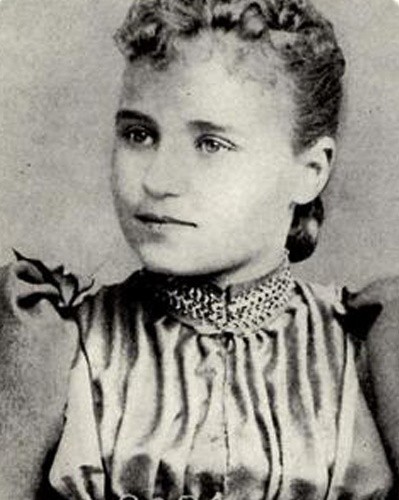
The decisive turning point in Suk’s artistic life occurred between 1904 and 1905. Antonín Dvořák died on 1 May 1904, a loss that affected Suk both emotionally and artistically. Just fourteen months later, Suk’s wife Otilie died suddenly in July 1905 at the age of 27.
These two deaths, coming in rapid succession, precipitated what Suk later described as “a spiritual crisis that forced me to reassess the purpose and direction of his music.”
Scholars consistently identify this period as the moment when Suk’s style shifted from lyrical Romanticism toward a darker, more introspective, and harmonically complex idiom.
This transformation found its most monumental expression in the Asrael Symphony, conceived initially as a memorial to Dvořák and subsequently expanded into a broader meditation on death, love, and transcendence.
Concept and Symbolism
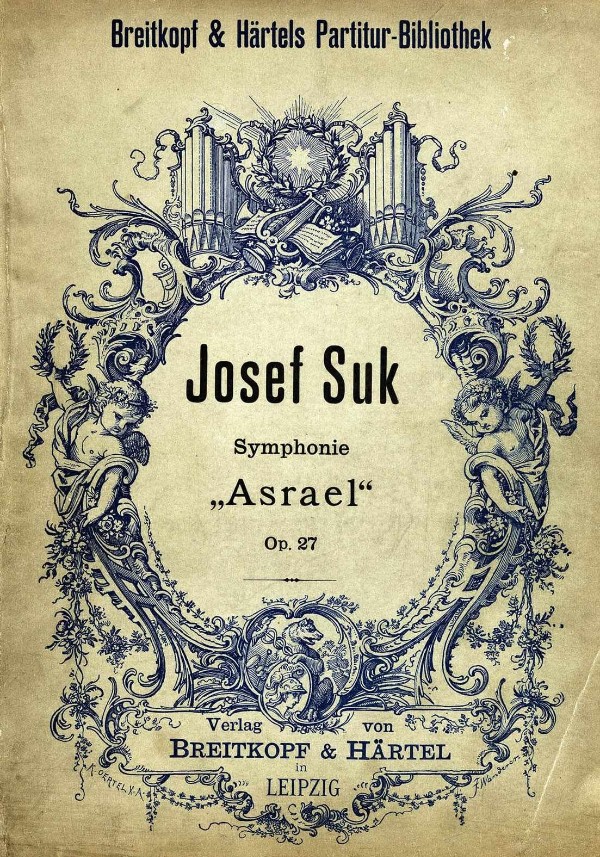
Josef Suk’s Asrael Symphony
The Asrael Symphony takes its name from “Azrael,” the angel of death in Islamic and Judaic tradition. While the title was suggested by Suk’s friend, the composer and conductor Karel Kovařovic, Suk, according to John Tyrrell, “embraced the symbolism as a framework for confronting mortality on both a personal and metaphysical level.”
Work on the symphony began in early 1905, with Suk originally planning a three-movement work dedicated to Dvořák’s memory. After Otilie’s death, Suk abandoned this initial plan and expanded the symphony to five movements, incorporating explicit musical memorials to both his mentor and his wife.
Michael Beckerman writes, “the completed score thus embodies a dual act of remembrance, transforming private grief into a public artistic statement.”
Josef Suk II: Asrael, Op. 27 – Part I: III. Vivace – Andante sostenuto – Appassionato – Maestoso (Bavarian Radio Symphony Orchestra; Jakub Hrůša, cond.)
Structure and Language
Otilie Suková
Cast in five movements, the unconventional structure of the “Asrael Symphony” allows Suk to construct an extended expressive arc rather than a traditional symphonic dialectic. Analysts frequently note the symphony’s cyclic coherence, achieved through recurring motivic cells associated with death, fate, and consolation.
Harmonically, Asrael represents a significant advance beyond Suk’s earlier works. The symphony makes extensive use of chromatic saturation, ambiguous tonal centres, and dissonant intervallic structures, particularly tritones and diminished chords, which “function as symbolic markers of existential tension.”
Suk was aware of contemporary developments in German symphonic music. Yet John Clapham cautions against interpreting Asrael as derivative of Mahler or Strauss. Instead, he finds a “distinctive synthesis of Czech lyricism and modernist intensity.”
Motifs and Movements
A recurring “fate motif” runs through the entire symphony, first heard at the opening and reappearing in various guises. The first movement unfolds as a dramatic, wave-like process rather than a strict sonata form, while the second movement evokes nocturnal funeral music, with hypnotic sustained tones, marching rhythms, and shadowy counterpoint.
The third movement is a grotesque, deathly scherzo, whose fleeting lyrical warmth is ultimately overwhelmed as the fate motif returns. After a long pause, the second part opens with an Adagio in A-flat major, which Suk described as “a tender musical portrait of his wife.”
Here Suk abandons dramatic conflict in favour of a luminous, elegiac texture, characterised by long melodic lines and restrained orchestration. Michael Beckerman describes this movement as “one of the most intimate expressions of conjugal love in the symphonic repertoire.”
Josef Suk II: Asrael, Op. 27 – Part II: IV. Adagio (Bavarian Radio Symphony Orchestra; Jakub Hrůša, cond.)
Premiere and Reception
Josef Suk
The Asrael Symphony was premiered on 3 February 1907 at the National Theatre in Prague, conducted by Karel Kovařovic. Contemporary reactions were mixed but intensely engaged. While some critics found the work excessively sombre and emotionally demanding, others recognised it as a breakthrough in Czech symphonic writing.
The composer Vítězslav Novák apparently hailed Asrael as “the first truly modern Czech symphony, praising its courage in confronting personal suffering without recourse to sentimentality.”
Over time, the symphony’s stature grew steadily, and it is now widely regarded as Suk’s masterpiece and a cornerstone of early twentieth-century orchestral literature.
Legacy and Resonance
Today, the Asrael Symphony is understood not merely as a biographical document but as a work of universal resonance. Its fusion of personal grief, mythic symbolism, and advanced musical language anticipates later developments in expressionist and modernist symphonic writing.
Scholars have also emphasised its ethical dimension. Michael Beckerman calls it “a moral act as much as a musical one.
Composed in the shadow of immense loss, Asrael stands as a testament to Suk’s artistic integrity and emotional courage. On the anniversary of his birth, it remains the most eloquent reminder of his capacity to transform tragedy into enduring artistic meaning.
For more of the best in classical music, sign up for our E-Newsletter
Josef Suk II: Asrael, Op. 27 – Part II: V. Adagio e maestoso – Allegro appassionato – Adagio e maestoso – Andante maestoso – Adagio e mesto (Bavarian Radio Symphony Orchestra; Jakub Hrůša, cond.)