Elisabeth Lutyens (1906–1983) was one of the most daring and innovative British composers of the twentieth century.
The daughter of famed architect Sir Edwin Lutyens, she defied both her family’s expectations and the male-dominated classical music world to carve out a radical creative path of her own.
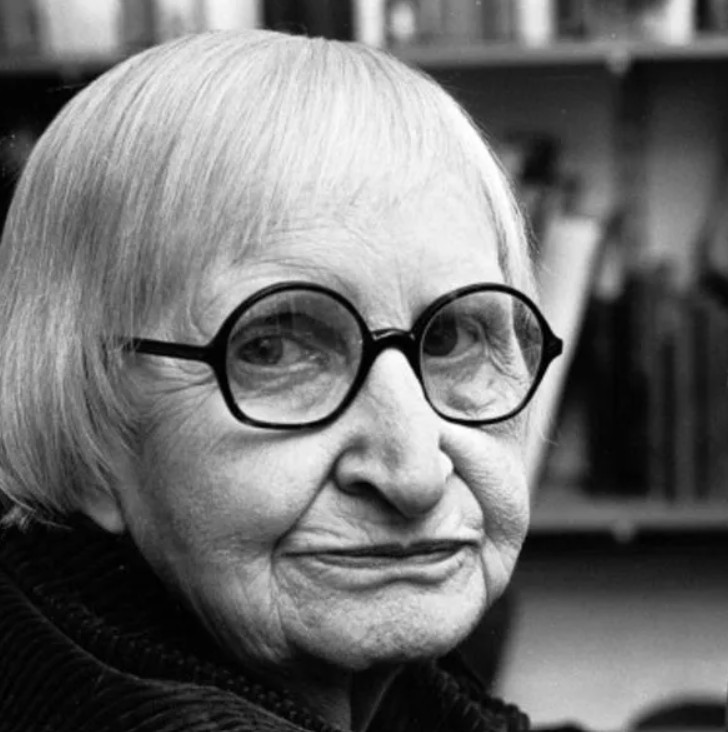
Elisabeth Lutyens
Nicknamed the “Mother of British Serialism”, Lutyens introduced twelve-tone techniques to England years before they were widely accepted.
She became the first British woman to score a feature film and gained a cult following for her eerie, modernist horror movie soundtracks.
Yet she also succeeded in writing so-called “serious” concert works, too.
Today, we’re looking at the life of Elisabeth Lutyens, a composer who was determined to compose on her own uncompromising terms.
Elisabeth Lutyens’s Childhood
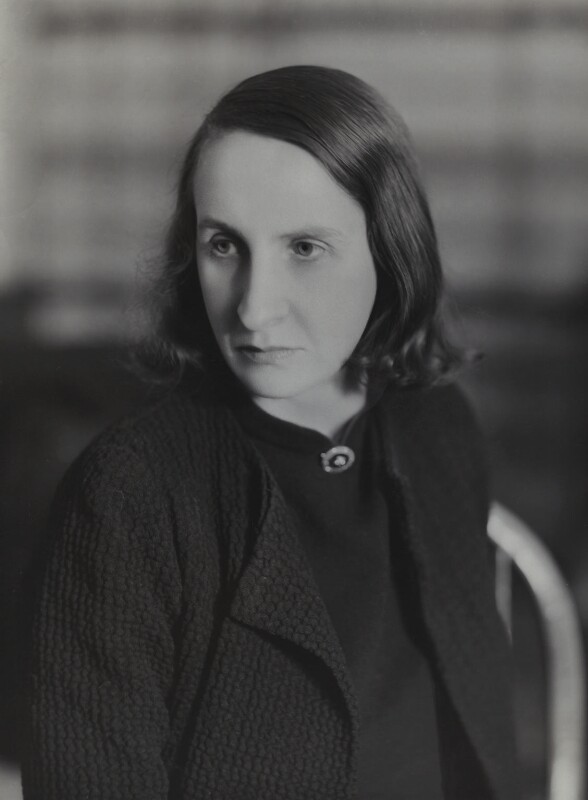
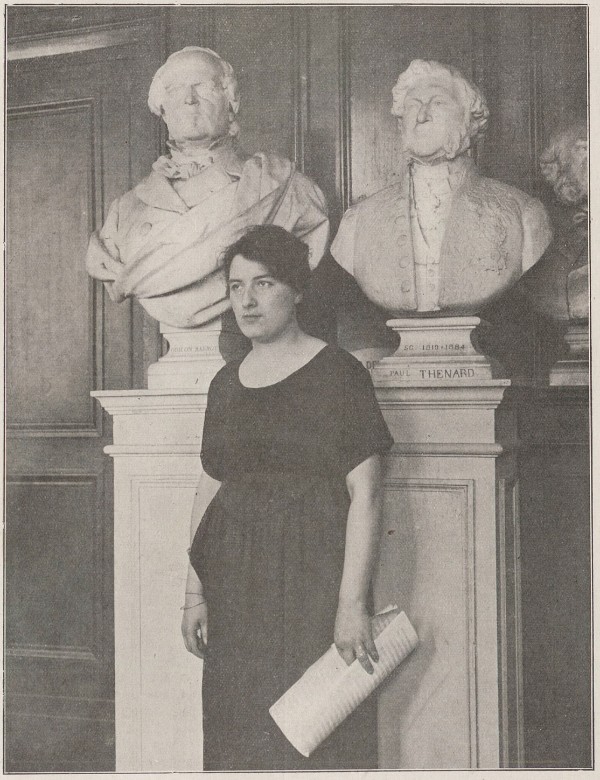
Elisabeth Lutyens, 1939
Agnes Elisabeth Lutyens (later known as Elisabeth or Betty) was born in London on 9 July 1906.
Her parents were architect Sir Edwin Lutyens, one of the greatest British architects of the twentieth century, and Lady Emily Bulwer-Lytton, a writer and champion of the religious movement known as theosophy.
In her autobiography, Elisabeth described herself as a “problem child”: “in fact, I was quite odious with screaming fits and bad temper and was the only one of my family to go to boarding school (which I went from the age of nine to fourteen).”
Elisabeth began music lessons on either the violin or piano around the age of seven or eight. She took to her lessons, and when she was nine, she decided that she wanted to become a composer.
Her relationships with her family members could be rocky, and she later said of her passion for music, “I wanted to take something that none of them knew anything whatsoever about, and therefore would leave me in peace.”
Studying Music In Paris
In 1922, the year she turned sixteen, she enrolled at the École Normale de Musique de Paris, a new school that had been established by pianist Alfred Cortot and that aimed to instruct both teachers and performers.
While in Paris, she roomed with a family friend named Marcelle de Manziarly, a woman composer seven years her senior who had studied under master teacher Nadia Boulanger.
Elisabeth recalled in her memoirs how de Manziarly left out “scores of Debussy’s Pelléas et Mélisande, Stravinsky’s Le Sacre du Printemps, Mussorgsky’s Boris Godunov, and many other exciting and magical works unknown to me till then.”
But she also balanced her music studies with a vibrant social life.
Elisabeth’s daughter Rose later wrote about her, “When she was studying in Paris, she had a wide circle of friends. She was very sociable. She felt very close to the old and to the very young, especially babies. She went bonkers over babies.”
Studies in London
In 1923, at seventeen, she left Paris to travel with her mother, who was doing international missionary work to spread the word about theosophy. In the end, Elisabeth became so fed up with theosophy and her mother’s obsession with it that she renounced religion entirely.
Once they returned to Britain, Elisabeth became a composition student of John Foulds, a cellist and composer especially fascinated by Indian folk music and instruments.
Between 1926 and 1930, she attended the Royal College of Music. She was barred from studying with Vaughan Williams or John Ireland and was assigned to organist Harold Darke instead. Luckily, she enjoyed working with him and found him deeply supportive.
After her graduation, she organised a series of new music concerts. The musicians she hired premiered works by multiple young British composers, including Benjamin Britten.
Becoming the Mother of British Serialism
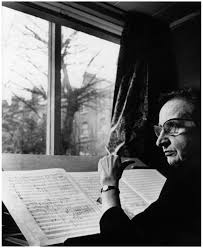
Elisabeth Lutyens
She was also busy thinking about how she could free her creative voice from the conventions of traditional music theory.
(In 1968, she wrote in a letter to Igor Stravinsky claiming that she’d invented serialism on her own before Schoenberg and his colleagues had embraced it in the 1920s.)
Elisabeth Lutyens: Chamber Concerto No. 1, Op. 8, No. 1 (Jane’s Minstrels, Ensemble; Roger Montgomery, cond.)
Her Chamber Concerto, dating from 1939, employs serial methods. The innovation eventually led to her nickname of the “mother of British serialism” or “Twelve-Tone Lizzie.”
(One wonders why we don’t call Arnold Schoenberg “Twelve-Tone Arnie”, but perhaps that’s a topic for another day!)
A future pupil, composer Robert Saxton, later observed of her, “She is often thought of, and admired, as the first 20th-century British composer to use serial technique. Thirty years after her death, a clearer perspective reveals that she employed the principles of 12-note composition at the service of a highly individual vision, technique being invariably the servant of her often burning inspiration.”
Her Criticisms of Other Composers
This wasn’t the only instance of the creative independence that would remain a hallmark of her career.
She was always unafraid of criticising her fellow composers. She once described her friend Igor Stravinsky as having “a face like a very piercing dachshund with glasses… and a squint.”
In the 1950s, she gave a lecture at the Dartington International Summer School and described her exalted countrymen and contemporaries Vaughan Williams, Holst, Ireland, and Bax as being from “the cowpat school”, who wrote “folky‐wolky melodies on the cor anglais.” Gustav Mahler, she labeled “overblown.”
But she had a soft spot for Debussy and, interestingly, Henry Purcell.
It’s important to note that her critical ear extended to her own works. In her young adulthood, she destroyed much of what she’d written before, feeling it wasn’t up to her own impossibly high standards.
Marrying Ian Glennie
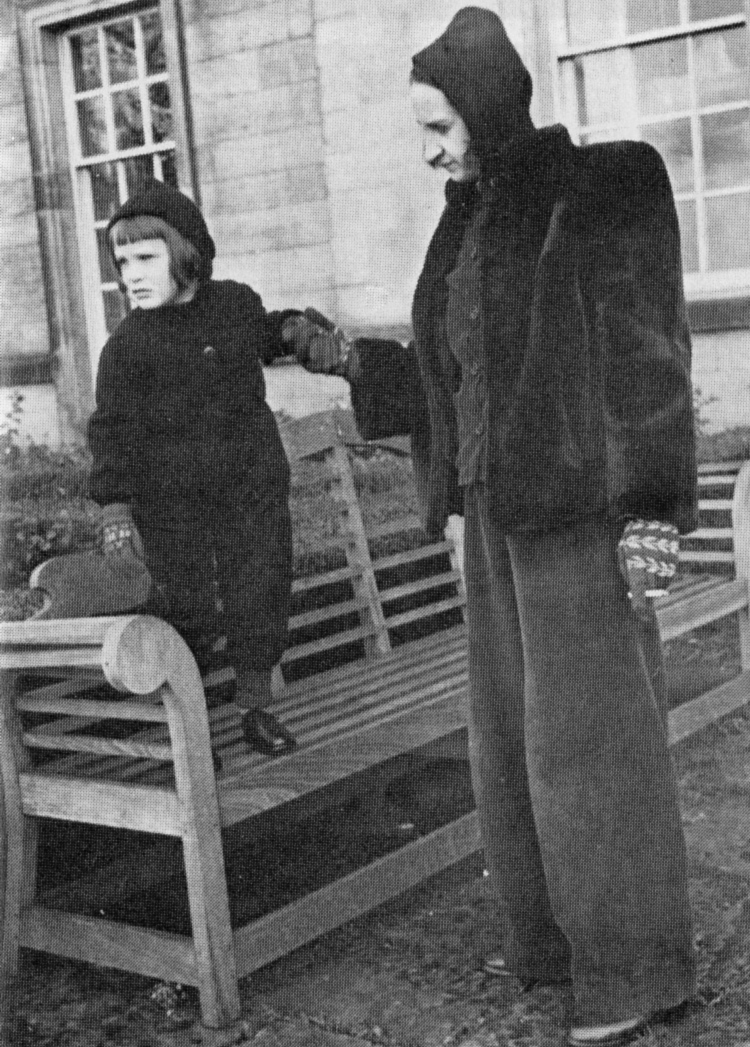
Elisabeth Lutyens and her daughter Rose
In 1933, Elisabeth married baritone Ian Glennie. He’d proposed five years earlier, but Elisabeth decided to accept him after seeing how happy her sister was after her marriage.
The couple had three children: Sebastian and twin daughters Rose and Tess.
Unfortunately, and perhaps predictably, the marriage was an unhappy one. She became increasingly worried about what marriage and motherhood would do to her composing career.
Her fears weren’t calmed by the input of her siblings. Once he found out she was pregnant, her brother Robert told her that there had never been a great woman composer. Her sister Ursula remarked, “Wait till you have a baby – that is the only creative life for a woman – you’ll soon give up wanting to be a composer then.”
The only problem was that, even after two pregnancies and three babies, she didn’t give up wanting to be a composer.
Elisabeth and Ian split in 1938 and finalised their divorce in 1940.
Marrying Edward Clark and Breaking Down
Her next partner was Edward Clark, a conductor and BBC producer who was eighteen years her senior. They had a son named Conrad in 1941 and married the following year.
Rose would later call Edward “the love of her life.” They exchanged love notes throughout their marriage.
During the war, Elisabeth sent her children to the countryside to stay safe (which she felt guilty about). Meanwhile, she remained in London, writing commercial jingles and the like to make a living.
She got pregnant again in 1946 at the age of forty. She wanted to keep the baby, but was convinced by her mother and husband to have an abortion.
In 1948, she suffered a complete mental breakdown and moved into a mental health facility.
It took three years for her to successfully address the alcohol addiction she had developed. Thankfully, she emerged stronger than ever and ready to create her most famous works.
Becoming a Film Composer
Starting in the late 1940s, she began exploring some new musical opportunities.
She was hired to write the soundtrack for the 1948 film Penny and the Pownall Case. It would be the first of her many soundtracks for movies, documentaries, and more. This made her the first British woman to ever score a feature film.
Over time, she began specialising in horror films, a context in which her propensity for writing in an atonal language was especially appreciated.
Grief and New Career Heights
Personal tragedy struck suddenly in 1962, when Edward died of thrombosis. She witnessed his death firsthand.
In her autobiography, she wrote of her grief:
“My private desolation increased rather than diminished as the shock wore off and reality returned. I can now understand why some animals and human beings die soon after the death of their mates. I felt this might have been my lot if I had not been an artist and, as such, committed – or condemned – to life.”
Her art became a buoy, and her career reached new heights in the 1960s; in 1965 alone, she wrote the scores for four movies.
She was practical about her work. A well-known Elisabeth Lutyens quip circulated in British music circles: “Do you want it good, or do you want it Wednesday?”
She also earned money by teaching and tutoring.
Composer Robert Saxton remembered her later: “Liz was my teacher for four years – most lessons lasting at least five hours! – then we remained friends. I proofread for her, and she, my parents and then my wife, Teresa, all got on very well.”
The Success of Her “Serious Works”
Interestingly, she managed to structure her career so that, even as she wrote a spate of soundtracks for horror films, her so-called “serious” work remained well-respected, too.
It helped that between 1959 and 1972, the Controller of Music at the BBC was a man named William Glock, who believed strongly in programming serial music.
Although she’d later complain that she was marginalised by the powers that be, Elisabeth was commissioned by the BBC eight times, which was more than twice the number of commissions that any of her contemporaries received over that same timespan.
Elisabeth Lutyens: String Quartet No. 6, Op. 25 (Fanny Mendelssohn Quartet, Ensemble)
Her first “serious work” to gain traction postwar was her sixth string quartet, composed between 1952 and 1953.
Elisabeth Lutyens: Quincunx, Op. 44 (Josephine Nendick, soprano; John Shirley-Quirk, baritone; BBC Symphony Orchestra; Norman Del Mar, cond.)
Later, between 1959 and 1960, she wrote the orchestral work Quincunx, which features soprano, baritone, and a quartet of Wagner tubas.
In 1961, her Symphonies for solo piano, wind, harps and percussion were commissioned for a Proms concert.
Lutyens: And Suddenly it’s Evening, Op. 66
In 1966, her work “And Suddenly It’s Evening” for tenor and ensemble was commissioned by the BBC and played and then repeated multiple times at the Proms in the 1960s and 1970s.
When the Queen Elizabeth Hall opened in London in 1966, an Elisabeth Lutyens piece was played at the opening concert.
Her daughter Rose later remembered this time:
“When I was an adult, we all lived in the same house for 14 years on King Henry’s Road, Chalk Farm, London – we on the ground floor, my mother on the top floor. We’d all go out together a lot. My husband, Mohammed, a potter, had his studio there too. My Sudanese mother-in-law, who didn’t speak a word of English, spent a lot of time with Liz. But they got on like a house on fire. They’d often watch Rock Hudson films together.”
Final Years and Legacy
In 1969, Elisabeth Lutyens was named a Commander of the British Empire. Three years later, she wrote an absorbing autobiography called The Goldfish Bowl.
She died in 1983 at the age of 76.
Lutyens’s “Islands”, 1970-71
The legacy of Elisabeth Lutyens is a complicated one. Being a British serialist, she doesn’t fit easily into a school of music like some other twentieth-century composers.
She battled sexism throughout her entire life, and her attention was bifurcated by parenthood in a way that it wasn’t for male composers.
That said, she abhorred the idea of being thought of as a “woman composer.” And she wrote across genres, some of which are considered “serious”, some not, and much of her music remains unperformed today.
But she’s obviously a fascinating figure, and she is worth diving into regardless of her obscurity. Hopefully, a full rediscovery of her is at hand soon.
For more of the best in classical music, sign up for our E-Newsletter