Ever wonder what the greatest American composers really thought about music, creativity, and the world around them?
We’ve gathered interviews with eight American composers, giving you a front-row seat to observe their personalities in conversation.
From Howard Hanson’s (timely!) warning about the dangers of computerised art, to Gian Carlo Menotti’s heartfelt defence of his partner Samuel Barber’s legacy, to Leonard Bernstein’s long but fascinating ramble about the conductors who shaped him…we promise you’ll learn something about each of these men and how they contributed to American music.
Howard Hanson (1896–1981)
Howard Hanson wrote lush, romantic music at a time when modernism was more in style.
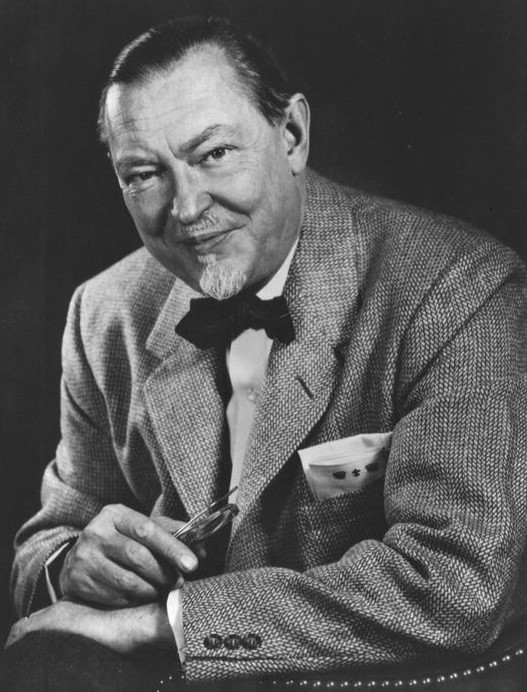
Howard Hanson
As director of the Eastman School of Music for four decades, he shaped generations of composers while still turning out symphonies and choral works full of sweeping melodies and cinematic flair.
In 1944, he won the Pulitzer Prize for his Fourth Symphony.
Highlights of the interview:
I think there’s a great danger that we may be losing creativity not only in music, but in the graphic arts, in literature…in fact, everything. Because the pressure is so much toward making everything automatic, computerised, as you say. Man is in a little danger of becoming a computer himself! And I think that this is one of the reasons why the arts are so tremendously important today, perhaps more important than they ever have been before in the long history of man.
I think talking to the future is a very dangerous pastime.
George Gershwin (1898–1937)
George Gershwin blurred the line between classical music and jazz with irresistible swagger.
From Rhapsody in Blue to the opera Porgy and Bess, he brought the charm of Tin Pan Alley to the concert hall.
Though he died young, his music helped define the sound of twentieth-century America.
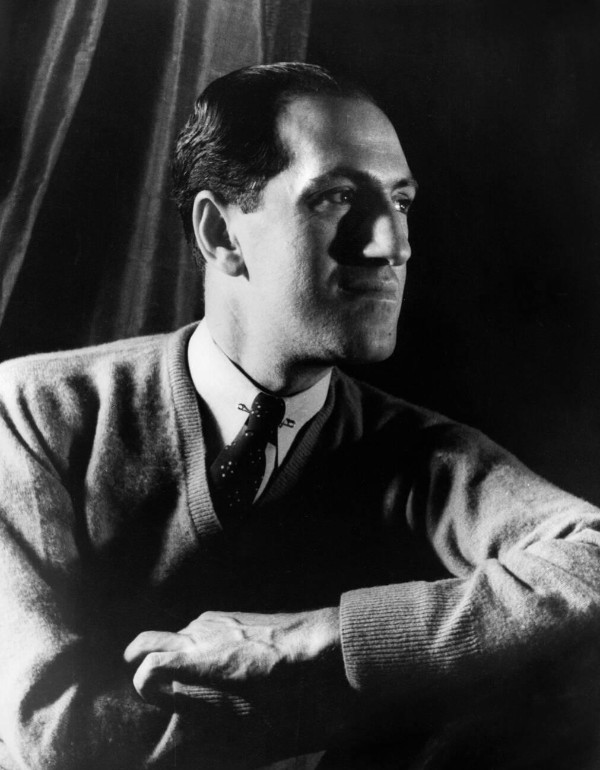
Portrait of George Gershwin
Highlights of the interview:
I’ve played these two tunes so many times at parties that I’ve naturally been led to compose numerous variations, the sort of thing every composer does when he is called upon to manipulate his own stuff over and over again.
Interviewer: When you work with your brother Ira, which comes first, the words or the music? Gershwin: Usually the music. I hit on a new tune, play it for Ira, and he hums it all over the place for a while until he gets an idea for the lyrics. And then we work the thing out together.
Here’s our pick for Gershwin’s fifteen most beloved songs (many of them with lyrics by his brother Ira).
Aaron Copland (1900-1990)
During his lifetime, Aaron Copland became the unofficial voice of American music, known for wide-open harmonies calling to mind the prairies of the Midwest.
Works like Appalachian Spring and Fanfare for the Common Man cemented a musical language that pinged as uniquely American.
He spent the latter part of his long life focusing on conducting his works, guaranteeing his place in the pantheon of American culture.
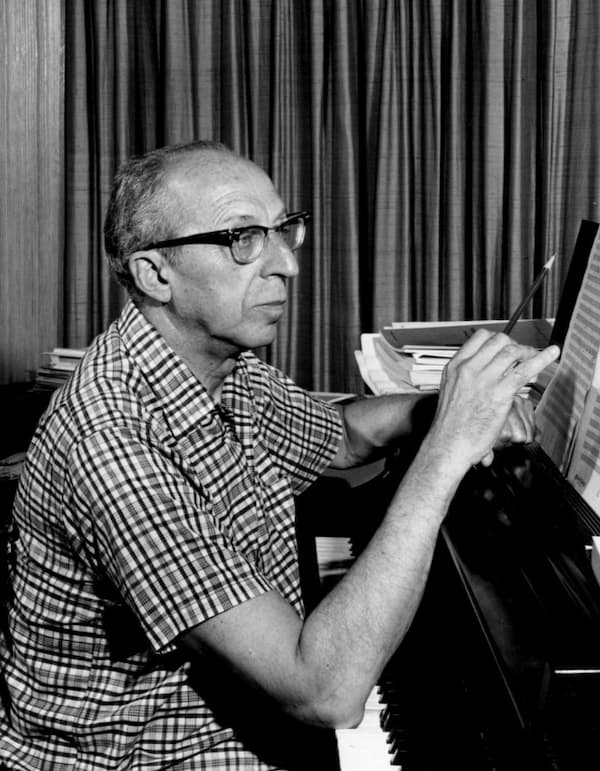
Aaron Copland, 1962
Highlights of the interview:
I think there’s perhaps too much emphasis on the inspirational side. There’s a lot that goes into composing that doesn’t have to do with inspiration.
You hope you’re inspired when you write your music, but there’s no guarantee that you are.
Composers have to live, and the principle that every time a piece of theirs is played for profit. That’s the important two words: for profit. They have a right to collect a performance fee!
Pieces sound different when they’re played before an audience than when you stay home and play it for yourself at the piano. They seem longer or shorter, tougher or easier. You’re not sure exactly how it seems at home. You have to hear it in live performance before a live audience in order, really, to test its potentialities.
Find out how Aaron Copland got his start.
Elliott Carter (1908–2012)
Elliott Carter was known for his brainy, multilayered works that even the most talented performers found demanding.
He didn’t hit his creative stride until his forties. From there, he kept composing well past the age of 100, making him one of the oldest composers in classical music history.
He earned two Pulitzer Prizes and became a vital voice in the field of contemporary music.
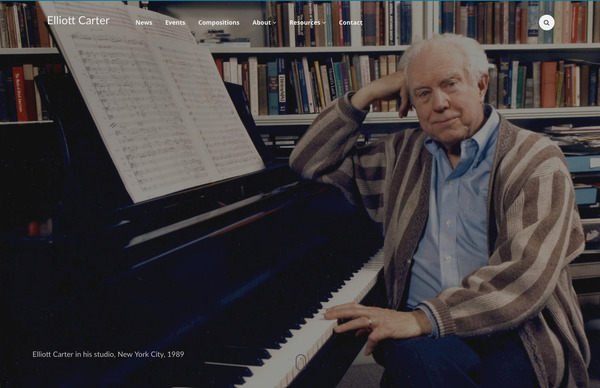
Elliott Carter
Highlights of the interview with Alisa Weilerstein:
What a pretty dress!
When my wife and I were in Japan, we went to the moss garden in Kyoto, and the moss garden had many streams of water to keep the moss alive, and it had little bamboo tubes, and they would fill up, and then when they were filled, they would turn over, and there would be a loud snap! And I put that into the concerto.
You’re holding the notes a little long. You’re not going to have any silences later; you’d better hold them now!
Remember…that the silence is really important.
Check out our overview of Elliott Carter’s hundred-year-long musical life.
Samuel Barber (1910–1981)
Samuel Barber wrote some of the most outwardly emotional music of the twentieth century, including his famous Adagio for Strings, which has since become a de facto national elegy. The work – championed by conductor Arturo Toscanini – helped shoot him to stardom at an early age.
Throughout his career, he avoided an avant-garde style, preferring a more conservative romantic style.
Barber was the partner of composer Gian Carlo Menotti. Together, the two men helped to shape mid-century American opera and classical music.
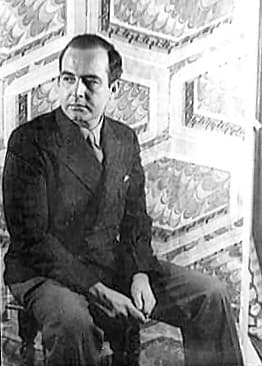
Samuel Barber
Highlights of the interview:
Interviewer: Are there certain works of yours that just haven’t been given the attention?
Barber: I would like to have records of my songs. A record of my songs. All my songs. There is none. And that’s odd, because they’re sung a lot. Let me see, what else can I think of to complain about? Very little. Very little.
I’d sent the scores [for Adagio for Strings] to [Toscanini], and I had no answer to them. A chauffeur brought them back, which was not a good sign. And Mr. Toscanini left for Italy. And I remember I was going over to see him at the island where he lived; I knew him a little bit. And then I decided I wouldn’t go, because I was annoyed that he had never even given me an answer. And I went over with Menotti. And at the end, Toscanini said to Menotti, “Where’s your friend Barber?” “Well, he’s not feeling very well today,” said Gian Carlo. And Toscanini said, “I don’t believe that. He’s mad at me. Tell him not to be mad. I’m not going to play one of his pieces; I’m going to play both.” So that was very good news.
The text means a great deal to me. And I read lots of poetry anyway. So I go through tons and tons of poems that could possibly be songs. It’s very hard to find them, and not easy to be found.
Find out how exactly Samuel Barber’s Adagio for Strings turned into his flagship composition.
Gian Carlo Menotti (1911–2007)
Gian Carlo Menotti was a master of drama, known for operas like The Consul and Amahl and the Night Visitors.
Born in Italy but a longtime American resident, his opera Amahl and the Night Visitors became the first opera ever televised in the United States. He also wrote the libretti to Barber’s operas Vanessa and Antony and Cleopatra.
He founded both the Spoleto Festival in Italy and its twin in America.
Even after the breakup of their romantic relationship, Menotti promoted and defended Barber’s music, as he does in this interview.
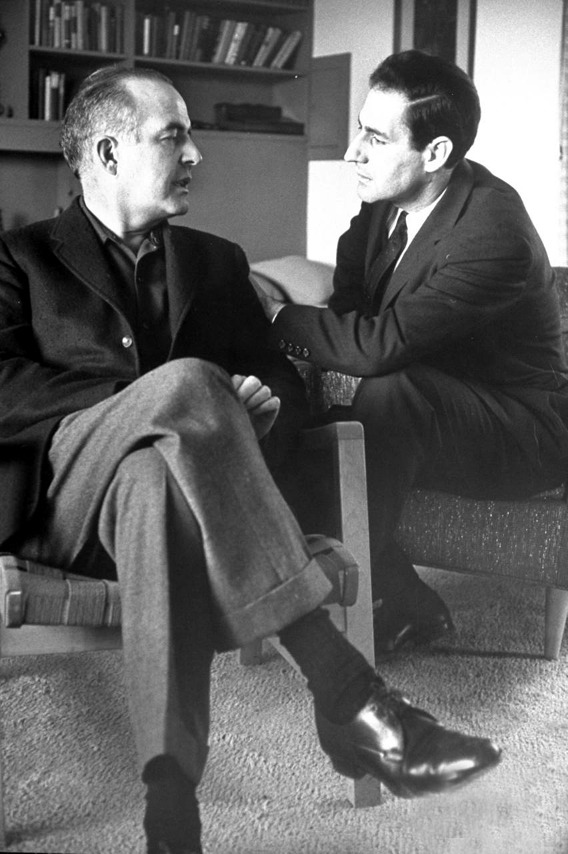
Samuel Barber and Gian Carlo Menotti
Highlights from the interview:
I arrived at the Curtis Institute when I was sixteen. I knew very few words of English; I spoke French and Italian.
When I met my teacher, Rosario Scalero, I told him that I was quite frightened to be all alone in Philadelphia in a foreign country. It was my first time in America. And Scaro said, “Well, you know, there is another composition student here. He is only one year older than you are, and he does speak French and a little bit of Italian, so why don’t you become friends?”
So he introduced us to each other, and so I spoke French with Sam. For about two years, we spoke only French. And for me it was a marvelous meeting, not only because I immediately liked him and we became very intimate friends, but also because in a certain way Sam was also one of my composition teachers…
When one says that his music is conservative… You know, all these condescending critics: “oh, it was good, but it was very conservative music.” Yes, it is, in the sense that it’s music that has to be conserved, and it will be conserved; it is here to stay.
Many other exciting experiments have gone by, but Sam’s music now, it’s part of the American heritage… I think it will live on.
Find out why Menotti owed his best-known work to a painting.
John Cage (1912–1992)
John Cage redefined what music could be.
Best known for his piece 4’33”, during which the performer doesn’t play a single note, Cage challenged audiences to think in new ways about both sound and music.
A philosopher, provocateur, and pioneer of chance-based composition, he turned randomness, everyday objects, and even mushrooms into artistic statements.
This interview with 21-year-old journalist Jonathan Cott is noteworthy for the host’s challenging, almost antagonistic line of questioning.
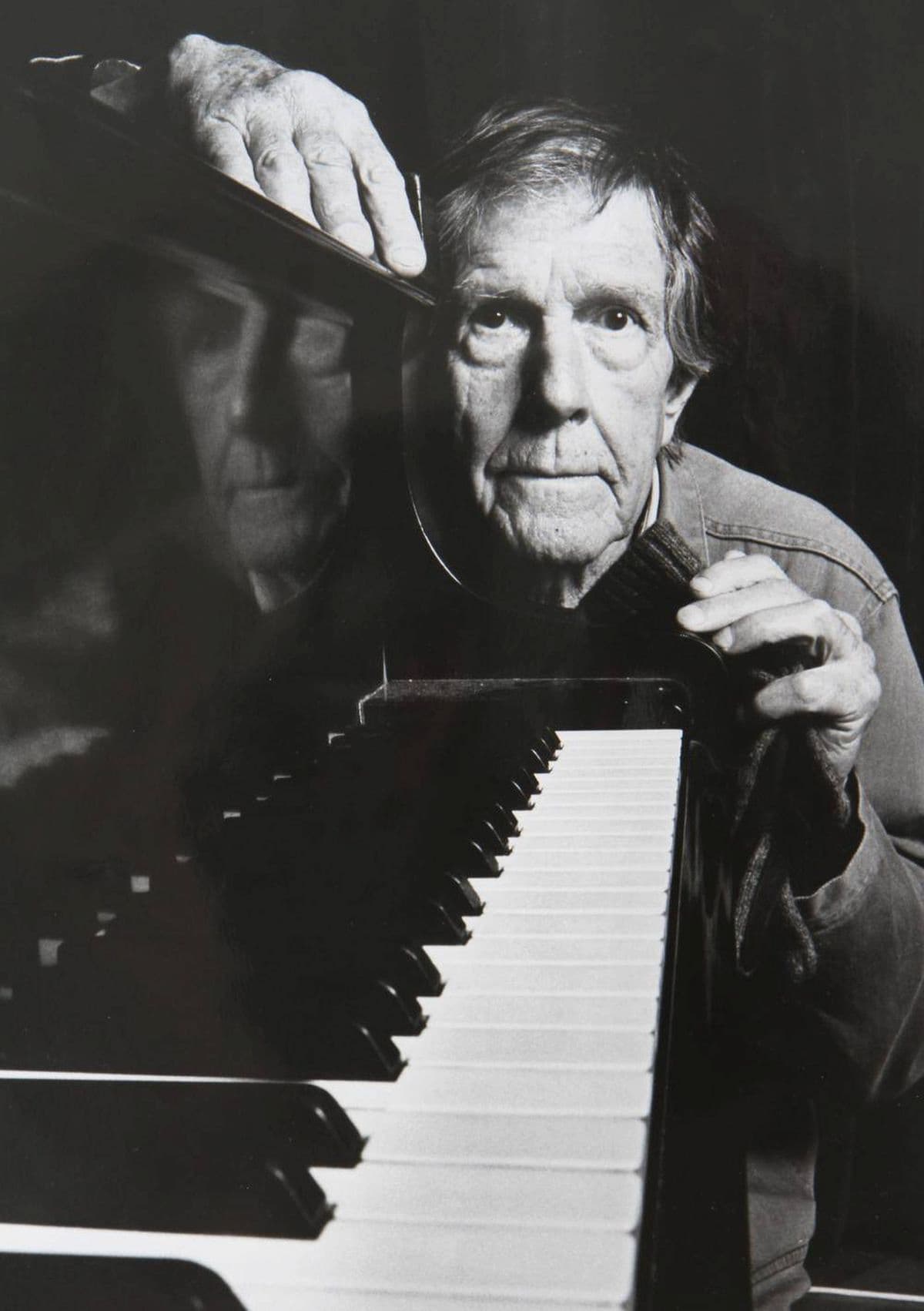
John Cage
Highlights of the interview:
It seems to me that we are all moving in many directions at the present time, and that each one who is conscientious in his work and in his life must answer for himself the question why he does what he does.
My responsibility is not to have something to say, but rather first of all to sober and quiet my mind, making me susceptible to divine influences, and second, through my music, to perhaps let that happen for other people.
I’m working with disorganisation. I’m not making objects; I’m involved in showing processes.
Tranquility is largely missing from the enjoyment of so-called classical European music because of its constantly moving toward climaxes.
For me, the basic musical experience is the absence of music. Let me clarify that statement. I mean to say that wherever anyone is, if he simply listens to ambient sounds, disorganized as they are, in his environment, not…moving in a linear fashion, from one sound to another, but coming from the total space around one wherever he is, this experience of sound that is available to everyone is, for me, the basic music which I simply interrupt when I put sounds into it.
Intrigued? Want to learn more? Here’s our beginners’ guide to John Cage.
Leonard Bernstein (1918–1990)
Leonard Bernstein was a musical whirlwind: musical composer, symphonic composer, conductor, music director, pianist, educator, and TV star.
He wrote in a variety of genres, from symphonies to West Side Story, and was the first American-born conductor to lead a major international orchestra.
Whether he was on the podium or in front of a chalkboard, Bernstein brought music to life in a way that was urgent and unforgettable.
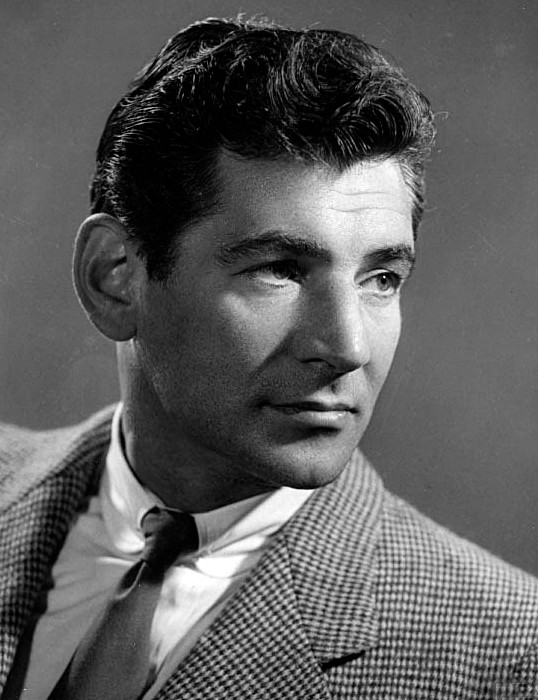
Leonard Bernstein, 1950s
Highlights from the interview:
A certain other member of the class, a boy from Hartford, Connecticut, bought a gun and ammunition with every intention of shooting [conductor Fritz] Reiner and me. And the only way we – he just went ape – he went out of his mind because he thought Reiner favoured me and disfavoured him.
Anyway, I’m very happy I studied with Vengerova, as she raised hell with me and she made me listen to what I was doing at the piano, which nobody had ever made me do. She said, “You wouldn’t dream of letting your orchestra play the way you just played. Do you realise what you just did? If that were an orchestra, you would stop immediately and correct it. Banging the left hand like that and not letting the other line come out. How dare you? Who do you think you are? You have to listen when you play.” She was a tyrant, and she taught me to listen.
I was friends with almost every conductor then, and that was quite a source of pride for me.
Of course, I was an assistant for Rodziński, who had a tremendous flair for conducting. A really remarkable colouristic sense. But he was not a great musician, and was also quite mad and paranoid and tried to kill me, and that’s a whole other story I won’t even bother to tell you.
In this article, we looked at the ten most frequently asked questions about Leonard Bernstein…and answered them.
Conclusion
We hope you enjoyed these interviews with some of the great American composers! Which composer is your favourite, and whose interview did you enjoy the most?
For more of the best in classical music, sign up for our E-Newsletter