The Christian celebration of Easter returns once again. This particular holiday is of central importance to the Christian faith. It’s the culmination of the Passion of Christ, which commemorates the Last Supper, and also the crucifixion and death of Jesus.
It’s all about the promise of eternal life, as Jesus rose from the grave on Resurrection Sunday. However, it’s not all life and death as Easter is also a joyous time celebrated with some delightful customs.
There are a large number of traditional Easter games that involve eggs, from rolling and hunting to tapping and dancing. Preparing, decorating, and colouring Easter eggs is a popular tradition, and the holiday is associated with delicious Easter foods.

Easter combines solemn reflection and exuberant hope, and the Easter story has been a profound source of inspiration. Choral music has produced some of the most powerful and moving expressions of the message of hope and new life.
With Easter 2026 just around the corner, let us turn to some of the greatest choral works for the Easter season and experience magnificent music that has inspired believers and music lovers for centuries.
Johann Sebastian Bach: St John Passion, BWV 245 “Herr, unser Herrscher”
Splendour and Sorrow
For me, this blog on the great choral works for the Easter Season is very easy to write. Because, when it comes to rousing choral music, Johann Sebastian Bach is the beginning and the end.
Of all the famous compositions from the pen of Johann Sebastian Bach, the St John and St Matthew Passions are truly some of the most remarkable masterpieces of religious music ever written. In these two powerful settings, Bach details the last days of Christ’s life using solo voices, double orchestra, and double chorus.
The St John Passion is more philosophical in nature, as the music explores the theological dimensions of the text. The text can tell the story on its own, but Bach adds multiple layers of musical meaning, allowing the music to be enjoyed on several levels.
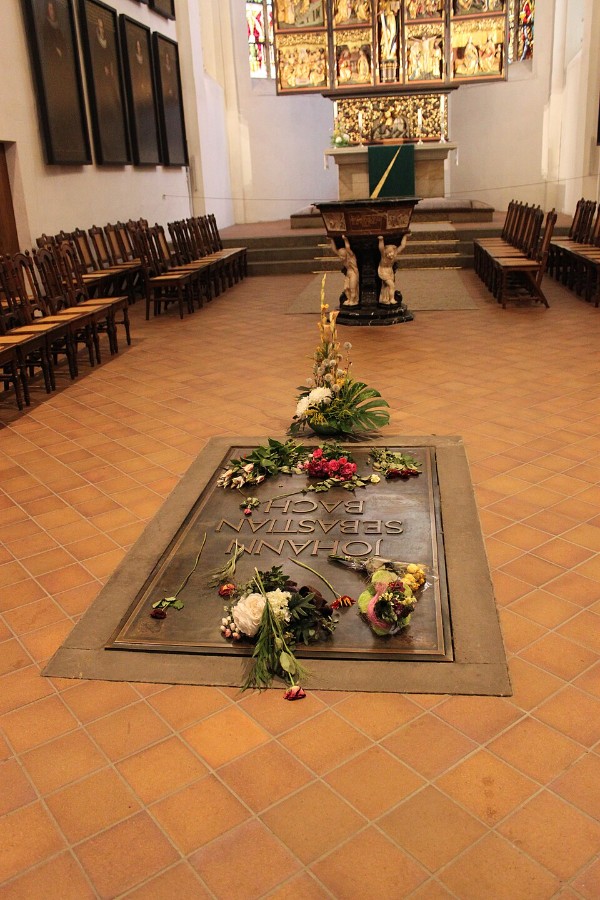
Grave of J.S. Bach, Leipzig
Composed in 1724 for Good Friday services in Leipzig, the opening chorus of the St. John Passion erupts with tempestuous energy. One of Bach’s most dramatic and emotionally charged works, it features swirling orchestral textures and urgent vocal lines that beautifully capture the profound reverence of the Passion narrative.
Felix Mendelssohn: Elijah, “And then shall light break forth”
Triumphant Close
Felix Mendelssohn drew musical inspiration for his oratorios from the works of J. S. Bach and G. F. Handel. In fact, he helped to organise the first performance of Bach’s St. Matthew Passion after the composer’s death.
He also prepared editions of several oratorios composed by Handel, and in 1846, he composed his own oratorio, Elijah. The music depicts events in the life of the biblical prophet, and the choruses are the heartbeat of the work.
Mendelssohn choruses are a dynamic force, shifting from polyphonic complexity to unison powers. They embody the collective human experience. And the chorus “And then shall the light break forth,” wraps up the oratorio with a burst of triumphant praise.
It radiates joy and confidence, and the soaring melody and rich harmonies signal a shift from Elijah’s personal journey to a universal message of redemption. It’s all about celebration as Mendelssohn connects the prophet’s legacy to a broader vision of divine salvation.
Orlando di Lasso: Magnum opus Musicum 1604, “Aurora Lucis rutilat”
Dawn of Resurrection
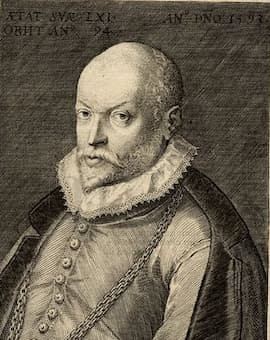
Orlando di Lasso
Let’s go back in time a little for our next selection. Orlando di Lasso (1532-1594) worked for decades at the court of the Duke of Bavaria. He was a prolific and versatile composer of the late Renaissance, composing over 2,000 works in Latin, French, Italian, and German.
After his death, his two sons collected all of their father’s motets and issued a complete works edition. The Magnum opus Musicum contains a staggering 516 motets, including a 10-voice setting of an Easter hymn.
The hymn “Aurora lucis rutilat” (Dawn reddens with light) dates from the 9th century and depicts the dawn of Easter morning and the triumph of the resurrection.
Both text and music describe the rejoicing of heaven and earth as Christ surges forth from the grave, and the wailing and moaning of hell at the same moment. The two five-voice choirs enter into this dialogue with celestial light meeting the darkness of hell.
Anton Bruckner: “Christus factus est”
Devout Vision
Anton Bruckner (1824-1896) was a schoolmaster and church organist educated at the monastery of St. Florian. He was a devoutly religious man who retained his shy demeanour throughout his life.
For many listeners, Bruckner was more than just an artist; he was a visionary. He certainly was one of the most innovative and creative figures in the second half of the 19th century, and he is primarily remembered for his symphonies and sacred compositions.
Bruckner was an internationally acclaimed organist, but he left really no music for that instrument. However, we have about 20 short choral pieces that express his devout Roman Catholicism.
The text for “Christus factus est” is used during Mass on Maundy Thursday. The motet begins quietly and mysteriously, growing towards a fortissimo climax on the words “a name which is above all names” when God exalts his son. The ending, however, is one of serene quietness.
Johann Sebastian Bach: Christ lag in Todesbanden, BWV 625 “Christ lag”
Defiant Joy
There is always space for more magic from the pen of Johann Sebastian Bach. The opening chorus of his early Cantata BWV 4, Christ Lay in Death’s Bonds, is a gripping and jubilant proclamation of Christ’s victory over death.
Based on the Easter hymn by Martin Luther, the stark yet radiant orchestration establishes a tone of both solemnity and exultation. The text celebrates the Resurrection, and Bach’s music captures this duality with a masterful blend of archaic severity and vibrant optimism.
Luther’s hymn melody is woven through the texture in long, sustained notes, serving as an anchor of faith amidst the intricate polyphony of the other voices.
The minor tonality lends a sombre, almost austere quality, reflecting the gravity of Christ’s sacrifice, but Bach infuses it with bright, major-key inflections at key moments, particularly when the text symbolises the light of the resurrection. It is a cosmic affirmation of life over death.
César Franck: Dextera Domini
Easter Glory
César Franck (1822-1890) was a child genius, and his father quickly realised that fact. When it comes to irresponsible and ambitious parents marketing their children, Nicholas-Joseph was especially aggressive.
However, Franck had always wanted to become an organist, and he was eventually appointed at the church of Sainte-Clotilde. His improvisations became legendary, and his organ compositions stand at the apex of the Romantic organ repertoire.
He also composed several miscellaneous pieces for his choir, and “Dextera Domini” is probably his finest. Composed specifically for Easter Sunday 1871, Franck repeated performances every Easter thereafter.
It’s a beautiful work originally missing the alto part, as it was scored for three-part chorus, organ, and double bass. The most commonly performed arrangement comes from American organist Leo Sowerby of Chicago, who excluded the double bass and included an editorial alto part.
George Frideric Handel: Messiah, “Hallelujah”
Bursting with Energy
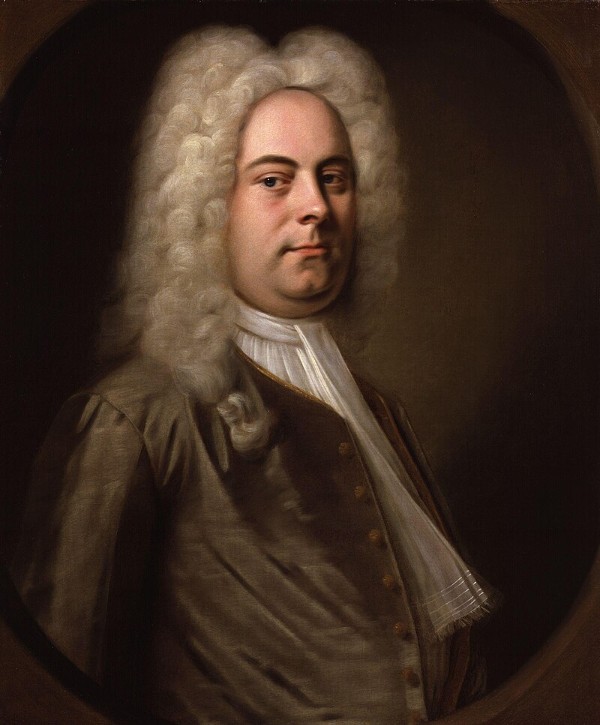
Balthasar Denner: George Frideric Handel, ca 1726–1728 (London: National Portrait Gallery)
You didn’t think that I was going to forget one of the most famous choruses for the Easter season. Not a chance, because when it comes to writing choruses that are bold, brilliant, and bursting with emotion, nobody does it quite like George Frideric Handel.
Handel’s choruses have an unparalleled ability to make you feel like you are part of something bigger than yourself. His powerful, uplifting harmonies and thrilling counterpoint fill concert halls and cathedrals with a vibrant energy that seems to lift both heart and soul.
Handel had a definite gift for creating choruses that are both majestic and moving. They can transport you from a moment of quiet contemplation to a full-on celebration in a heartbeat.
There is no prize for guessing the most popular Handel chorus ever. Of course, it’s the “Hallelujah” from the oratorio Messiah. It is impossible not to feel completely swept up in the energy of this chorus. It is like a jubilant explosion of sound that fills the air with divine energy.
Ralph Vaughan Williams: Five Mystical Songs, “Easter”
Mystical Easter
Ralph Vaughan Williams (1872-1958) was the son of a vicar who struggled with his faith. He served in WWI in the Royal Army Medical Corps, and the traumatic experiences as a stretcher-bearer and artilleryman profoundly shaped his faith and music.
A declared atheist, he later mellowed into what his wife described as a “cheerful agnostic.”
Nevertheless, among the many poems he set to music were a number of Anglican hymns, including poems by George Herbert, an ordained priest in the Church of England.
The Five Mystical Songs date from 1911, and are scored for a four-part choir, baritone soloist and orchestra. The first two settings specifically celebrate Easter Sunday and the resurrection.
The baritone soloist takes a prominent role, and like Herbert’s simple verse, the songs are rather direct. The music, however, has the same intrinsic spirituality as the original text. The lute and its music are used as a metaphor, and here, as elsewhere, Vaughan Williams provides a rather personal meditation.
John Taverner: Dum transisset Sabbatum
Easter Dawn
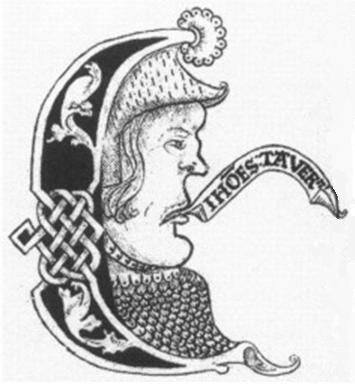
John Taverner
Let’s go back in time once more and discover a hauntingly beautiful Easter motet by John Taverner (1490-1545). Don’t confuse him with the 20th-century composer, Sir John Tavener, a fellow student of John Rutter.
We don’t have a lot of factual information on the older Taverner, but his motet “When the Sabbath had passed” describes the central moment of the Christian story. Mary Magdalene and “the other Mary” come to the tomb on Easter Sunday.
They bring spices to anoint the body of Jesus, and find the stone rolled away and the tomb empty. The music is built around a cantus firmus, a plainchant melody delivered in long notes in the tenor. This was a common technique of the period, and the central truth of the Easter message literally underpins the entire piece.
The Operatic Passion
Today, it may be hard to believe, but Johann Sebastian Bach had a rather difficult time securing the position of Kantor at St. Thomas Church in Leipzig. In the event, for the next 27 years, Bach was responsible for the education of several hundred boys in the St. Thomas School.
He was also in charge of music at the town’s four churches, St. Nicolas, St. Thomas, St. Matthew and St. Peter. Bach was cautioned to make compositions that were not theatrical, not last too long, and be of such a nature as not to make an operatic impression.
Of course, Bach happily ignored all instructions and left us the magnificent and operatic St Matthew Passion, a work that reflects on the events from the perspective of a humble and faithful listener.
In the opening chorus, Bach really makes the text and the story come alive. Since the Passions are sacred oratorios, they don’t have costumes or scenery, and there is no action. It’s compositionally complex and triggers a wide range of profound emotional responses. It certainly is one of the single greatest masterpieces of Western sacred music.
You don’t have to be religious to stand in awe of these great choral works for the Easter season. These masterpieces continue to lift hearts and souls across the centuries, and as we celebrate Easter 2026, let these choruses remind us of the enduring power of hope.
For more of the best in classical music, sign up for our E-Newsletter