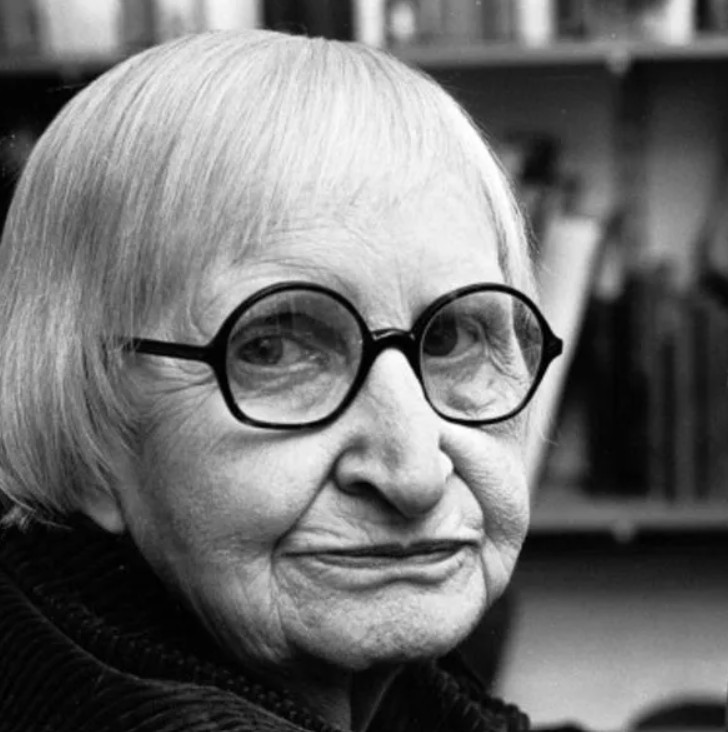
She may be obscure today, but Eunice Norton was one of the most fascinating pianists of the 1920s and 1930s: a woman who came from the American Midwest, who made an innovative and international career for herself.
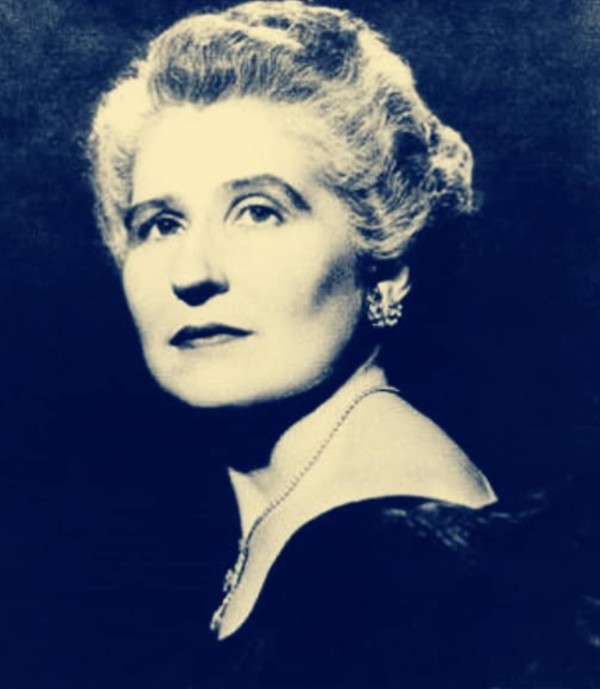
Eunice Norton
Today, we’re looking at how she became a famous pianist, the many great musicians she worked with, the reasons why she’s been so forgotten…and where you can find all of her brilliant recordings online for free.
Eunice Norton’s Background and Early Musical Life
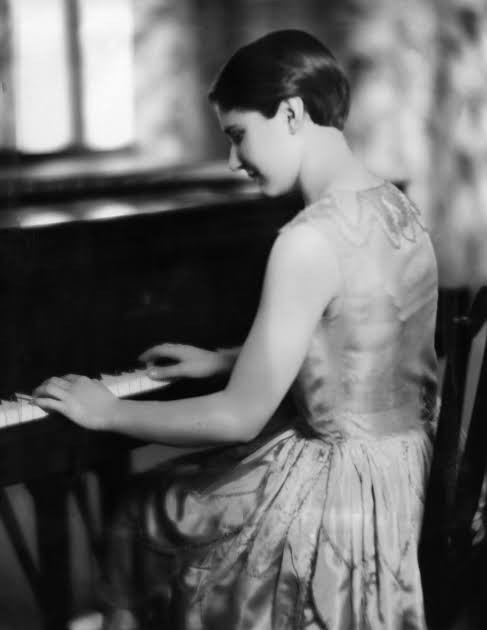
Eunice Norton
Eunice Norton was born on 30 June 1908 in Minneapolis, Minnesota, to a member of the Minnesota State Legislature and his amateur musician wife.
Eunice was attracted to the piano from an early age. In a late-in-life interview, she said, “I climbed up on the chair that was in front of the piano in my home and just picked out my nursery songs.”
“My mother,” she said, “had had some musical training, not very much, but enough to teach a child, and she was my first teacher.”
Around her sixth birthday, Mrs Norton sought out a new instructor for her daughter. In Eunice’s words:
Fortunately, that teacher immediately started me on Bach‘s inventions. And I think that was the best thing and probably the only really good thing that she did. But I was wedded to Bach from that moment, even as a small child.
There’s a story in Eunice’s obituary that during her childhood in Minneapolis, she was “assigned a Czerny exercise, and she came back the next week and had memorised the whole book, and played it at a very fast speed.”
Eunice Norton’s recording of the Prelude & Fugue in C from the Well-Tempered Clavier
Meeting Professor William Lindsay
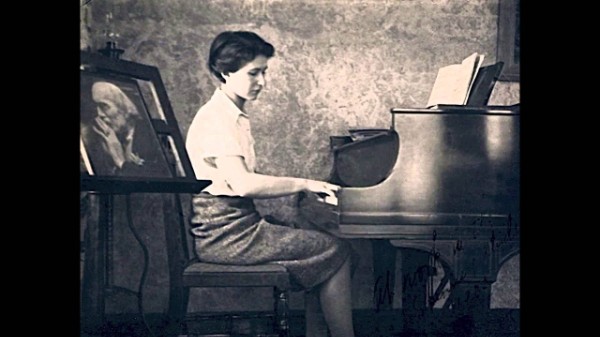
Eunice Norton
She soon outstripped the teaching capabilities of her childhood teacher, so her mother contacted a Scottish professor named William Lindsay, who taught at the University of Minnesota.
At first, Lindsay was hesitant to take her on because he had never taught a child before. But her mother kept asking him, and after auditioning Eunice in the Norton family home (“I wouldn’t ask a child to play on a strange piano,” Lindsay said), he accepted her into his studio. He refused to take payment to teach her.
Norton studied at the University of Minnesota between 1922 and 1924.
Heading to London
Inevitably, the family began discussing where she would go to college. Lindsay’s German teacher was “too cruel”, he said, so he recommended another teacher, Tobias Matthay, who was based out of London.
Matthay had taught other stars of the twentieth century, including York Bowen, Eileen Joyce, and Dame Myra Hess.
Lindsay introduced his prize pupil to Hess when she came through Minneapolis to perform with the Minneapolis Symphony. She agreed wholeheartedly that the talented teenager should be sent to Matthay.
Myra Hess playing Bach
Norton’s mother had never left the state of Minnesota before, but she said goodbye to her husband, packed the family trunks and set off to London with her daughter.
When they arrived, they met with William Lindsay, who came to introduce them to Matthay. Lindsay took them to a club. Eunice later remembered:
And in the club, all the women were smoking, and my mother was just horrified, and she said, “What have I brought Eunice into?” Anyway. Didn’t harm me.
Working with Tobias Matthay
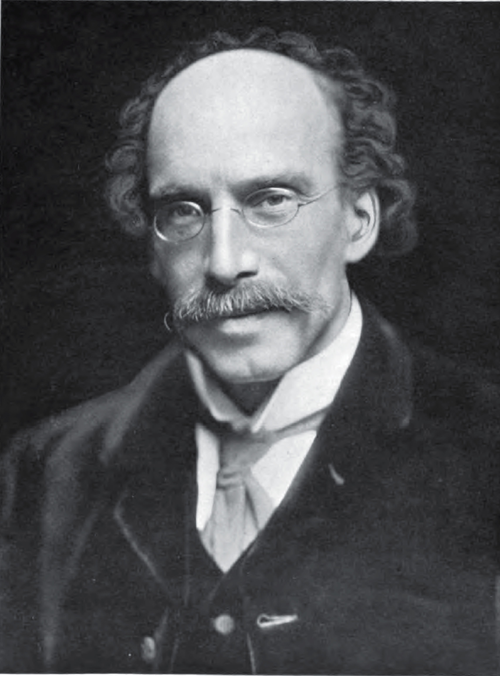
Tobias Matthay
Norton loved working with Matthay. He worked with her on practical issues like addressing the rotation of her hand. They also delved into the science of key resistance.
Norton went to a private school to finish her extra-musical education, choosing to focus on subjects that would complement her dream career of being a soloist.
Every morning, she would wake up to a freezing apartment and don three sweaters. Only as the fire burned in the fireplace would it gradually warm the room enough for her to start taking each layer off one by one as she worked.
She later remembered:
It was all for a career. I was very career-oriented. Terribly ambitious… I was given all this encouragement, naturally, to be ambitious. And I worked tremendously. Just tremendously.
Eunice Norton giving a lecture about studying with Tobias Matthay
Transitioning from a Student to a Professional
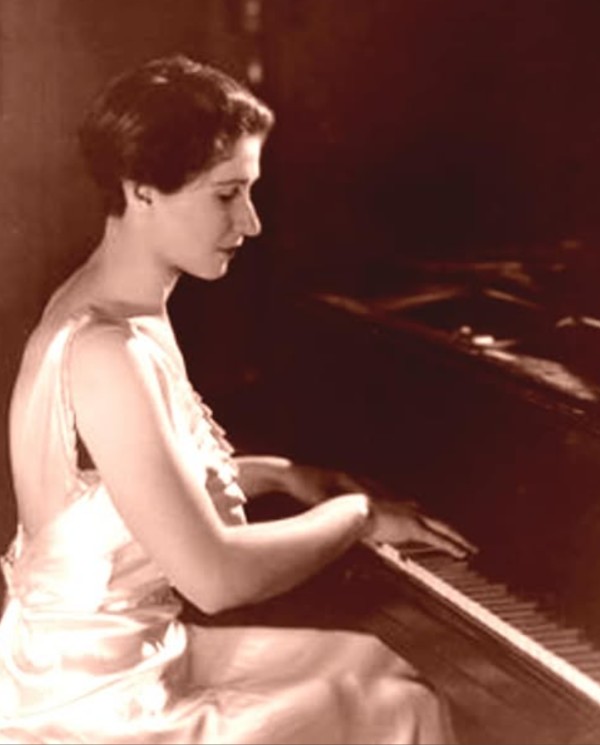
Eunice Norton
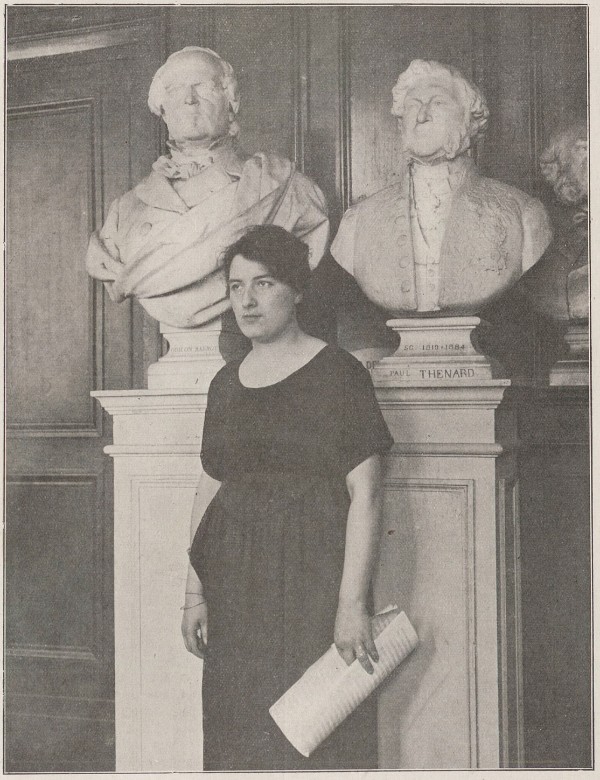
Her first appearance with a major English orchestra, two years into her London studies, was with the Queen’s Hall Symphony Orchestra. She went on tour with them. She also gave multiple solo recitals at Town Hall and Wigmore Hall.
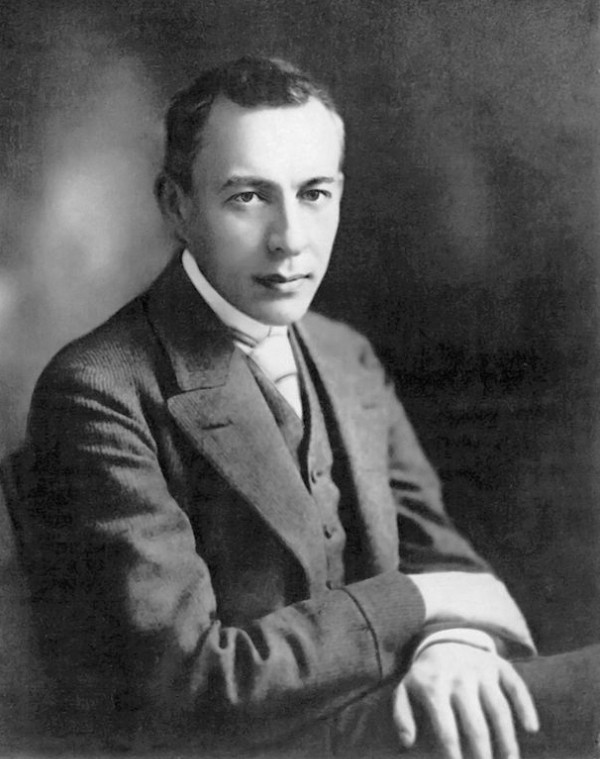
When she wasn’t studying or playing, she and her mother would go out together and attend all kinds of performances: everything from John Barrymore appearing in Hamlet to Rachmaninoff playing his own works.
“That was part of my big education,” she later acknowledged.
It was a very important part of my development, because when I came from Minneapolis, of course, I only knew the pieces that…I had actually played. So this was a tremendous thing.
And there were artists who played, who influenced me in various ways.
For example, of course, Rachmaninoff played often. And I really learned to play the Chopin waltzes from Rachmaninoff. He just had the right touch for those waltzes. And I listened and listened and copied, and I’ve always loved to play the waltzes, as a matter of fact.
A 1919 recording of Rachmaninoff playing Chopin’s Waltz in A-flat-major
Eunice Norton playing Chopin’s Waltz in A-flat-major
An International Career
In 1927, at the age of nineteen, Eunice won the Chappell Gold Medal and the London Bach Prize.
She then toured Austria, France, the Netherlands, and Germany. In Berlin, musicologist Alfred Einstein wrote, “Her Bach is played as Bach would have wished to hear it.”
She also began to tour beyond continental Europe, making appearances in Moscow and St. Petersburg.
Next came a tour through her homeland, where she appeared with the great American orchestras in New York, Pennsylvania, Chicago, and, of course, Minneapolis. Her career was on the rise.
The Revelation of Artur Schnabel
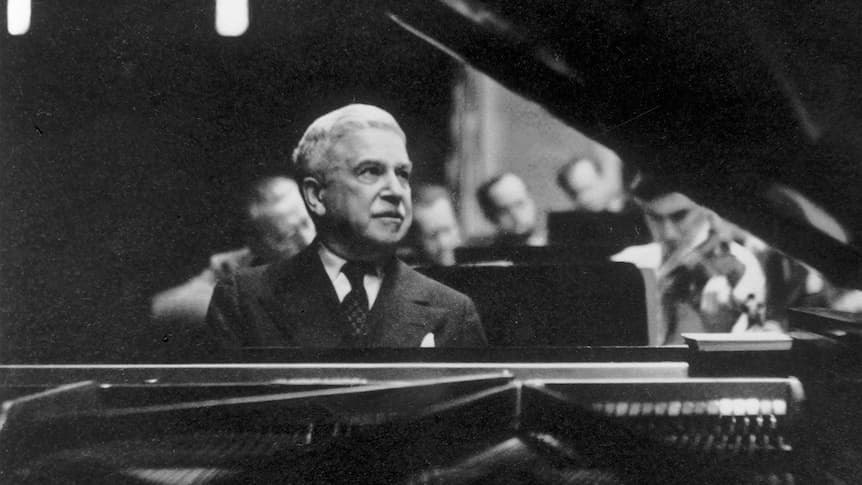
Artur Schnabel
In 1932, the year she turned 24, she heard pianist Artur Schnabel perform Beethoven.
When I heard Schnabel for the first time in London, where I’d been out of the United States for nearly eight years, I heard him play an all-Beethoven concert in a very small hall.
She was so impressed that she began dreaming of studying with him.
However, she was heartbroken to say goodbye to Matthay, who had been so crucial to her development.
Around this time, her former teacher, Professor Lindsay, came to visit her. He pointed out, “I didn’t expect you to stay with Matthay the rest of your life!” So she made the switch from Matthay to Schnabel.
Studying with Schnabel
In the 1930s, she began studying with Schnabel in Berlin during the summers. She continued until they – and many others – fled to Italy as the political situation deteriorated in Germany.
At the time, Schnabel was in the middle of a groundbreaking project to record all thirty-two of Beethoven’s sonatas. Norton was the beneficiary of the deep thought Schnabel was putting into these works at the time.
“I had to learn how to play Beethoven that way,” she later said.
Artur Schnabel playing Beethoven’s Piano Sonata No. 28
He changed her musical tastes to prioritise Austro-German composers like Schubert and Beethoven in her repertoire.
Schnabel was fond of his Minnesotan pupil. She later reminisced:
He didn’t force me to do artificial things to express: in other words, to distort the rhythms and indulge in what Schnabel called decadence. And that was marvelous. I’ll tell you something – you can cut it out of the tape, because I don’t like saying some things, but he did announce to the class… He said, “I have never heard Eunice play a decadent tone.”
Eunice Norton playing Beethoven’s Piano Sonata No. 28
Championing Modern Composers
Norton didn’t stop with Beethoven. She also played the works of then-modern composers, such as Ravel, Stravinsky, Bartók, and Copland. She even played Copland’s devilishly difficult Variations for the composer himself in New York.
In December 1932, at the age of 24, she made an impressive Hindemith recording with Leopold Stokowski, which he initially refused to release. Norton believed this was because Stokowski, a notorious perfectionist, was upset with the recorded balance between soloist and orchestra.
Luckily for posterity, the recording still exists. (“I have a copy,” she told her interviewer in the 1980s. “You’d get a kick out of hearing that, probably.”)
As for Hindemith, he was, she remembered, “very strict, extremely strict… But he was very, very nice to me, and he showed me how to play his pieces.”
Click here to watch Eunice Norton’s performance of the final movement of Hindemith’s Kammermusik, No. 2 (op. 36, no. 1)
Eloping – And Being Dropped by Her Management
In 1934, Eunice eloped with a British chemist named Bernard Lewis after an eight-year courtship.
He had heard her nearly a decade earlier in concert in Minneapolis, written a concert review of her performance, and then followed her from concert to concert. “He pursued me from that time on,” she later said.
She would go on to have two children with him.
In a tragic loss for twentieth-century music, Columbia Artists decided not to renew their contract with her after her marriage. It was believed that a married mother could not be faithful to both her family and her career.
Luckily for Eunice, her husband was fascinated by recording technology. He created a home studio for his wife so she could continue to record, even if the results were never released on a label. It wasn’t the same as having the backing and support of a record label, but it was certainly better than nothing.
A New Life in Pittsburgh
In 1942, Lewis took a job with the U.S. Bureau of Mines and relocated to Pittsburgh, Pennsylvania, while taking auxiliary business trips to Washington, DC, to attend to professional obligations at the Pentagon during the war. Eunice followed him.
That same year, she made the first recording of the Goldberg Variations on piano. (Claudio Arrau made one, as well, but it wasn’t released until 1988.)
Eunice Norton’s 1942 recording of the Goldberg Variations
She settled into her new hometown nicely and eventually became a fixture in Pittsburgh’s classical music scene.
Together, she and Lewis founded a chapter of the New Friends of Music, which eventually evolved into the Pittsburgh Chamber Music Society.
She also began solidifying her relationship with the Pittsburgh Symphony. In fact, she gave the first Pittsburgh performance of Brahms’s first piano concerto, under the direction of Fritz Reiner.
(She had been hesitant to even learn the massive concerto in the first place because she didn’t think audiences would want to hear a woman playing the piece. Schnabel bellowed back at her, “Nonsense! Music knows no sex! You go right home and learn the piece.” She did.)
A Brilliant Career
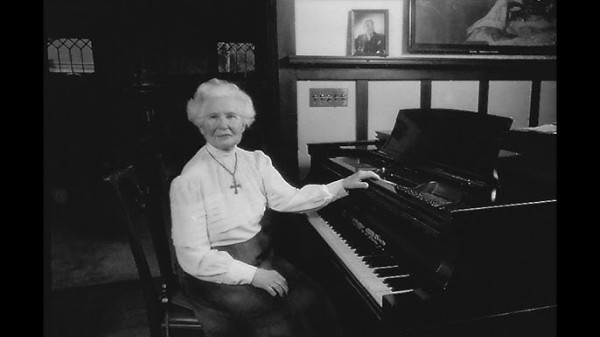
Eunice Norton
Although Pittsburgh remained her home base for years to come, she did continue her career even after her marriage, proving Columbia very wrong.
For instance, she became the first person, male or female, to play Bach’s Goldberg Variations on an American radio broadcast.
In addition to performing, she also loved teaching. In the 1980s, she gave a series of lectures about her two most famous teachers: Schnabel and Matthay.
Just like her mentor Schnabel, she played the cycle of Beethoven’s thirty-two piano sonatas. She did this not just once, but three times. The final time was to celebrate her eightieth birthday. All of those performances were recorded.
The first part of a Eunice Norton lecture about studying with Schnabel
She gave her last full-length recital in 1991: an all-Mozart program.
Her final performance took place in 1992; her final masterclass was held in 1995; and she made her final recording in 1996. When she retired from the stage, it was the end of a career that had spanned most of the twentieth century.
Eunice Norton’s Death and Legacy
Eunice’s husband, Bernard Lewis, died in 1993.
In 2002, in her mid-nineties, she decided she wanted a change of scenery, so she moved to Vienna, the home of the composers she loved best.
She died there in December 2005 at the age of 97.
Today, dozens of her recordings have been uploaded to YouTube, free of charge, on the eunicenortonarchive channel: https://www.youtube.com/@eunicenortonarchive
In one of her interviews from the 1980s, she talks to her interviewer about tempo. Her words on the subject are fitting ones to leave off on, perfectly capturing her boundless energy and passion for the piano:
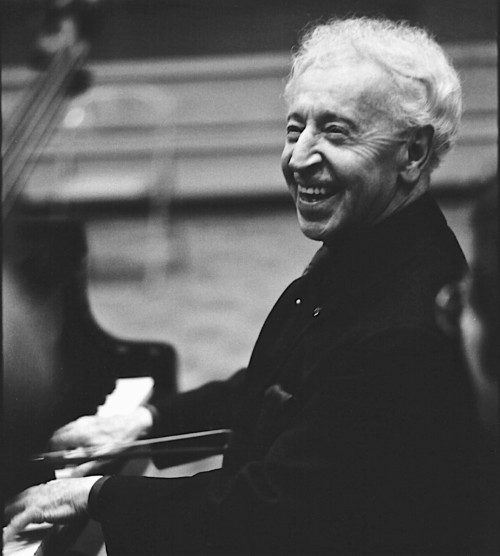
I have a great terror, of as I get old, playing slow. So I’m very glad I have those tempo marks [that I made in my music] to assure myself that I haven’t slowed down in tempo. It can happen. Serkin’s playing very slow now. And I noticed that Rubinstein, the last time I heard him on the TV, very much slower. And cautious.
Well, when I have to be cautious…
You know what Schnabel said. Dare everything. Safety last. So you have to take your chances.
For more of the best in classical music, sign up for our E-Newsletter