During the nineteenth century, syphilis was rampant in Europe, and quite a few composers are believed to have had it.
The 2024 article “The Syphilis Pandemic Prior to Penicillin: Origin, Health Issues, Cultural Representation and Ethical Challenges” estimates that during the 1800s, approximately fifteen per cent of European men were infected. Plus, infections were more common in urban areas, where composers tended to live and work.
In a time before antibiotics, syphilis was more than a medical condition: it was often a death sentence. On top of that, the mercury and arsenic “cures” on offer were often just as toxic as the disease itself.
You can imagine how the mental and physical effects of infection and treatment impacted these artists’ lives and work.
Of course, diagnosing composers from centuries away with absolute certainty can be a fool’s errand. But today we’re using historians’ best judgment and looking at seven composers who either are confirmed to have had syphilis, or are widely believed to have had it…as well as how those infections shaped (and in some cases, ended) their careers.
Niccolò Paganini (1782-1840)
Paganini’s Violin Concerto No. 1, Movement 3
A native of Genoa, Italy, Niccolò Paganini was the greatest violinist of his generation…and maybe of all time.
He became famous for his demonic appearance and seemingly supernatural abilities.
However, although some people felt he was an otherworldly being, he was actually very human, and he struggled with bad health throughout his life.
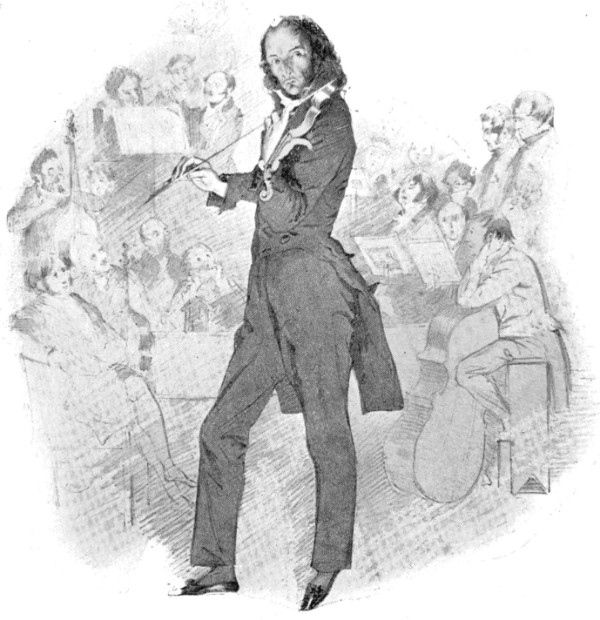
Niccolò Paganini
Modern historians believe that he had Ehlers-Danlos Syndrome or Marfan Syndrome. Either would help explain his double-jointedness, which he put to good use while reinventing violin technique.
He was diagnosed with syphilis around 1822, when he was forty. His treatment included mercury therapy and opium. That in turn led to mercury poisoning and opiate addiction.
In 1828, when he was 46, he developed necrotising osteitis of the jaw that had to be operated on.
He also developed tuberculosis, which may have contributed to his dysphonia (loss of voice).
When Paganini met with composer Hector Berlioz in 1838, his voice was so inaudible that his young son had to put his ear next to Paganini’s mouth to hear his words, then translate for Berlioz.
He died in Nice in 1840.
We wrote about the turbulent final years of Paganini, including why he was denied a Catholic burial.
Gaetano Donizetti (1797-1848)
Donizetti’s Mad Scene from Lucia de Lammermoor
Donizetti was born in Bergamo, Italy, in 1797. He became one of the most popular opera composers of his generation.
Sometime in his teens or twenties, he came down with syphilis.
In 1828, at the age of thirty-one, he married his eighteen-year-old wife Virginia. She gave birth to three babies, but all died as infants, and the first one was deformed, suggesting he’d passed the disease on.

Portrait of Gaetano Donizetti by Francesco Coghetti
Virginia’s own health deteriorated, as well, and she died young in the summer of 1837. It may have been cholera, but it might also have been a syphilitic infection.
Donizetti eventually began exhibiting a host of alarming symptoms: fevers, headaches, paralysis, speechlessness, incontinence, and more.
He was only formally diagnosed in August 1845. His doctor believed he was no longer able to make sane decisions for himself, and so he was tricked and involuntarily confined in 1846.
It was a darkly ironic fate for someone who had written the most famous “mad scene” in operatic history.
He never lived on his own again and died in 1848.
Franz Schubert (1797-1828)
Schubert’s String Quartet No. 14, “Death and the Maiden”
Franz Schubert was born in Vienna in 1797. He became infected with syphilis in late 1822, when he was in his mid-twenties.
He first noticed symptoms in early 1823, when he began suffering from particularly acute feelings of depression, as well as a red rash and hair loss.
As time passed, and as he got sicker and sicker, he began feeling increasingly doomed, and his compositions started turning darker.
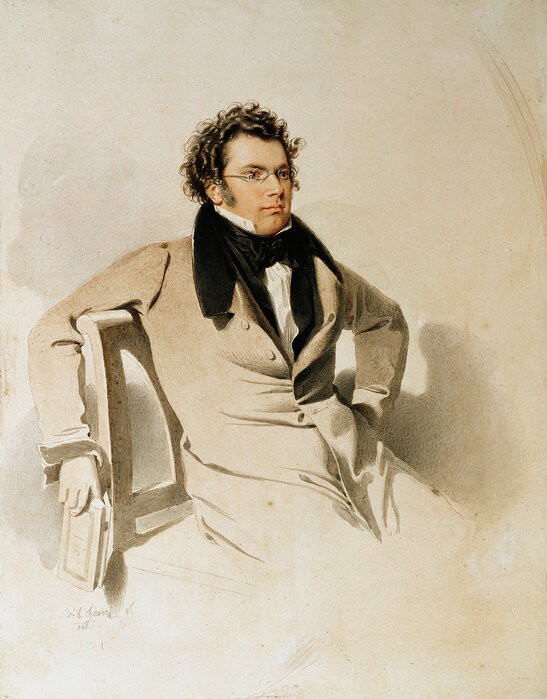
Franz Schubert
His fourteenth string quartet from 1824, nicknamed Death and the Maiden, dates from this time.
In 1828, he saw a physician who told him that the end was near. He began suffering from headaches, joint pain, and fever, and became unable to keep down food.
During the final weeks of his life, he moved in with his brother, who took care of him until he died in November 1828 at the age of thirty-one.
Historians today are split about whether he died from typhoid fever, mercury poisoning, syphilis, or some combination of all three.
Read more about how his illness impacted the composition of the “Death and the Maiden” quartet.
Robert Schumann (1810-1856)
Schumann’s Violin Concerto
Robert Schumann was born in Zwickau, Germany, in 1810, and suffered from health issues throughout his life.
By his early twenties, he was wrestling with depressive episodes interspersed with manic ones. A later note he wrote about this time of his life reads, “In 1832, I contracted syphilis and was cured with arsenic.”
If the problem was syphilis, it had actually not been cured; it had only become latent. (This might explain why he apparently never passed it on to his wife, Clara.)
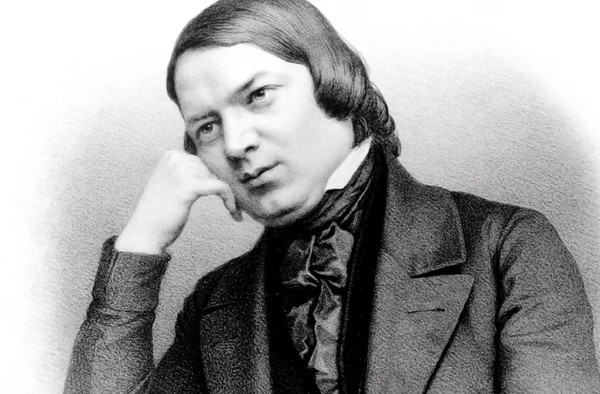
Robert Schumann
By his thirties, his symptoms were turning more physical, with his doctor in Dresden noting he was complaining of “insomnia, general weakness, auditory disturbances, tremors, and chills in the feet, to a whole range of phobias.”
In February 1854, he jumped off a bridge into the Rhine River. He was rescued and agreed to be sent away to a sanitarium. Unfortunately, his health continued to deteriorate there.
In the summer of 1856, he came down with pneumonia. His overtaxed immune system couldn’t fight the infection off, and he died that July.
During his illness and after his death, his wife, Clara, and his friends sorted through his music. One of the works they felt revealed his sickness was his violin concerto. It was suppressed until its rediscovery in the 1930s.
We wrote about Schumann’s tragic final days.
Bedřich Smetana (1824-1884)
Smetana’s String Quartet No. 1, “From My Life”
Composer Bedřich Smetana married his wife, pianist Kateřina Kolářová, in August 1849.
They had four daughters between 1851 and 1855, but by 1856, three of them had died of either tuberculosis or scarlet fever, and Kateřina had been diagnosed with tuberculosis, too. She died in April 1859. He remarried the following year.
Unfortunately, his story wasn’t going to have a happy ending. A couple of years later, he began developing hearing issues, chief among them incapacitating tinnitus.
Although he went to see countless doctors and specialists, he grew more and more deaf over the following years.
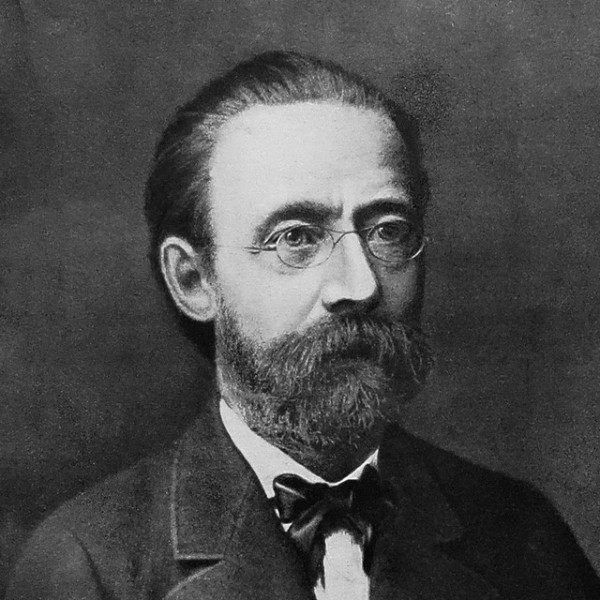
Bedřich Smetana
Day-to-day life became excruciating. In January 1875, he wrote, “If my disease is incurable, then I should prefer to be liberated from this life.”
In his first string quartet, dating from 1876, he portrayed the experience of tinnitus by using long high notes in the violin.
A few years after he wrote the quartet, he began expressing fears that he was going mad.
In the early 1880s, his symptoms grew debilitating and included hallucinations and intermittent loss of speech.
By early 1884, he began acting out violently toward his family. In late April, he was committed to an asylum. He died there a few weeks later.
The official death certificate claimed that he’d died of dementia, but his family believed it had been syphilis.
Some twentieth-century doctors took issue with this diagnosis, or whether his hearing loss was due to a syphilitic infection, but it remains a leading theory.
An autopsy was done that revealed high amounts of mercury in his remains.
Read more about how Smetana incorporated autobiography into his first string quartet, including the simulation of tinnitus.
Hugo Wolf (1860-1903)
Wolf’s “Verborgenheit”
Composer Hugo Wolf was born in present-day Slovenia in 1860.
From the beginning, two things were clear: Wolf was incredibly musically talented, and he lacked discipline, at least in part due to his depressive mood swings.
He came down with syphilis young, in his late teens, and became preoccupied with writing lied on themes of sin and suffering.
He had a few ups and downs physically and mentally, but he hit a low point in late 1891, when a combination of his depression symptoms and syphilis symptoms kept him from composing.
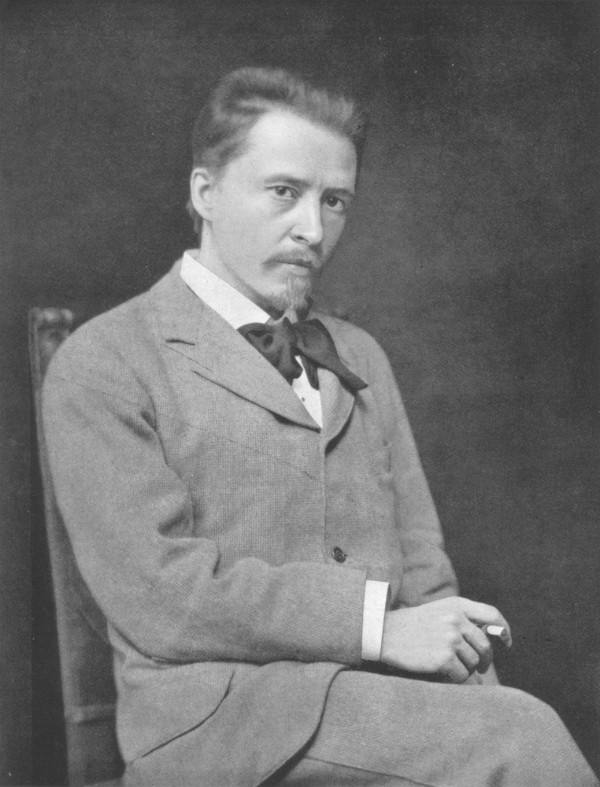
Hugo Wolf in 1902
A few years later, in 1897, he began feeling his mind deteriorating. He tried to write an opera, but only managed sixty pages before he became too ill to write.
He attempted to drown himself in 1899 but survived, and he spent the last few years of his life in an asylum before dying in 1903.
Frederick Delius (1862-1934)
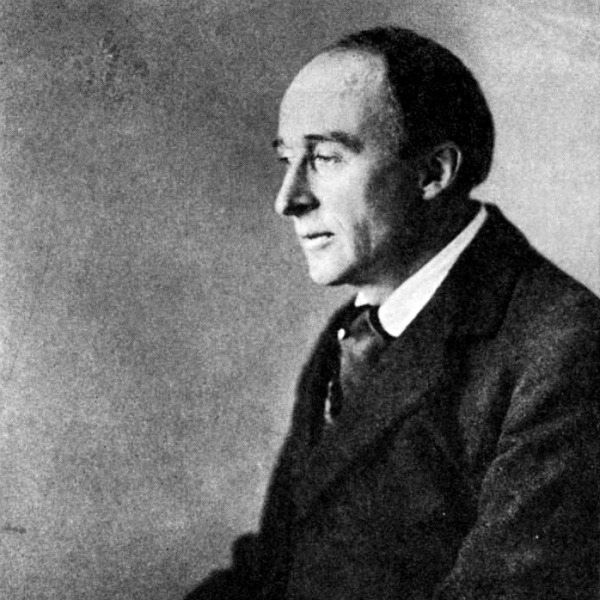
Frederick Delius
Frederick Delius was born to a British family in 1862.
As a young man, he traveled to Paris to befriend artists and soak in the bohemian lifestyle there. It is believed that his syphilitic infection originated during these years.
In 1903, at the age of 41, he married a wealthy painter named Jelka Rosen. He had a number of affairs during their marriage, but she never left him.
In 1910, syphilis symptoms began to manifest, chief among them headaches, back aches, and blurred vision.
Within a decade, he could no longer move except with a wheelchair; he was completely blind; and he was on morphine for pain.
Jelka tried her best to take care of him, but she needed help. The couple hired a composer, conductor, and pianist named Eric Fenby, who would serve as Delius’s helper as he navigated the end of his life, dealing with syphilis-related health issues.
Learn more about how Delius, Jelka, and Eric Fenby worked together in the final years of Delius’s life.
Delius’s farewell to music and to life was his setting of some poetry from Walt Whitman’s Leaves of Grass in his Songs of Farewell.
Frederick Delius: Songs of Farewell (Waynflete Singers; Southern Voices; Bournemouth Symphony Chorus; Bournemouth Symphony Orchestra; Richard Hickox, cond.)
Documentary excerpt with Eric Fenby
Conclusion
Syphilis diagnoses – and the stigma and shame surrounding them – profoundly impacted the work of many major composers…and therefore, obviously, left a mark on the history of music.
For many composers, the diagnosis impacted not only their health but also the tone, intensity, and subject matter of their work, from Schubert’s haunting reflections on mortality to Smetana’s anguished depiction of his resulting deafness.
While this music offers us a glimpse into the despair and struggle of a pre-antibiotics syphilis diagnosis, what can’t be seen as clearly is, of course, all of the additional music that the disease deprived us of.
It’s a sad truth that without the scourge of syphilis and its deadly treatments, classical music history would look very different today.
For more of the best in classical music, sign up for our E-Newsletter