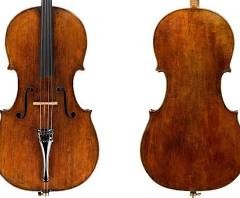
Cellists and luthiers take note! The Liang Yi Museum of Hong Kong has just unveiled the world’s first huanghuali cello, live in their museum this January. It’s a collaboration of a landmark exhibition between the museum, the leading instrument dealer J&A Beare of London, and acclaimed luthier Robert Brewer Young. Robert has crafted a cello of prized Chinese huanghuali wood (Chinese rosewood), using celebrated European instrument craftsmanship.
The opening reveal took place on January 16th, 2026. Visitors can view the exhibit through January 28 with tours in English, Mandarin, and Cantonese. Along with these tours, the museum is featuring “The Five Senses of the Violinmaker” workshops led by Robert himself. Precious huanghuali objects from the Liang Yi Museum’s collection, as well as historic violins such as rare examples by Antonio Stradivari and Giuseppe Guarneri del Gesù, were on view.
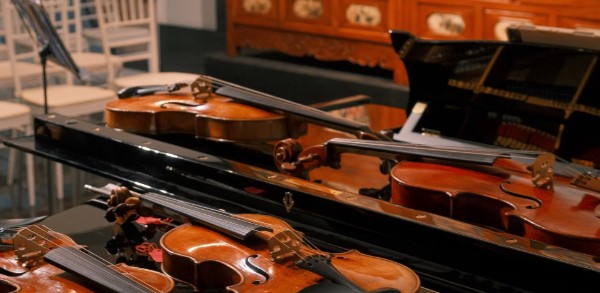
Violin collections at the Liang Yi Museum of Hong Kong
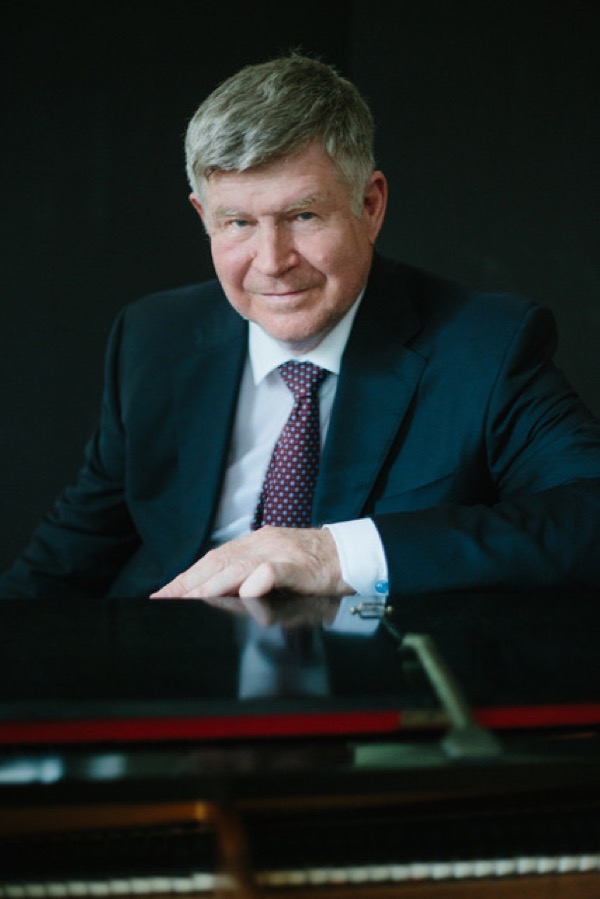
Hong Kong’s iconic Hollywood Road has been a renowned destination for antique Chinese furniture since the 1980s. Liang Yi Museum opened in 2014 and houses one of the world’s finest collections of Chinese classical antiques and collections of Ming and Qing dynasty furniture—over 450 items crafted from prized materials such as huanghuali and zitan. But that’s not all. Their collection includes European silver, Japanese art, and features over 800 dazzling pieces from the 1880s to 1960s of European bejewelled clutches, compacts, and powder boxes from renowned houses like Cartier and Van Cleef & Arpels.
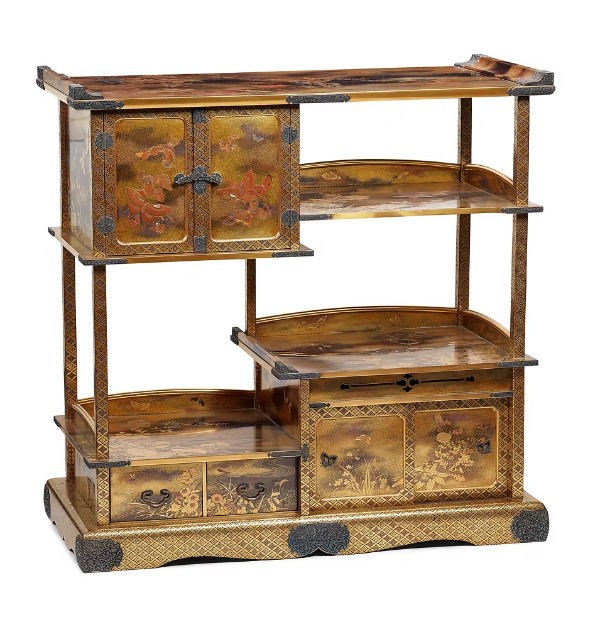
Rare furniture
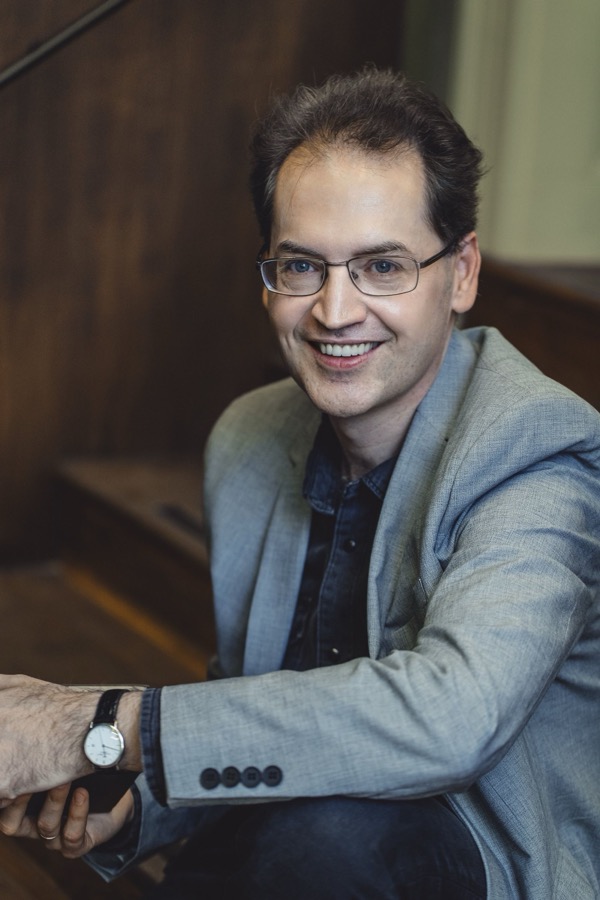
Luthier Robert Brewer Young is among the world’s most well-known violinmakers. He is head of the Scientific Research & Conservation at Beare and is known for having taken care of the most admired string instruments being played today, such as those by Stradivari, Guarneri, and other Italian masters at the artist’s studios of Carnegie Hall in New York. Robert is currently dedicated to making his own instruments in the spirit of these Cremonese visionaries. Robert’s cellos, violins, and violas are played by soloists such as Steven Isserlis, Truls Mørk, Glenn Dicterow, and principal players of orchestras around the world. Robert has his workshops in London at J & A Beare, in Cremona, Italy, and currently in Hong Kong, where he is doing some of the work on the new cello.
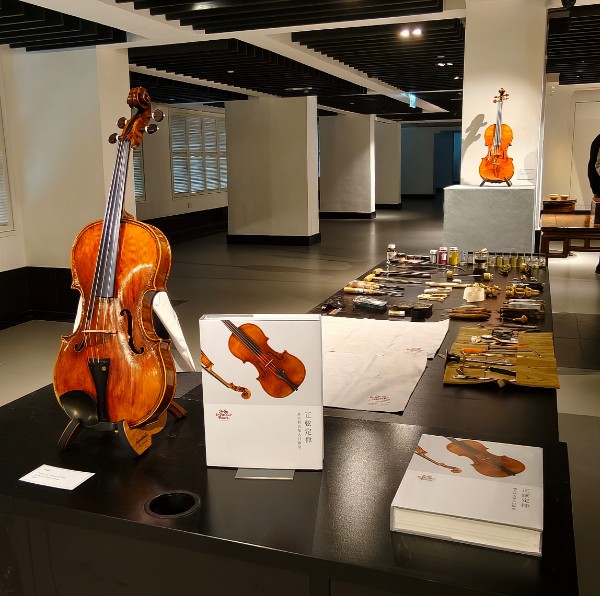
The Luthier’s Workbench
Conversations with the founder of the museum Peter Fung, an avid amateur cellist himself, began eight years ago.
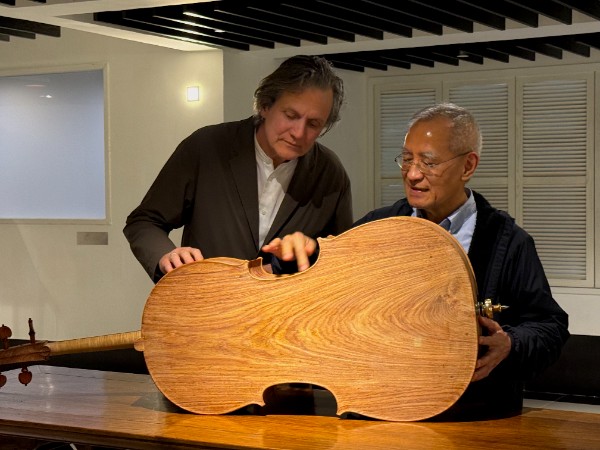
Robert Brewer Young and Peter Fung
The Director of Liang Yi Museum, Peter’s daughter Lynn Fung, said in describing the partnership, “many people know my father, Peter Fung, as the founder of Liang Yi Museum. But not many people know that he is also a lifelong aficionado of classical and chamber music and an amateur cello player. Years of dialogue and conversation discussing their mutual passion for music and crafts led my father and Robert to dream up this utterly unique and innovative instrument. This exhibition is the first time we see this fantastical dream turn into the reality of a cello of huanghuali wood, and we are excited to share its unveiling with our audience.”
I had so many questions. Late one night – when it was morning in Hong Kong—I was able to speak with Robert and Joanne Yau, Museum Assistant, to hear more about the crafting of a cello of huanghuali wood.
JH: You’ve had a whirlwind of events over the last few days: workshops, demonstrations, and other events. So, how is it going, Robert?
RY: It’s been quite exciting, especially very rewarding to hear the cello performed publicly in the museum for the first time.
JH: When did you procure the wood, and how long have you been working on the cello?
RY: We chose the wood a year ago, Peter and I, and it’s been a year of working on it. Choosing the wood was quite significant. We cut it in the Black Forest in Germany with a very precise band saw. So the overall project is two years.
JH: Do you know the approximate age of this wood?
RY: It’s very difficult to do dendrochronology on hardwoods. The analysis through high-resolution photos of the grains to determine the age of the wood. Spruce is easy – every year is right in front of you, but the science is in very nascent stages, and relatively little has been done on tropical hardwoods. Contextualising its age relies upon the long huanghuali furniture tradition. That said, we think it’s at least 200 years old.
JH: The cello looks to be unvarnished at this time.
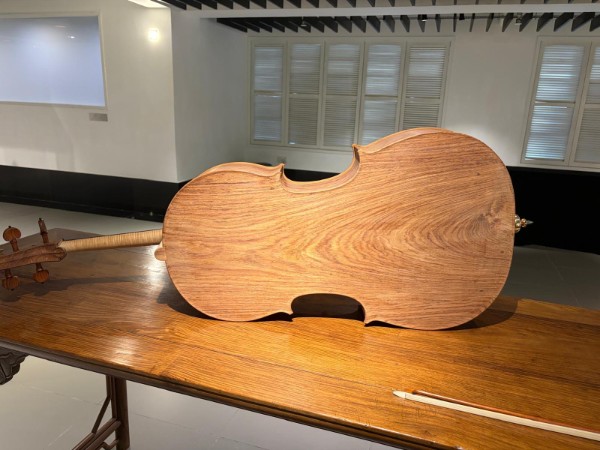
Back of the cello
RY: That is correct. We put the first coat of varnish on yesterday, a sealer coat. I had applied a preparatory coat on the top in advance of coming, which also helps sound-wise. So it doesn’t have the feeling of an entirely unvarnished instrument, but the cello was strung up only five days ago! It’s important for me to finish it on site.
JH: I’m very curious to know what model you used for the instrument? Cellos did vary in size prior to Stradivari’s last instruments.
RY: I chose one of the large Stradivari models, the Castelbarco model, because we used a flat back with the goal of having more breadth and increased air volume inside the instrument, which is over the B model, such as The Marquis from 1726, which would have been more petite. (The B-form Strad became the more standard or archetypal cello, taken over by Vuillaume and other makers.) The only Stradivari we know of with a flat back has broad proportions as well, and I was looking to that for inspiration. I’ve been working with the Castelbarco model more extensively for the last five years with some success, and wanted to see what this model we knew very well would sound like with this type of wood.
JH: For our readers: The 1697 “Castelbarco” Stradivarius cello, part of the remarkable collection of Count Castelbarco of Milan, is in Washington D.C. (Collection Musical Instruments at the Library of Congress.) It’s one of the few surviving Stradivari cellos that retains its original, un-shortened dimensions, making it highly significant for its original sound and form.
RY: Hamzah Zaidi, our resident cellist, who has worked with me on other projects in the museum, has a Castelbarco model cello that I made, so we could compare a so-called “normal” cello to this huanghuali instrument.
JH And what did you think?
RY: We were really excited when we heard the first notes. Of course, there was a significant risk factor with the project, due to the unknown features of working with non-conventional materials and materials that were generally much denser than customary woods, but I think from the first moment, we were extremely inspired by the sound.
JH: An audience of musicians is coming to a workshop today. What will you be showing them?
RY: When I say: how do we “dial it in?” I’m referring to adjustments or minor augmentations of the sound that we can make. During the workshop today, we will demonstrate how these adjustments can vary the sound. For example, sometimes we might move the soundpost one way to enhance the brilliance, or another way to deepen the bass and so on.
JH: Typically, you would use different types of woods for the front, the back, and ribs of instruments. Did you use the huanghuali wood entirely?
RY: The things that are consistent with what would be normal practice are the top of an instrument. So I called upon a cutter whom I know very well to cut high alpine Italian spruce for the top. This was critical, I think, to be able to predict the sound. We also used a maple neck, for example, but huanghuali for the scroll. To use huanghuali for the neck would have been too heavy and too expensive! And obviously, the top is critical to be consistent with more traditional instruments.
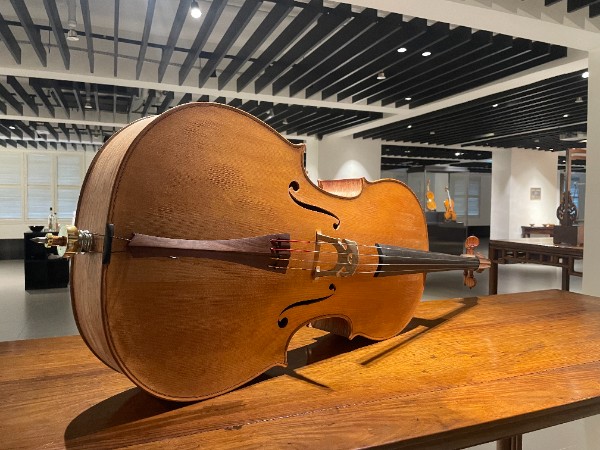
Front of the cello
JH: How was it working with this wood? Different from what you are used to? Is it malleable?
RY: It was extremely challenging. Huanghuali is a very hard wood, and carving requires sharper tools. I found I needed to sharpen my tools much more often. There was some fragmentation or chipping of the wood, so “reading” the wood was a new and different experience, but getting a sense of the wood was quite fascinating for me.
Joanne, can you share some more information with Janet about the wood?
Joanne: Huanghuali is a valuable, rare and slow-growing tree from China. It is fragrant rosewood used extensively as decorative material for scholarly objects, such as brushed pots and boxes, and for luxury furniture. It has a distinctive colour, density, and a woody, sweet fragrance. The finest huanghuali has a lustrous, glistening surface and has distinctive and abstract swirling patterns in the wood. When the wood grows slowly, knots and burls emerge. As the wood matures, these irregularities combine with changes in colour and texture to produce shapes that resemble eyes, mouths, or entire faces: the so-called “ghost faces.” This natural phenomenon is actually not unique to huanghuali and can be found in other tropical woods such as maple and ash. But the name “ghost faces” is tied to the appreciation of huanghuali furniture, dating back to the Ming and Qing dynasties, which gives it its cultural significance.
JH: Thank you for that! They really do look ghostly!
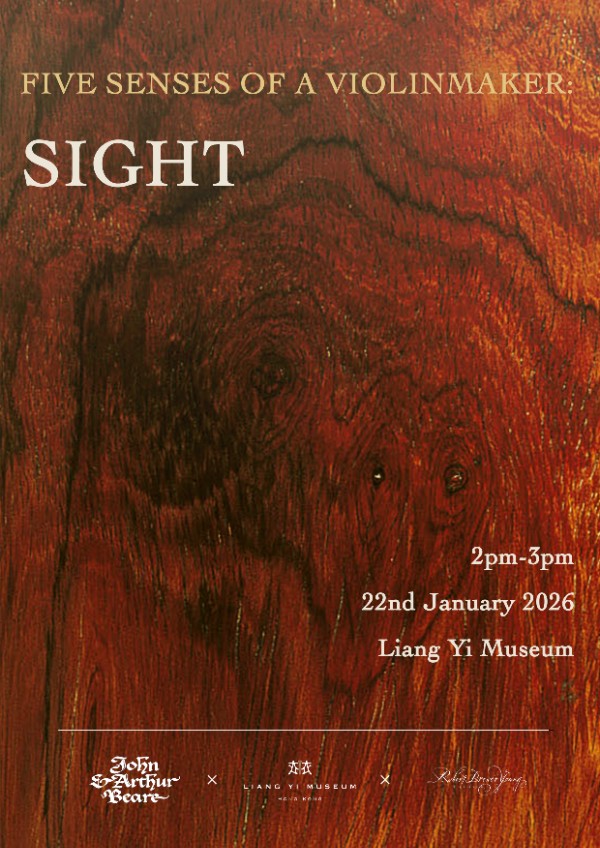
Poster featuring the “ghost faces” of the wood
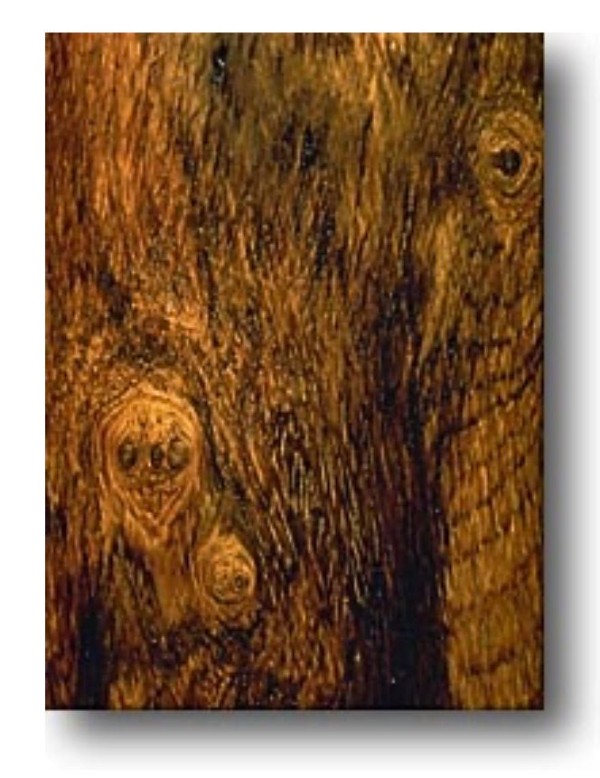
Close up of the wood
Robert, do you think you might make another huanghuali instrument?
RY: I’m pleased to say that’s on the horizon. The curator of the exhibition and I went to the wood source, a furniture restoration workshop here in Hong Kong, and we chose wood at Peter’s behest to make a quartet of instruments.
JH: I understand you used standard woods to carve the bridge and soundpost. Did you place gut or steel strings on the cello or a combination, like some cellists prefer?
RY: We have steel strings on it for now, but it’s something I look forward to exploring. I would like to put gut strings on the cello and have Steven Isserlis try it, as he plays on gut strings, of course. I’d like several soloists try the cello and give me feedback.
JH: It would be wonderful to have Truls Mørk try the huanghuali cello also, as he is a big guy, perfect for this larger cello.
RY: Yes, actually, he plays a cello of mine now as his principal instrument, which I made on the Castelbarco model. With our cellists here in Hong Kong, Hamzah and Maryam Zaidi we’ll have a dialogue about sound. They’ll play cello duets with the huanghuali cello and the standard Castelbarco model cello that I made, so we’ll hear them together, and that will be quite exciting for me personally.
JH: How is the sound of the instrument so far?
RY: We are quite surprised by the depth and resonance of the C string. It has a lot of breadth in the sound. Sometimes, if you have the low resonance, you wonder how the upper string, the A-string, will be, but we seem to have a lot of breadth with interesting extremes in the sound.
JH: Here is a short clip from J.S. Bach Solo Suite No. 2 with Hamzah Zaidi playing the huanghuali cello.
JH: What have you yet to do other than the final coats of varnish?
RY: I’ve been waiting to put the purfling on the back. I wanted to hear the cello first, as I might deepen the purfling. The depth of the purfling makes the back move a bit more, so I’ll decide and finish it here in the museum.
I hope you’re as fascinated by this project as we are. You still might wonder what string players look for in an instrument and how we choose an instrument to play. I asked Maryam and Hamzah about their thoughts on the huanghuali cello and the views of cellists lucky enough to play the highly coveted cellos of Stradivarius, Montagnana, or Gofriller.
Stay tuned for the next article.
For more of the best in classical music, sign up for our E-Newsletter