Long before the famous Labèque sisters, there was a piano duo in Baltimore – of all places. Rose and Ottilie Sutro, born in 1870 and 1872, respectively, were among the earliest internationally recognised teams to make a career out of playing two pianos together. They performed in Europe and in the US and earned the admiration of audiences and critics.
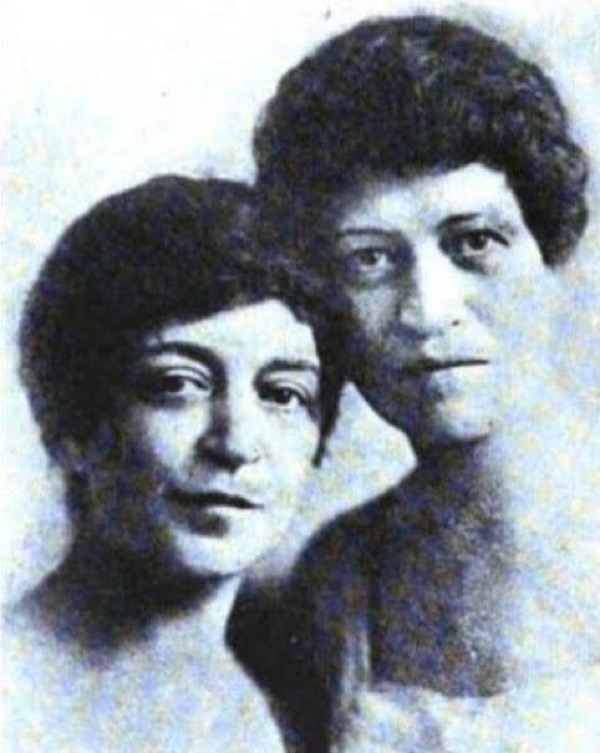
Rose and Ottilie Sutro
The often-repeated claim that the Sutros were the first piano duo isn’t strictly accurate: other duos, notably the brothers Willi and Louis Thern, had preceded them. Nevertheless, the sisters were among the pioneers who helped establish two-piano playing as a serious concert format.
Yet their place in musical history rests on something rather less edifying than their pianism: a series of dealings with the German composer Max Bruch (1838–1920) that involved unauthorised alterations to his music and the disappearance of the manuscript of one of the most popular violin concertos ever written.
Rose Sutro and Ottilie Sutro grew up in a household at the centre of Baltimore’s musical life. Their father, Otto Sutro, was a German-born organist, composer, conductor and music publisher who founded the city’s Oratorio Society and became an influential figure in its cultural life. Their mother, Arianna Handy, was a pianist and singer who gave her daughters their first piano lessons.
In 1889, the sisters travelled to Berlin to continue their studies at the Royal Hochschule für Musik. Their debut took place in London in July 1894. Later that year, they returned to the US, making their American debut in Brooklyn.
Their performances were praised for their precision and coordination. They often played facing each other and without scores, which made their ensemble work all the more impressive to audiences. They were invited to perform for Queen Victoria and at the White House. For two young American women, this was a remarkable ascent.
In 1904, Ottilie injured her hand and was unable to perform for several years, returning to the concert stage around 1910. During this period, she developed an interest in arranging music for two pianos, including works by Chopin.
Chopin: Étude Op. 25 No. 2 (Rose & Ottilie Sutro)
Their repertoire combined familiar orchestral and chamber works adapted for two pianos with music written specially for the medium. They made piano-roll recordings, including works by Gounod and Dvořák, for the Duo-Art reproducing-piano system. In 1924, they premiered Amy Beach’s Suite for Two Pianos, Op 104, which was dedicated to them.
Their most consequential musical relationship, however, began with a composer whose generosity they would eventually exploit: Max Bruch.
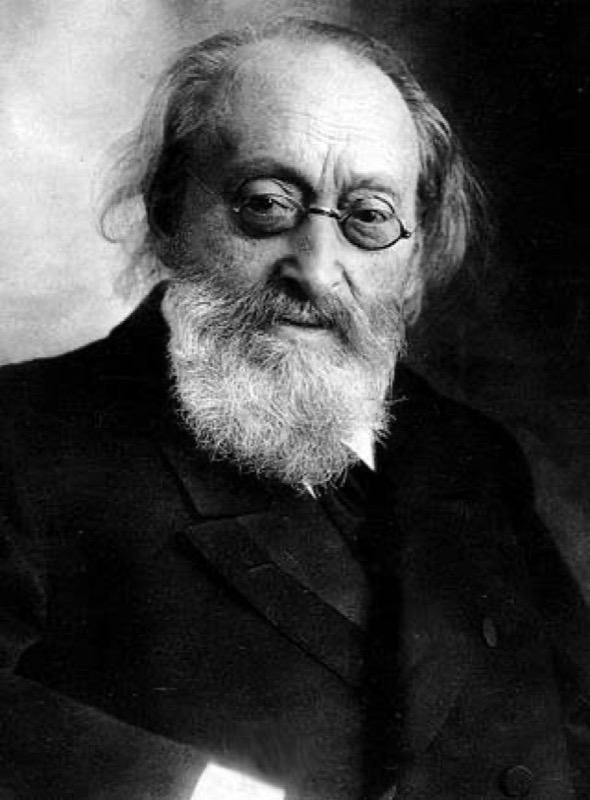
Max Bruch
Bruch was so impressed by the Sutro sisters’ performance of his Fantasy in D minor for two pianos, Op 11 that he agreed to write a concerto for them. The result was his Concerto for Two Pianos and Orchestra in A-flat minor, Op 88a. Bruch granted the sisters the exclusive right to perform it.
The commission should have been the culmination of their careers. Instead, it became one of the strangest episodes in the history of the concerto repertoire.
The Sutros substantially altered Bruch’s score without his authorisation. They simplified and reworked the piano parts, changed the orchestration and restructured the music to suit their own abilities. They then copyrighted their version and deposited it with the Library of Congress in 1916.
In December that year, they performed the concerto with the Philadelphia Orchestra under Leopold Stokowski. A further performance followed with the New York Philharmonic under Josef Stránský in 1917, this time in a version reduced from four movements to three. A review of the Philharmonic performance noted a lack of unanimity and precision between the soloists and the orchestra, but the crucial point is that audiences were hearing something substantially different from the concerto Bruch had written.
Bruch did rehearse the concerto privately with the sisters in Berlin and permitted performances in the US. The extent of his knowledge of their alterations remains uncertain. But the fact that the sisters continued revising their version long after Bruch’s death in 1920 makes it difficult to regard the affair as a simple misunderstanding over editorial details.
The manuscript itself resurfaced only after Ottilie’s death in 1970. In January 1971, pianist Nathan Twining bought a box of unidentified papers from the sale of her effects for just $11. Among them was the score of the Sutros’ version of the concerto. Twining subsequently located additional orchestral materials and, with the help of pianist Martin Berkofsky and others, reconstructed Bruch’s original work.
In November 1973, the original version was recorded for the first time, with Berkofsky and Twining as soloists, the London Symphony Orchestra and Antal Doráti conducting. After more than half a century of obscurity, Bruch’s concerto could finally be heard in a form much closer to the one he had intended.
Max Bruch: Concerto for Two Pianos Op. 88a
If the double concerto affair were the whole story, the Sutros might be remembered as musicians who crossed the line between interpretation and appropriation. But their dealings with Bruch extended further.
At the end of the First World War, Bruch was in financial difficulty. In April 1920, he entrusted the autograph manuscript of his first Violin Concerto – one of the most frequently performed concertos in the repertoire – to the sisters, hoping that they would sell it in America and send him the proceeds.
Max Bruch: First Violin Concerto
Bruch died later that year without receiving the money. The sisters claimed that the manuscript had been sold, but failed to provide convincing details of the transaction. They sent his family German paper money that had become practically worthless and repeatedly declined to disclose the identity of the supposed buyer.
Bruch was not an obscure composer whose work had little commercial value. His first Violin Concerto was already a staple of the international repertoire. The manuscript, which represented a valuable historical document, remained in the sisters’ possession for nearly three decades. In 1949, they finally sold it, and it eventually entered the collection of Mary Flagler Cary. Following her death in 1967, her music collection was bequeathed to the Morgan Library & Museum in New York, where the manuscript is now preserved.
The Sutros failed to fulfil their promise to Bruch, retained the manuscript for many years, and ultimately profited from its sale. The fact that Bruch was an elderly composer in financial difficulty makes the story all the more troubling.
Rose Sutro died in 1957, aged 86. Ottilie survived her by 13 years, dying in 1970, aged 98. Their long lives spanned an extraordinary transformation in musical culture: from the late Romantic concert world to the age of recording and broadcasting.
Chopin: Nocturne Op. 9 No. 2 (Arranged by Ottilie Sutro)
Today, the sisters occupy an uncomfortable place in piano history. They helped popularise the two-piano duo as a concert format, toured internationally at a time when women performers still faced significant barriers, and left behind piano rolls that preserve something of their musical partnership. Their careers deserve more than to be reduced to a scandal; but neither can the scandals be separated from their legacy. Their conduct towards Bruch raises questions not merely of artistic integrity, but of personal ethics.
The Sutro sisters were certainly pioneers, but hardly heroines. Their story is one of talent, ambition and betrayal – a reminder that achievement and personal integrity don’t always go hand in hand, and that the history of classical music performance is as much a record of human ambition and opportunism as it is of artistic inspiration.
For more of the best in classical music, sign up for our E-Newsletter