For two musicians who have spent so much time in the recording studio, you’d be forgiven if you’ve never actually heard any of their own material. I’m not talking about some grand creative block or obsessive perfectionism hindering their output — far from it, in fact.
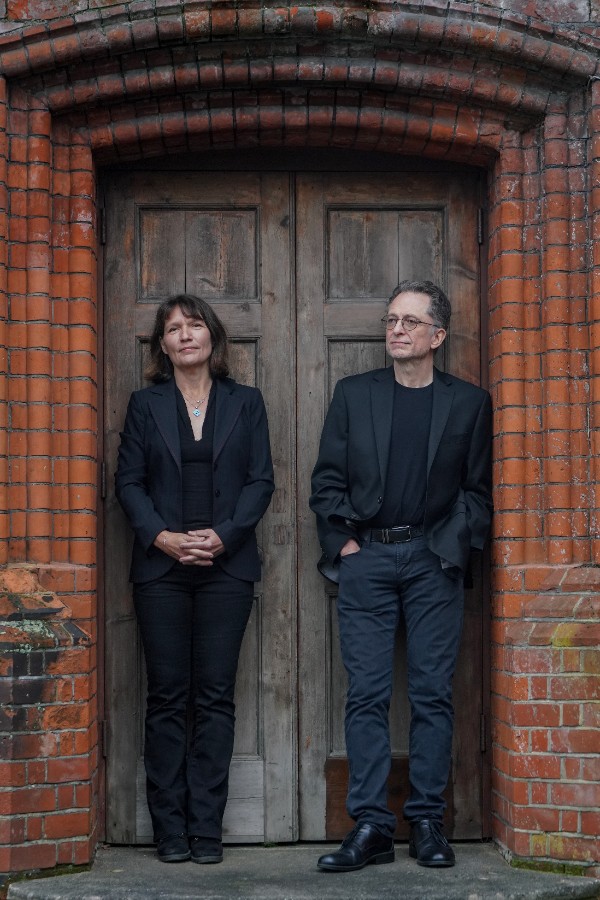
Cloud Chamber: Gavin Greenaway & Caroline Dale © ottantotto
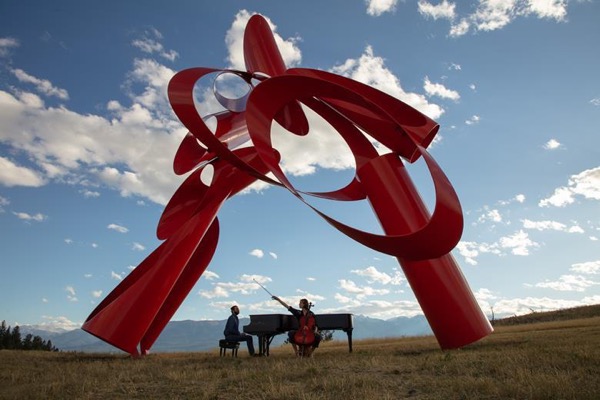
Composer-pianist Gavin Greenaway and cellist Caroline Dale have, through their work recording film and TV scores, been featured on hundreds of movies and TV soundtracks, contributing, in their words, ‘from just beyond the frame’. Caroline’s work ranges from concerto appearances with the Royal Philharmonic Orchestra to being a featured soloist in the films Atonement and Truly Madly Deeply. Gavin has composed for the Vancouver Winter Olympics, written songs for Bryan Adams, and conducted the scores to films including Gladiator, Wicked, and How to Train Your Dragon.
So, while prolific, the pair’s work has mostly been for someone else. Cloud Chamber is the result of Gavin and Caroline stepping out into the spotlight to form their own duo, performing their own music in their own right, a musical project involving nobody else but themselves.
The name of their ensemble is shared with, and inspired by, the particle detector used to visualise the passage of ionised radiation: ‘Cloud Chamber,’ a name as scientific as it is artistically evocative.
Cloud Chamber’s debut album of cello and piano music, Skylines, is out with Brighton-based label MVKA on 9 October, with launch concerts at London’s Kings Place, Kent, Milton Keynes, Folkestone, Epsom, and Cheltenham.
Gavin wrote all the music on the album specifically for the project. Performed by Caroline with Gavin at the piano, Skylines is a vibrant, fresh offering from two musicians striking on their own while tipping their hats to the world they spend so much of their time working in.
The influence of the movie world is a thread that runs through the album, the two instruments conjuring up cinematic soundscapes that create a result far greater than the sum of its parts, each piece one of a series of ‘portraits without words’.
Pieces like ‘Smoke’ and ‘Doriel’s Air’ allow the cello to soar and plunge to the extremes of its register, while others such as ‘Les Jardins d’eau’ offer a moment of stillness and reflection amidst the more heroic material.
I sat down with Caroline and Gavin to talk about the project’s genesis, the recording, their influences, and their hopes for Cloud Chamber’s future.
Smoke
How did the project come about?
GG: It all started because one lunchtime, during a session, Caroline said, ‘That was fun, but why don’t we do anything for ourselves?’
I was coming out of long COVID, after three or four years of low energy, and Caroline put this seed in my head about the cello and piano together — I started writing right away.
I wrote about seven or eight pieces before losing all confidence in whether Caroline would play them. I’d worked with her for about 25 years, and I’ve always looked up to her as one of those magic musicians who can take three or four notes and turn them into something. So, I wrote all these pieces for her but then lost my nerve!
For a couple of weeks, I told myself Caroline wouldn’t do it, but then I sent her an email, and about ten seconds later she replied, ‘Yes please!’
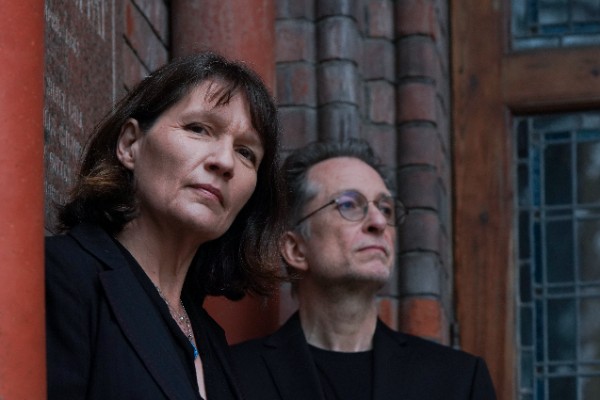
Cloud Chamber: Gavin Greenaway & Caroline Dale © ottantotto
How was it to play together, just the two of you, after so much time being part of larger projects involving more people?
GG: It’s good. I was worried I wouldn’t have control over how the cello part went, and that there would be some creative conflict. Nothing like that has happened. Caroline will suggest something which makes it better, and basically, we do our thing.
CD: It just feels like we can play. I think part of that is because I know Gavin wrote the music, so in a way, it feels like it plays off the page to me. It’s really clear.
GG: Caroline has this amazing ability to look into the moment, and when we play together it’s so easy. I was taken back to when I was a student myself at Trinity College of Music, accompanying others, and how fun it felt.
Tell us about the process of learning, performing and eventually recording the works on the album.
CD: It’s quite interesting that I found it remarkably difficult to practice the cello part without the piano. I’ve never experienced it as much as with this, but then when we play together it clicks immediately. Something pings into place. It really needs that harmony underneath for it to work.
GG: Most of the stuff we do in our careers is film music. There’s a particular style to that, the way you play to the click track; it’s sort of unlike anything else. We spend a lot of time doing that, and the phrasing in Cloud Chamber has become informed by that — it’s a less ‘classical’ way of playing.
CD: Having done so many different styles of music, both of us, it’s so nice to experience something that you can really get to grips with and have you excited. I couldn’t wait to record it, and the recording process was really interesting.
The first day of recording was a bit of a struggle as we tried to get what the room was giving us, but on the second day, everything just fell into place. Now we’re excited to perform it, and to think about how best to perform it. I think we both like the idea of adding visuals, so it’s not just a cello and piano concert; we can use this as the starting point and experiment from there.
Doriel’s Air performed by Cloud Chamber
Do you want Cloud Chamber to be flexible as an ensemble in this sense of having different elements to your performance or collaborating with others?
GG: Caroline was making suggestions about things too during the recordings. She is a composer too, which I didn’t realise at the time. She’s had music out under her name, and when we do the launch concerts, we will include at least one of her pieces. The idea of Cloud Chamber is that it can expand, with more people involved for some concerts.
CD: There’s a lot of artistic input, particularly from Gavin, who did all the writing and also made the wonderful music videos. It’s all in-house — he’s done everything. It’s nice because it feels like you have a lot of control over the project, a lot of input.
The album cover is very striking. How did you decide on this image?
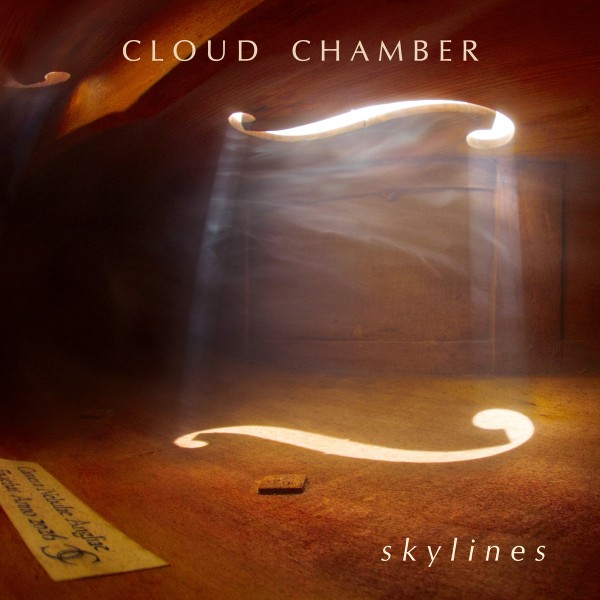
CD: A big thing about records, with artists like Joni Mitchell or Pink Floyd and others, is that they really care about the record covers, and they really care about the artwork because it’s an expression of the piece.
We came up with the name Cloud Chamber, and then Gavin took a picture of the inside of a cello. It’s a lovely album cover, especially for the vinyl release, where you can have that visual element. It’s important to have a picture of the album in your mind.
Can you talk about the combination of cello and piano, and the experience of performing this music inspired by the world of film?
CD: I think the cello is particularly good for this project because it’s got the range. It can be aggressive and lyrical and high and low. It really feels like the project has moved along very easily. Obviously, we’ve been working very hard, but it feels like it’s got its own momentum, the way it’s moved.
GG: I’ve always been fascinated by harmonic structures and how harmony works. I’ve done concerts with orchestras where, as soon as I start thinking harmonically, everything flows: all the melodies, all the rhythms, everything kind of works. If you don’t get into that harmonic understanding, you can’t really tell the story.
CD: I agree. I think […] music has to either have a melodic line, whatever that may be, even if it’s something very left field, but something you can be emotionally attached to, or a rhythmic force, or a harmonic structure to it of some sort.
Messiaen, for instance, is fantastic, because you’ve got all three, and it’s so descriptive. But if I’m playing a piece where I can’t get that harmonic structure, I find it very difficult to get inside. There has to be something deeper there, something that is trying to be described, and Gavin’s music is very descriptive. I can feel the story in my head.
Reminiscenza by Cloud Chamber
With film recording projects, your work is fixed in place once the session is over. Do you feel more flexibility and freedom with Cloud Chamber?
GG: Often it feels like there are so many film recording projects going on that you can’t remember many of them, because they’re all so intense that it can be too much. In a session, you get one shot at the performance, but with Cloud Chamber, as soon as we have an audience, we play it completely differently than we rehearse it.
CD: I don’t really have that kind of one-shot session mentality. I’m very prepared to get it wrong. I feel that focusing on the music is more important than whether it’s ‘right’ or not.
GG: I did some concerts of Hans Zimmer’s music with an orchestra, and some of the soloists were fretting about making mistakes and things. I started by saying that the audience doesn’t really notice mistakes, but they do notice if you’re enjoying yourself and connecting with them. If you’re doing that, then nothing else matters.
You have some album launch concerts scheduled – how are you feeling about these, and what does the future hold beyond that for Cloud Chamber?
CD: It’s just that energy that you get when you connect with an audience, and it feels right; there’s a sort of vibration from them. With something like Messiaen’s Quartet for the End of Time, for example, no matter how much you rehearse it, it comes alive with an audience and only with an audience. It’s magical, really.
GG: There’s still stuff to discover in the pieces on the album. They’re not fixed, even though we’ve recorded them.
CD: I’d love to do another album; it feels like a natural progression. Maybe we can expand the group too — with a name like Cloud Chamber. We didn’t want it to be too specific, so we can expand or contract as needed for certain concerts.
For more of the best in classical music, sign up for our E-Newsletter