Musical aptitude tends to run in families, and the House of Bernadotte is no exception. This royal house of Sweden, also the royal house of Norway between 1818 and 1905, was founded in 1818 by Charles XIV. He was born in Pau, in southern France, as Jean Bernadotte. He served as Minister of War during the French Revolution and, under Napoleon, as Marshal of the French Empire and Prince of Ponte Corvo. Sweden, meanwhile, faced a serious succession crisis, as Charles XIII was “old, prematurely senile, and childless.” As soon as he ascended to the throne in 1809, it became clear that the Swedish branch of the House of Holstein-Gottorp would die with him. The solution was adoption, and thus Jean Bernadotte eventually became King Charles XIV. We are not entirely sure King Charles XIV had any particular musical talents. Still, during his time as Napoleon’s ambassador in Vienna, he met with Hummel, Kreutzer, and Beethoven on several occasions.
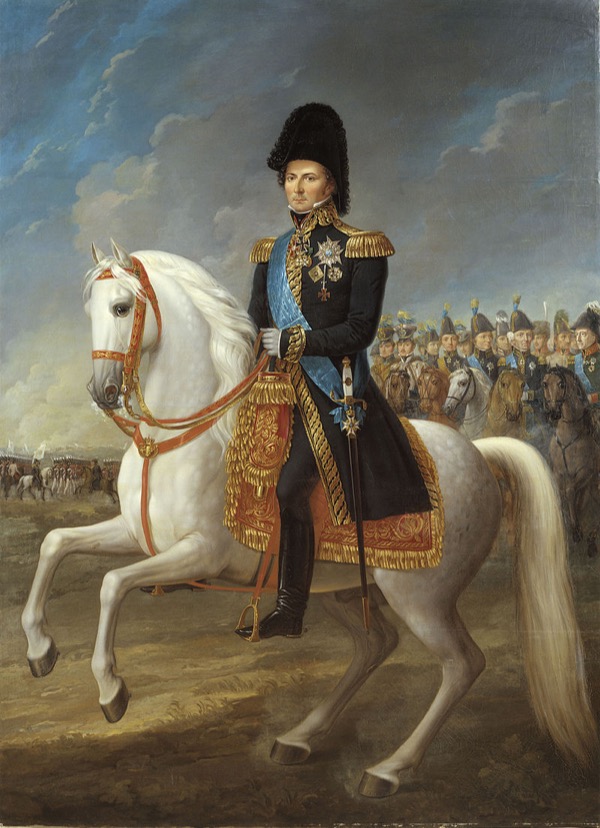
Karl XIV Johan (Charles XIV John), King of Sweden and Norway, painted by Fredric Westin
Oscar I, King of Sweden: Beaucoup d’amour (Nicolai Gedda, tenor; Arnold Östman, piano)
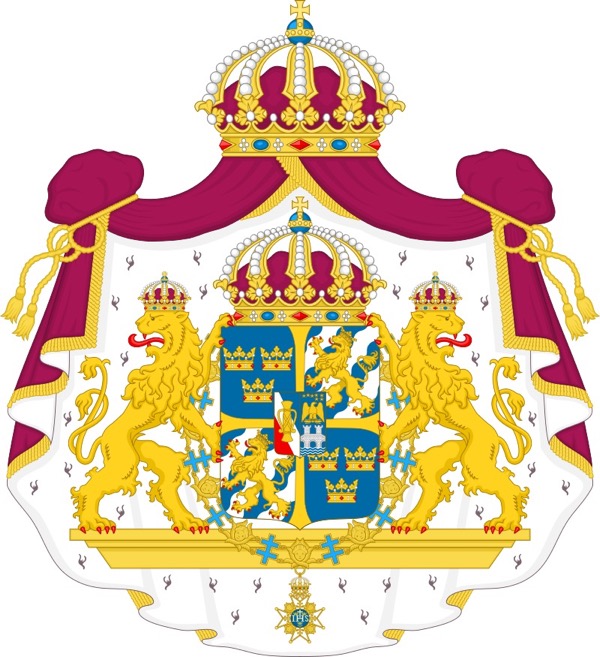
Great coat of arms of Sweden
King Charles XIV’s son was born in France and quickly learned Swedish. Oscar became Crown Prince in 1818, and he was the first composer in the Bernadotte family. He took piano lessons from an early age and was praised for his fine singing voice. He initially studied piano and composition with the famed pianist Edmund Passy, who had been appointed music teacher at the royal court. Passy was succeeded by one of the most prominent Swedish composers of the 19th century, Adolf Fredrik Lindblad. Lindblad had extensive musical contacts throughout Europe, including Robert Schumann and Felix Mendelssohn. In fact, Mendelssohn proposed to dedicate his three string quartets, Op. 44, to Prince Oscar I. Oscar composed several songs and piano pieces, and he even contributed to the unfinished opera Ryno by Eduard Brendler. Some of Oscar’s compositions were published under a pseudonym, but once he succeeded his father as king of Sweden, he was forced to abandon his musical activities.
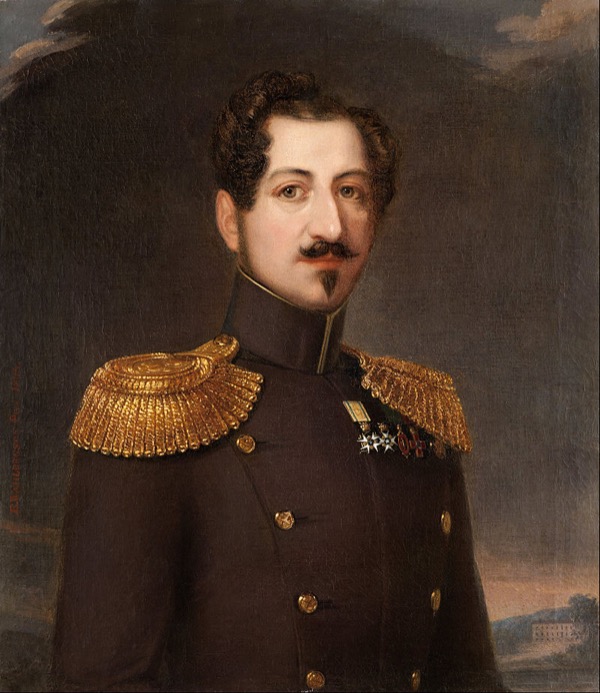
Erik (Wahlberg) Wahlbergson: Oscar I, King of Sweden and Norway 1844–1859
Josephine, Queen of Sweden: Romance islandaise (Biljana Milovanovic, soprano; Elena Atanasovska-Ivanovska, piano)
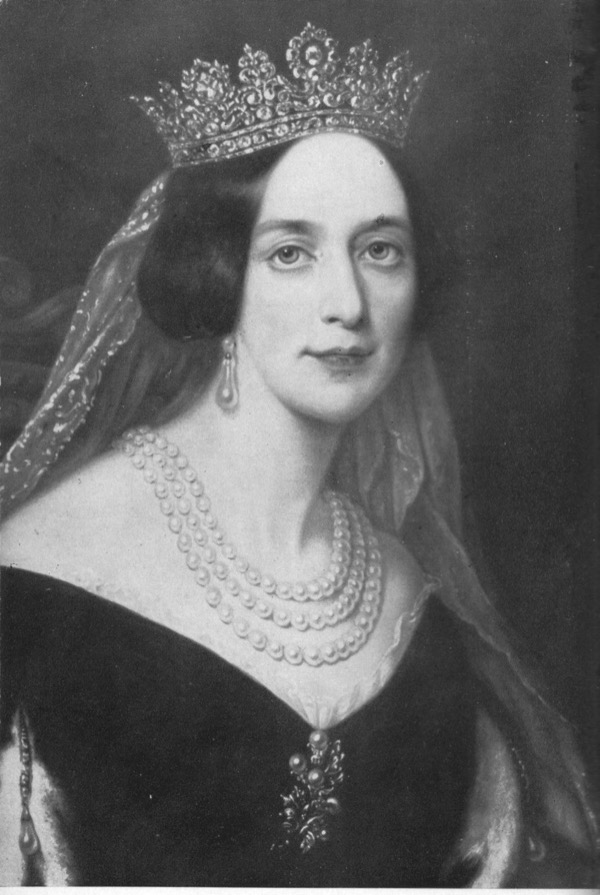
Queen Josephine of Sweden, painted by Axel Nordgren
During his time as music teacher to the royal court in Sweden, Adolf Fredrik Lindblad also instructed Princess Joséphine of Leuchtenberg. She would subsequently become Queen Josephine of Sweden and Norway, and she shared in her husband’s musical interest. Lindblad continued to teach the royal children, and Prince Gustav and Princess Eugénie, were “both skilled pianists and accomplished composers. They would devote a considerable amount of their time to music.” Prince Gustav was called the “Singer Prince,” and he had composed several military marches by age 16. Drawing on the traditions of the German Lied and Swedish folk song, Prince Gustav penned several highly popular student songs that are still sung today. In all, he wrote roughly fifty pieces and, like his father, contributed music for an opera. On his way home after a European journey with his father and sister, Prince Gustav contracted typhoid fever and passed away at the age of 26. Knowing his time on earth was ending, he composed a funeral march and dedicated it to himself.
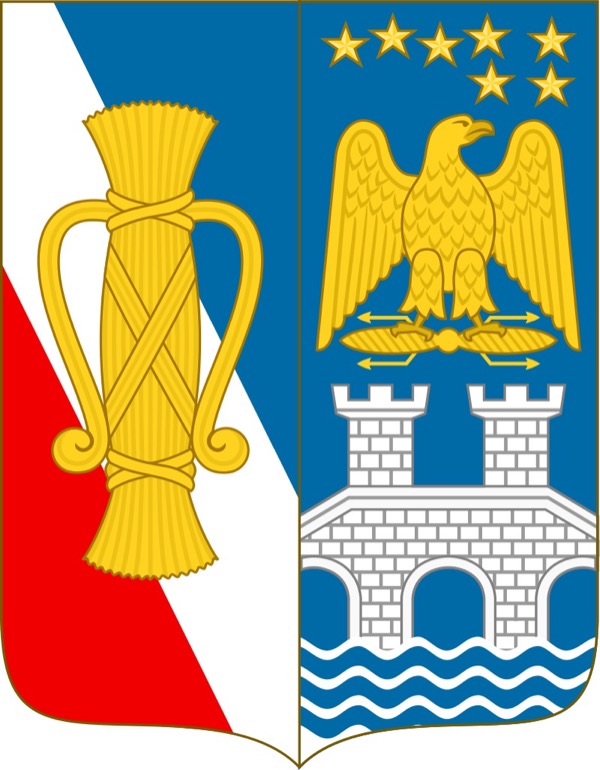
Arms of the House of Bernadotte
Prince Gustaf: Funeral March (Lars Blohm, organ)
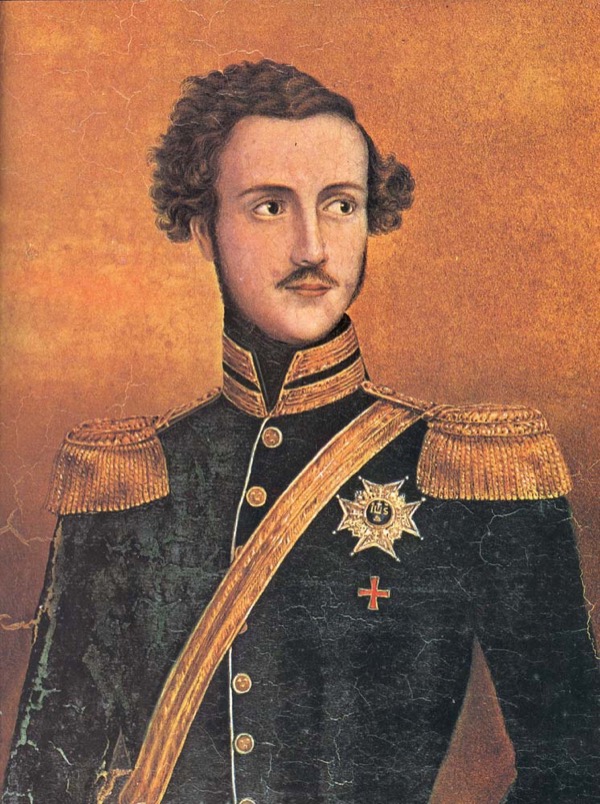
Gustav of Sweden and Norway (1827), c. 1850
Gustav’s sister Princess Eugénie also composed roughly fifty compositions, including several short piano pieces. Nevertheless, she was strikingly talented and was publicly recognised when she was inducted as an honorary member of the Royal Academy of Music at the age of 29. In her vocal works, scholars note that “she exhibits an ability to emphasise the lyrics through the music, despite their traditional and rather limited formats, and to vary both the melody and the counterpoint.” Her compositions were frequently performed in concerts at the royal palace, with her solo songs and duets included in concert programs. In turn, her instrumental waltzes, polonaises, and gallops were played at balls and official dances at the palace. Princess Eugénie remained unmarried and became a dedicated painter and author, publishing a book of prose and poetry illustrated with her own drawings.
Eugénie, Princess of Sweden: Fåglarnas morgonlov (Biljana Milovanovic, soprano; Ljiljana Milovanovic, soprano; Elena Atanasovska-Ivanovska, piano)
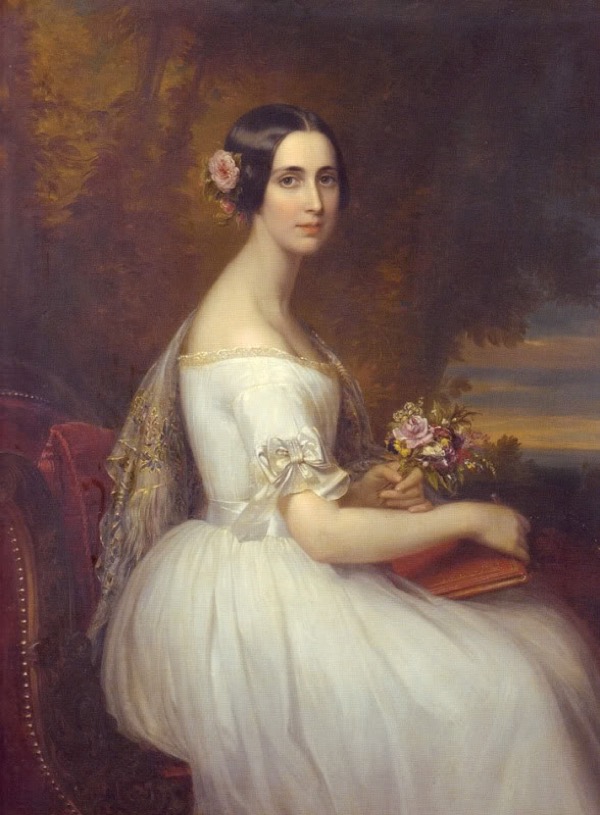
Princess Eugénie of Sweden
Prince August was Oscar and Josephine’s youngest son. He wasn’t particularly interested in music or the arts. However, his German-born wife, Princess Theresia of Saxony-Altenburg, was a gifted pianist, and she is said to have happily played piano four-hands with her sister-in-law, Princess Eugénie. She composed several attractive works, primarily short piano pieces in stylised dance forms. We also find several songs, a polka for wind sextet, and a wind octet. The House of Bernadotte reigned in Sweden and Norway until the dissolution of the union in 1905. Prince Carl of Denmark was then elected as King Haakon VII of Norway. He was the grandson of King Charles XV of Sweden, and a great-great-grandson of Charles XIV.
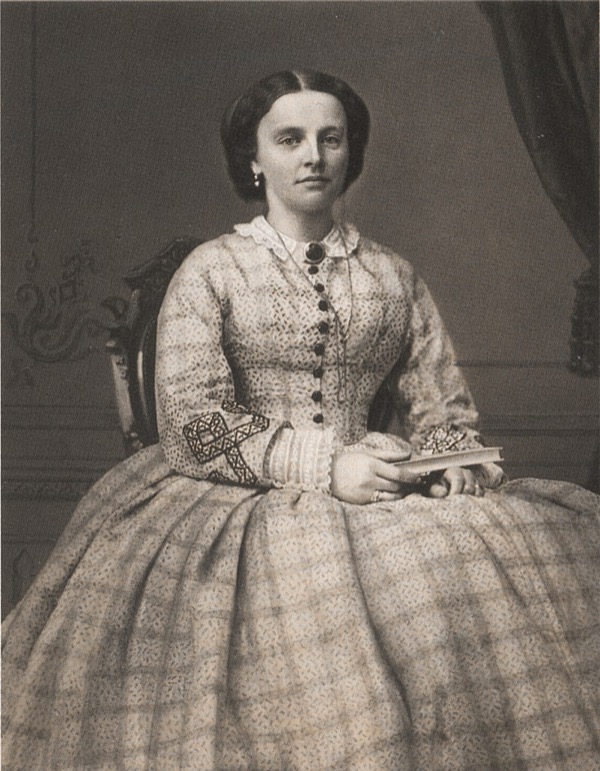
Teresia of Saxe-Altenburg, Princess of Sweden
For more of the best in classical music, sign up for our E-Newsletter
Therese, Princess of Sweden: Gondoliera (Carl-Axel Hallgren, baritone; Arnold Östman, piano)