The castrato voice is one of the most fascinating – and troubling – phenomena in the history of classical music.
Produced by castrating boys before puberty, this vocal type combined the lung capacity and physical power of a male body with the high range of a boy’s unbroken voice, creating a kind of voice that had never existed before and has never existed since.
The castrati were the rock stars of the Baroque era: mobbed by fans, lavished with fortunes, and fought over by the greatest composers of their day, including Handel and Gluck.
Here are the remarkable stories of three of the most famous castrati in history – and the remarkable, often chaotic lives they led.
Senesino (1686 – 1758)
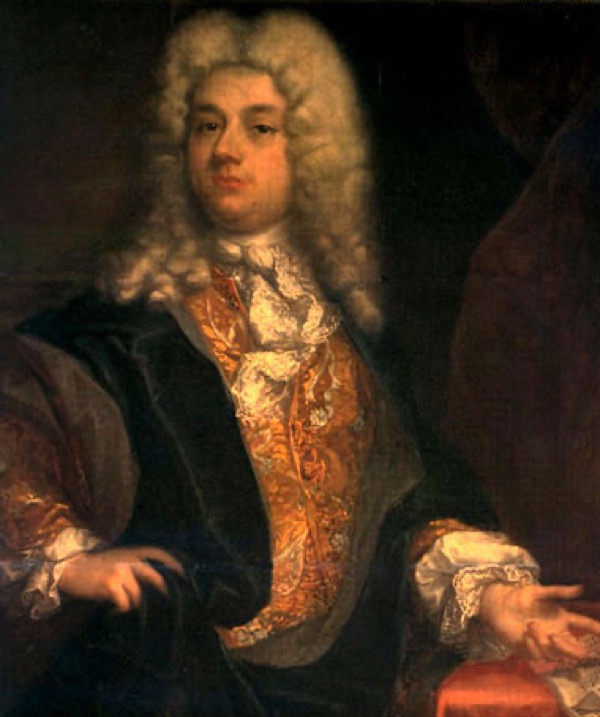
Senesino
Francesco Bernardi was the son of a Tuscan barber – and one of the most celebrated singers of the eighteenth century.
He was born in 1686 and began singing in the cathedral choir in Siena, Italy, at nine years old. He was castrated at thirteen: a late age for the procedure.
At 21, he made his debut in Venice, and over the next decade, using the stage name Senesino, he became a superstar of European opera.
His acting was panned (one impresario wrote, “he stands like a statue, and when occasionally he does make a gesture, he makes one directly the opposite of what is wanted”), but critics raved over his musicality.
A music video from countertenor Randall Scotting’s Senesino tribute recording
Flautist Johann Joachim Quantz wrote in 1719:
“He had a powerful, clear, equal and sweet contralto voice, with a perfect intonation and an excellent shake. His manner of singing was masterly and his elocution unrivalled.”
In 1720, he was hired by George Frideric Handel to sing at the Royal Academy of Music, commanding a colossal salary.
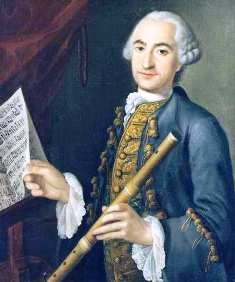
Johann Joachim Quantz
Over the following decades, Handel wrote seventeen leading roles for him, including Giulio Cesare (1724) and Orlando (1733).
Unfortunately, their personal relationship was rocky, and the two parted ways acrimoniously in 1733 after Orlando.
“Ah stigie larve!” from Orlando
Senesino got back at Handel by signing with a rival troupe known as the Opera of the Nobility, but left Britain soon after.
He sang in Italy for a few years, but tastes had shifted by mid-century. His style began to seem old-fashioned, and he met with limited success.
He retired to a home he built in Siena, where he kept a menagerie that included a pet monkey and parrot.
The final years of his life were filled with various quarrels and disputes with his family. He died in 1758 at the age of 72.
Farinelli (1705 – 1782)
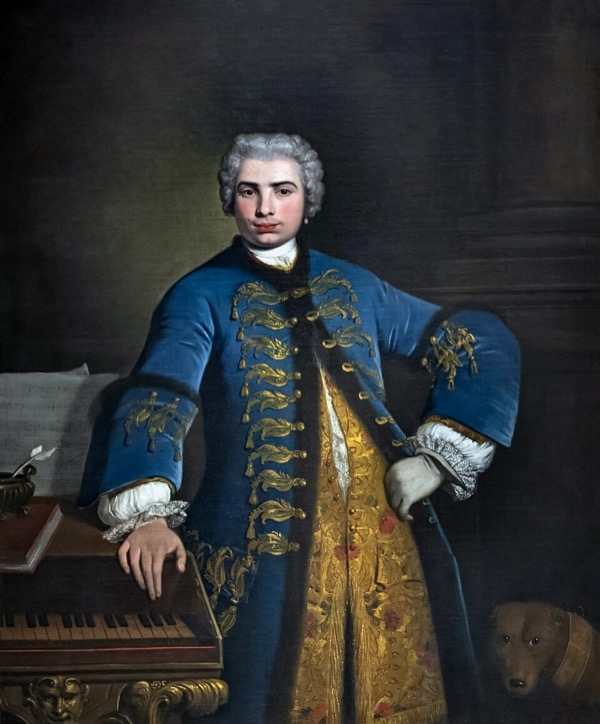
Farinelli
Carlo Maria Michelangelo Nicola Broschi was born in 1705 in southern Italy to a family of professional musicians.
When he was six, his family moved to Naples, where he began studying with Nicola Porpora, a teacher the young Joseph Haydn would also study with.
His father died in 1717, plunging the family into economic distress.
It is believed that Farinelli’s castration occurred around this time, in the hopes he would become a wealthy star castrato. However, the official story was that he’d fallen from a horse.
He debuted at fifteen and began performing throughout Italy under the stage name Farinelli.
During the 1720s, he conquered Europe, making waves in Vienna, Milan, Bologna, Venice, and Munich. He also appeared at the Opera of the Nobility, where he enjoyed a brief but lucrative engagement.
An excerpt from the film Farinelli
Historian Charles Burney famously wrote about one joint operatic performance between Farinelli and Senesino:
“Senesino had the part of a furious tyrant, and Farinelli that of an unfortunate hero in chains; but in the course of the first air, the captive so softened the heart of the tyrant, that Senesino, forgetting his stage-character, ran to Farinelli and embraced him in his own.”
In 1737, after a triumphant appearance at Versailles, Farinelli arrived in Madrid to serve as chamber musician in the court of Philip V of Spain.
When Philip’s son Ferdinand VI ascended to the throne in 1746, Farinelli accepted the title of Director of the Court Opera. He also gave legendary performances for the court on luxury barges.
In 1759, Ferdinand’s half-brother Charles III became king. Charles had no interest in opera and released Farinelli from his musical duties, but kept paying his salary.
Farinelli moved back to Italy and entered retirement. He died in Bologna in 1782 and is remembered today as one of the greatest performers in operatic history.
Caffarelli (1710 – 1783)
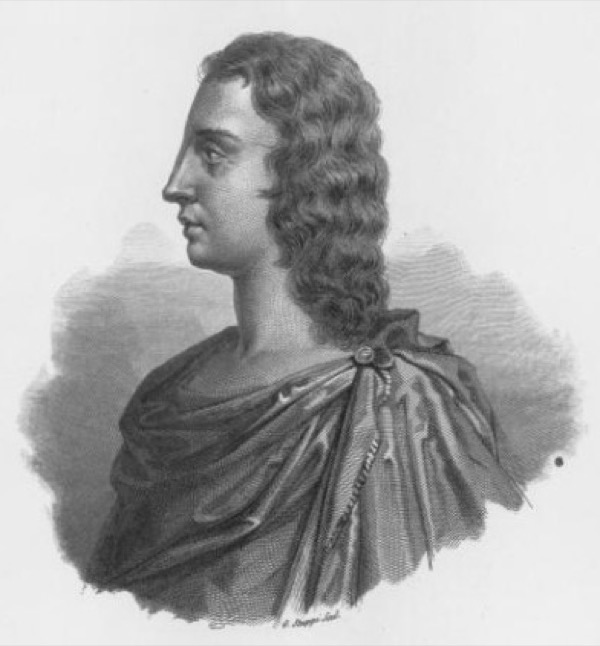
Caffarelli
Gaetano Carmine Francesco Paolo Majorano was born in Bitonto, southern Italy, in 1710.
He began dreaming of taking the stage early in life. A remarkable legal document survives dating from 1720, recording how his grandmother signed over income from two vineyards to him, and how he wanted to use the money to study music, as he hoped to become a castrato.
He began studying with Farinelli’s teacher, Nicola Porpora, while still a boy. After several years of study, Porpora reportedly declared, “Go, my son: I have no more to teach you. You are the greatest singer in Europe.”
He debuted in Rome in 1726 at fifteen and toured Italy over the next decade under the stage name Caffarelli.
When he went to London in 1737, he wasn’t particularly successful; the British public preferred Farinelli.
However, while there, he did create a very famous role: Serse in Handel’s opera of the same name, featuring the famous Largo.
“Ombra mai fu” (Largo) from Serse
After a brief stint in Versailles, marred by a duelling accident (he badly injured his poet opponent), he returned to Italy, where he spent the rest of his career.
He was famous for his quick temper and love of duelling. He also had terrible onstage manners, sometimes mocking the singing of his co-stars and chatting with audience members during others’ arias.
His teacher Porpora couldn’t stand Caffarelli’s arrogance, but toward the end of his career, admitted that his former student was “the greatest singer Italy had ever produced.”
Conclusion
Senesino, Farinelli, and Caffarelli were three very different performers. Still, all three shared the same extraordinary instrument and the same improbable trajectory: from obscure Italian childhoods to the glittering courts and opera houses of Europe.
Their stories are a window into a world of music that, thankfully, has vanished – but not before leaving behind traces that are vitally important to our understanding of the history of classical music.
For more of the best in classical music, sign up for our E-Newsletter