Clara Schumann’s students came from across Europe and went on to careers that stretched into the second half of the twentieth century.
In the first part of our series on Clara Schumann’s students, we met four women who studied with her at various points in her career.
Here, we meet three more: a German pianist who carried her legacy to Juilliard, a British prodigy who remembered Brahms dropping in on her lessons, and a Hungarian child performer who outlived the great musicians of her era by decades.
Carl Friedberg (1872–1955)
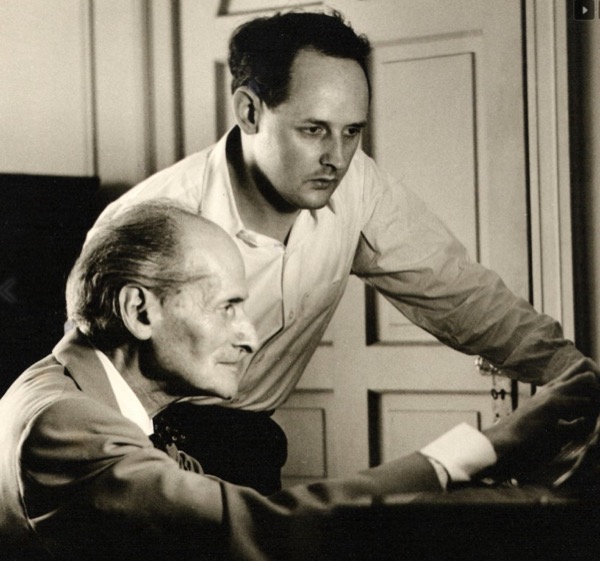
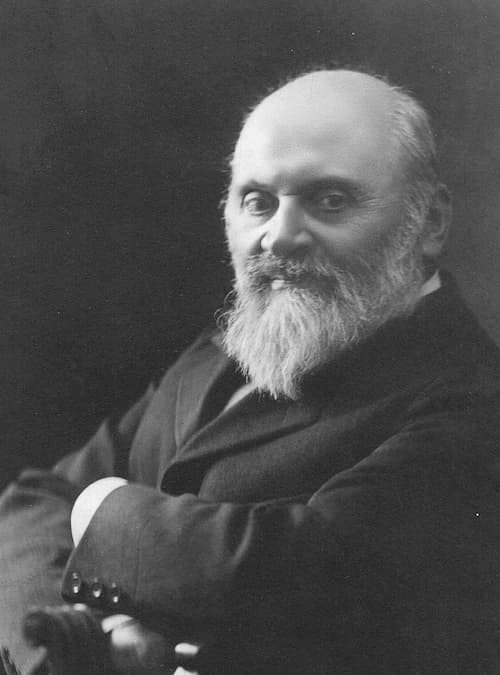
Carl Friedberg
Carl Friedberg was born in September 1872 in the town of Bingen am Rhein, Germany, to a family of wine merchants.
He showed musical promise from an early age, and when he was eleven, he moved to Frankfurt to study at the Hoch Conservatory, where Clara Schumann taught.
He was clearly a talented student. In 1893, just a decade after his arrival, Friedberg joined the faculty and taught there until 1904. Afterwards, between 1904 and 1916, he taught in Cologne, Germany.
Then, in 1916, he moved to New York to teach at the Institute of Musical Art, which later merged with the Juilliard School.
He would teach a variety of talented students at Juilliard – including Nina Simone – until his 1946 retirement.
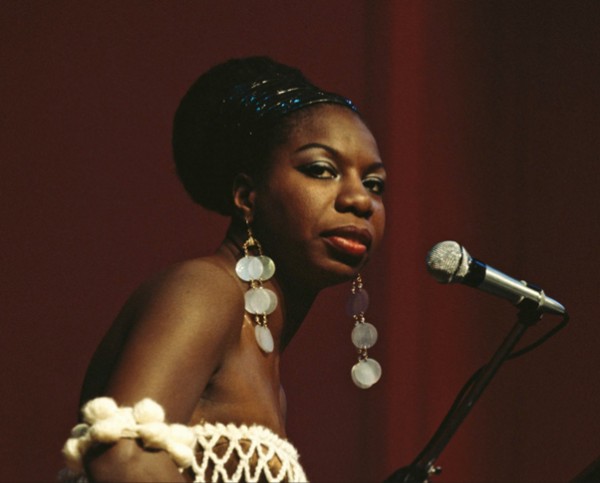
Nina Simone
Alongside his teaching career, he also enjoyed an impressive performing career.
In 1892, at the age of twenty, he played with the Vienna Philharmonic under Gustav Mahler. The following year, he played a Brahms recital – with Brahms himself in the audience.
Brahms was so impressed by Friedberg that he set aside time to coach him on his piano works, providing generations of future students an invaluable direct line to Brahms’s approach.
Friedberg resisted recording. Over his long career, he only made a handful of them in the studio; the others were bootlegs or made by amateurs.
In 1955, while crossing the Atlantic to give concerts in Europe, Friedberg developed pneumonia while aboard the ocean liner. He died at sea a week away from his 83rd birthday.
Here’s a private recording of him teaching Brahms to student Bruce Hungerford, as well as a performance of Brahms’s third Ballade from a 1951 recital.
Carl Friedberg teaches and plays Brahms Ballade in G Minor Op.118 No.3
Adelina de Lara (1872–1961)
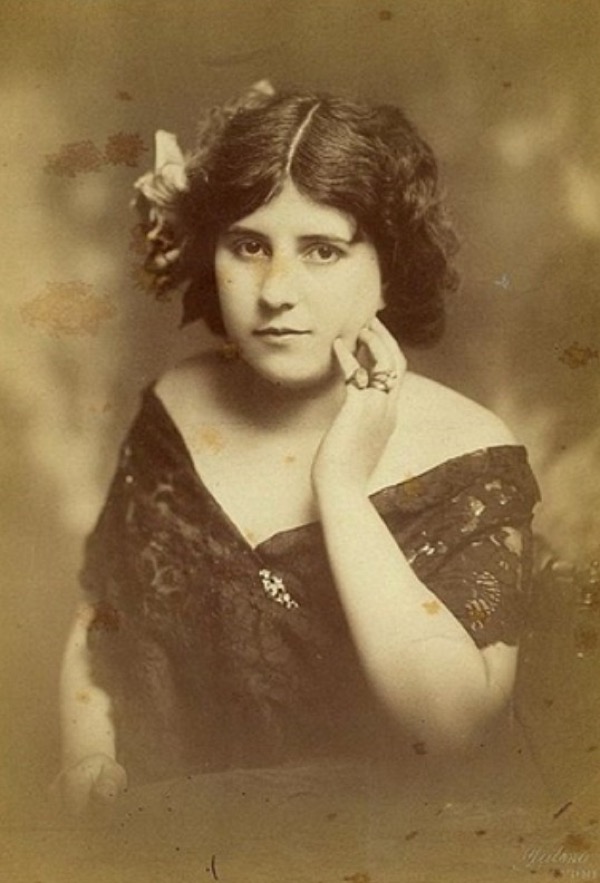
Adelina de Lara
Adelina de Lara was born Lottie Adelina Preston in England in 1872.
She was a prodigy and gave her first public performance at the age of six.
One day, when she and her father went to the local music store to advertise her appearance, the store owner suggested she change her stage name to something less British. They settled on Adelina de Lara, using her mother’s maiden name.
In 1885, she began studying with Clara Schumann’s student, Fanny Davies. Within a year, Davies decided her talented thirteen-year-old student should go to Clara Schumann herself.
De Lara studied with Clara Schumann in Frankfurt for five years, until 1891. Clara was so influential at the time that de Lara’s British career was launched on the strength of her endorsement.
During her studies, she’d not only gotten a glimpse into Clara Schumann’s professional career, but her personal life, too, including her famous friendship with Brahms.
Decades later, de Lara remembered meeting Brahms when he’d come to visit Clara in Frankfurt.
“And how we welcomed him, two or three times a year to stay… He was so kind, and full of jokes, always interested in the few favourite pupils allowed to play to him. He would pop in and out of the music room, smiling at us while we were having lessons and then come and stand behind one’s chair, particularly if we were playing something of his. I would perhaps be going through the Brahms/Handel variations, or a concerto, and the hints, praise or otherwise, that one was longing for came forth.”
Adelina de Lara playing Brahms
Clara Schumann reported in her 1891 diary that, when Adelina de Lara left the school, she was one of her best pupils.
De Lara continued to play and appear in public for decades. In fact, she gave a televised recital on the BBC at the age of 82!
She also took up composing, including two piano concertos.
In 1955, she published her memoirs, which she titled Finale.
She died in 1961 in Surrey.
We wrote more about her extraordinary life here: https://interlude.hk/pianist-adelina-de-lara-clara-schumanns-tv-star-student/.
The year she died, she spoke on the BBC about her career and her studies with Clara Schumann.
Adelina De Lara – “Clara Schumann and her teaching” – Reminiscences and Examples
Ilona Eibenschütz (c. 1872–1967)
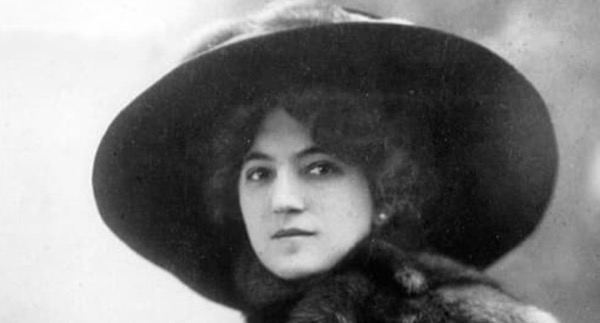
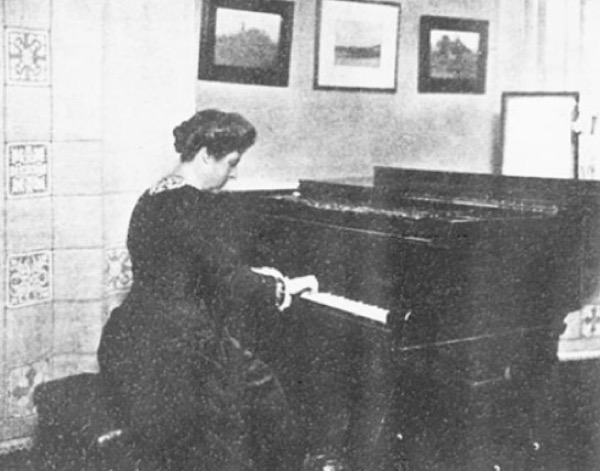
Ilona Eibenschütz
Ilona Eibenschütz was born to a musical family in 1871, 1872, or 1873 (sources differ as to the exact date) in present-day Budapest, Hungary. She was the daughter of the cantor of a synagogue in Pest.
She had at least six older siblings, and her brother was her first piano teacher.
When she was just six years old, she made her stage debut in Pest. Soon after, she made her Vienna debut.
Her family was poor, and to help make ends meet, she began touring Europe while still a child.
Between 1878 and 1885, she studied in Leipzig with Hans Schmitt. Later, during the years between 1885 and 1890, she studied in Frankfurt with Clara Schumann.
Eibenschütz plays and remembers Brahms
In 1886, while a teenager, she befriended Brahms, who was extremely impressed with her musicianship. Despite their nearly forty-year age difference, the two would remain friends until Brahms’s death.
In the summer of 1893, he introduced the pieces from his autumnal Op. 118 and 119 to her. She later wrote, “It was of course the most wonderful thing for me to hear these pieces as nobody yet knew anything about them. I was the first to whom he played them.”
At the time, he’d been quarrelling with Clara Schumann, but after he dedicated his Op. 118 to her and shared them with her student, the two friends reconciled.
Clara wrote to him, “So let us, dear Johannes, resume our friendship for which your new Klavierstücke, about which Ilona has written to me, affords the best opportunity, if you are willing. With sweet greetings in the old affectionate way, from your Clara.”
In January 1894, Eibenschütz gave the public premiere of these works in England.
Eibenschütz plays Brahms and Robert Schumann
In January 1902, she married a stockbroker and amateur violinist named Karl Adolph Derenburg. He held English citizenship, so the couple settled in Britain and had two daughters, one in 1905 and one in 1907.
As was common at the time, she largely retired from public performance after her marriage. However, she did make a few intermittent concert appearances and a handful of recordings.
Her husband died in 1927. She lived until 1967, dying a few years before her hundredth birthday.
This made her one of the last surviving colleagues of Brahms and Clara Schumann.
We wrote about Eibenschütz and her relationship with Brahms here: https://interlude.hk/what-was-brahms-really-like-pianist-ilona-eibenschutz-tells-all/.
Conclusion
Clara Schumann shaped all three of these great artists. Through them, she shaped pianists who came after.
Like any truly great teacher, her influence didn’t stop when she died. Thanks to her and the talent of these three pianists, that influence continued well into the twentieth century – and from there, to the present day.
For more of the best in classical music, sign up for our E-Newsletter