Tyrolean Cultural Heritage
Attending the Innsbruck Festival is an experience that extends far beyond the concert halls into a city deeply defined by centuries of imperial musical patronage. Long before it became a modern festival destination, Innsbruck served as a vibrant musical crossroads connecting Northern Europe with the Italian Peninsula. The compact, walkable old town allows visitors to seamlessly weave musical heritage, mountain air, and regional epicurean traditions into their daily schedule.
A walk through the historic centre usually begins at the Golden Roof (Goldenes Dachl), the city’s iconic landmark built around 1500 for Emperor Maximilian I. While famed for its 2,657 fire-gilded copper tiles, the alcove balcony was historically used by the imperial family to watch street spectacles and listen to court musicians—the Hofkapelle—performing fanfares from the square below. Maximilian I was one of Europe’s greatest Renaissance patrons of music, bringing legendary composers like Heinrich Isaac to Innsbruck. Isaac’s famous lied, “Innsbruck, ich muss dich lassen” (Innsbruck, I must leave thee), remains one of the most poignant musical tributes to the city, cementing Innsbruck’s place in Renaissance music history.
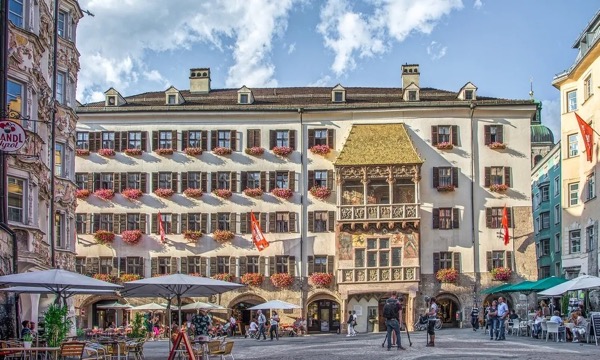
Credit: https://www.uibk.ac.at
Innsbruck, ich muss dich lassen (Heinrich Isaac) | The Mancunium Consort
Just steps away lies the Imperial Hofburg Palace, transformed into an elegant Rococo residence by Empress Maria Theresa in the 18th century. Beyond its glittering state rooms, the palace and its immediate courtyard grounds carry a rich operatic history. It was here in November 1655 that Queen Christina of Sweden was received with extravagant celebrations after publicly converting to Catholicism at the adjacent Hofkirche. To mark this historic event, Archduke Ferdinand Karl commissioned Pietro Antonio Cesti to compose the opera L’Argia, which premiered at the court theatre with lavish staging and virtuoso singing. The performance was a triumph that delighted the Queen and cemented Innsbruck’s reputation as a premier centre for Italian opera north of the Alps.
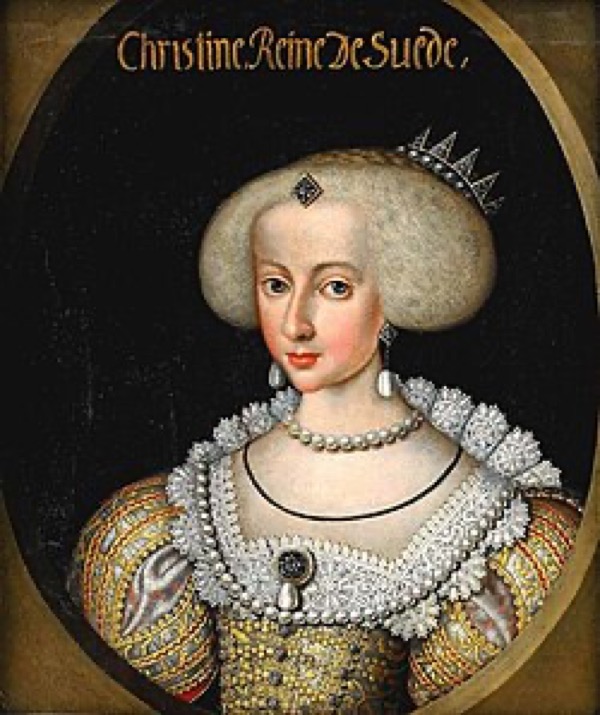
The 14-year-old Christina as queen, painting by Jacob Heinrich Elbfas
Perched on a hill overlooking the Inn Valley, Ambras Castle (Schloss Ambras) stands as a testament to Archduke Ferdinand II’s passion for arts and culture. Beyond housing the famous Chamber of Art and Curiosities (Kunst- und Wunderkammer) with its exotic artefacts and Renaissance armour, the castle holds an exceptional collection of historical musical instruments. Ferdinand II actively collected rare lutes, flutes, and early keyboard instruments, forming a private collection that reflects the sophisticated chamber music traditions of the late Renaissance court.
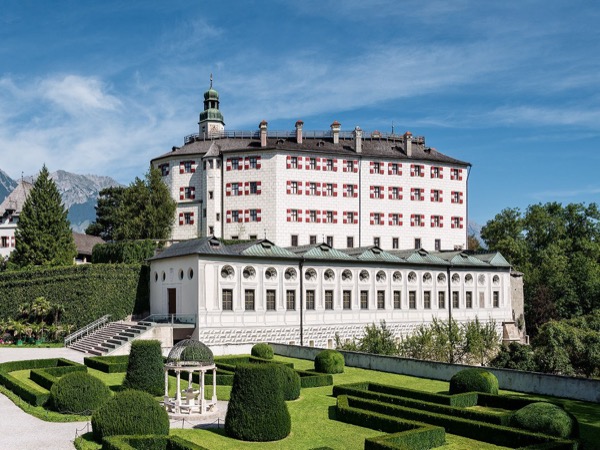
Credit: https://www.schlossambras-innsbruck.at
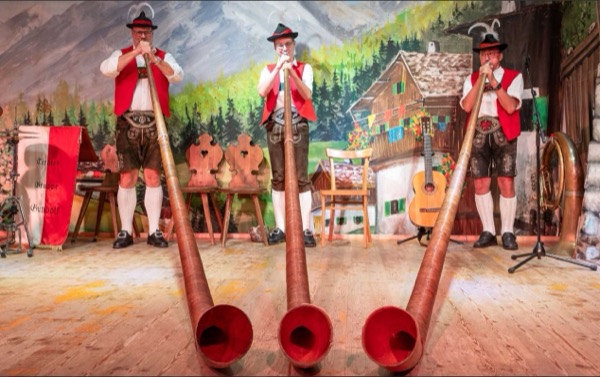
To bridge historical imperial culture with living regional folklore, visitors can experience a traditional Tyrolean Evening with the Gundolf Family. Performing in Innsbruck for over 50 years, this famous ensemble presents an authentic celebration of local musical heritage, traditional dress, and alpine customs.
The performance showcases classic Tyrolean folk music played on authentic regional instruments, including the zither, dulcimer (Hackenbrett), accordion, and wooden harp, as well as virtuosic brass fanfares. Between musical numbers, dancers clad in traditional Tracht—vibrant Dirndls and leather Lederhosen—bring local customs to life through energetic Schuhplattler boot-slapping dances, alpine yodelling, and rhythmic woodchoppers’ routines.
Credit: https://www.innsbruck.info/
Tyrolean Evening Show with the Gundolf Family in Innsbruck
The evening seamlessly combines these time-honoured stage traditions with authentic Tyrolean gastronomy. Guests can enjoy a hearty three-course meal featuring regional culinary staples such as clear beef broth with savoury liver dumplings, slow-roasted pork served with sauerkraut and traditional potato dumplings, and a warm, freshly baked apple strudel served for dessert. Hosted at the central Alpensaal, it offers a charming, immersive look into the vibrant folk traditions that have echoed through the Tyrolean valleys for generations.
Innsbruck’s Legacy of Instrument Making
Innsbruck’s identity as an imperial capital laid the groundwork for an extraordinary tradition of instrument-making, where military metalwork, domestic woodworking, and court patronage intersected. Beyond the grand performance halls, three specific venues in and around the city preserve this vibrant acoustic archaeology.
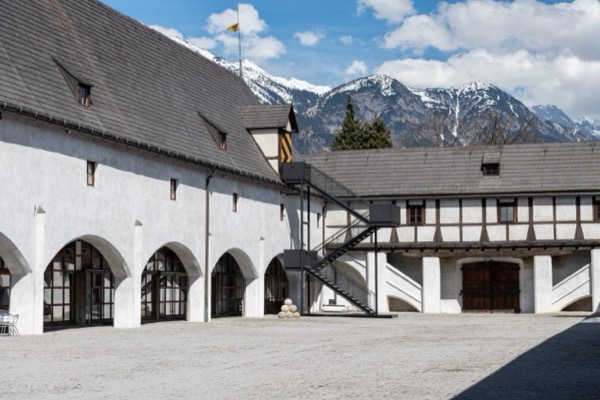
Just outside the old town, the Zeughaus (Armoury)—built around 1500 as Emperor Maximilian I’s central military arsenal—offers direct insight into the roots of regional brass instrument making. The Habsburg Empire’s constant demand for heavy artillery created a thriving local metal foundry industry. Over time, these precise metalworking skills were adapted for musical production. The quiet galleries of the Zeughaus showcase this transition, displaying historical hunting horns, military fanfares, and early brass organ pipes, tracing how the metallurgical techniques used in warfare laid the physical foundation for Tyrolean brass-founding traditions.
Credit: Wolfgang Lackner
For string instruments, the pinnacle of Tyrolean craftsmanship centres on Jakob Stainer (c. 1617–1683), the premier 17th-century Austro-German luthier whose violins—renowned for their sweet, vocal warmth and high arching—were preferred by Baroque masters like J.S. Bach and Händel over Italian instruments. In central Innsbruck, the Ferdinandeum (Tyrolean State Museum, then closed for renovation) houses one of the world’s most significant collections of Stainer’s surviving works. Its music galleries feature meticulously preserved violins, violas, and cellos, allowing visitors to examine the refined varnish and delicate carving that defined the golden age of Alpine luthiery. Just a short journey outside the city, the Museum Absam—located in Stainer’s hometown—complements this display by showcasing his original workshop tools, technical drafts, and historical archives, revealing the painstaking manual labour behind these immortal instruments.
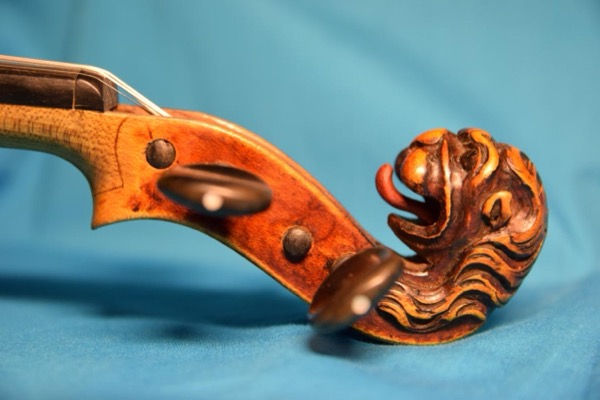
Carved head of lion from a typical Stainer violin
Demonstration of one Jacob Stainer Violin, 1656
Meanwhile, the adjacent Tiroler Volkskunstmuseum (Tyrolean Folk Art Museum) highlights the domestic side of regional instrument-making. Alongside its collection of historic portable organ chests (Positiv-Orgeln), the museum features fully restored wooden parlours (Stuben) salvaged from mountain farmhouses. These enclosed timber rooms provided ideal resonance chambers for local craftsmen who hand-carved zithers, folk fiddles, and woodwinds. Together, these three venues demonstrate how Tyrolean instrument making seamlessly bridged rugged mountain folk traditions, industrial foundry techniques, and the highest refinements of the Habsburg court.
For more of the best in classical music, sign up for our E-Newsletter